Artwork
Woman Selling Poultry
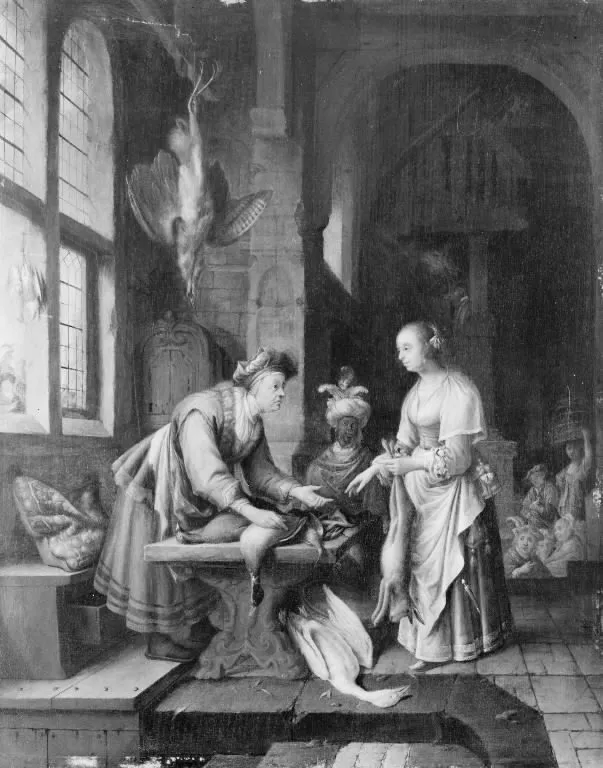
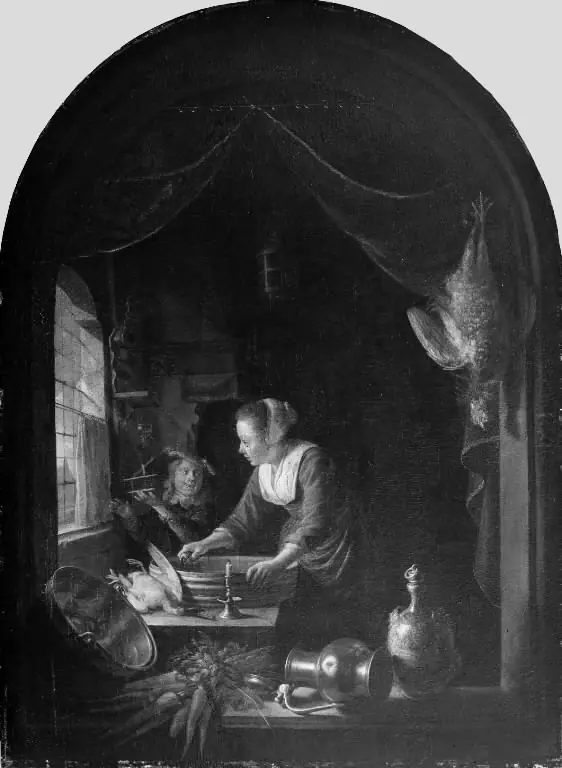
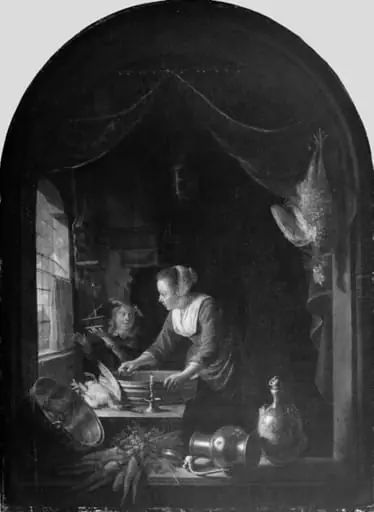
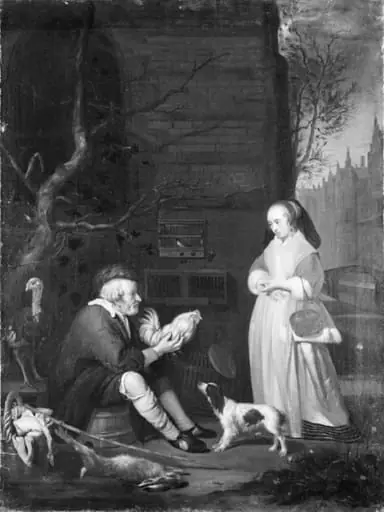
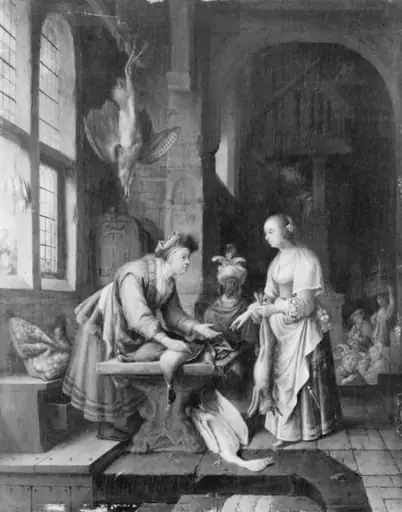
Woman Selling Poultry is an oil painting by the Dutch Golden Age artist Jan Adriaensz. van Staveren. It dates from 1654 and is held in the collection of the Statens Museum for Kunst. Painted in 1654 by Jan Adriaensz.
About this work
Overview
van Staveren, this oil-on-canvas work captures a quiet moment of market life in 17th-century Leiden.
Painted in 1654 by Jan Adriaensz. van Staveren, this oil-on-canvas work captures a quiet moment of market life in 17th-century Leiden. Van Staveren, a member of the Leiden Guild of St. Luke since 1644, specialized in intimate genre scenes rendered with meticulous detail. The painting reflects the quiet realism favored by the fijnschilders, a group known for their refined technique and focus on ordinary domestic and commercial interactions.
Subject & Meaning
The scene portrays a vendor, dressed in a long dress and headscarf, seated beside a basket of poultry, engaging with a customer in a long coat and hat. Their interaction is subdued, lacking theatricality, suggesting a routine transaction rather than a staged event. The focus on everyday commerce underscores the value placed on domestic economy and the dignity of labor in Dutch society, where such scenes were seen as reflections of moral order and civic virtue.
Technique & Style
Van Staveren employs oil paint with careful layering to achieve subtle textures—the weave of fabric, the sheen of feathers, the grain of wood. Chiaroscuro defines the figures, with light filtering through a distant window to model forms against a deep, shadowed background. The restrained palette and precise brushwork align with the Leiden fijnschilders tradition, emphasizing quiet observation over dramatic flair, and enhancing the painting’s sense of tangible reality.
History & Provenance
The painting has remained in institutional hands since at least the 19th century, now part of the Statens Museum for Kunst’s collection in Copenhagen. Van Staveren’s documented activity in Leiden, including his guild dues until his death in 1669, confirms his local roots and steady output. While few of his works survive, this piece is among the more clearly attributed examples, offering insight into the regional genre painting market of mid-17th-century Holland.
Context
During the Dutch Golden Age, genre scenes like this one flourished as urban middle-class patrons sought art that mirrored their daily lives. Markets, kitchens, and domestic interiors became popular subjects, replacing religious or mythological themes. Van Staveren’s work fits within this trend, contributing to a visual culture that celebrated modesty, diligence, and the quiet rhythms of civic existence in the newly independent Dutch Republic.
Legacy
Though van Staveren was not widely known beyond his hometown, his paintings contribute to the broader understanding of Leiden’s artistic community. His attention to quiet, unidealized moments helped shape the genre’s evolution, influencing later artists who valued realism over spectacle. Today, his works serve as historical documents, preserving the textures and rhythms of ordinary life in a period of profound economic and cultural change.
Artist & collection
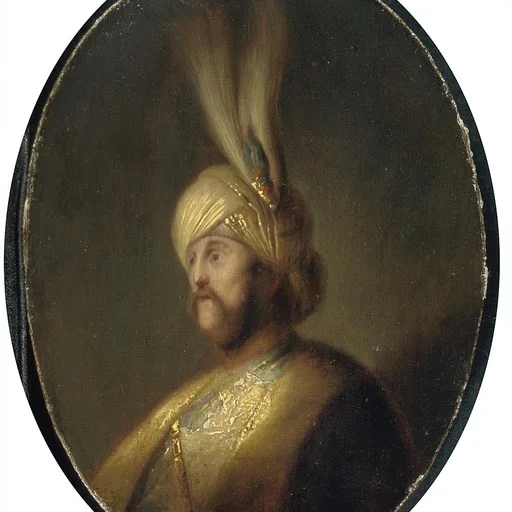
Artist
Jan Adriaensz. van Staveren (1614 in Leiden – 1669 in Leiden), was a Dutch Golden Age painter of the Leiden school of fijnschilders. According to the RKD he was fourteen when he entered his name in 1628 in the Leiden…