Artwork
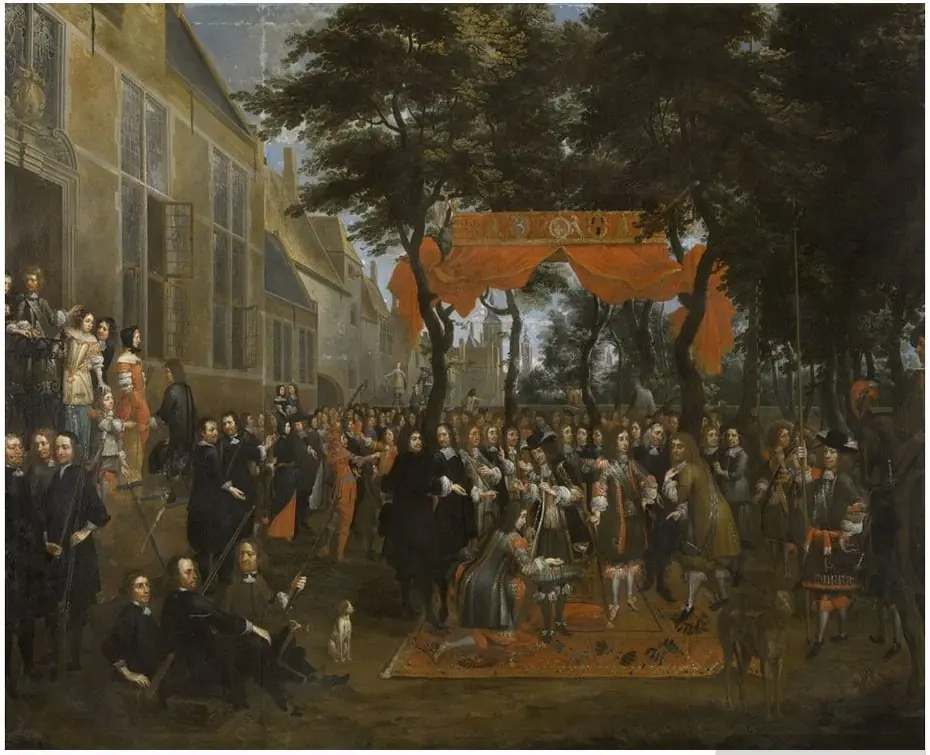
The Reception of Charles II and his Brothers in the Guild of Saint Barbara in Bruges
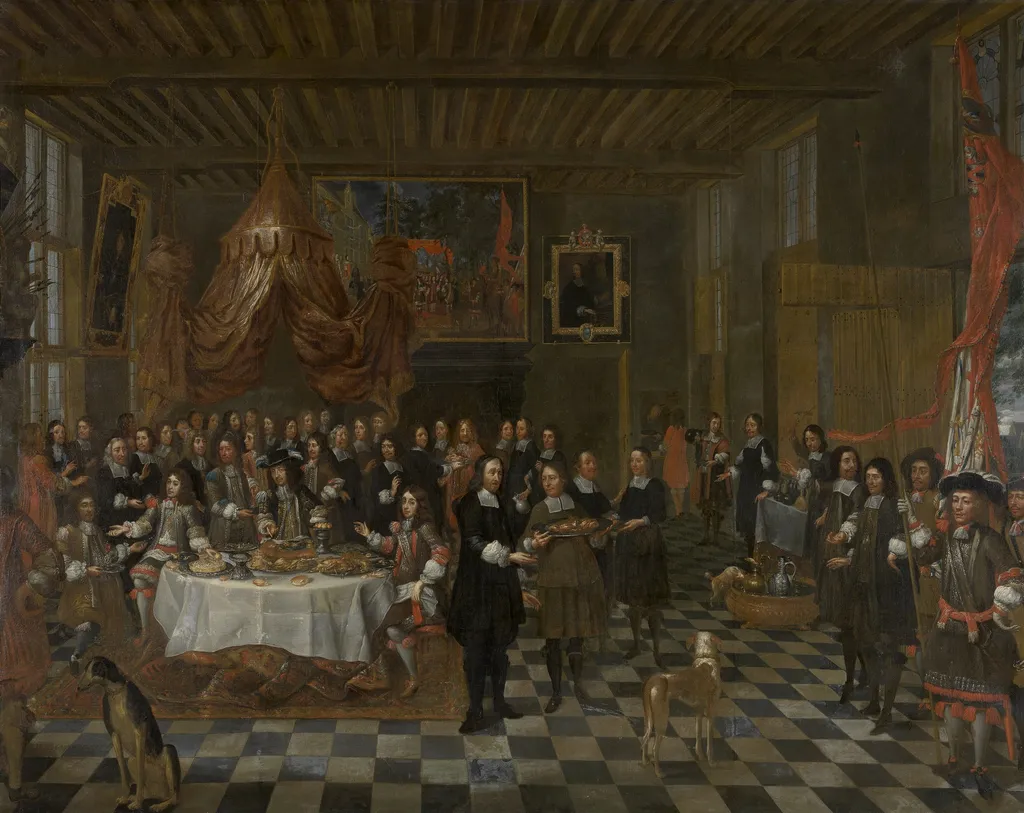
The Reception of Charles II and his Brothers in the Guild of Saint Barbara in Bruges is an oil painting by the Flemish Baroque painting artist Jan Baptist van Meunincxhove. It dates from 1671 and is held in the collection of the Groeningemuseum.
About this work
Overview
The artist, primarily recognized for urban vistas and architectural interiors, captures a formal gathering that merges portraiture with civic pageantry.
Executed in 1671, this oil painting by Jan Baptist van Meunincxhove documents a ceremonial moment within Bruges’ Guild of Saint Barbara. The artist, primarily recognized for urban vistas and architectural interiors, captures a formal gathering that merges portraiture with civic pageantry. Though Flemish painting had entered a phase of diminished innovation, van Meunincxhove sustained a meticulous, descriptive approach characteristic of the period.
Subject & Meaning
The composition centers on Charles II of England, flanked by his brothers Henry Stuart and James II, alongside Karel van den Bosch, a local dignitary. Their presence in the guildhall signals diplomatic or fraternal bonds between England and Bruges. Gestures of deference—subtle bows, attentive postures—emphasize hierarchy, while the draped canopy and silver tableware underscore the occasion’s solemnity and the guild’s prestige.
Technique & Style
Van Meunincxhove employs a restrained palette dominated by dark attire, punctuated by reflective surfaces—polished silver, glassware, and marble tiles—that animate the scene. Figures are rendered with precise, almost miniaturist detail, their expressions and poses conveying individual roles within the collective narrative. Architectural elements, such as the coffered ceiling and tall windows, frame the gathering, reinforcing spatial depth and the guild’s opulent setting.
History & Provenance
Commissioned in 1671, the work has remained in Bruges, where it entered the Groeningemuseum’s holdings. Its creation coincides with a period of relative stability for the city, following economic decline but retaining cultural significance. The painting’s survival intact suggests its value as both a historical record and a testament to the guild’s enduring influence.
Context
The late 17th century marked a transitional phase for Flemish art, with diminished patronage and creative vitality compared to earlier eras. Yet Bruges maintained traditions of civic portraiture, often celebrating alliances or visits by foreign dignitaries. This painting reflects such practices, capturing a moment of political theater within a guild known for its role in local governance and trade.
Legacy
While van Meunincxhove’s reputation rests primarily on his cityscapes, this work exemplifies his skill in group portraiture, a genre less frequently associated with his name. It preserves a fleeting diplomatic encounter, offering insight into 17th-century ceremonial customs and the intersection of art, power, and civic identity in Bruges.
Own this work as a print
Artist & collection
Artist
Jan Baptist van Meunincxhove (c. 1620/25 – 1703/04) was a Flemish painter of cityscapes, architectural paintings, marine views and group portraits who was active in Bruges. Without being original, he maintained a high…

 Family Portrait
 Banquet
 The Ratification of the Treaty of Münster
 Untitled
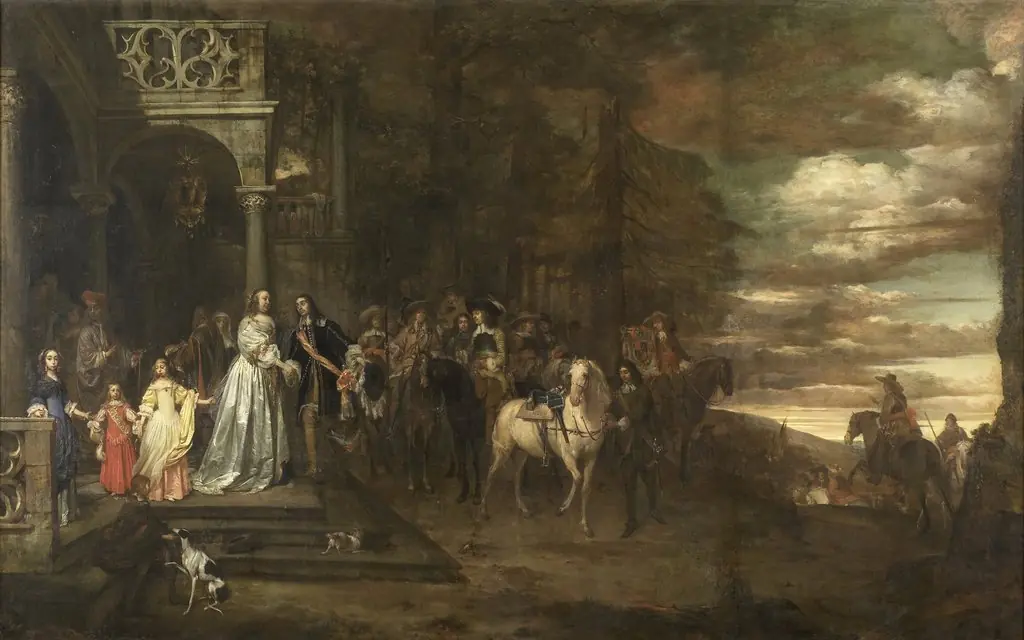 The leavetaking of Captain Hendrik de Sandra (1619-1707), sent off by his wife and children
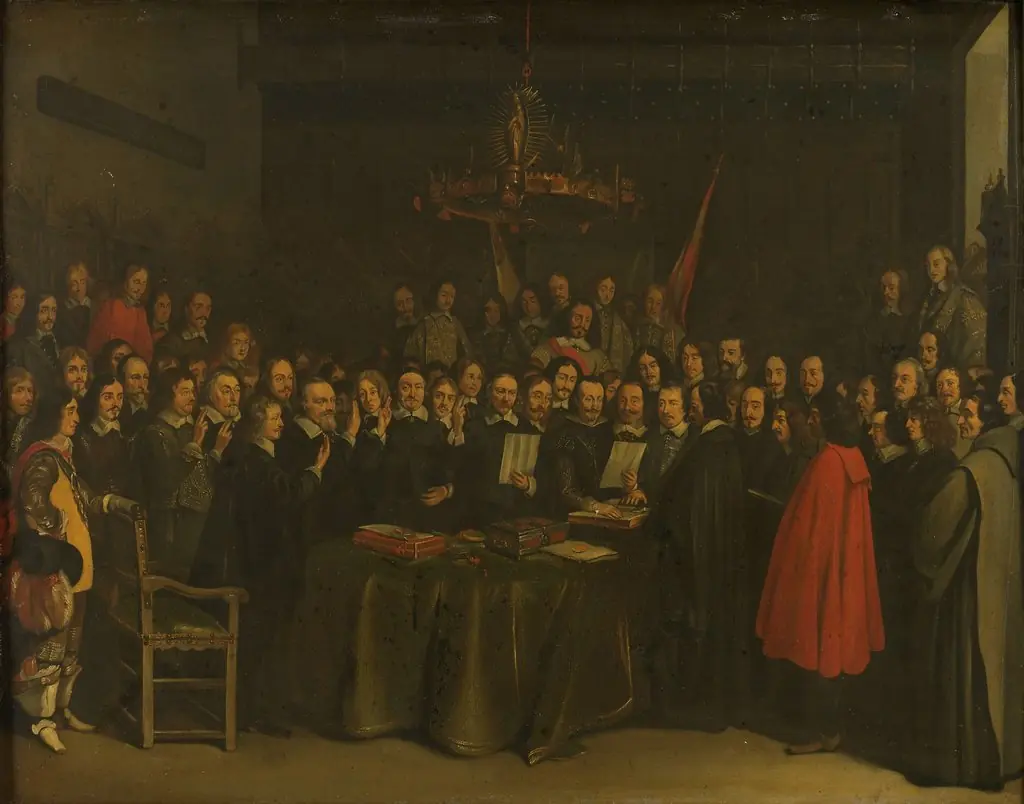 Ratification of the Peace of Münster between Spain and the Dutch Republic in the town hall of Münster, 15 May 1648
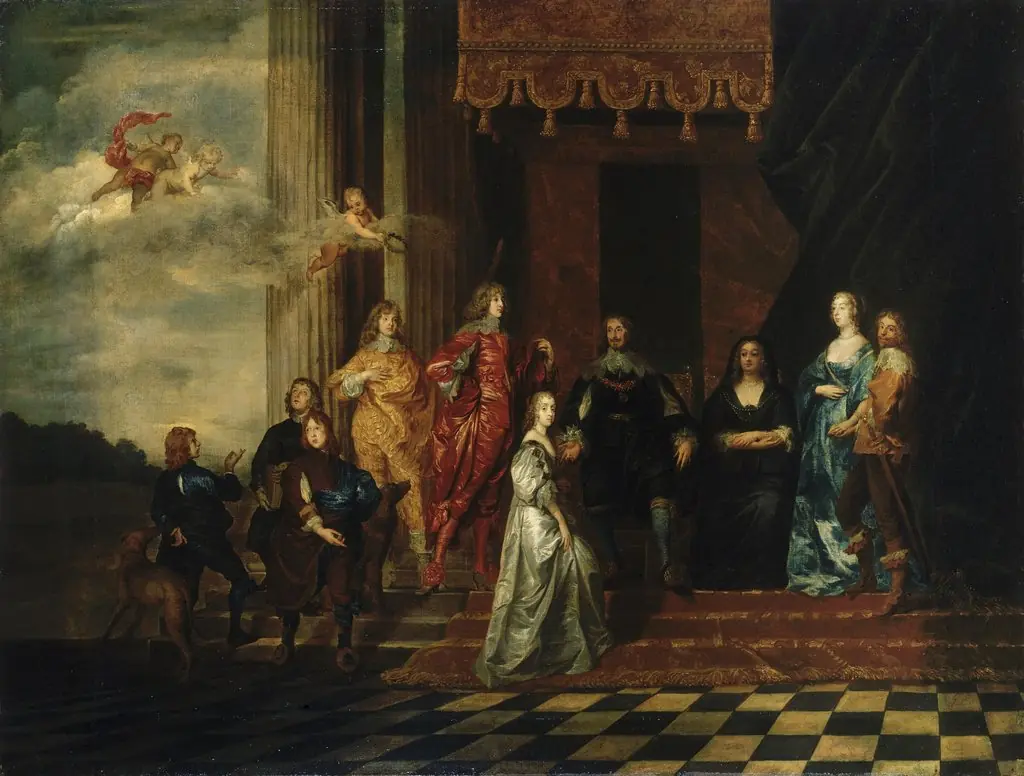 Portrait of the Earl of Pembroke with His Family (copy)
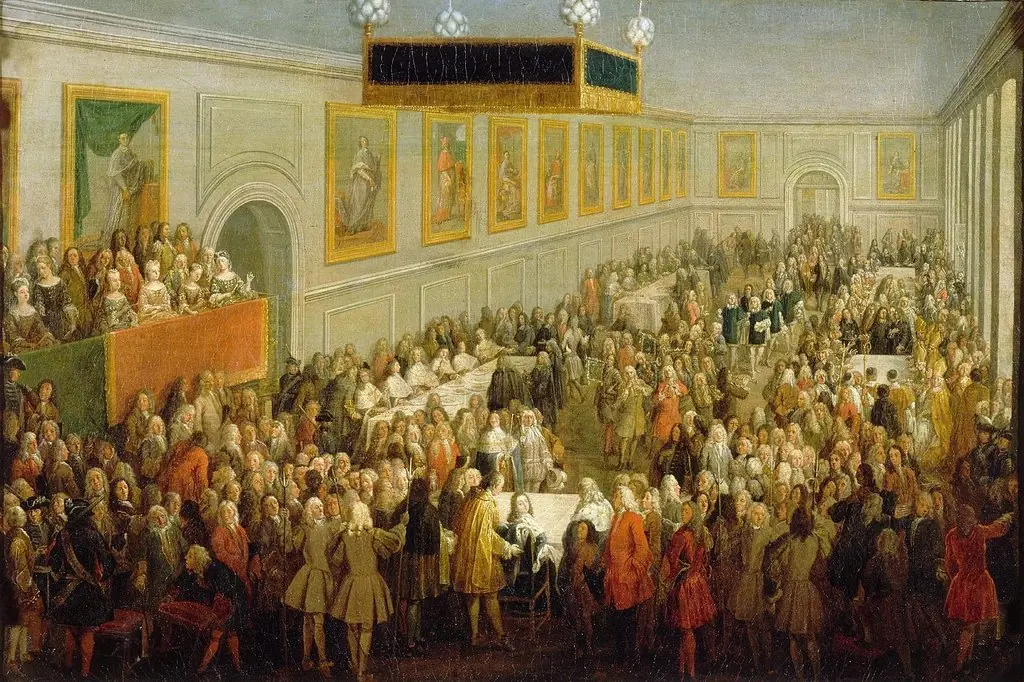 Feast given after the coronation of Louis XV of France
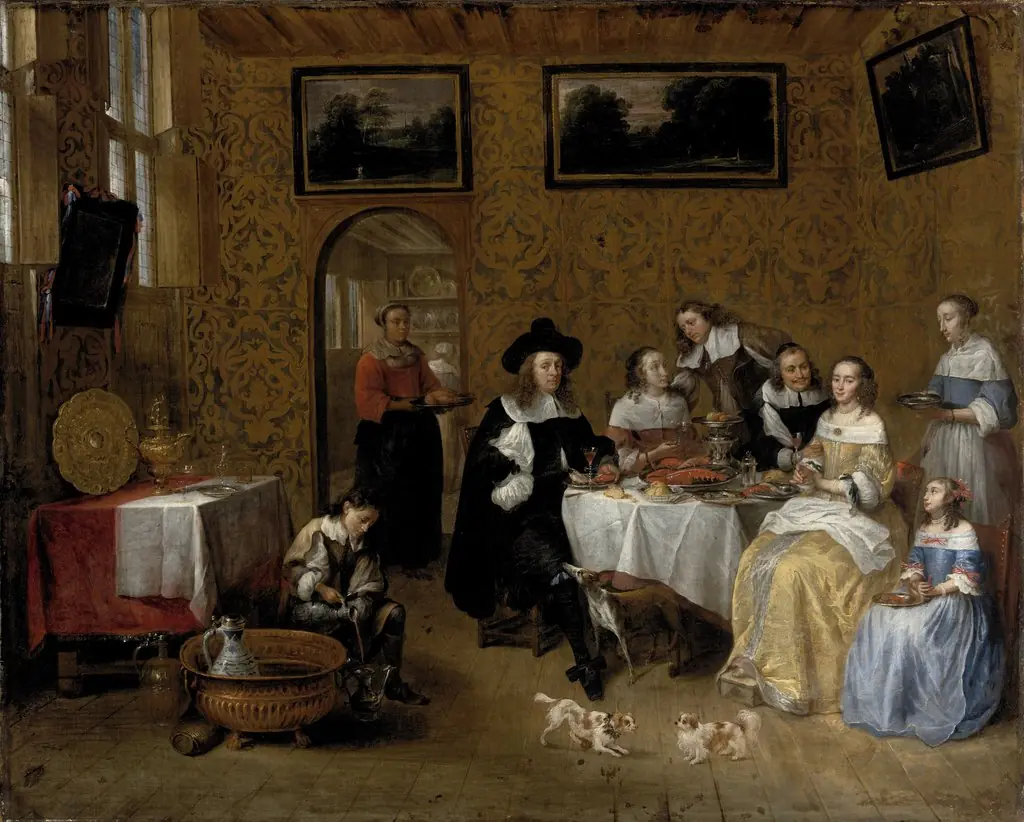 Portrait of a Family
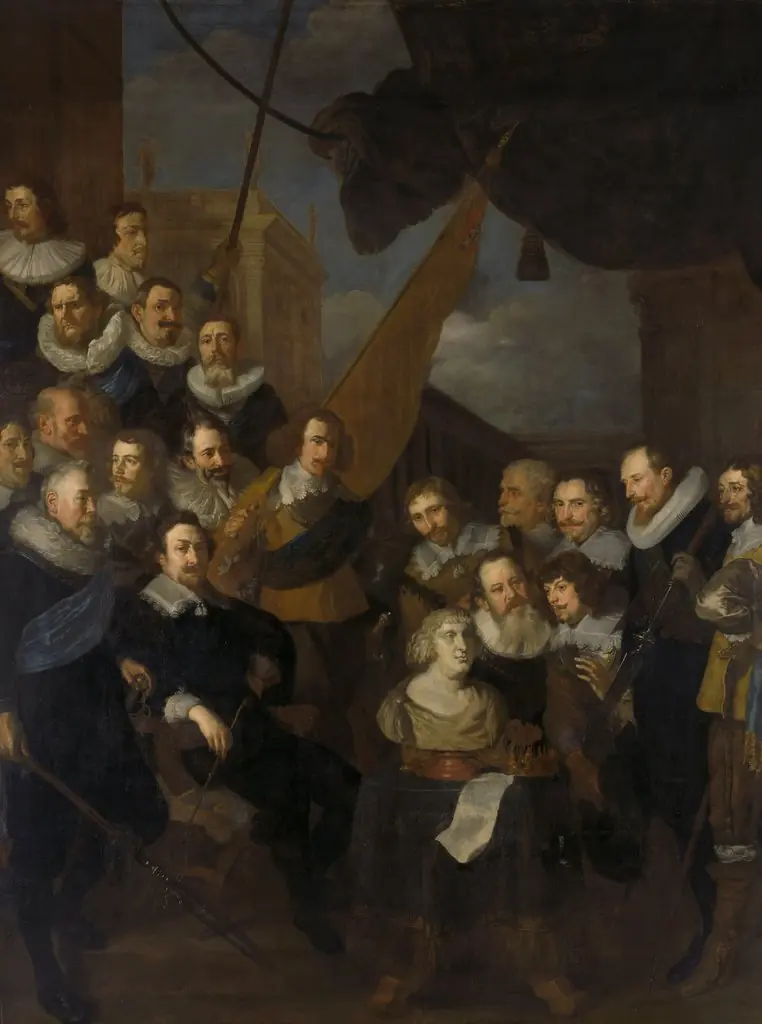 Officers of the militia of departmetn XIX in Amsterdam under the command of Cornelis Bicker and Frederick van Banchem, ready to receive Maria de' Medici in 1638
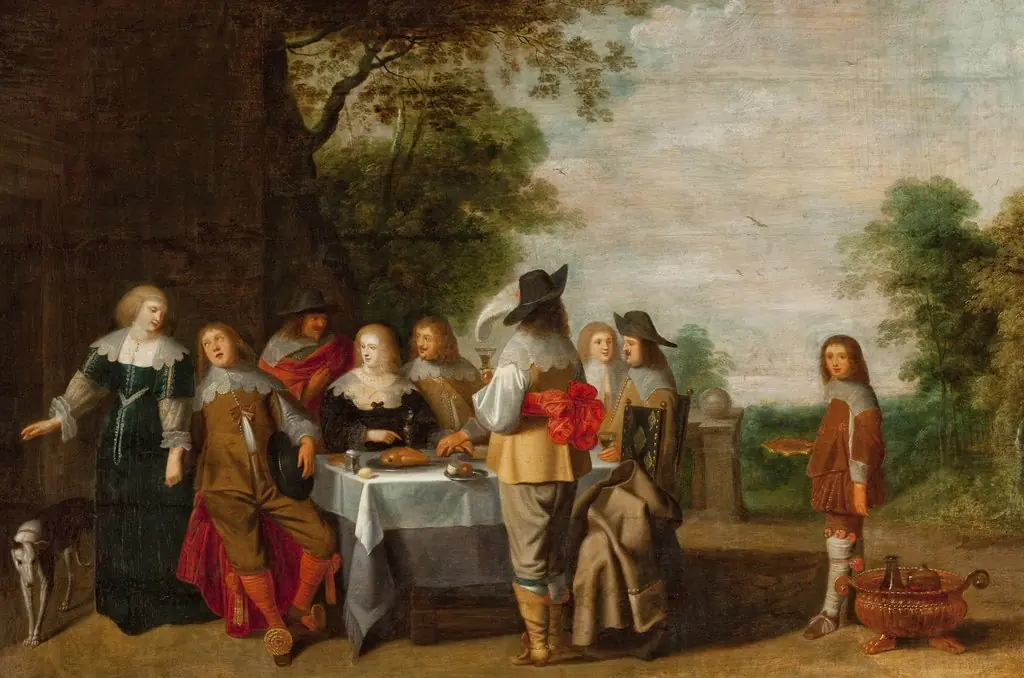 Company at the Table in a Park