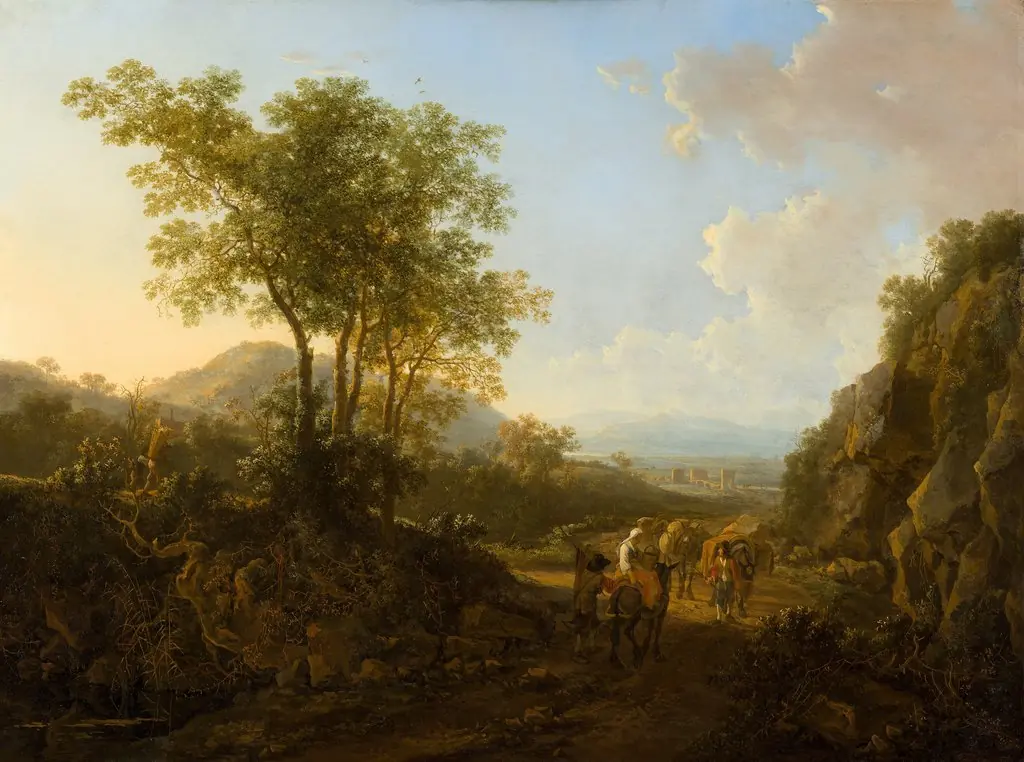
Artwork
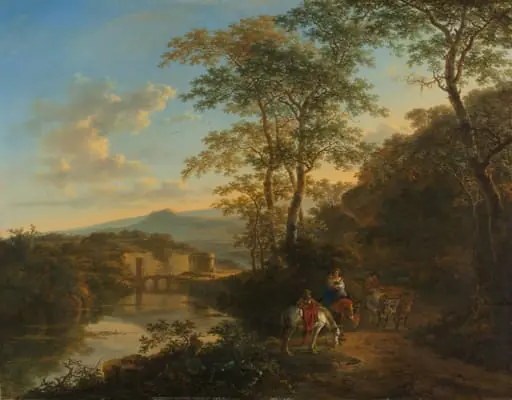
The Ford and Halt of the Travelers
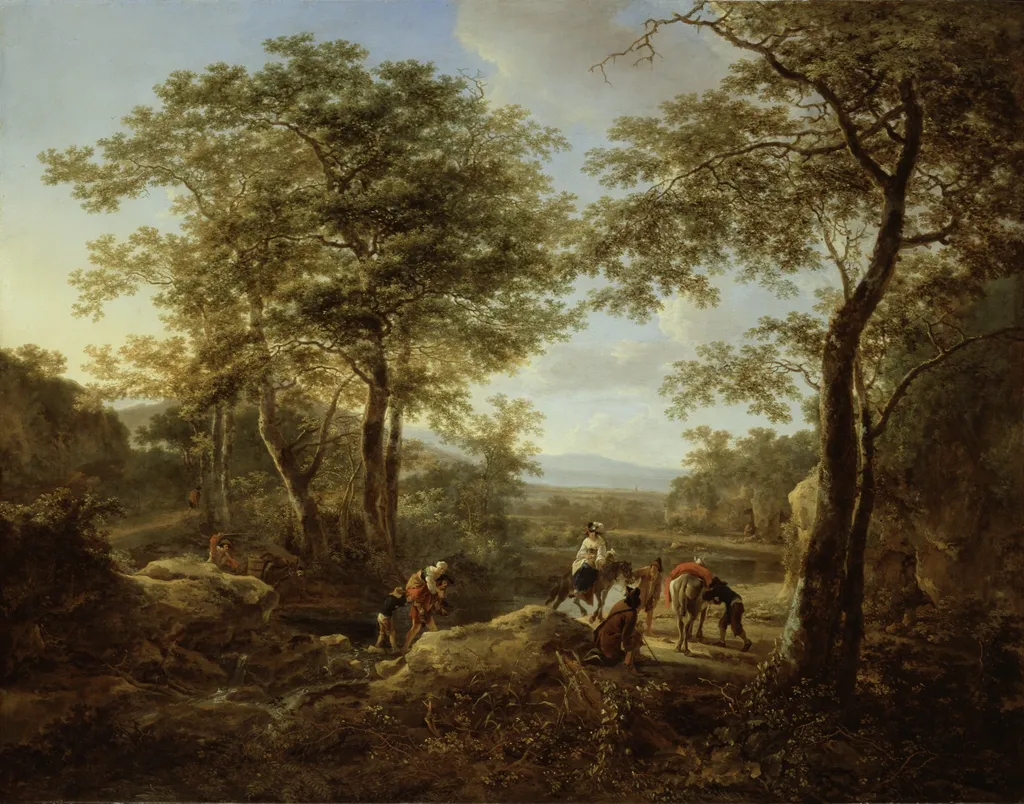
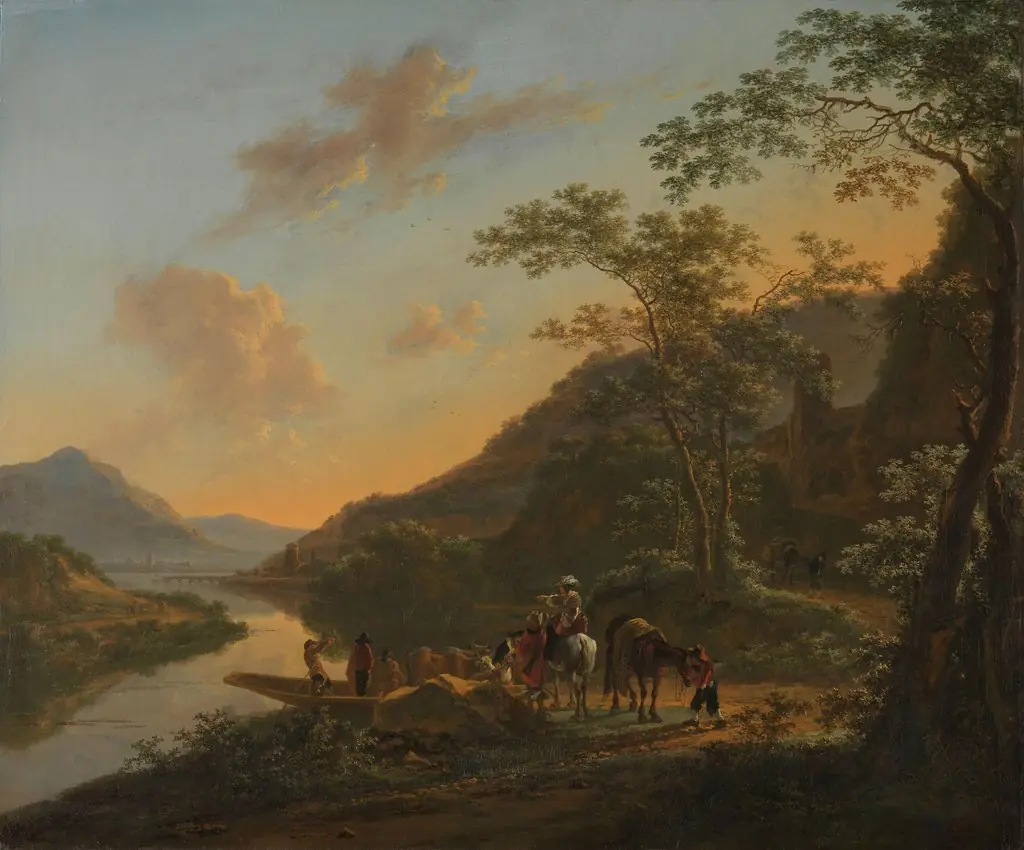
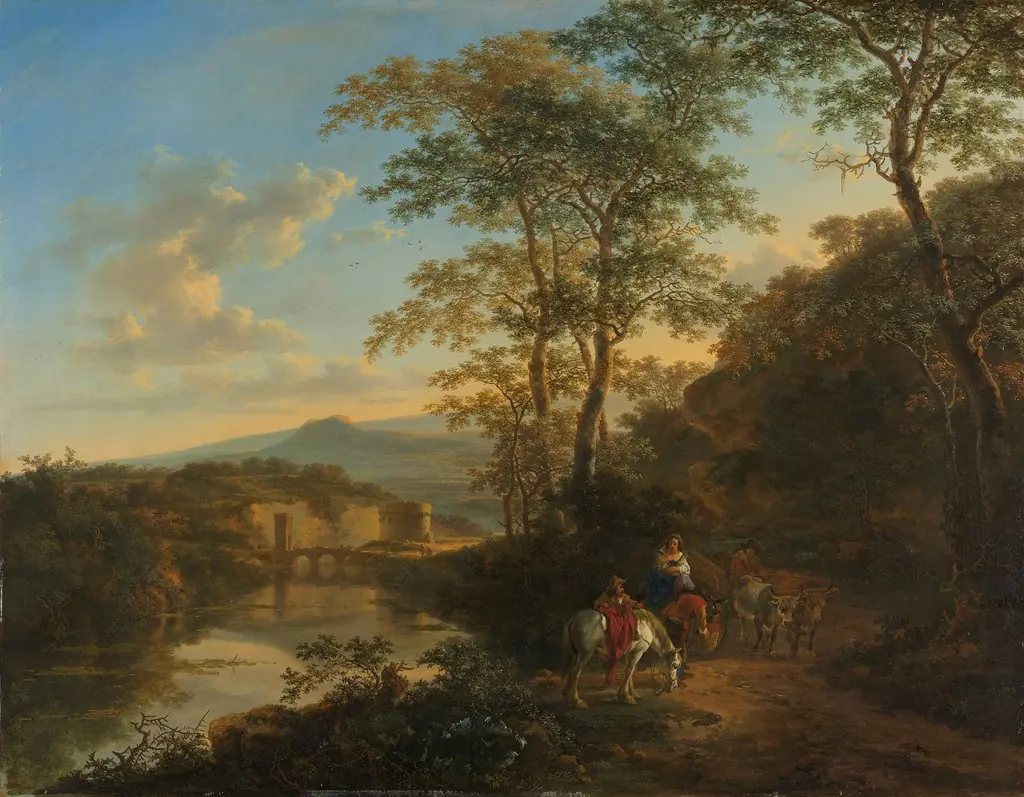
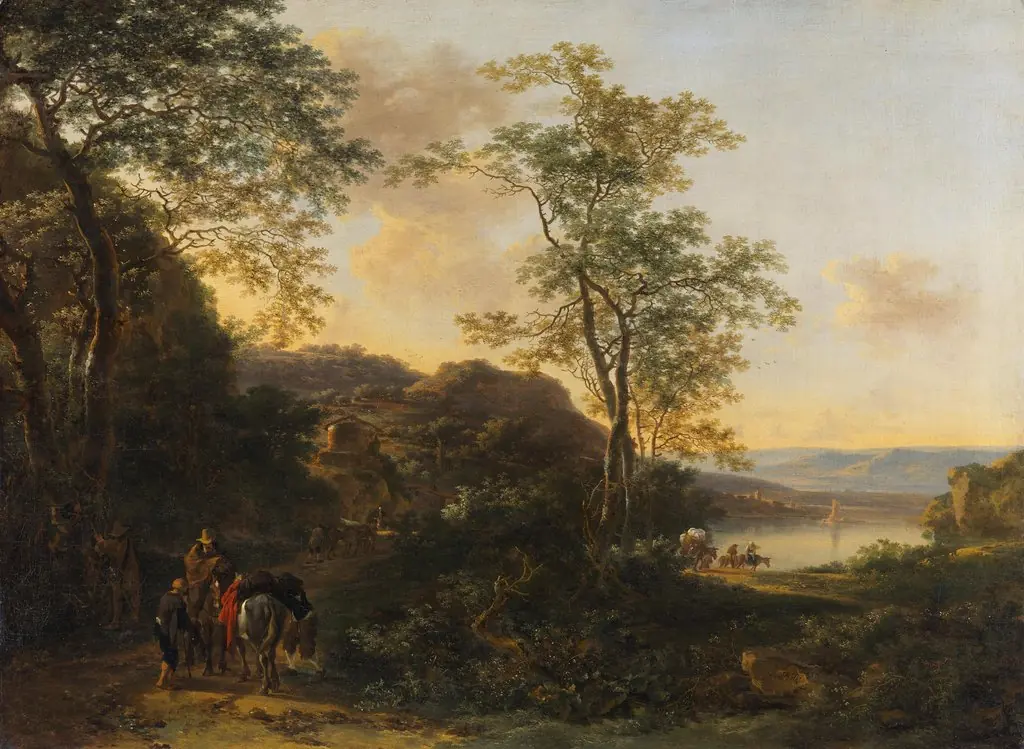
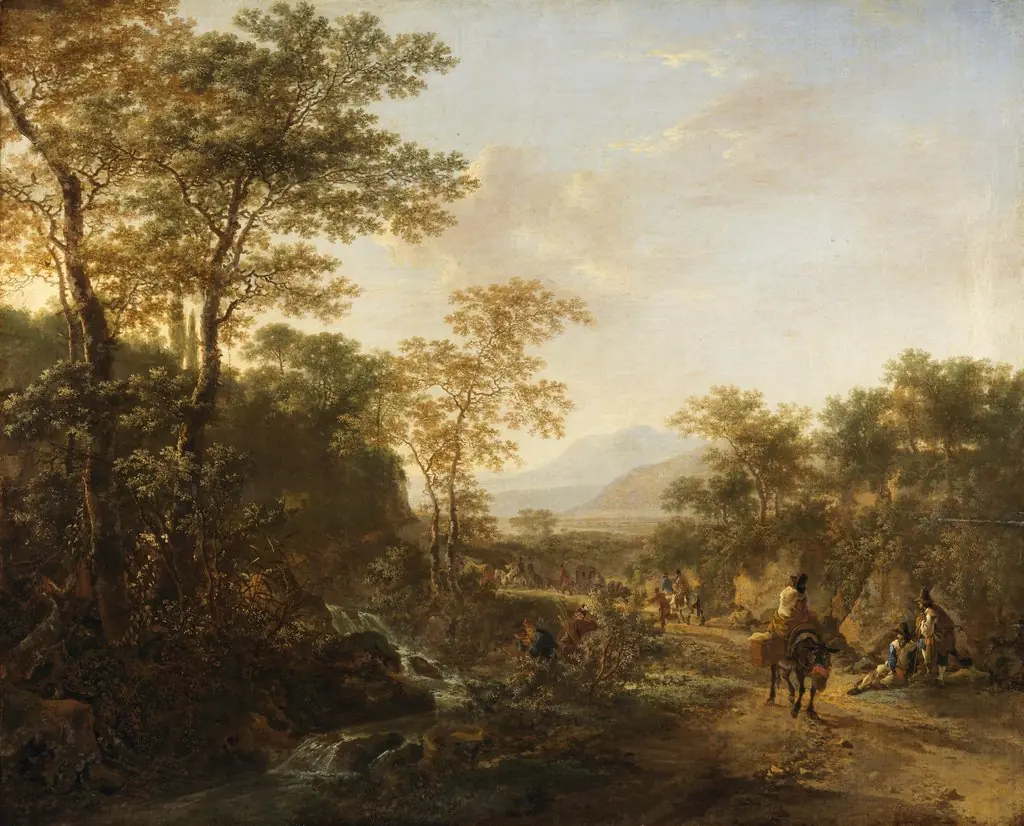
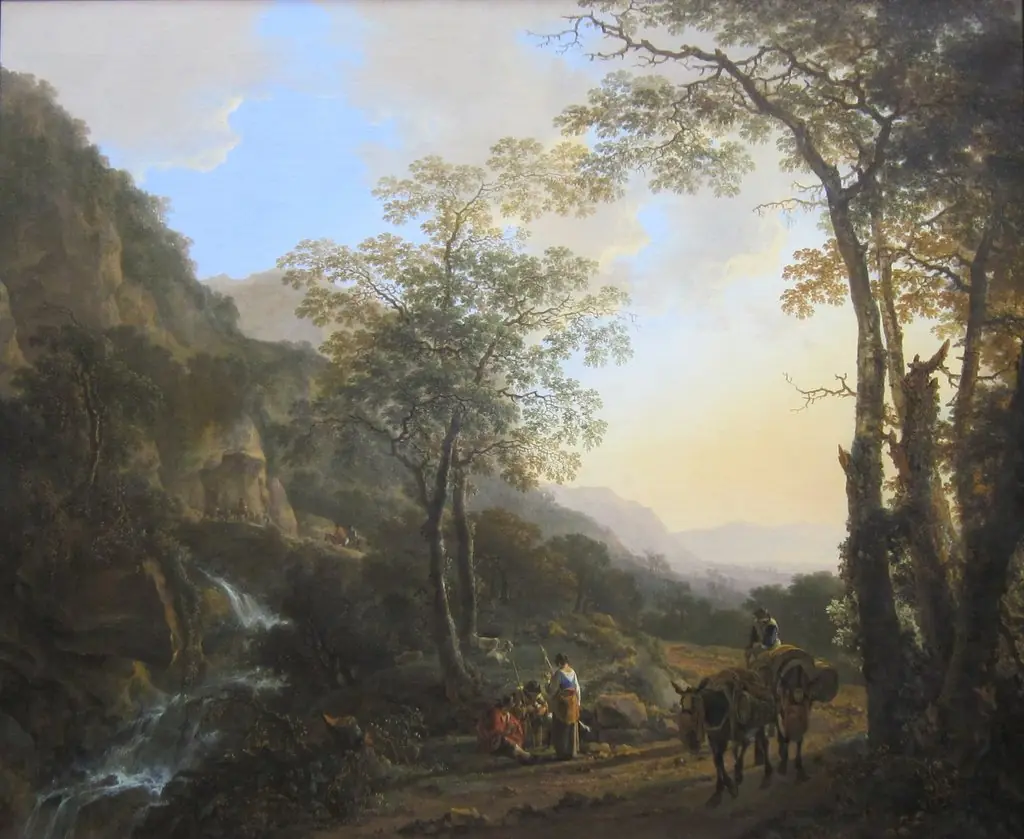
The Ford and Halt of the Travelers is an oil painting by the Dutch Golden Age artist Jan Both. It dates from 1649 and is held in the collection of the Detroit Institute of Arts.
About this work
Overview
The scene captures a moment of rest during a journey, emphasizing the harmony between human activity and the natural environment.
The Ford and Halt of the Travelers (1649) is an oil painting by the Dutch artist Jan Both, depicting a group of figures and horses pausing at a stream within a luminous Italianate landscape. Both, a key figure in the Utrecht Caravaggisti who spent significant time in Rome, is renowned for synthesizing Dutch realism with the warm, golden light of the Italian countryside. In this composition, the travelers gather near the water's edge, framed by dense, dark foliage that contrasts with the expansive, sun-drenched sky filled with soft white clouds. The scene captures a moment of rest during a journey, emphasizing the harmony between human activity and the natural environment. The painting exemplifies Both's mature style, characterized by a sophisticated handling of atmospheric perspective and a distinct palette that evokes the Mediterranean climate. Created in 1649, the work reflects the artist's continued influence on the Dutch Golden Age landscape tradition, bridging the gap between Northern detail and Southern idealism. The composition guides the viewer's eye from the shadowed foreground figures toward the bright, distant horizon, creating a sense of depth and tranquility that defines Both's contribution to 17th-century art.
Subject & Meaning
The work captures a moment of rest during a journey, suggesting themes of movement, pause, and the relationship between humanity and the environment. The travelers, positioned at the water’s edge, appear to be fording or simply taking a break, highlighting the everyday experiences of travel in the 17th‑century countryside.
Technique & Style
Both employs a nuanced chiaroscuro, contrasting illuminated foreground elements with deeper shadows to model forms and convey atmospheric depth. The handling of light on foliage, water, and the figures’ garments creates a sense of volume, while the soft, diffused sky contributes to a harmonious, almost lyrical landscape typical of Dutch Golden Age scenery.
History & Provenance
Created in 1649, the painting entered the collection of the Detroit Institute of Arts, where it remains on display. Its provenance traces back to the artist’s workshop in the Netherlands before crossing the Atlantic, reflecting the broader 19th‑century interest in Dutch landscape painting among American collectors.
Own this work as a print
Artist & collection

Artist
Jan Dirksz Both was a Dutch painter, draughtsman, and etcher, who made an important contribution to the development of Dutch Italianate landscape painting.