Artwork
Ring of Children
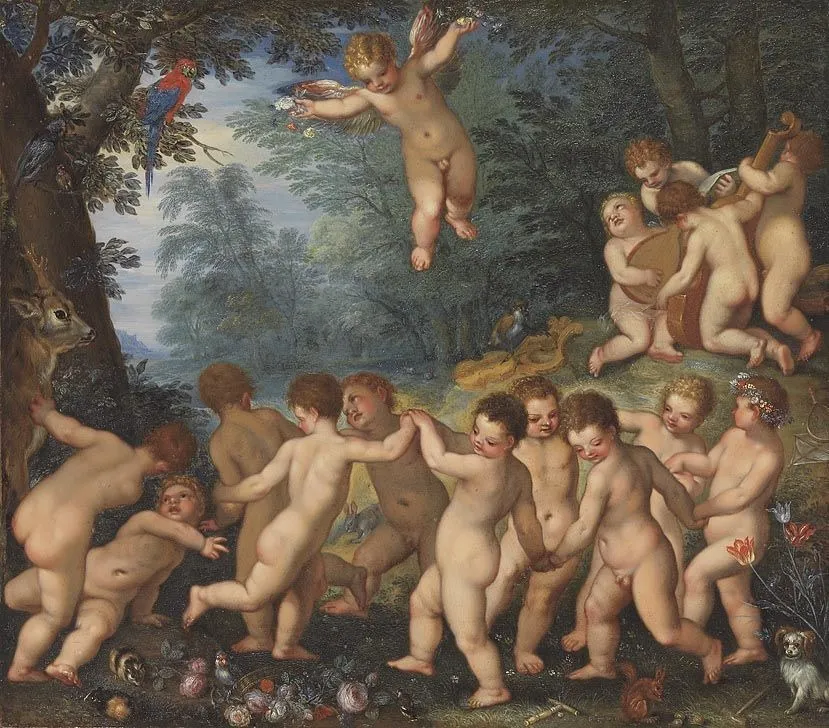
Ring of Children is an oil painting by the Flemish Baroque painting artist Jan Brueghel, the elder. It dates from 1600 and is held in the collection of the Bavarian State Painting Collections. Painted in 1600 by Jan Brueghel the Elder, this work on copper depicts a circle of nude children engaged in a playful dance.
About this work
Overview
The small scale and polished surface of the copper panel allowed for fine brushwork, characteristic of his meticulous technique.
Painted in 1600 by Jan Brueghel the Elder, this work on copper depicts a circle of nude children engaged in a playful dance. Executed during the early Flemish Baroque period, it reflects Brueghel’s interest in genre scenes and naturalistic detail. The small scale and polished surface of the copper panel allowed for fine brushwork, characteristic of his meticulous technique. The painting is part of the Alte Pinakothek’s collection in Munich.
Subject & Meaning
The scene portrays a group of children holding hands in a circular motion, suggesting a folk game or ritual dance. Their nakedness evokes innocence and a prelapsarian harmony, while the surrounding forest and wildlife imply a connection to nature. The composition lacks overt religious or moral symbolism, instead emphasizing spontaneous joy and the vitality of childhood within an idealized natural setting.
Technique & Style
Brueghel employed copper as a support, a material favored for its smoothness and durability, enabling precise rendering of textures. His brushwork captures the softness of skin, the sheen of hair, and the varied foliage with delicate attention. The palette is dominated by earthy greens and browns, accented by warm tones in the children’s bodies. The figures are rendered with a sense of movement, their postures suggesting rhythm and balance within the circular formation.
History & Provenance
Created in the early 17th century, the painting entered the Bavarian royal collection in the 18th century and was later transferred to the Alte Pinakothek. Its survival in good condition reflects its early recognition as a work of quality. While not widely documented in contemporary inventories, its presence in a major European collection since the 1700s confirms its enduring status within Brueghel’s oeuvre.
Context
Brueghel worked in a cultural milieu where depictions of children in natural settings were gaining popularity, often tied to humanist ideals of innocence and harmony. His collaboration with Rubens and engagement with Italianate landscapes influenced his approach to composition and detail. This painting aligns with broader Northern European trends that celebrated everyday life, distinct from the grand narratives of religious or mythological subjects.
Legacy
Though not among Brueghel’s most frequently reproduced works, the painting exemplifies his skill in blending genre scenes with natural observation. It contributed to the development of Flemish genre painting and influenced later artists interested in childhood and pastoral themes. Its preservation in a major museum ensures continued scholarly and public engagement with its quiet, lively vision of youth in nature.
Artist & collection
Artist
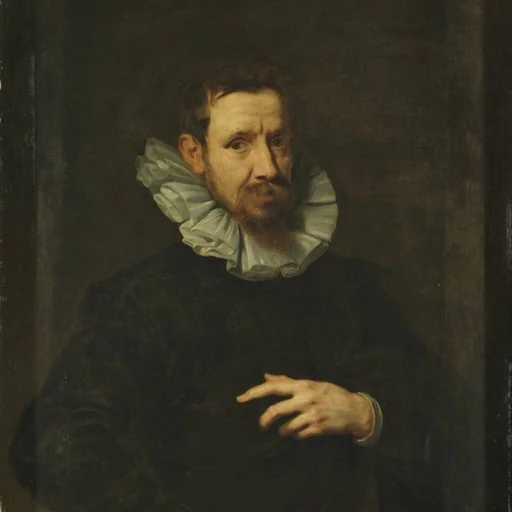
Jan Brueghel the Elder ( BROY-gəl, US also BROO-gəl; Dutch: ; 1568 – 13 January 1625) was a Flemish painter and draughtsman.

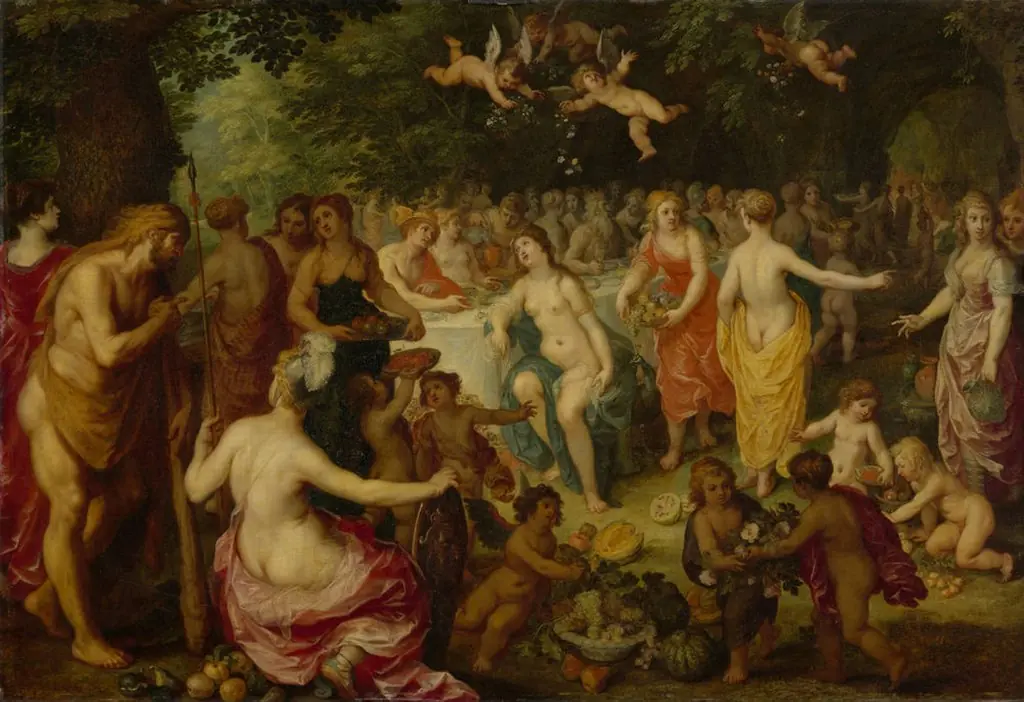 The Feast of the Gods
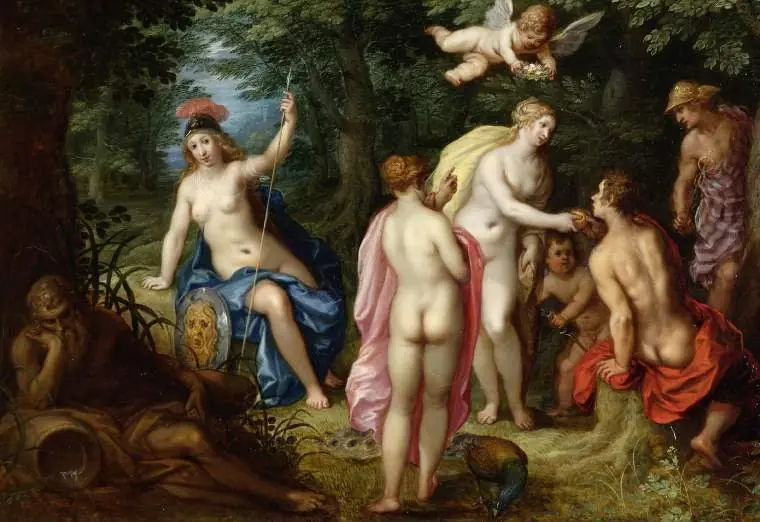 Judgement of Paris
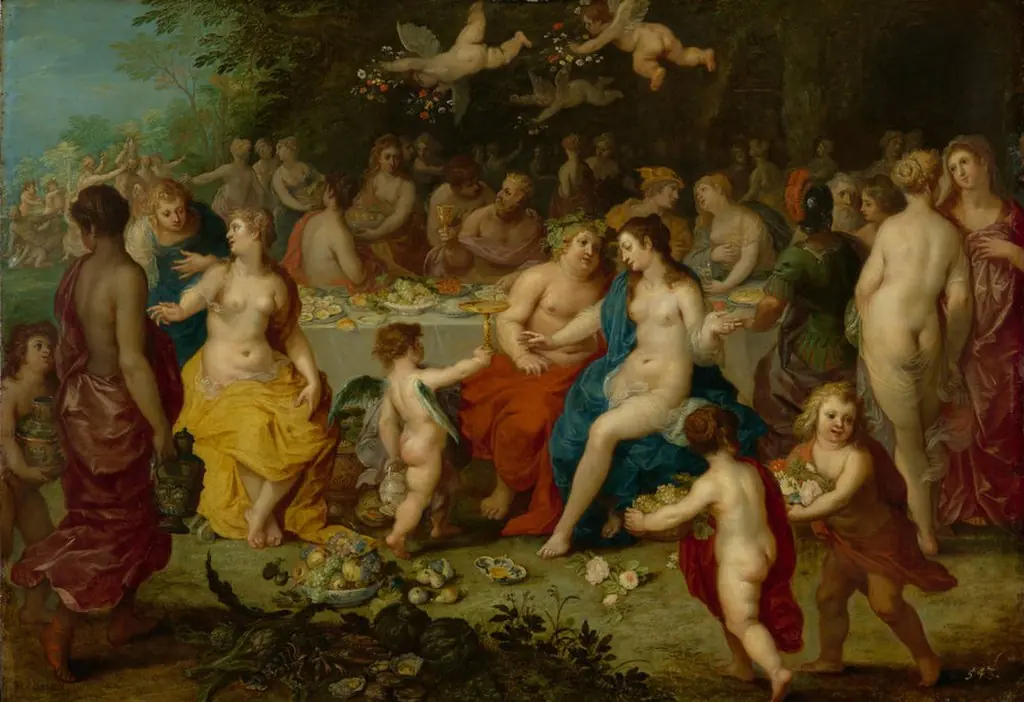 The wedding banquet of Bacchus and Ariadne
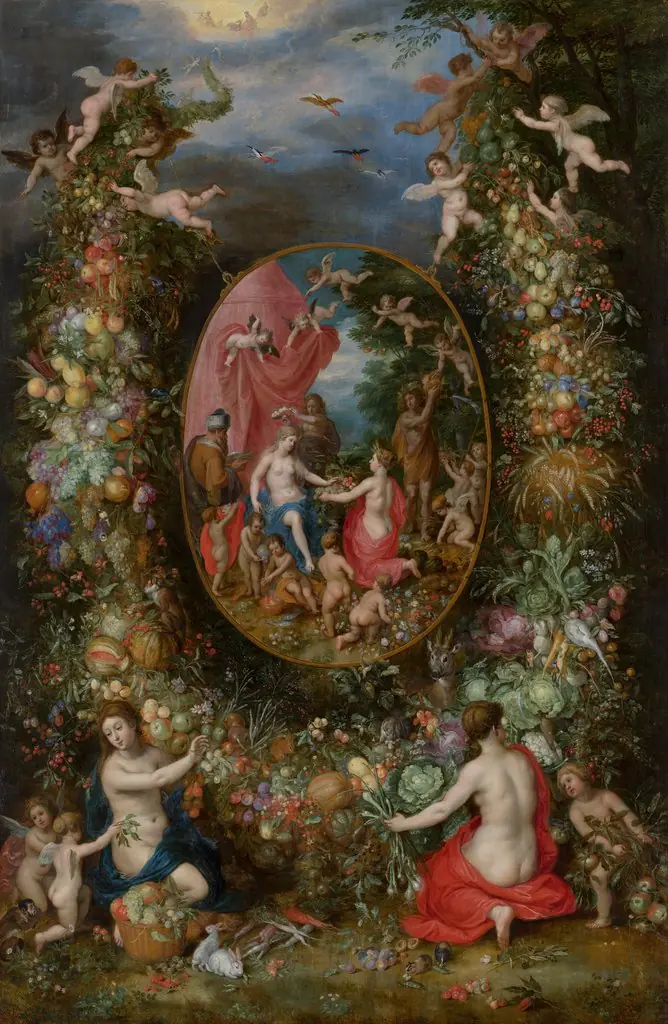
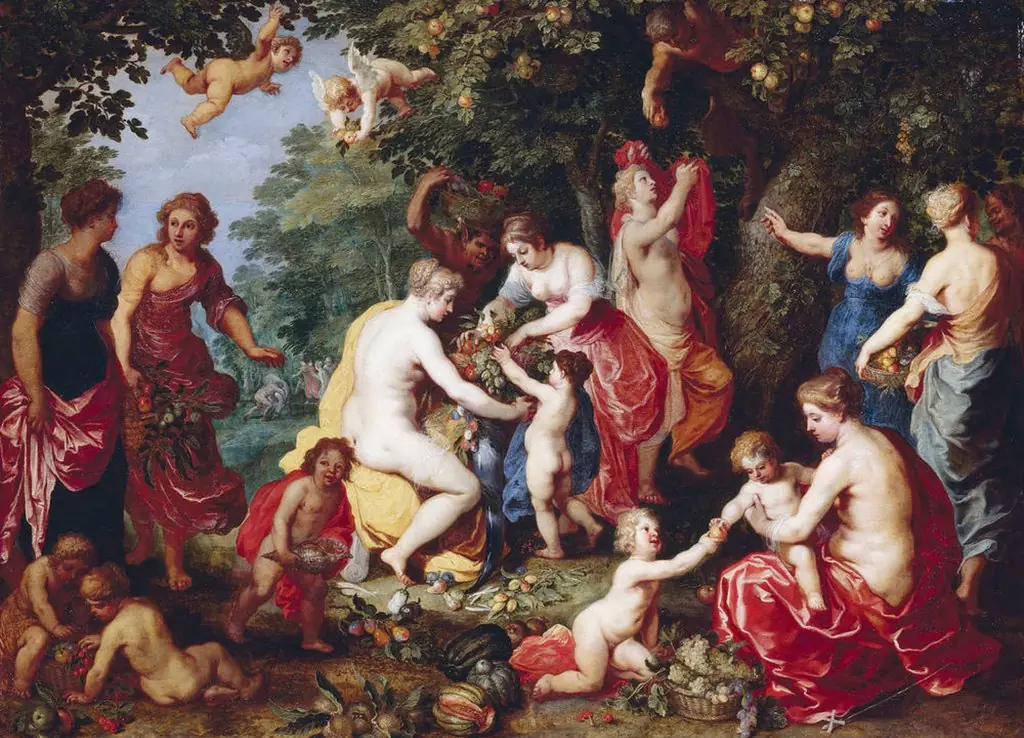 Nymphs and children under fruit trees (Naiads fill the cornucopia)
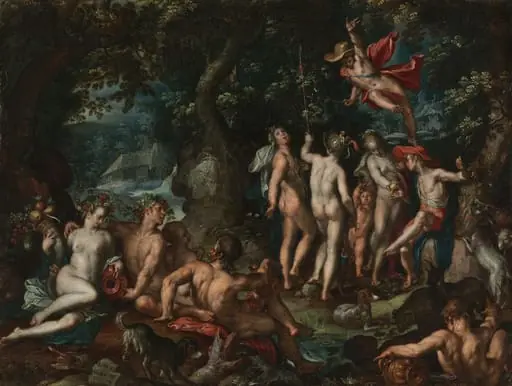 The Judgment of Paris
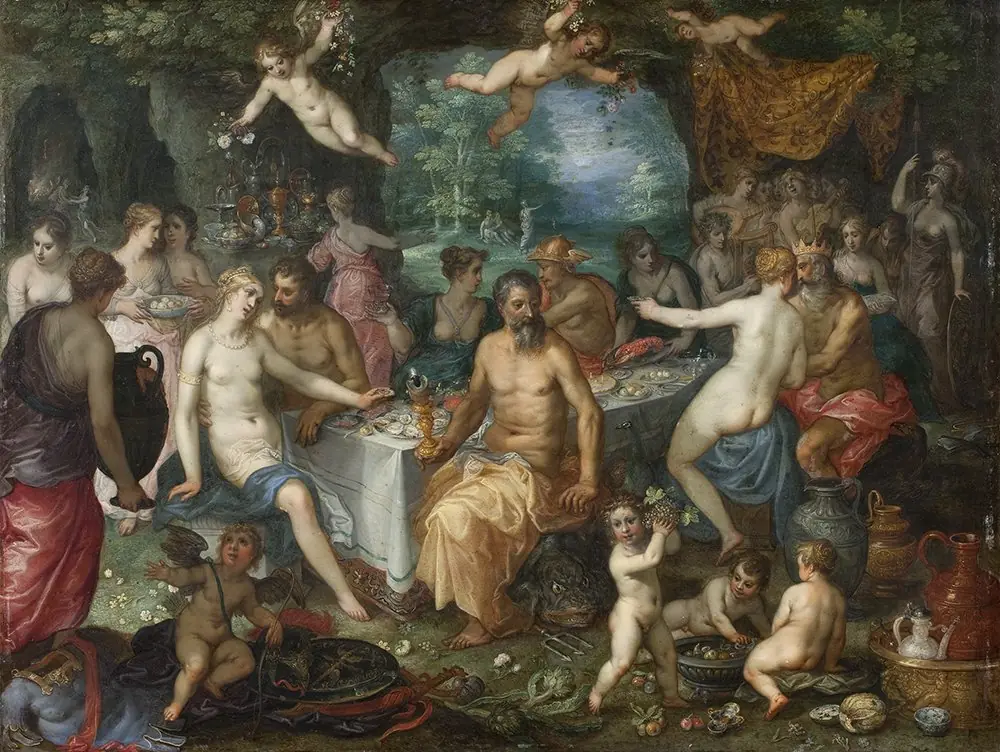 The Feast of the Gods. The Wedding of Peleus and Thetis
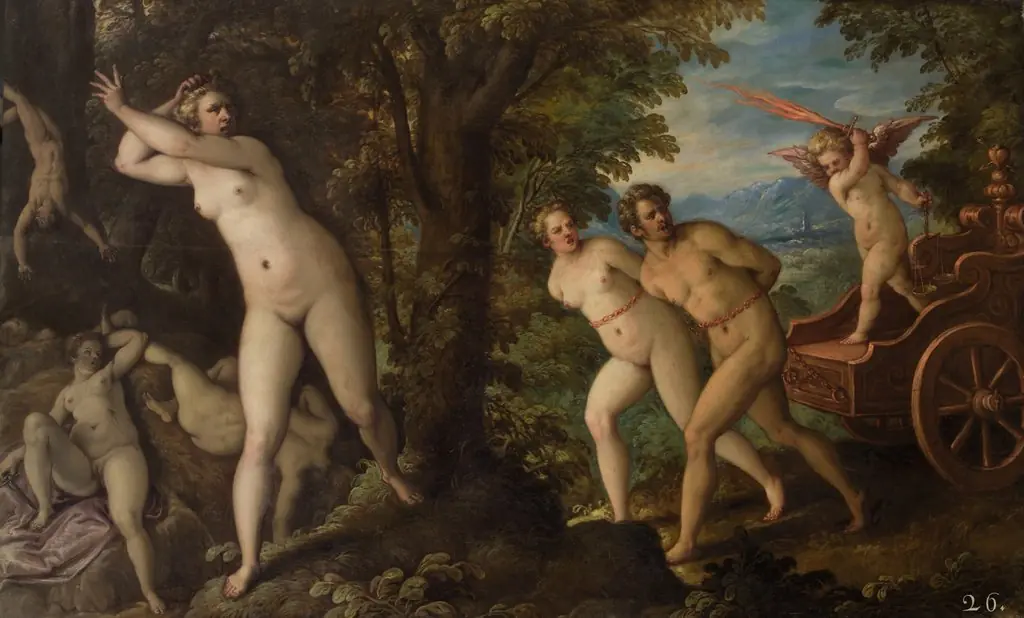 Punishment of Love
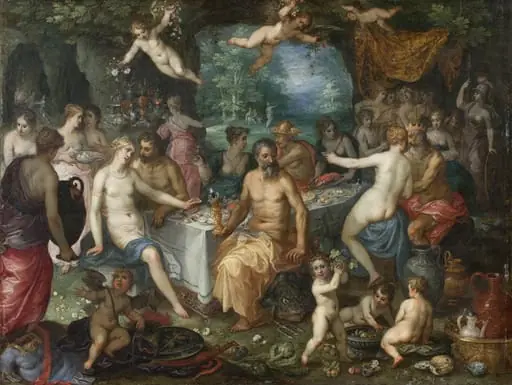 The Feast of the Gods. The Wedding of Peleus and Thetis
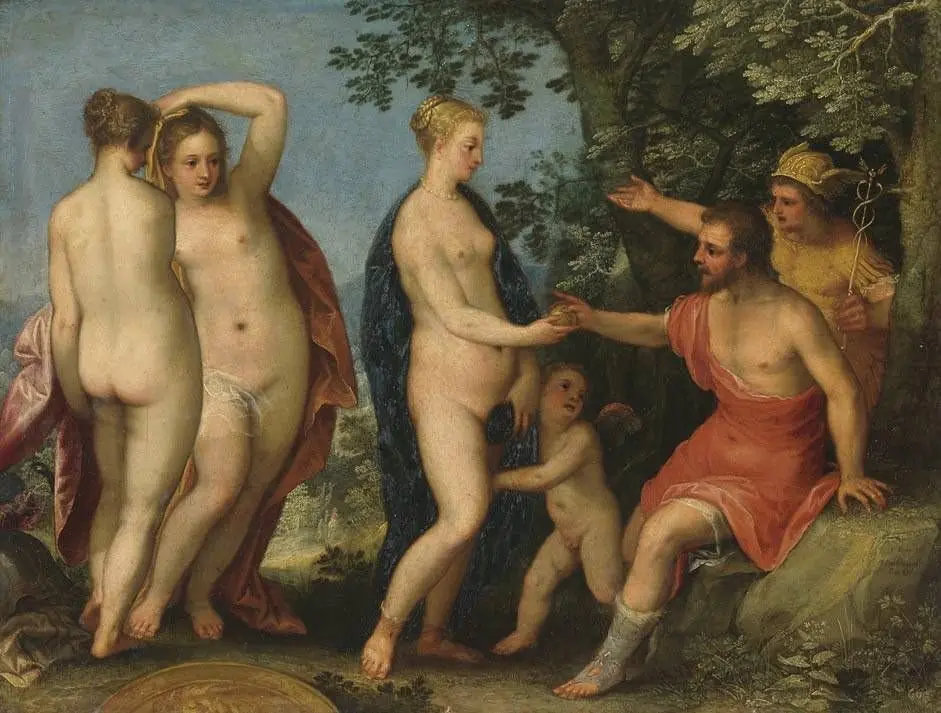 The Judgment of Paris
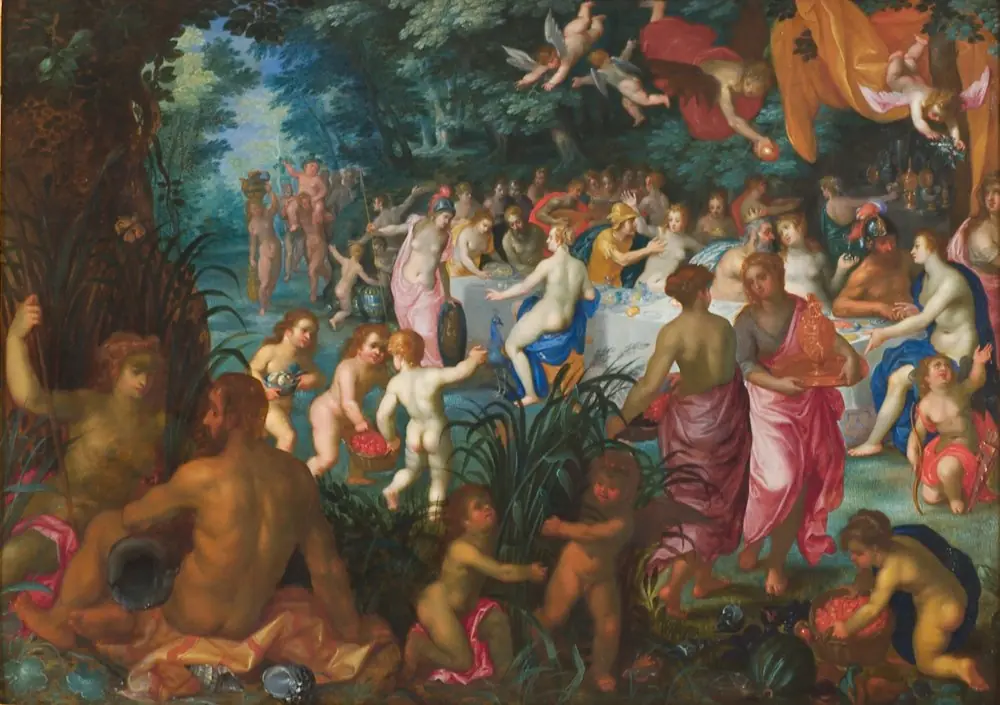 The Marriage of Peleus and Thetis
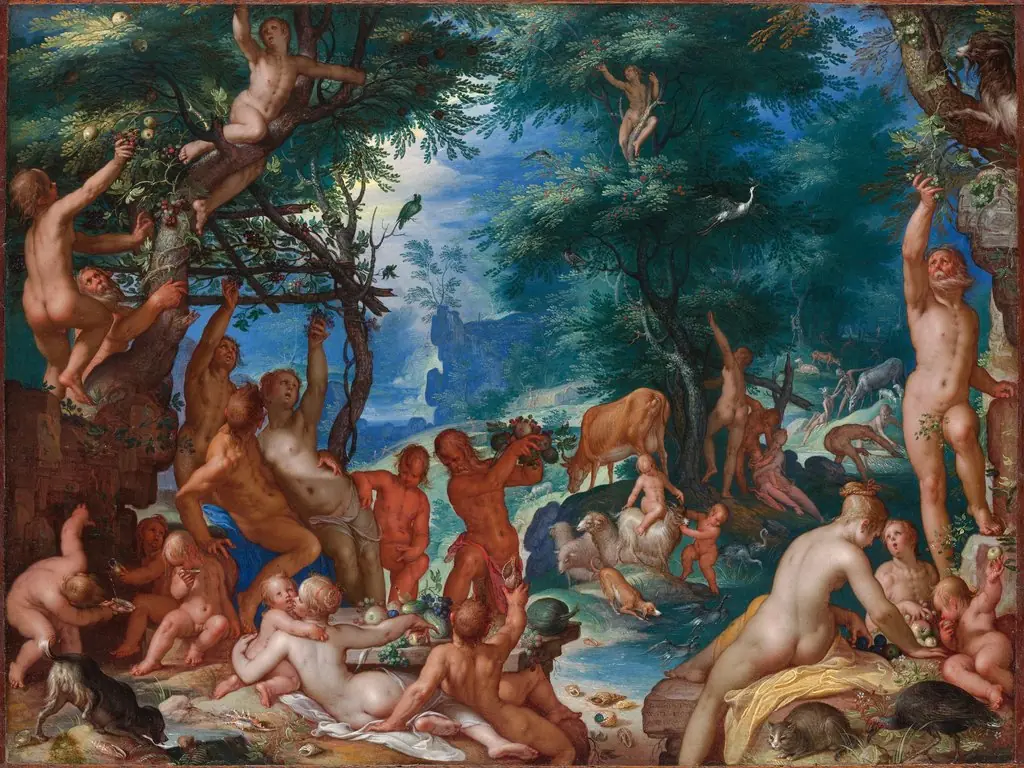 The Golden Age
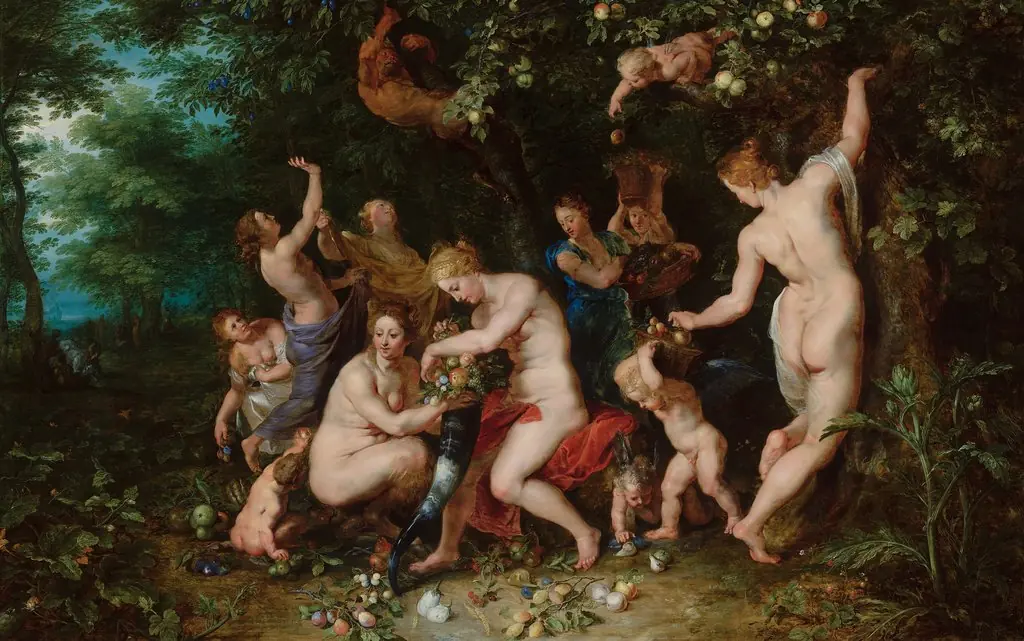 Nymphs filling the horn of plenty