Artwork
The Judgment of Paris
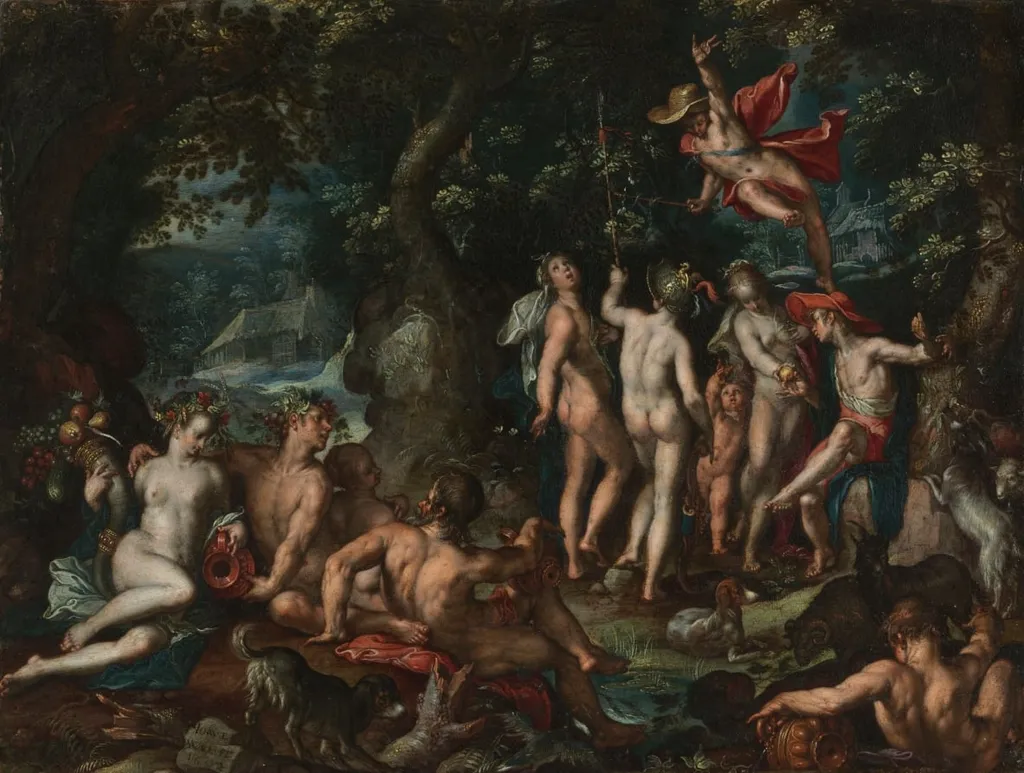
The Judgment of Paris is an unspecified painting by the Baroque artist Joachim Anthoniz Wtewael. It dates from 1602 and is held in the collection of the Cleveland Museum of Art.
About this work
Overview
Executed with meticulous detail, the work exploits copper’s smooth surface to intensify color and luminosity, creating an effect akin to stained glass.
This small copper painting depicts the mythological moment when Paris, a Trojan prince, awards a golden apple to Venus, choosing her as the most beautiful goddess. The scene unfolds in a sunlit woodland, with three nude goddesses—Hera, Athena, and Venus—surrounded by symbolic objects: a peacock, a helmet, and a winged cupid. Executed with meticulous detail, the work exploits copper’s smooth surface to intensify color and luminosity, creating an effect akin to stained glass.
Subject & Meaning
Paris’s decision, prompted by Venus’s promise of Helen’s love, sets in motion the events leading to the Trojan War. Each goddess offers a different boon: Hera promises political dominion, Athena military glory, but Venus appeals to desire. The composition centers on Venus’s composed yet self-assured posture, contrasting with the other goddesses’ more reactive stances. The inclusion of symbolic items reinforces their domains and the stakes of the judgment.
Technique & Style
The artist rendered the scene on a copper support, a material prized for its ability to hold fine detail and reflect light. Brushwork is precise, with smooth transitions and vivid hues that glow against the darkened background. Figures are elongated and stylized, their poses carefully arranged to guide the viewer’s eye toward Venus. The lighting is theatrical, enhancing the ethereal quality of the scene and the metallic sheen of the apple.
History & Provenance
Painted in the early 17th century by a Dutch Mannerist, the work reflects the period’s fascination with classical myth and technical virtuosity. Its small scale suggests it was intended for private collection rather than public display. The painting’s survival in good condition is notable, given the fragility of copper supports and the passage of time. Its provenance traces through European aristocratic collections before entering a public museum.
Context
During the early 1600s, Dutch artists frequently turned to classical narratives to demonstrate intellectual refinement and technical skill. The Judgment of Paris was a popular subject, but few rendered it on copper with such intensity. The work aligns with Northern Mannerism’s emphasis on elegance, complexity, and artificial grace, diverging from the naturalism emerging in Italy at the time.
Legacy
The painting exemplifies how mythological themes were adapted to suit Northern European tastes, blending classical storytelling with meticulous craftsmanship. Its use of copper influenced later still-life and genre painters seeking luminous surfaces. While not widely replicated, its compositional clarity and symbolic density contributed to the enduring visual vocabulary of mythological painting in the Low Countries.
Artist & collection

 The Judgment of Paris
 The Apulian Shepherd
 Untitled
 The Golden Age
 Marsyas punished by the Muses
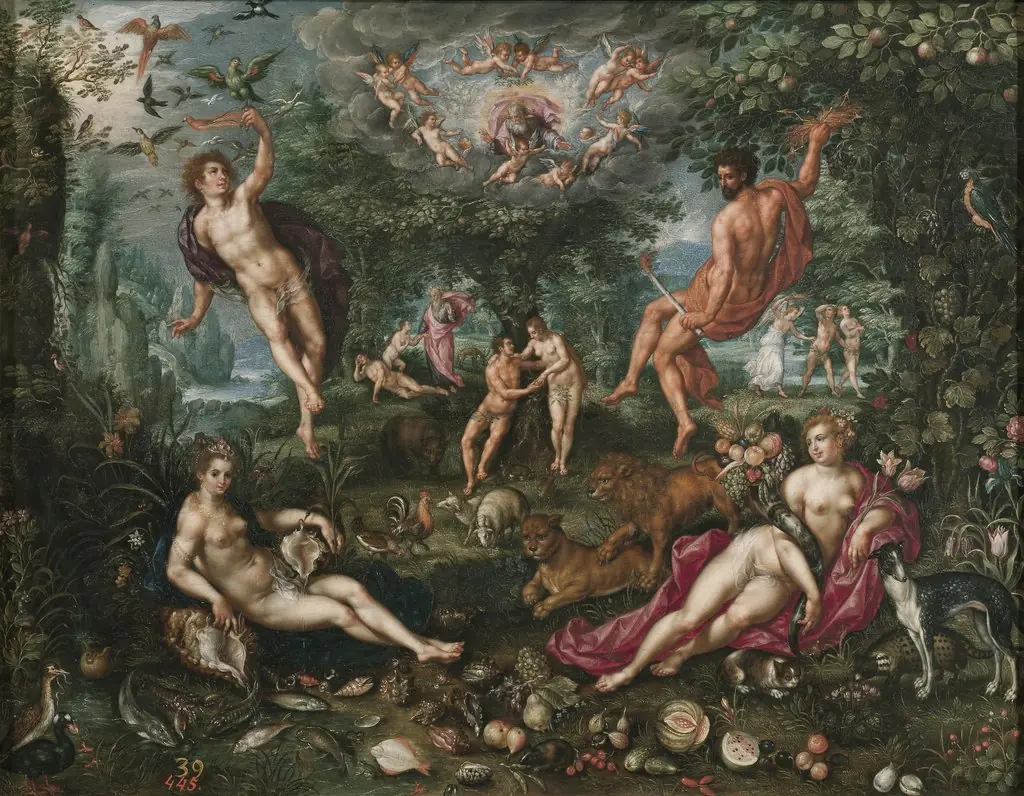 Paradise with the Four Elements
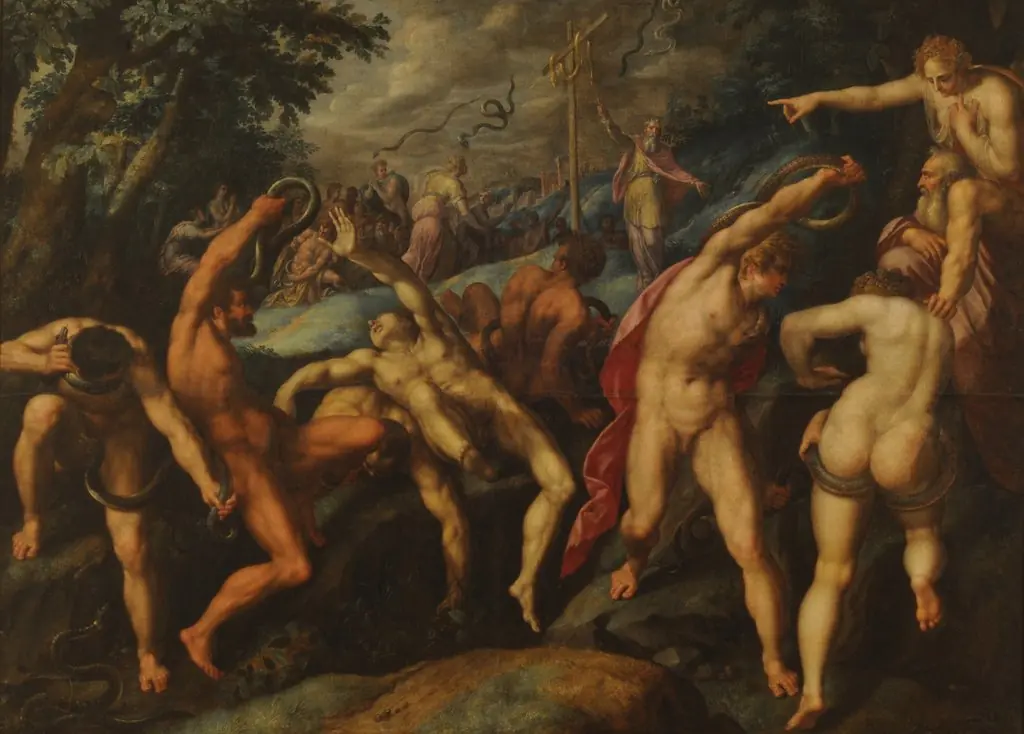 Moisés elevando la serpiente de bronce (Números 21:5-9)
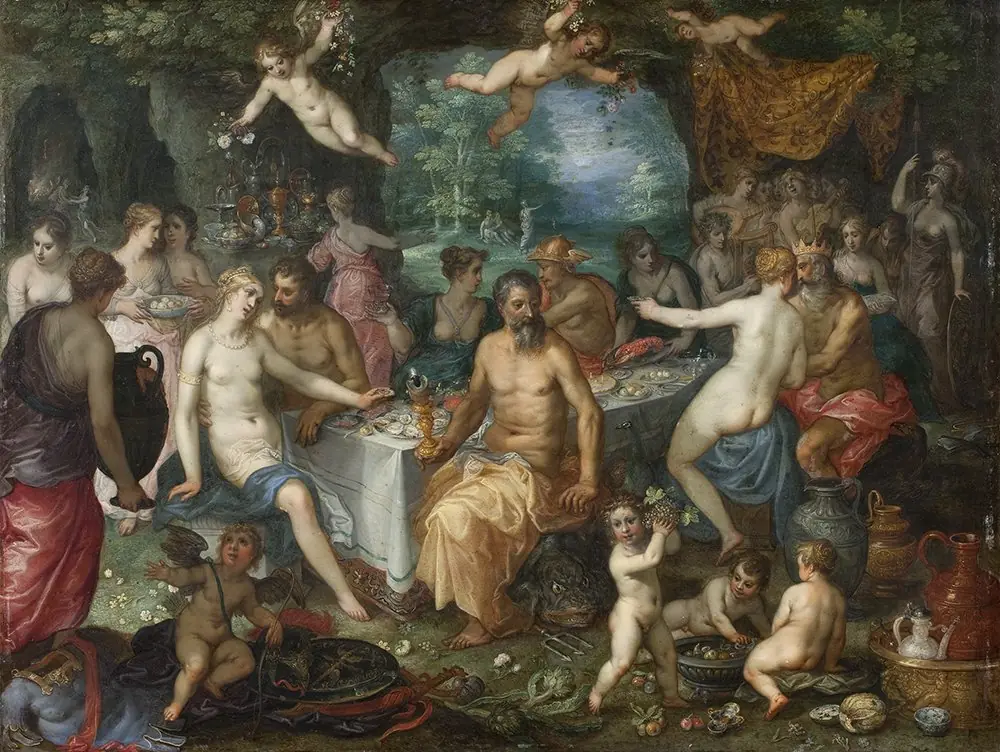 The Feast of the Gods. The Wedding of Peleus and Thetis
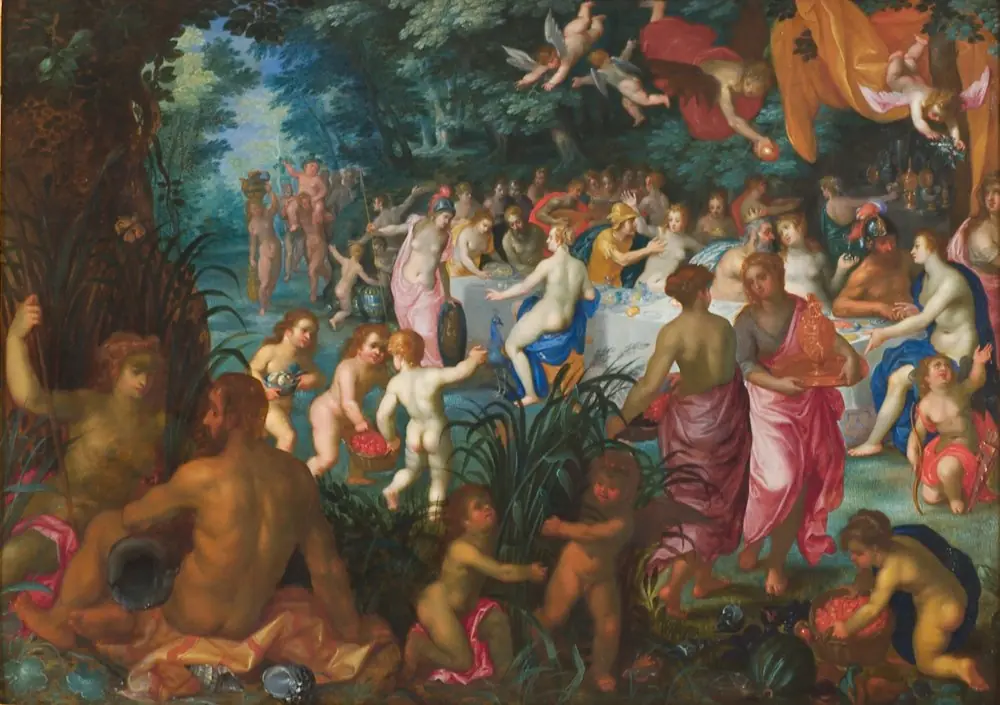 The Marriage of Peleus and Thetis
 The Feast of the Gods. The Wedding of Peleus and Thetis