Artwork
Forest Landscape with Stag Hunt
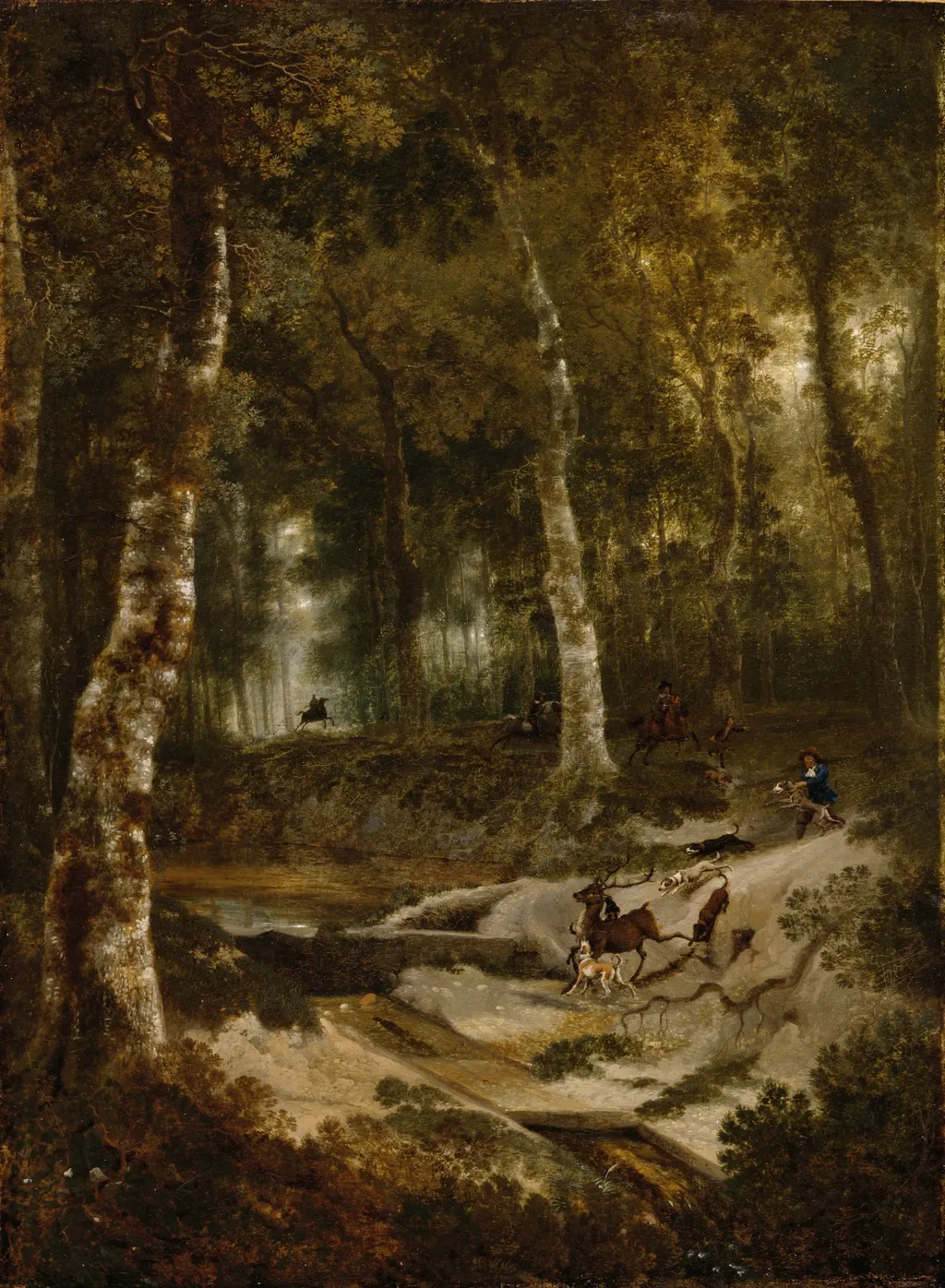
Forest Landscape with Stag Hunt is an oil painting by the Dutch Golden Age artist Jan Hackaert. It dates from 1667 and is held in the collection of the Detroit Institute of Arts.
About this work
Overview
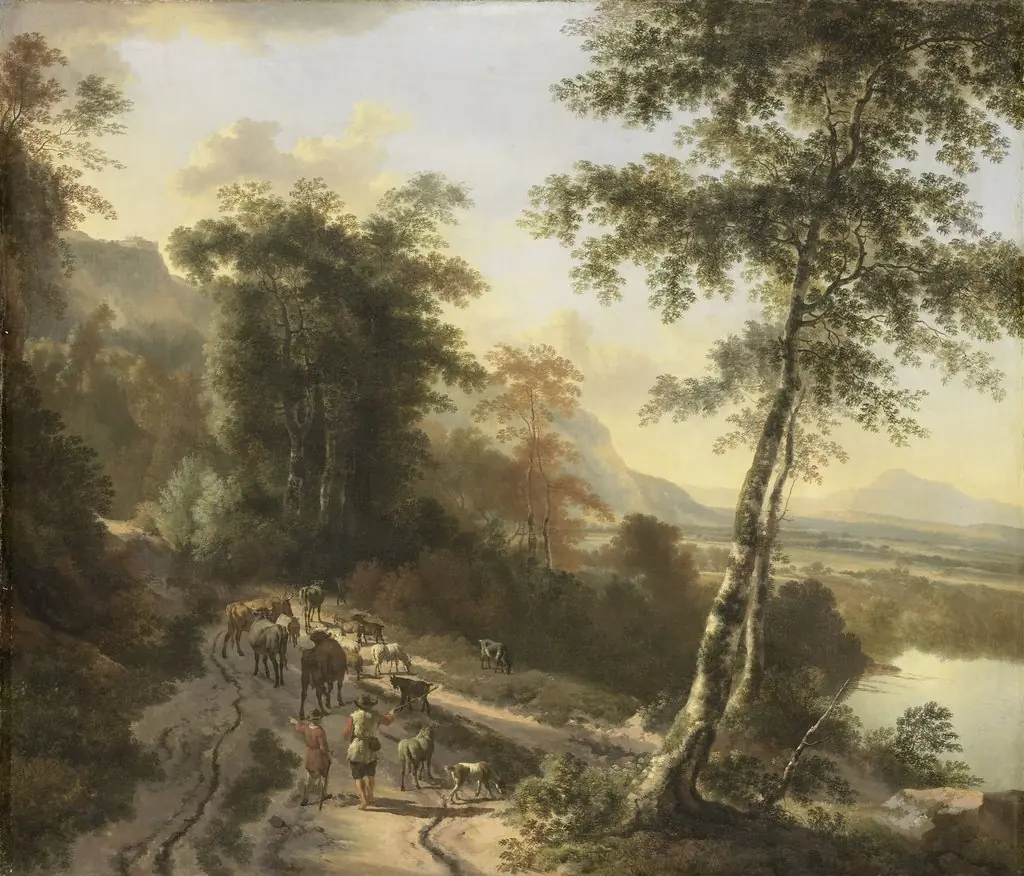
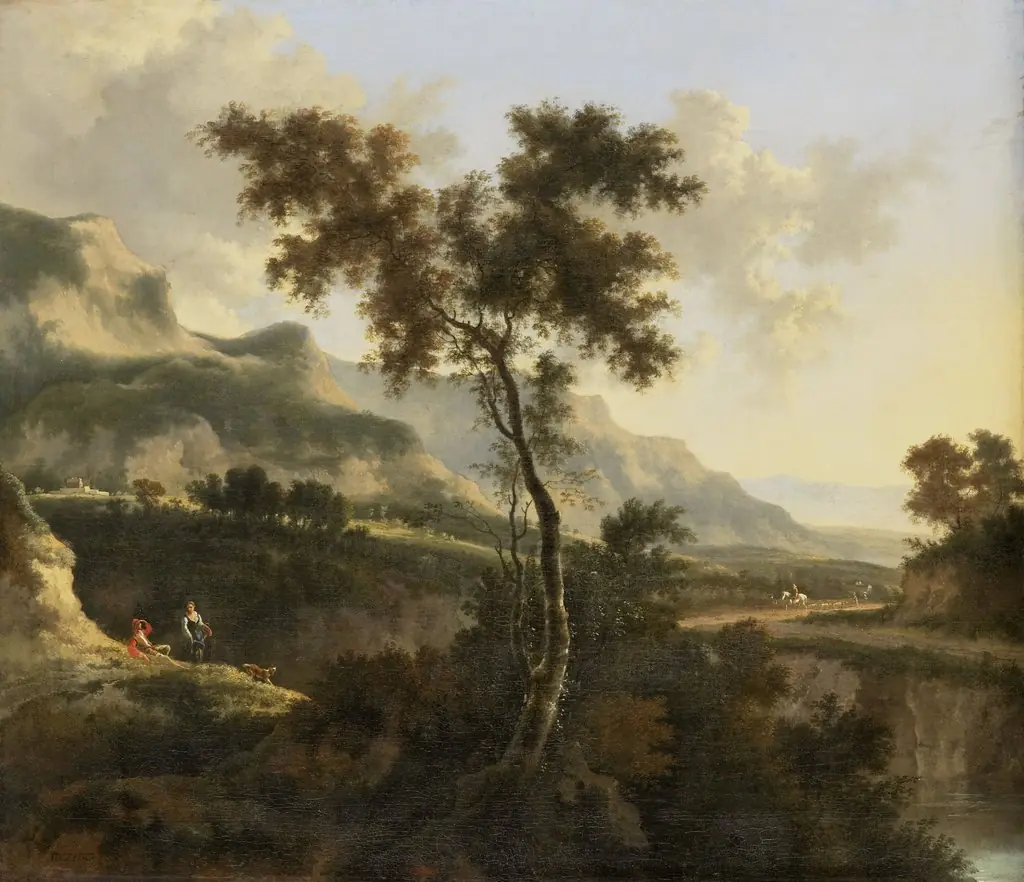
Jan Hackaert’s 1667 oil painting titled *Forest Landscape with Stag Hunt* presents a wooded scene in which a hunting party pursues a stag and its fawn.
Jan Hackaert’s 1667 oil painting titled *Forest Landscape with Stag Hunt* presents a wooded scene in which a hunting party pursues a stag and its fawn. The composition is anchored by a winding forest path and a group of figures on horseback in the distance, while a solitary figure in a blue coat kneels near a fallen tree in the foreground. The work belongs to the collection of the Detroit Institute of Arts.
Subject & Meaning
The canvas captures a moment of aristocratic sport set within a dense forest, emphasizing the ritual of the hunt rather than its violence. The calm demeanor of the riders and the lack of overt struggle suggest a controlled, almost ceremonial pursuit, reflecting contemporary attitudes toward nature as a stage for genteel recreation.
Technique & Style
Hackaert employs a nuanced chiaroscuro, allowing shafts of light to pierce the canopy and illuminate patches of foliage and bark. The careful rendering of texture—particularly the glint on leaves and the roughness of tree trunks—creates a convincing sense of depth. The muted palette and soft transitions reinforce the atmospheric, subdued mood of the scene.
History & Provenance
Executed in 1667, the painting entered the Detroit Institute of Arts’ holdings in the 20th century, though earlier ownership records are sparse. Its acquisition reflects the museum’s interest in Dutch Golden‑Age landscape works that illustrate both technical skill and genre themes popular in the period.
Context
Hackaert, a Dutch landscape painter, often depicted forested settings and rural activities. This work aligns with the 17th‑century Dutch fascination with naturalistic scenery and the social practice of hunting, a pastime associated with the elite. The painting’s tranquil portrayal mirrors the period’s broader tendency to idealize nature within controlled, human‑dominated contexts.
Own this work as a print
Artist & collection