Artwork
Batestein Castle near Vianen
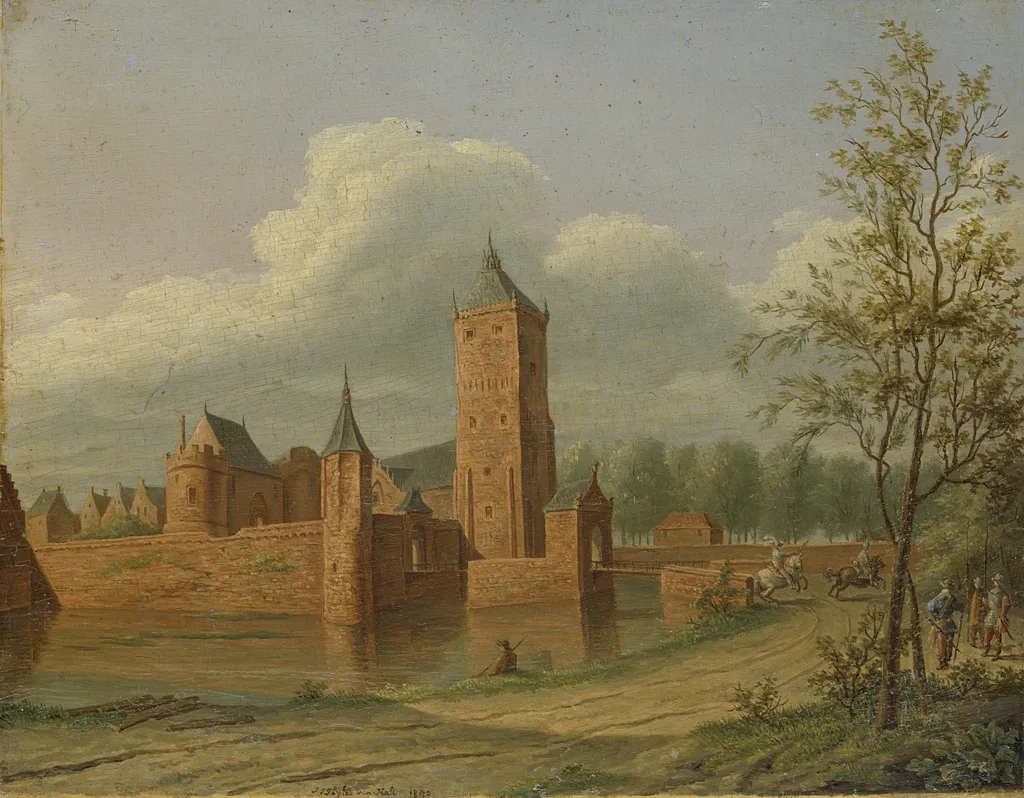
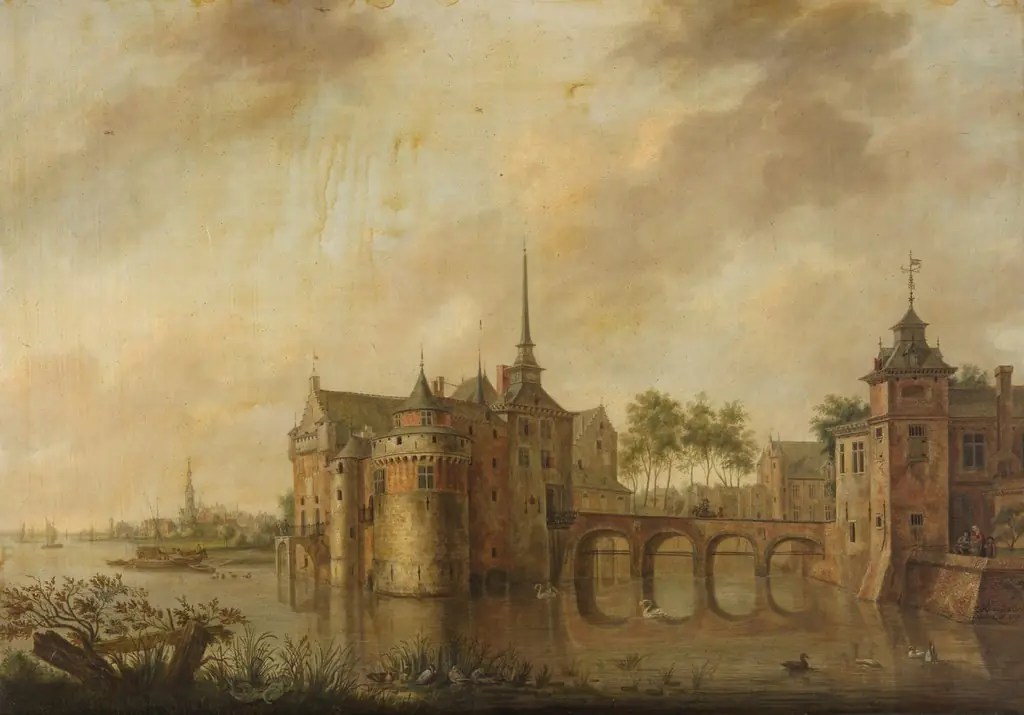
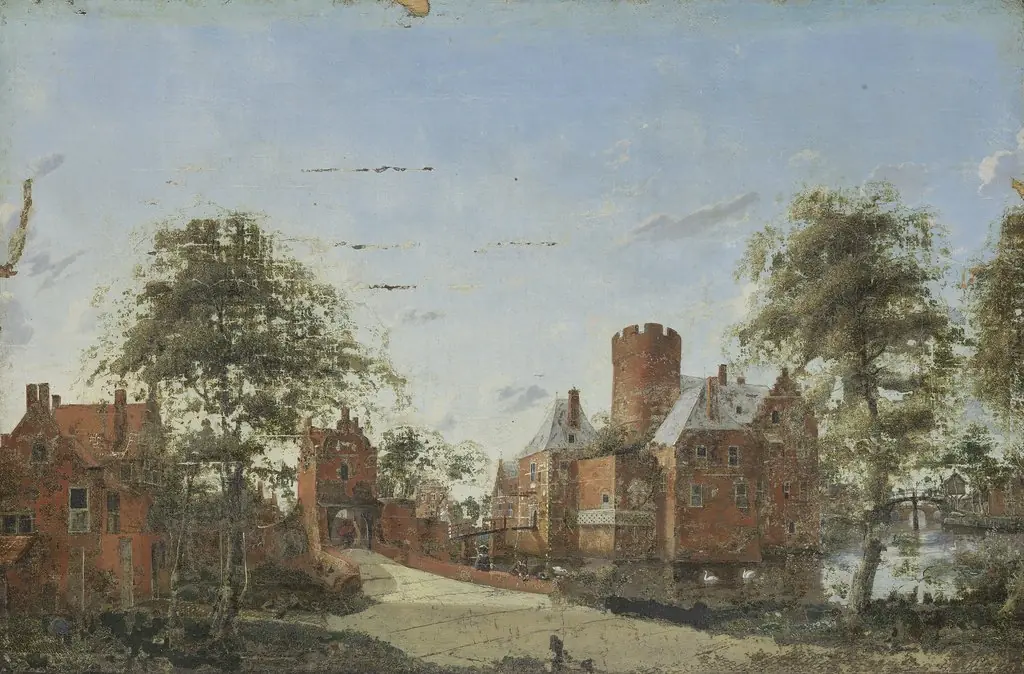
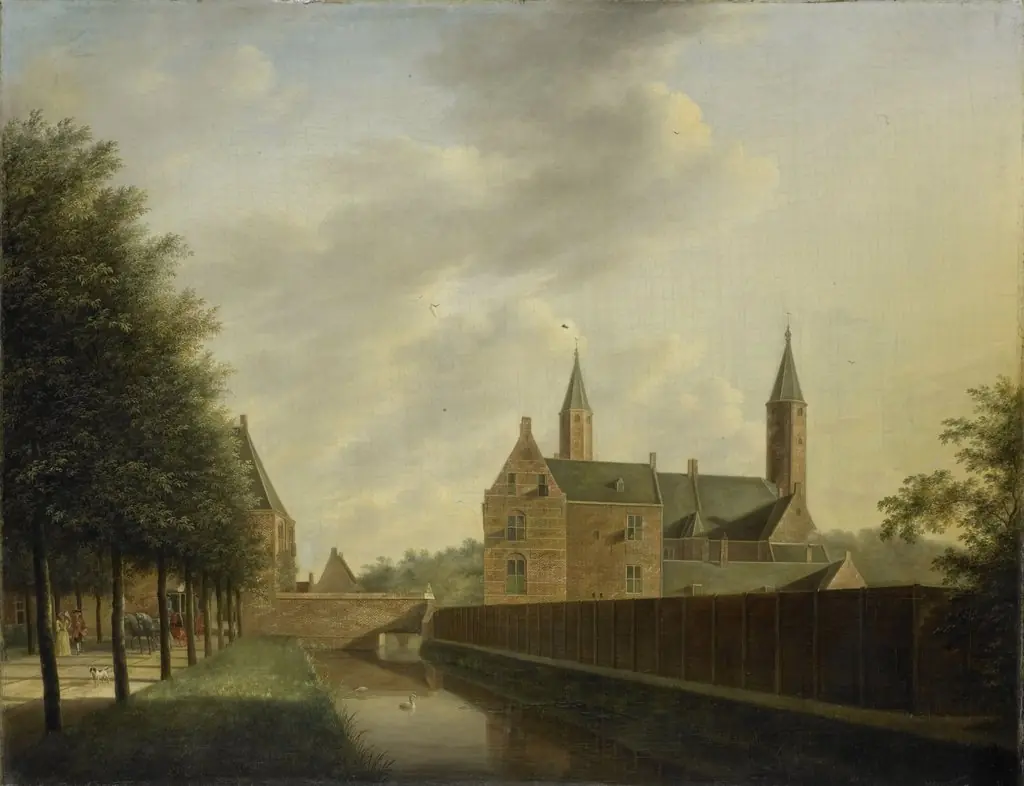
Batestein Castle near Vianen is an oil painting by Jan Jacob Teyler van Hall. It dates from 1840 and is held in the collection of the Rijksmuseum.
About this work
Overview
The painting resides in the Rijksmuseum’s collection, where it represents a modest but deliberate entry in 19th-century Dutch topographical art.
Painted in 1840 by Jan Jacob Teyler van Hall, this oil work captures Batestein Castle near Vianen in the Netherlands. The scene is rendered with quiet precision, focusing on the castle’s sturdy brick architecture and its surrounding landscape. The composition avoids dramatic flair, instead emphasizing calm observation and atmospheric balance. The painting resides in the Rijksmuseum’s collection, where it represents a modest but deliberate entry in 19th-century Dutch topographical art.
Subject & Meaning
The painting presents Batestein Castle not as a symbol of power, but as a quiet fixture in the landscape. A narrow moat, a simple bridge, and a few distant figures suggest daily life around the structure. The inclusion of trees and soft clouds grounds the castle in its natural setting, implying continuity rather than grandeur. The work reflects a preference for unembellished observation, valuing the ordinary presence of historical architecture within everyday rural life.
Technique & Style
Teyler van Hall employed subtle gradations of light and muted earth tones—browns, greens, and pale grays—to convey texture and depth. The castle’s brickwork is rendered with restrained detail, avoiding ornamental emphasis. Softly modeled clouds and diffused lighting create a sense of gentle atmosphere. Brushwork is controlled and deliberate, favoring clarity over expressiveness, aligning with the period’s interest in accurate, tranquil landscape representation.
History & Provenance
The painting was completed in 1840 and entered the Rijksmuseum’s holdings at an early date, likely through acquisition or donation. Its preservation suggests recognition of its documentary value, even if not considered a major artistic achievement. The castle itself, once a noble residence, had declined in prominence by the 19th century, making the painting a record of a fading architectural presence rather than a celebration of its past glory.
Context
In mid-19th-century Netherlands, artists increasingly turned to local landscapes and historic buildings as subjects, moving away from idealized scenes. Teyler van Hall’s work aligns with this trend, reflecting a national interest in documenting regional heritage. His approach, neither romantic nor revolutionary, mirrors a broader cultural shift toward measured, factual representation of the Dutch environment and its architectural legacy.
Legacy
Though not widely exhibited or studied today, the painting remains a quiet example of Dutch topographical painting from the early Victorian era. It contributes to a larger archive of visual records that document the physical state of historic sites before modernization. Its value lies in its unassuming accuracy, offering a reliable glimpse into the appearance of Batestein Castle in the 1840s.
Own this work as a print
Artist & collection
Artist
Jan Jacob Teyler van Hall (1794–1851) was an artist, born in Amsterdam.