Artwork
Teylingen Castle
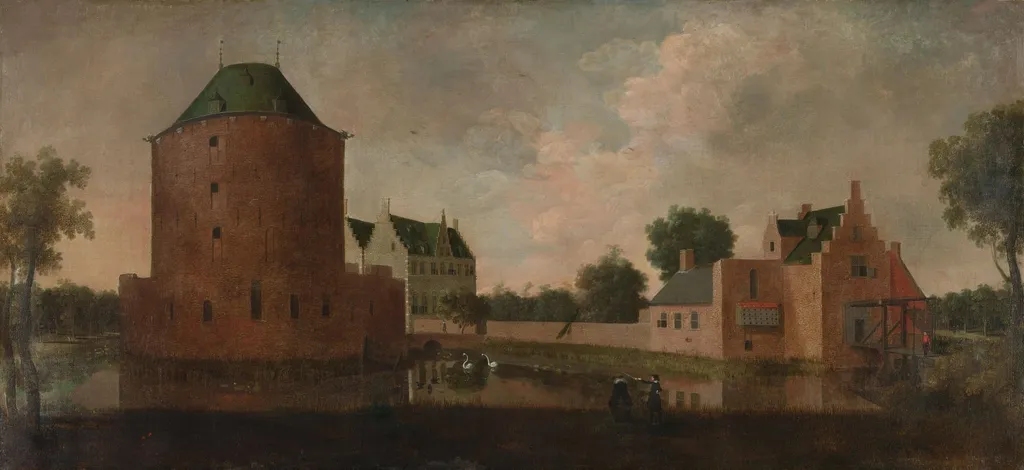
Teylingen Castle is an unspecified painting by the Dutch Golden Age artist Unknown. It dates from 1640 and is held in the collection of the Rijksmuseum.
About this work
Overview
It is among the rare visual records of the castle from this period, offering a glimpse into its condition before later alterations and decline.
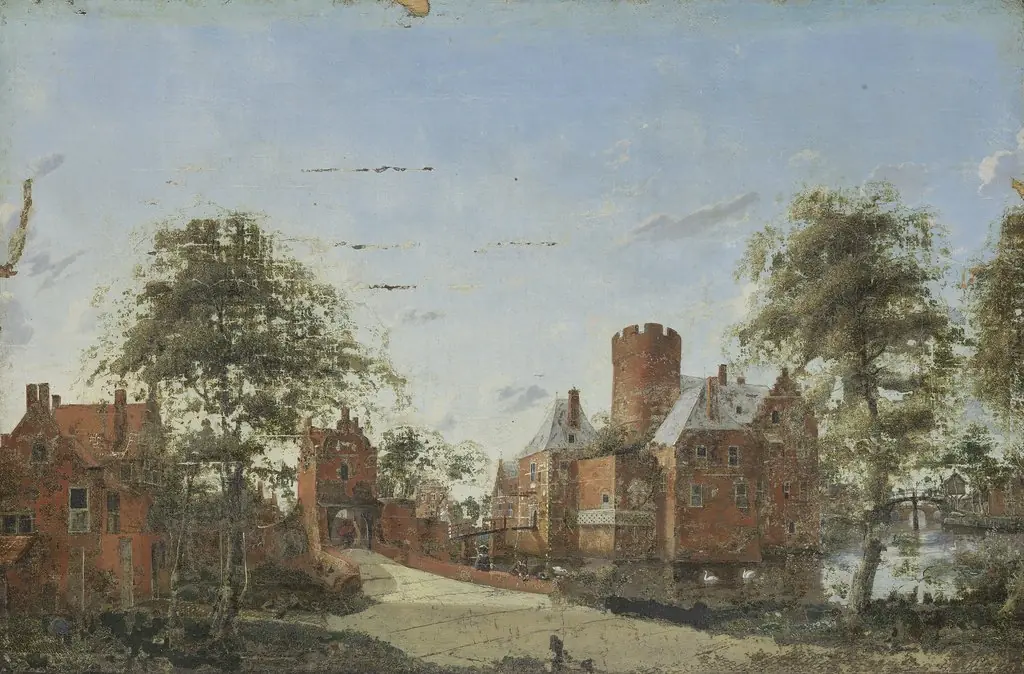
This 17th-century painting depicts Teylingen Castle as it appeared during the Dutch Golden Age, surrounded by its moat and set against a quiet, atmospheric landscape. Two figures stand near the water’s edge, their presence subtly emphasizing the scale and solitude of the structure. It is among the rare visual records of the castle from this period, offering a glimpse into its condition before later alterations and decline.
Subject & Meaning
The painting presents Teylingen Castle not as a fortified stronghold but as a tranquil, almost domesticated ruin. The inclusion of two observers suggests contemplation rather than conquest, shifting focus from military history to quiet reflection. Though once associated with Jacoba of Bavaria’s 15th-century struggles, the scene here conveys a sense of peaceful decay, aligning with 17th-century Dutch interest in the passage of time and the dignity of the past.
Technique & Style
The artist employs soft, diffused lighting to create a serene mood, with gentle reflections on the water and muted tones across the castle’s stone walls. Brushwork is restrained, avoiding dramatic contrasts in favor of subtle gradations of light and shadow. The composition is balanced and horizontal, drawing the eye along the moat’s edge and reinforcing the calm, observational tone of the scene.
History & Provenance
Teylingen Castle, originally built in the 13th century, fell into disrepair after the 15th century and was largely abandoned by the 1600s. This painting is one of the few surviving depictions from that era, likely created by a local artist documenting the landscape. Its survival offers rare visual evidence of the castle’s appearance before later restorations, making it a key document in its architectural history.
Context
In the 17th century, Dutch artists increasingly turned to landscapes and ruins as subjects, reflecting a cultural fascination with history and the natural world. Teylingen, though no longer a political center, retained symbolic weight as a relic of medieval nobility. Its depiction here aligns with broader trends in Dutch painting that valued quiet observation over grand narrative.
Legacy
The painting serves as a historical record of Teylingen Castle’s 17th-century state, informing later restoration efforts and scholarly understanding of its evolution. While not widely known outside regional art circles, it remains a quiet testament to the Dutch tradition of documenting the landscape with precision and restraint, preserving a moment in time before modern intervention.
Artist & collection

 Domestic Scene
 Giacomo and Cardinal Marco, investing Andrea, Abbot of San Zeno, with his Benefice
 The Nymph of Fontainebleau
 Portrait of a Woman
 Madonna and Child with Saints in the Enclosed Garden
 Venus and Minerva
 Family Group of Four on Sofa
 Wall painting from Room H of the Villa of P. Fannius Synistor at Boscoreale
 Schloß Temsch an der Schelde
 Heemstede Castle
 Huis Oudaen, Near Breukelen
 Loenersloot Castle on the Angstel
 Dutch Village
 Holländisches Dorf am Wasser
 View of Nyenrode Castle
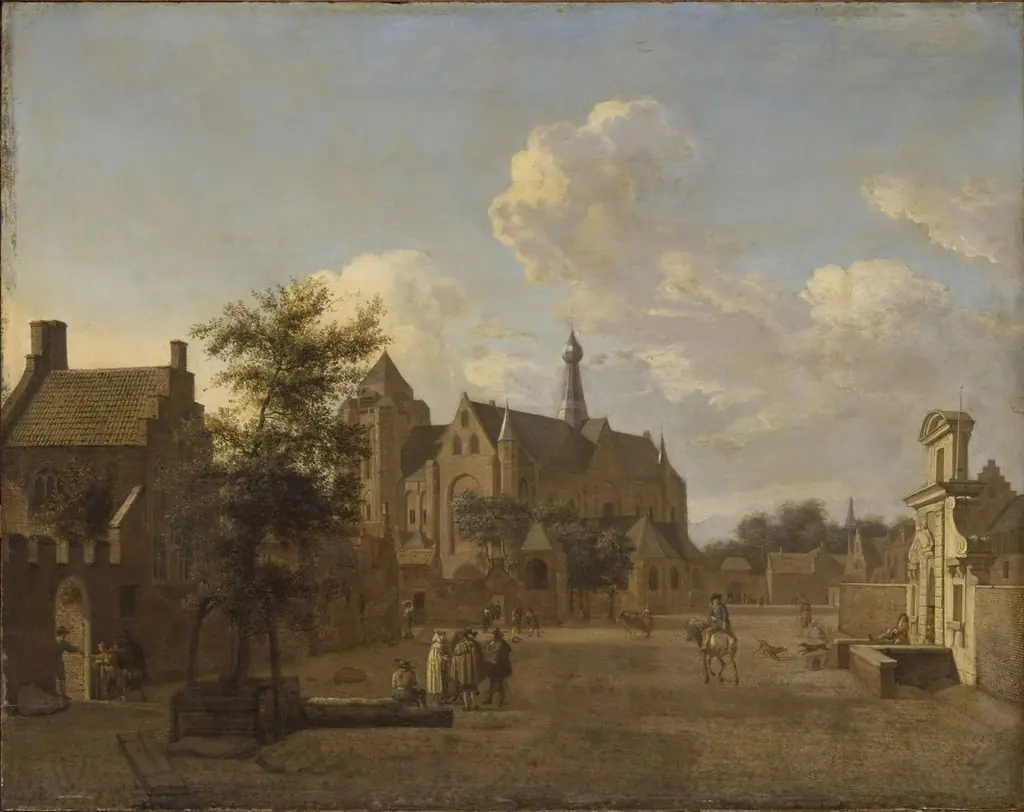 View of Veere, Zeeland
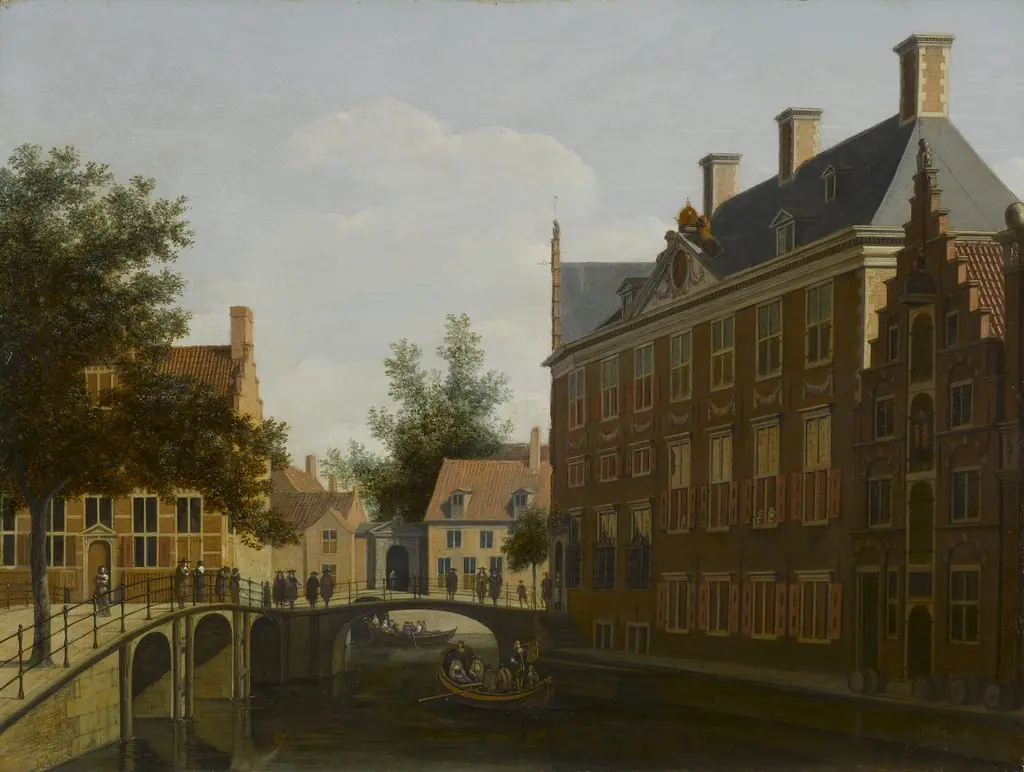 The Oude Zijds Herenlogement (gentlemen's hotel) in Amsterdam
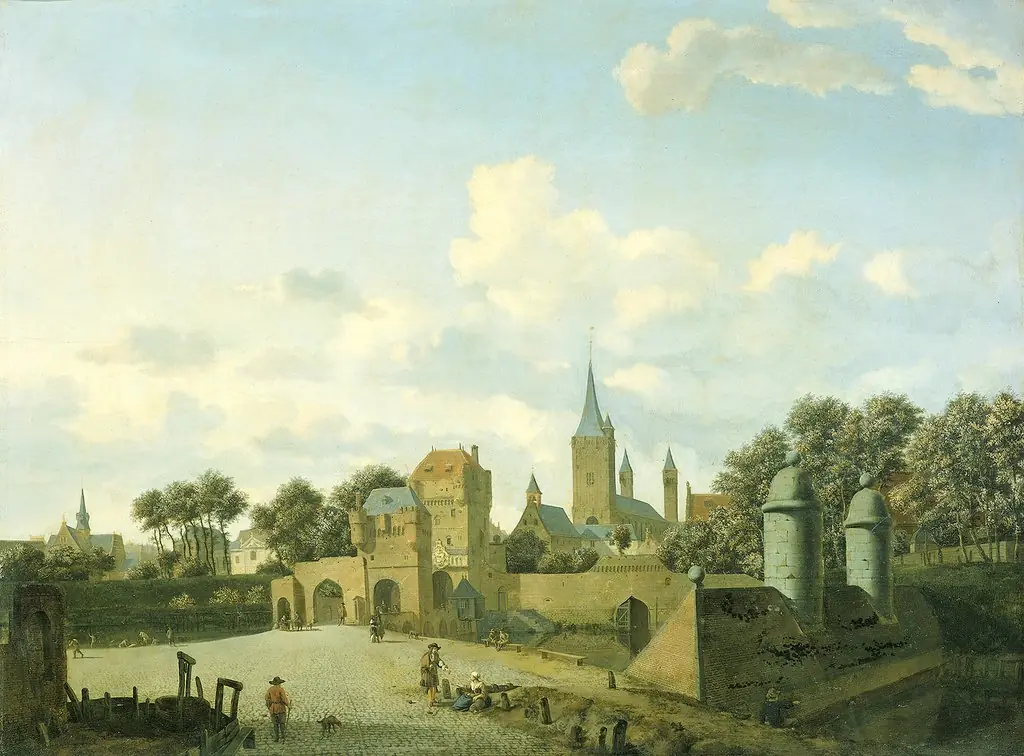 The church of St. Severin in Cologne in a fantasy setting