Artwork
Village on a River
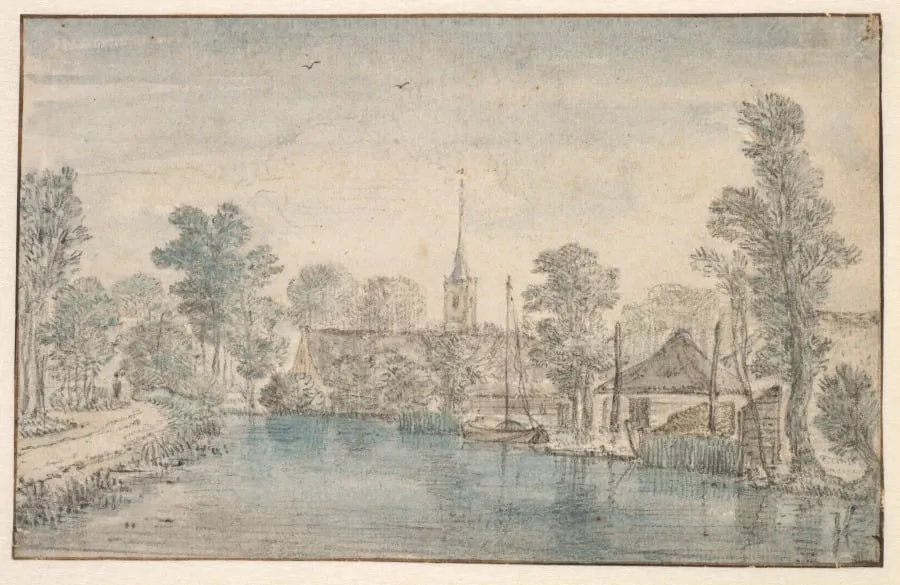
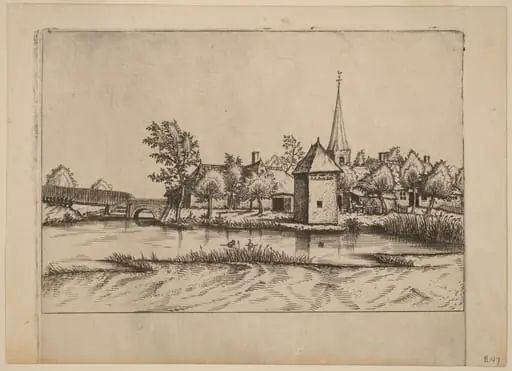
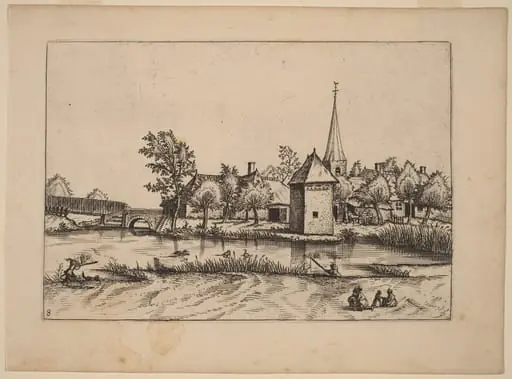
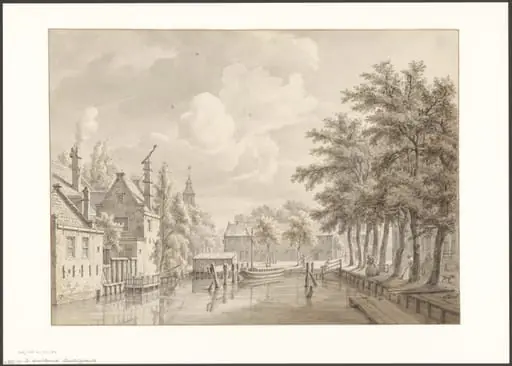
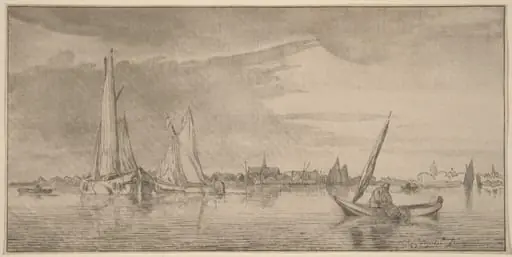
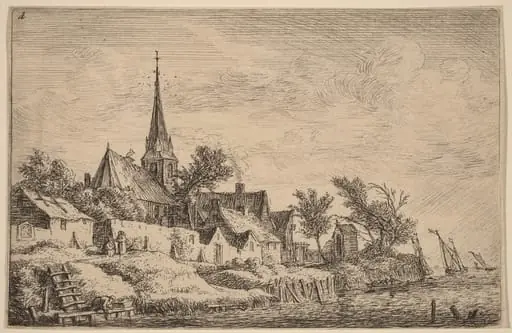
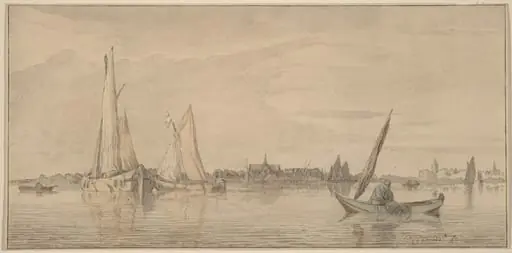
Village on a River is a drawing by the Baroque artist Jan Jansz den Uyl. It dates from 1622 and is held in the collection of the Cleveland Museum of Art. A small ink drawing on paper, attributed to Jan Jansz.
About this work
Overview
Executed in the 1620s, the work is lightly colored with watercolor washes in blue, green, gray, and ochre.
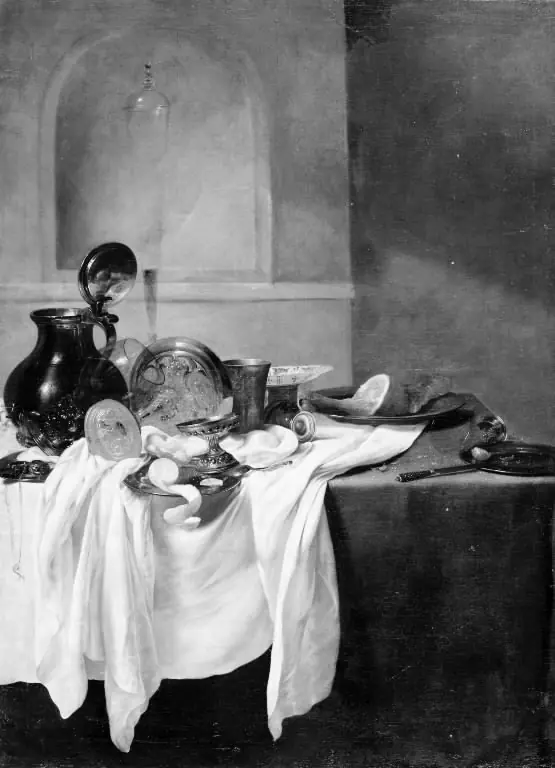
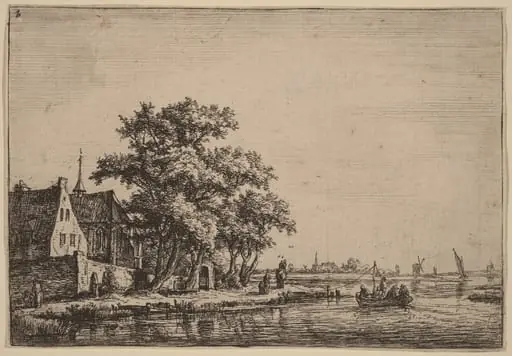
A small ink drawing on paper, attributed to Jan Jansz. den Uyl, depicts a tranquil Dutch village nestled beside a meandering river. Executed in the 1620s, the work is lightly colored with watercolor washes in blue, green, gray, and ochre. Unlike his known still lifes, this piece appears to be a private exercise, made outside the bounds of his professional output and likely inspired by a casual outing beyond Amsterdam.
Subject & Meaning
The scene captures an unassuming rural settlement, with modest buildings clustered along the riverbank and sparse vegetation suggesting seasonal change. There is no narrative or symbolic intent; the focus is on quiet observation. The absence of human figures and activity reinforces a sense of stillness, reflecting a personal engagement with the landscape rather than a commissioned or public work.
Technique & Style
The drawing is rendered in fine ink lines, with delicate watercolor applied sparingly to suggest light, foliage, and water. The palette is restrained, avoiding dramatic contrast. Brushwork is loose yet controlled, indicating spontaneity rather than meticulous planning. This approach aligns with emerging Dutch practices of direct observation, though the handling remains intimate and unpolished.
History & Provenance
No record links this drawing to any known painting or preparatory study by Den Uyl. Its survival suggests it was preserved by the artist or a close associate, possibly as a keepsake. As a non-commercial work by a still life specialist, its existence offers rare insight into an artist’s private visual habits during a period when landscape sketching was uncommon in the Netherlands.
Context
In the early 1620s, Dutch artists typically worked from memory or studio models rather than sketching outdoors. Den Uyl’s practice of recording a real scene on-site was unusual, especially for someone not primarily a landscape artist. This drawing reflects a quiet shift in artistic habits, where direct experience of nature began to inform personal work, even among non-specialists.
Legacy
Though not influential in the broader development of Dutch landscape art, the drawing stands as a modest testament to individual curiosity. It reveals how even artists focused on other genres engaged with the natural world in private moments. Its survival offers a glimpse into the informal, unrecorded practices that underpinned the era’s artistic culture.
Artist & collection
Artist
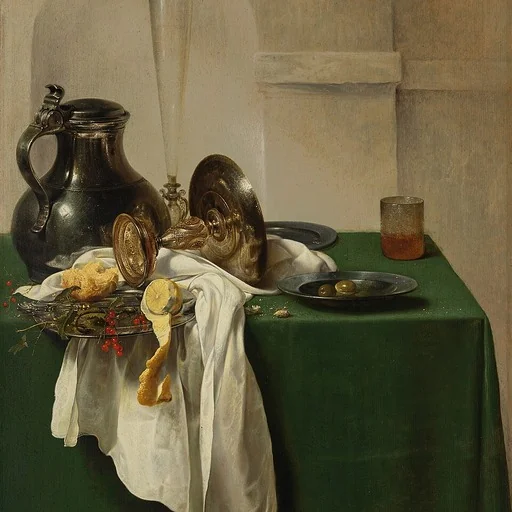
Jan Jansz. den Uyl (Utrecht (?), 1595/96 – 24 November 1639) was a painter of the Dutch Golden Age. He very much specialized in the form of still life known as the breakfast piece, or, in the elaborate style of painters…