Artwork
Country Village with Church and Bridge
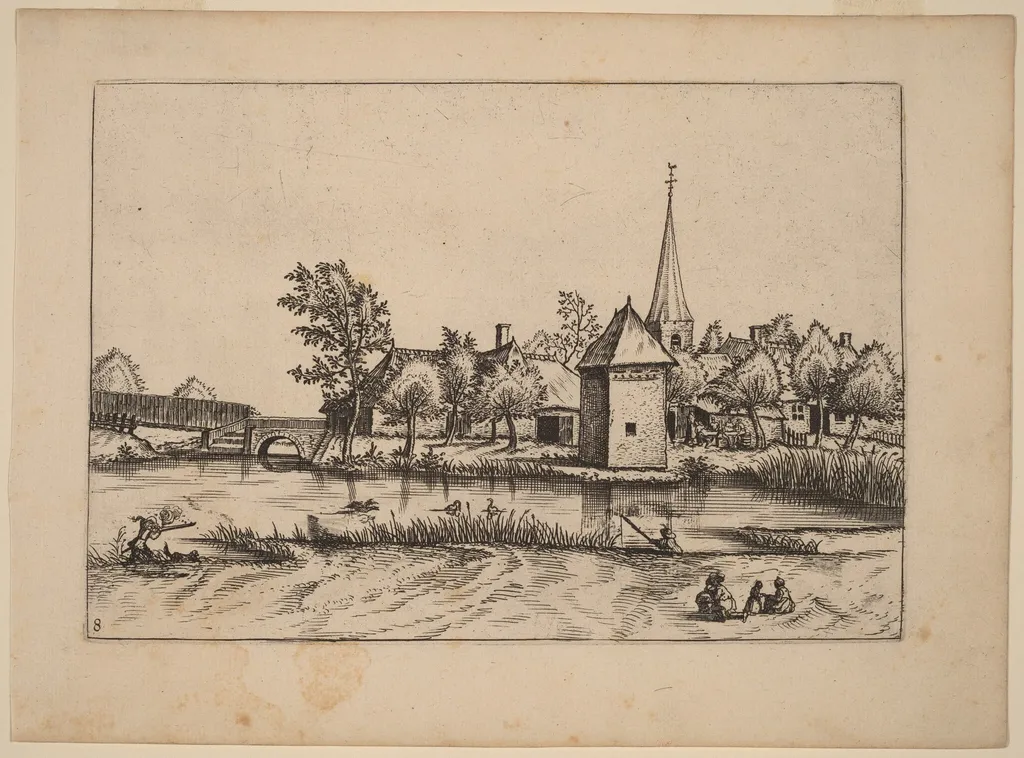
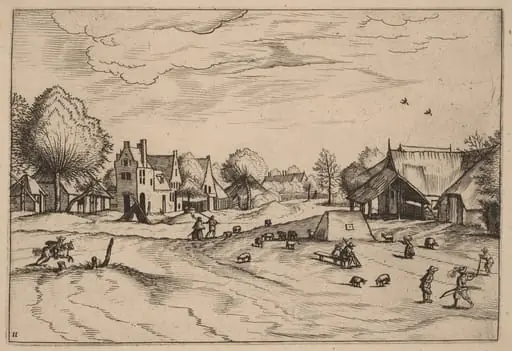
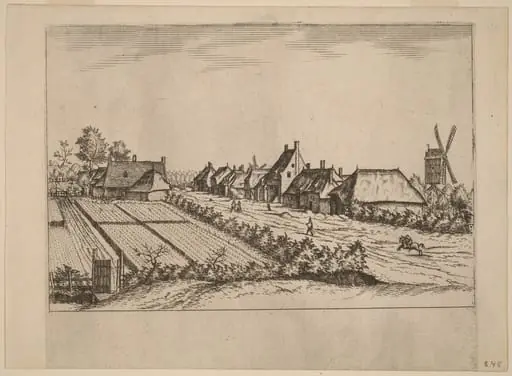
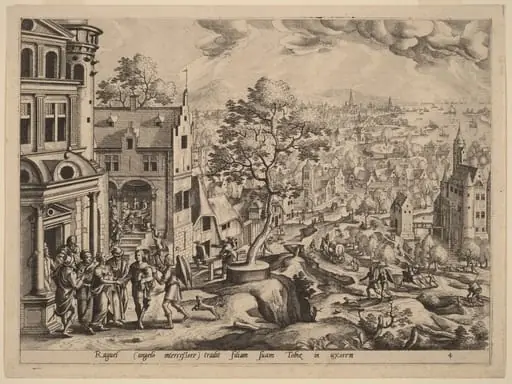
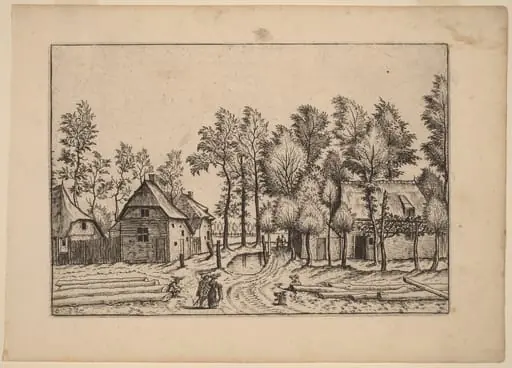
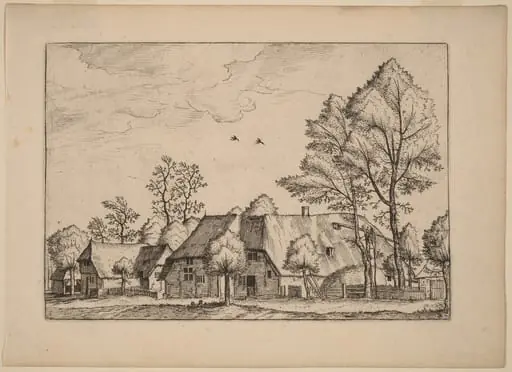
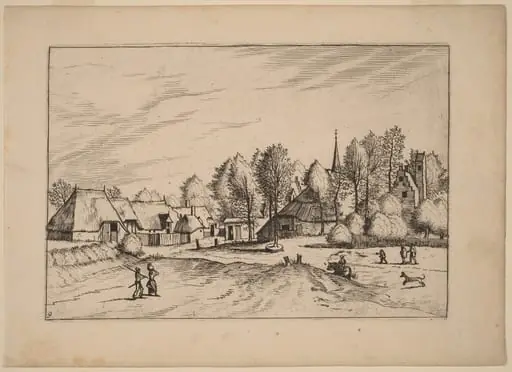
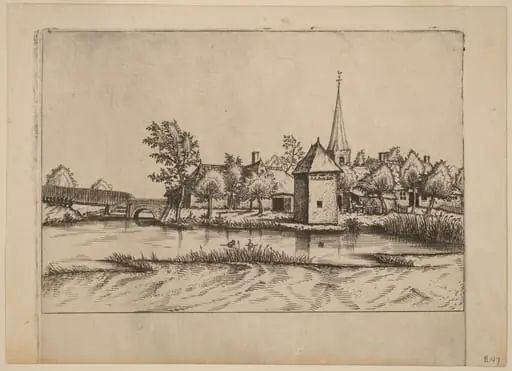
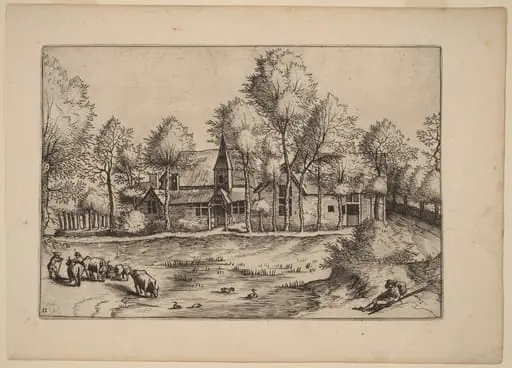
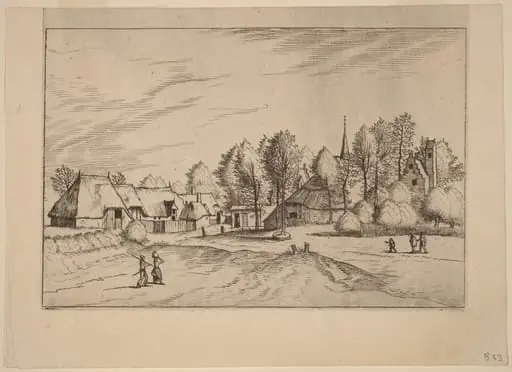
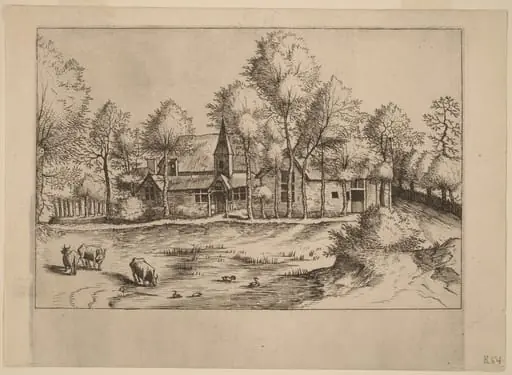
Country Village with Church and Bridge is an ink print by the Baroque artist Johannes van Doetechum the Elder. It is held in the collection of the National Gallery of Art.
About this work
Overview
Though dated to the late 17th century, the work reflects the enduring influence of earlier Netherlandish landscape traditions.
Created in 1676 by Johannes van Doetecum the Elder, this black-and-white print combines etching with selective engraving to depict a tranquil Dutch village scene. Though dated to the late 17th century, the work reflects the enduring influence of earlier Netherlandish landscape traditions. Van Doetecum, active in Haarlem after moving from Deventer in 1578, specialized in reproductive prints and cartographic work, often collaborating with family members in a family-run printshop.
Subject & Meaning
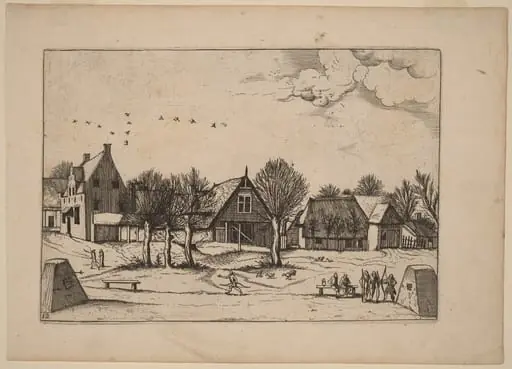
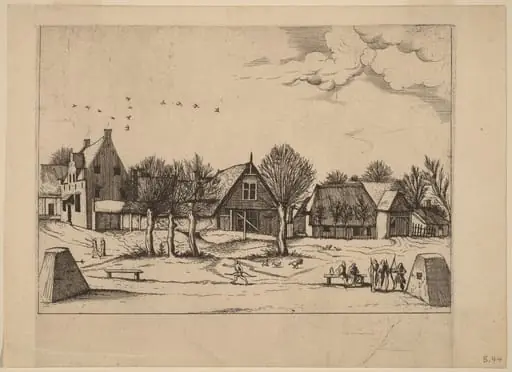
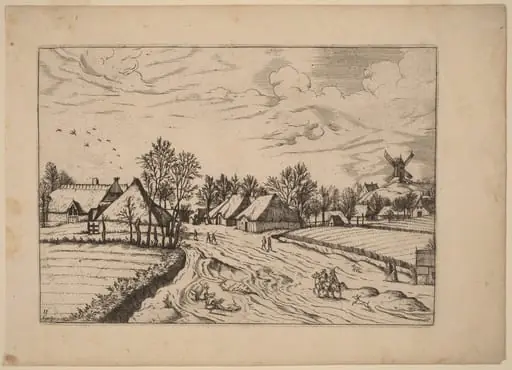
The scene portrays a modest rural settlement centered around a stone bridge and a tall church steeple, elements that anchor the composition and suggest community life. Figures engaged in fishing and rowing along the river introduce quiet human activity without narrative drama. The arrangement emphasizes harmony between architecture and landscape, reflecting a common Dutch interest in the dignity of everyday rural existence rather than grandeur or idealization.
Technique & Style
Van Doetecum employed etching to lay down the primary lines, then enhanced key areas—such as the church’s steeple and bridge arches—with finer engraving for greater definition. The precision of the lines creates sharp contrasts in tone, allowing depth and texture to emerge in monochrome. This method, typical of Dutch reproductive printmaking, prioritized clarity and detail over expressive brushwork, serving both documentary and aesthetic purposes.
History & Provenance
The print emerged from a family workshop in Haarlem, where Johannes van Doetecum the Elder worked alongside his brother Lucas and sons Johannes II, Peter, and Baptista. While the exact early ownership is undocumented, such prints were widely circulated among collectors and artisans in the Netherlands. The work’s survival reflects its role in disseminating landscape imagery during a period of growing interest in regional topography and domestic scenes.
Context
In late 16th- and early 17th-century Holland, prints like this served as affordable visual records of place and daily life. Van Doetecum’s focus on rural subjects aligned with broader trends in Dutch art, where the ordinary landscape gained cultural value. His earlier reproductions of Bruegel’s compositions positioned him within a lineage of artists who translated complex scenes into accessible graphic forms for a growing urban audience.
Legacy
Though not widely recognized as an innovator, van Doetecum’s prints contributed to the standardization of landscape imagery in print culture. His technical precision and collaborative workshop model influenced later generations of Dutch engravers. This work remains a representative example of how printmaking preserved and transmitted regional visual identity during a time of expanding literacy and artistic consumption in the Netherlands.
Artist & collection

Artist
Johannes van Doetechum the Elder
Joannes van Doetecum the Elder (1530 – 1605) was a Dutch engraver-cartographer known for his etched works after genre scenes by Pieter Bruegel the Elder and maps of various cities in the Netherlands.