Artwork
Trees before a Village
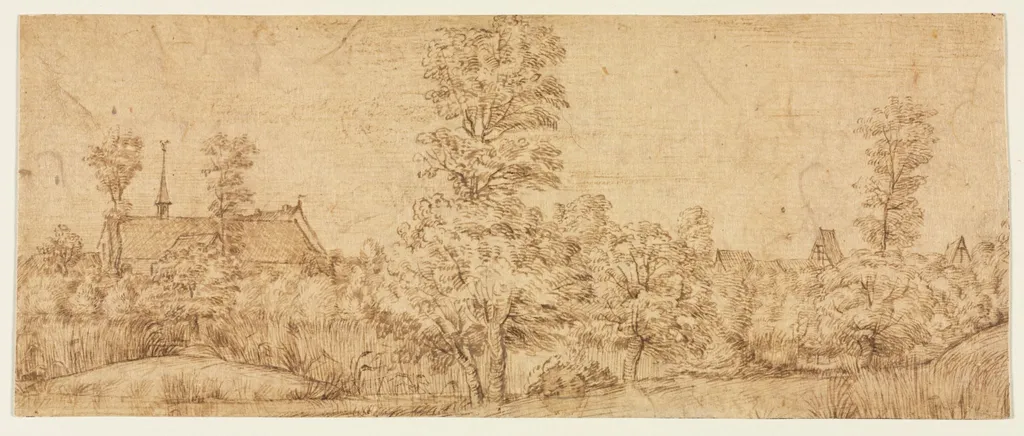
Trees before a Village is a drawing by the Baroque artist Jan Lievens. It dates from 1662 and is held in the collection of the Cleveland Museum of Art.
About this work
Overview
Trees before a Village is a 1662 drawing by Jan Lievens, a Dutch Golden Age artist. The work captures a serene rural landscape, juxtaposing foreground trees with a distant village.
Subject & Meaning
The subject is a quiet village scene, with a few small houses and a church steeple in the background. The emphasis on natural elements (trees, grassy field) alongside humble village life may suggest a contemplative or idyllic portrayal of rural existence.
Technique & Style
Executed in light, rough, and quick lines, the drawing relies on simple shapes and subtle shadowing to convey depth. The trees' thin, branching lines and the leaning posture of both trees and houses contribute to a sense of realism and spontaneity.
History & Provenance
Created in 1662 by Jan Lievens, who trained under Pieter Lastman in Amsterdam and was associated with Rembrandt early in his career. The artist's itinerant career spanned multiple European cities.
Context
Part of the broader Dutch Golden Age artistic movement, this work reflects the period's interest in landscapes and everyday life. Lievens' travels and associations (e.g., with Rembrandt) likely influenced his stylistic approach.
Legacy
As a lesser-detailed yet expressive work, *Trees before a Village* contributes to Lievens' diverse oeuvre, illustrating his capacity for capturing serene, everyday scenes beyond his more renowned portrait and historical works.
Artist & collection

Artist
Jan Lievens (24 October 1607 – 4 June 1674) was a Dutch Golden Age painter who was associated with his close contemporary Rembrandt, a year older, in the early parts of their careers.




 An Evening Landscape with a Distant Cathedral
 Clump of Trees with a Vista
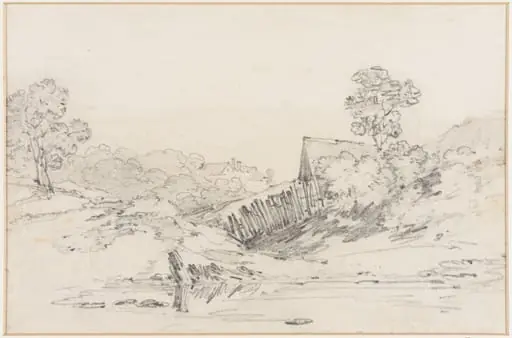 Cottage and landscape at Chirk, North Wales
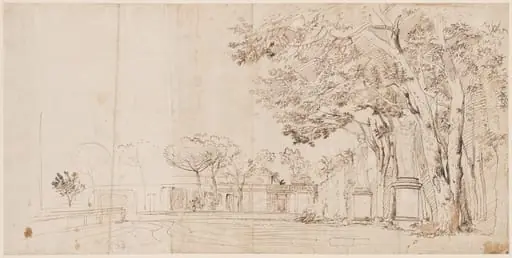 The Gardens of the Villa Medici
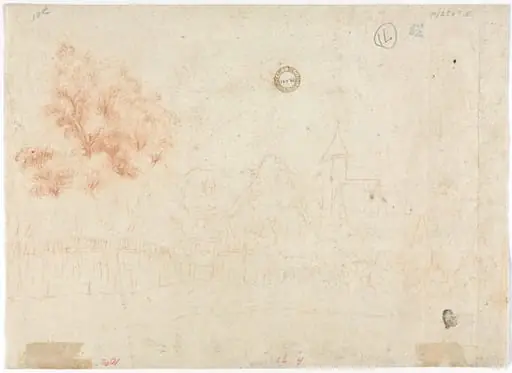 Sketch of a Village (verso)
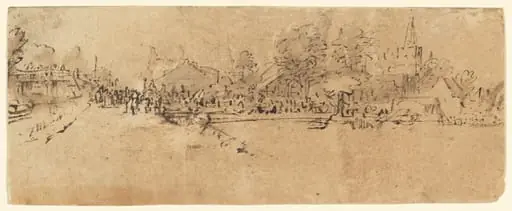 View of Diemen
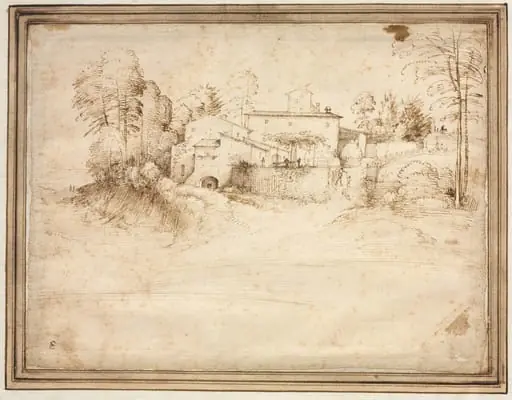 Farmhouse on the Slope of a Hill
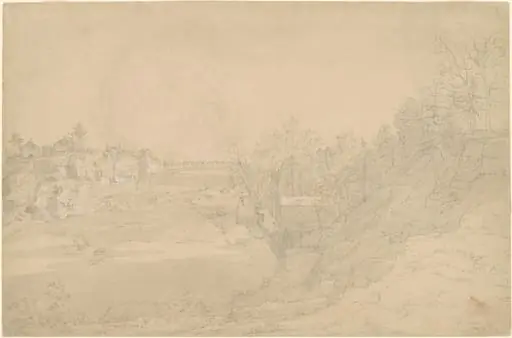 James McCullough's Leadmill
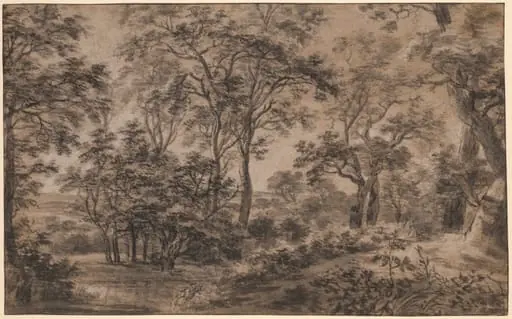 Wooded Landscape
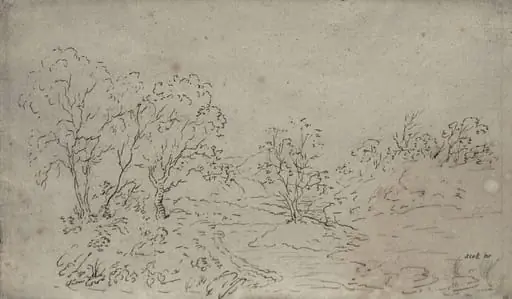 Landscape: a stream running between trees
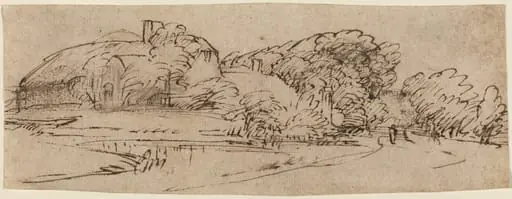 A Landscape with Farm Buildings among Trees
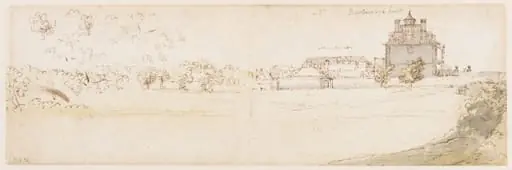 Preparatory study for a drawing of Peterborough House and Westminster Abbey