Artwork
Sketch of a Village (verso)
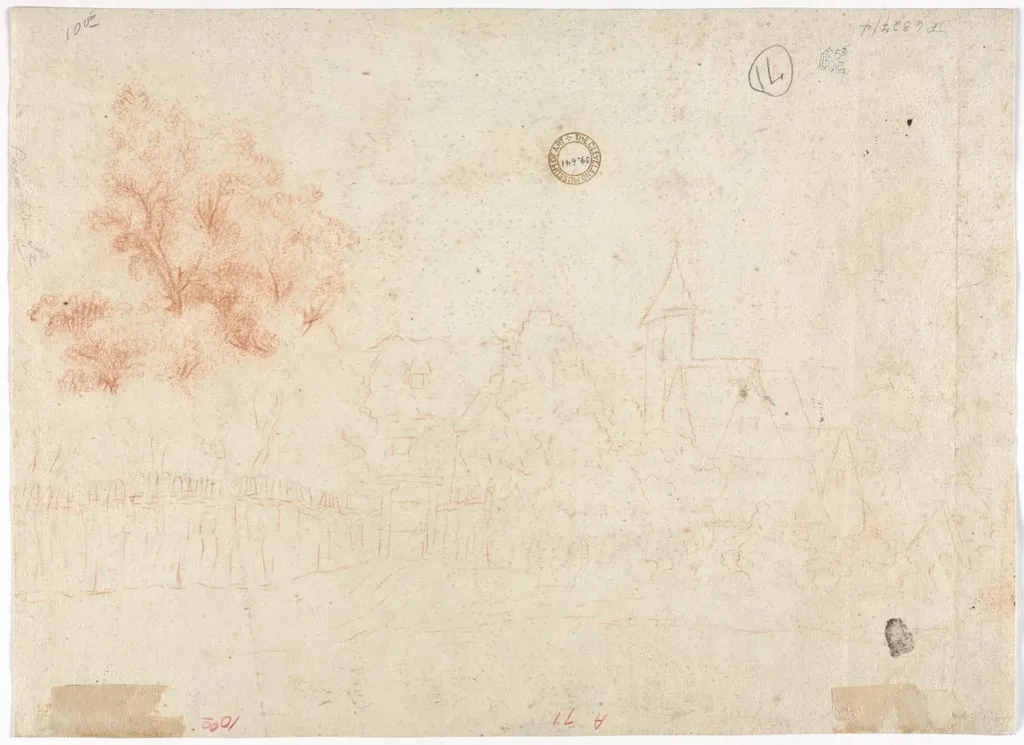
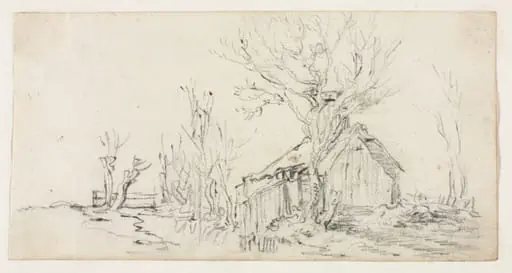
Sketch of a Village (verso) is a drawing by the Baroque artist Unknown. It dates from 1750 and is held in the collection of the Cleveland Museum of Art. This small pencil drawing captures a rural village scene in loose, tentative strokes.
About this work
Overview
Buildings and a solitary tree are suggested rather than defined, with no shading or detail to complete the composition.
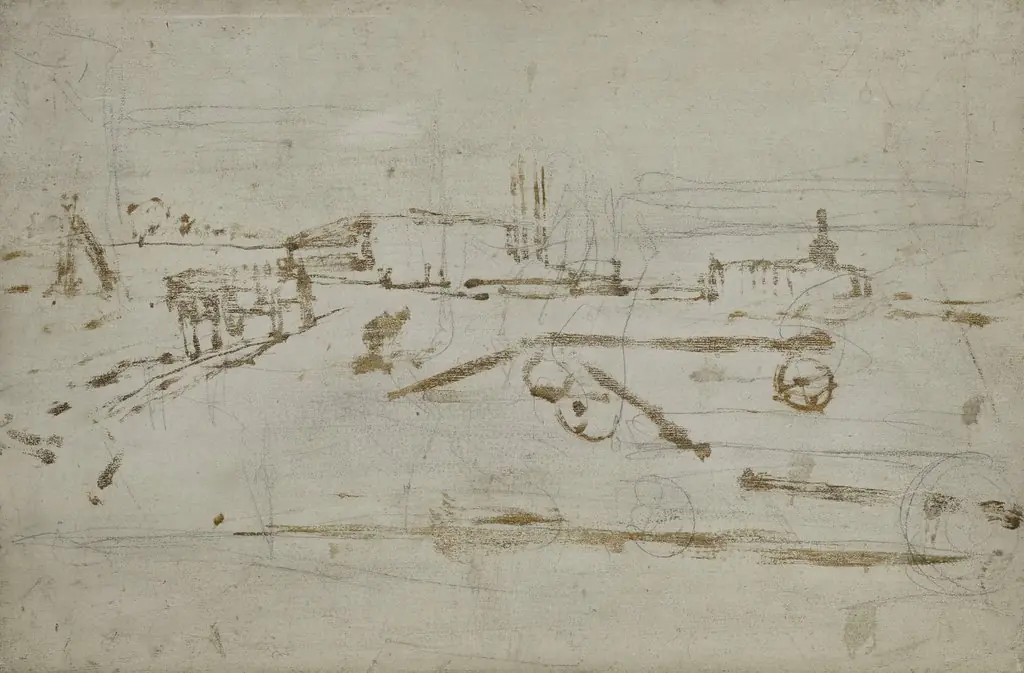
This small pencil drawing captures a rural village scene in loose, tentative strokes. Buildings and a solitary tree are suggested rather than defined, with no shading or detail to complete the composition. The work appears as a preliminary study, its fragile lines indicating rapid observation rather than polished execution. Its unfinished quality reflects an artist’s immediate response to a landscape, not a final statement.
Subject & Meaning
The scene depicts a modest cluster of dwellings along a path, with a single tree on the left margin. No figures or activity are present, emphasizing stillness and solitude. The subject lacks narrative or symbolic intent; instead, it records a fleeting visual impression. The simplicity suggests the artist was noting spatial relationships or light conditions, not conveying a message.
Technique & Style
Light, uneven pencil lines define forms without firm contours. The strokes are hesitant, overlapping, and uneven in pressure, revealing a hand in motion rather than a deliberate draft. The absence of erasures or corrections implies spontaneity. This approach aligns with observational sketching practices common among artists working directly from nature, prioritizing immediacy over refinement.
History & Provenance
The drawing’s origin is undocumented, but its style and medium suggest it dates to the late 17th or early 18th century. It may have been part of a private sketchbook used during travel or study. No known exhibition or collector history accompanies it, and its verso designation implies it was drawn on the back of another sheet, possibly reused paper.
Context
In the Baroque period, artists increasingly turned to direct observation, using sketches to capture transient effects of light and form. This drawing fits within that trend, reflecting a shift from idealized compositions to informal studies. Its informality mirrors the broader movement toward empirical seeing, even if it lacks the drama typical of major Baroque works.
Legacy
Though not attributed to a known artist, the sketch exemplifies the quiet, unassuming practice underlying larger artistic developments. Its value lies in its honesty as a working record — a glimpse into the private process of seeing. Such drawings, often discarded or overlooked, now offer insight into how artists trained their eyes before committing to finished works.
Artist & collection

 Domestic Scene
 Giacomo and Cardinal Marco, investing Andrea, Abbot of San Zeno, with his Benefice
 The Nymph of Fontainebleau
 Portrait of a Woman
 Madonna and Child with Saints in the Enclosed Garden
 Venus and Minerva
 Family Group of Four on Sofa
 Wall painting from Room H of the Villa of P. Fannius Synistor at Boscoreale
 Trees before a Village
 Landscape with Church
 Preparatory study for a drawing of Peterborough House and Westminster Abbey
 James McCullough's Leadmill
 The Gardens of the Villa Medici
 Landscape with a Moated Village
 Water meadows near Salisbury
 View of Diemen
 View of Marino (recto)
 Cottages
 The Edge of a City
 Sketch of Landscape with Cottage