Artwork
Still Life with Fruit and Oysters
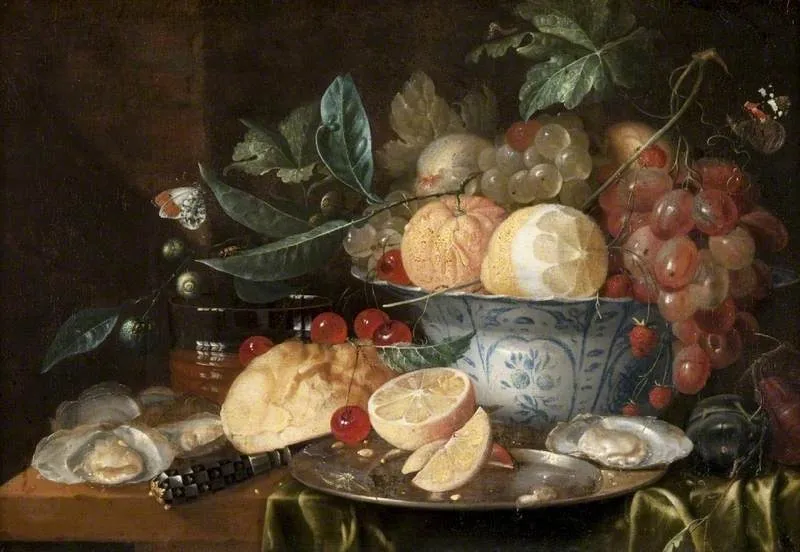
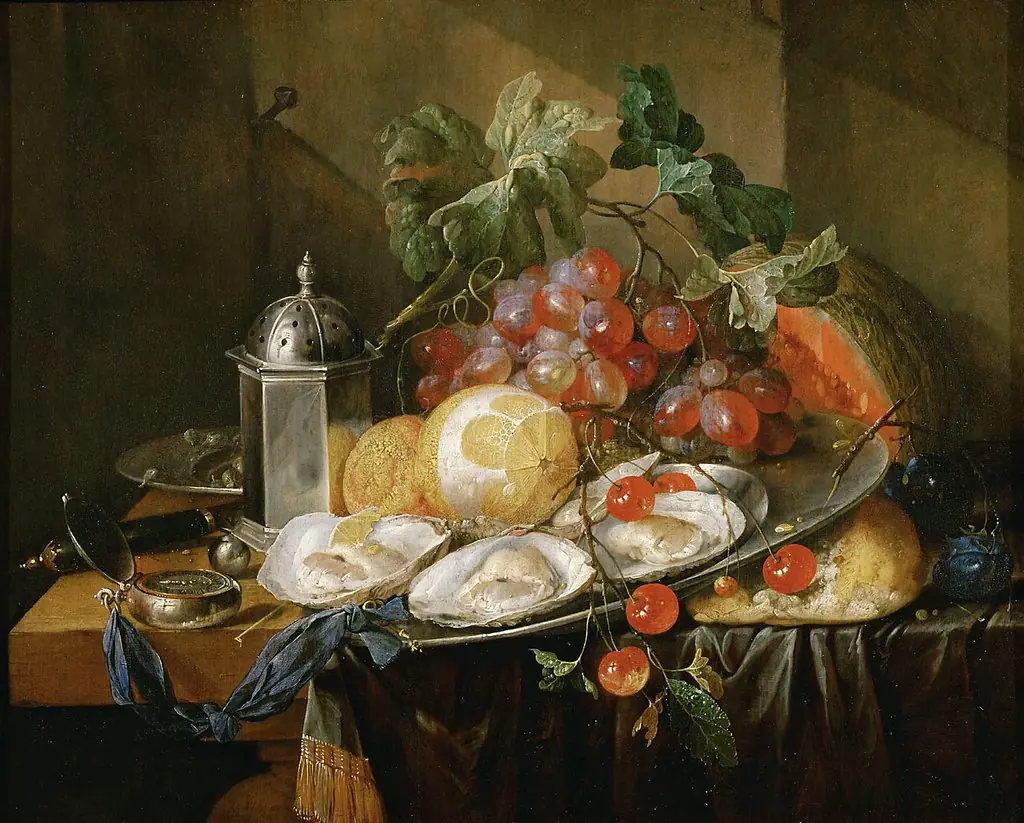
Still Life with Fruit and Oysters is an oil painting by the Dutch Golden Age artist Jan Pauwel Gillemans the Elder. It dates from 1656 and is held in the collection of the Kelvingrove Art Gallery and Museum.
About this work
Overview
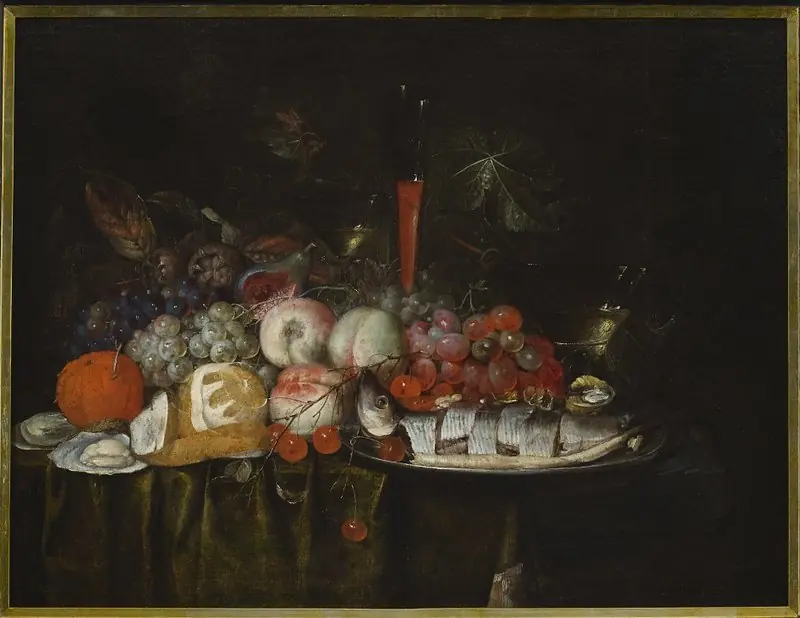
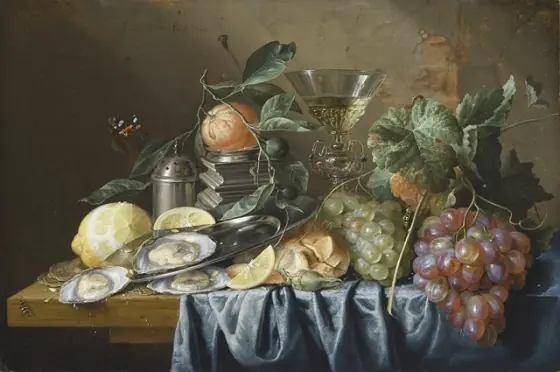
Painted around 1656 by Jan Pauwel Gillemans the Elder, this oil on canvas still life presents an arrangement of fruit and shellfish on a draped table.
Painted around 1656 by Jan Pauwel Gillemans the Elder, this oil on canvas still life presents an arrangement of fruit and shellfish on a draped table. Gillemans, trained as a goldsmith in Antwerp, turned to painting during the Dutch Golden Age, where such compositions reflected both aesthetic refinement and economic prosperity. The work is part of the Kelvingrove Art Gallery and Museum’s collection, representing Flemish contributions to the broader Northern European still life tradition.
Subject & Meaning
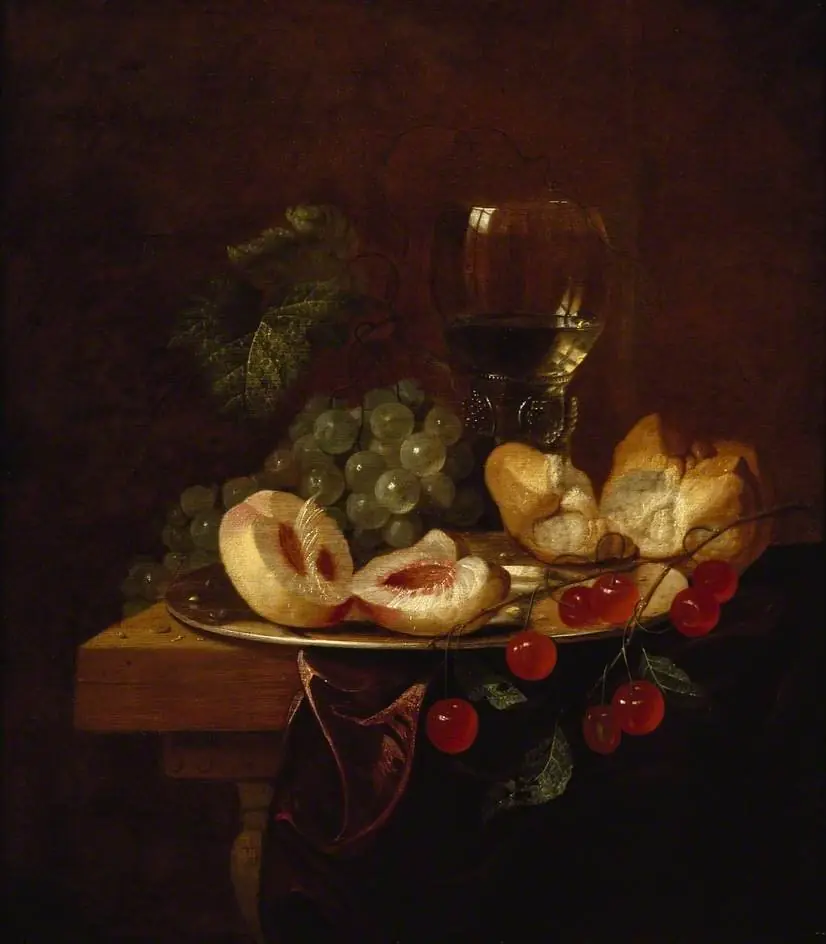
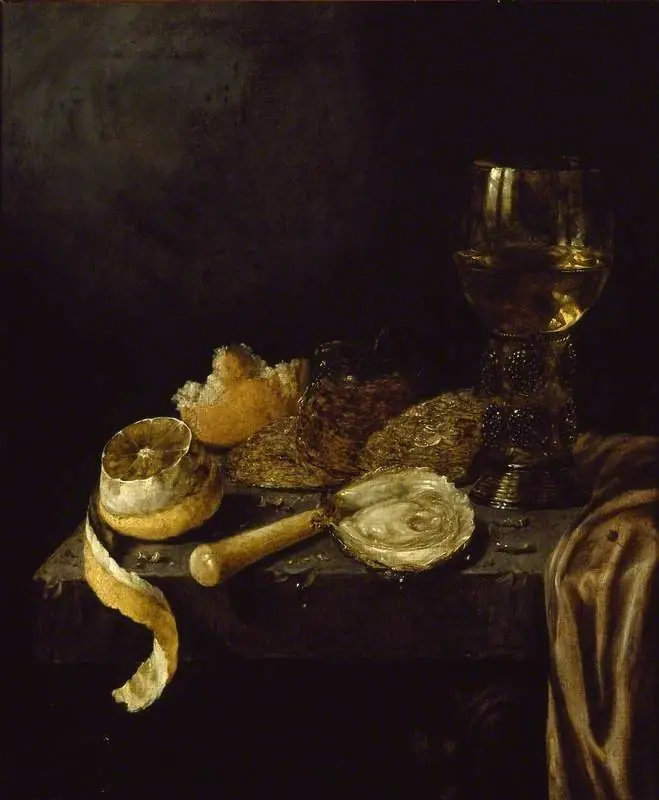
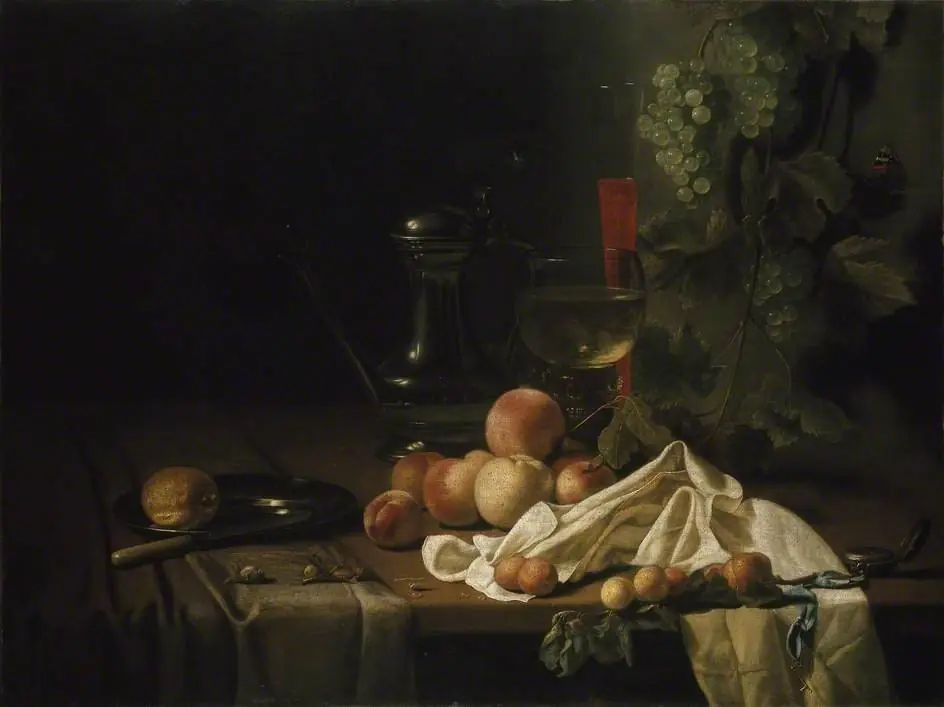
The composition features ripe grapes, cherries, and lemons alongside a plate of oysters, arranged to suggest seasonal abundance. These elements carry symbolic weight: the fruit implies earthly pleasure and transience, while the oysters, associated with luxury and sensuality, hint at the fleeting nature of indulgence. A butterfly perches near the edge, a subtle reminder of metamorphosis and mortality, common in vanitas motifs of the era.
Technique & Style
Gillemans employs chiaroscuro to model the forms with precision, using sharp contrasts between light and shadow to give volume to the fruit’s skin and the oysters’ shells. The green drapery anchors the scene, its folds rendered with soft brushwork, while the textures of glossy fruit and damp shells are meticulously distinguished. The palette leans toward warm tones, enhancing the tactile richness without overt theatricality.
History & Provenance
Created during Gillemans’s mature period in Antwerp, the painting reflects his established reputation for detailed fruit and food still lifes. Though little is documented about its early ownership, it entered the Kelvingrove collection in the 20th century, likely through a broader acquisition of Northern European works. Its preservation has allowed continued study of Flemish still life practices beyond the Dutch Republic.
Context
In mid-17th-century Flanders, still life painting flourished as urban elites commissioned works that celebrated material wealth and natural beauty. Gillemans’s focus on perishable goods aligned with broader cultural interests in observation, trade, and the moral implications of abundance. His work shares affinities with contemporaries like Osias Beert, though his compositions often retain a quieter, more intimate tone.
Legacy
Gillemans’s paintings, though less widely known than those of his Dutch peers, contributed to the development of Flemish still life as a distinct branch of the genre. His attention to texture and naturalistic detail influenced later artists in the region. Today, this work remains a quiet example of how everyday objects were elevated through careful composition and observation, reflecting the era’s visual culture without overt moralizing.
Artist & collection
Artist
Jan Pauwel Gillemans the Elder
Jan Pauwel Gillemans the Elder (Antwerp, 1618 - Antwerp, 1675) was a Flemish goldsmith and still life painter who is known for his fruit still lifes, flower pieces, vanitas still lifes and pronkstillevens.