Artwork
Still Life with Fruit
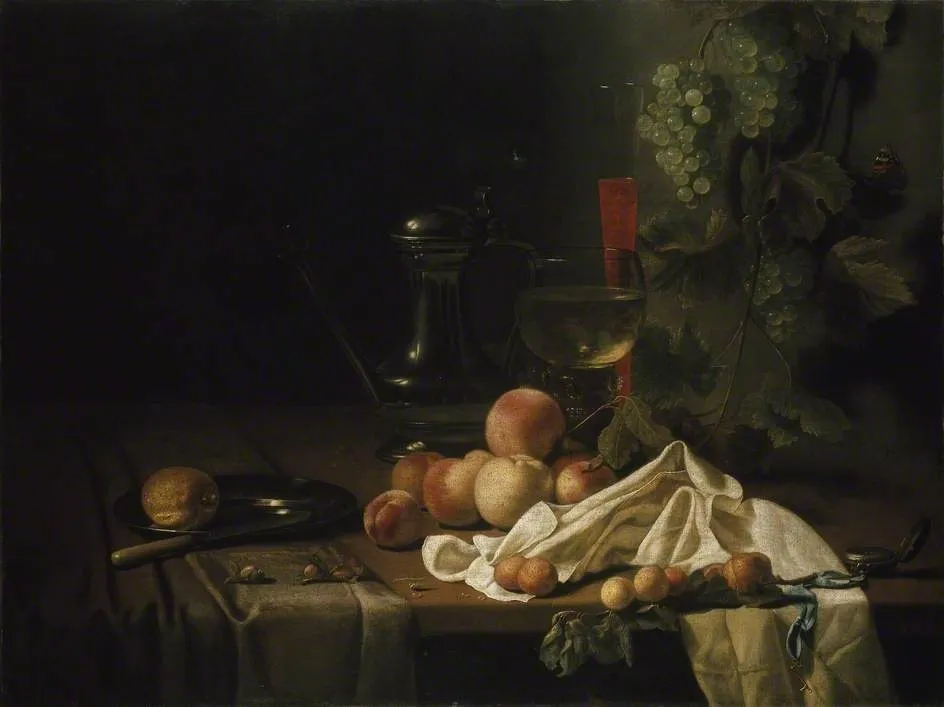
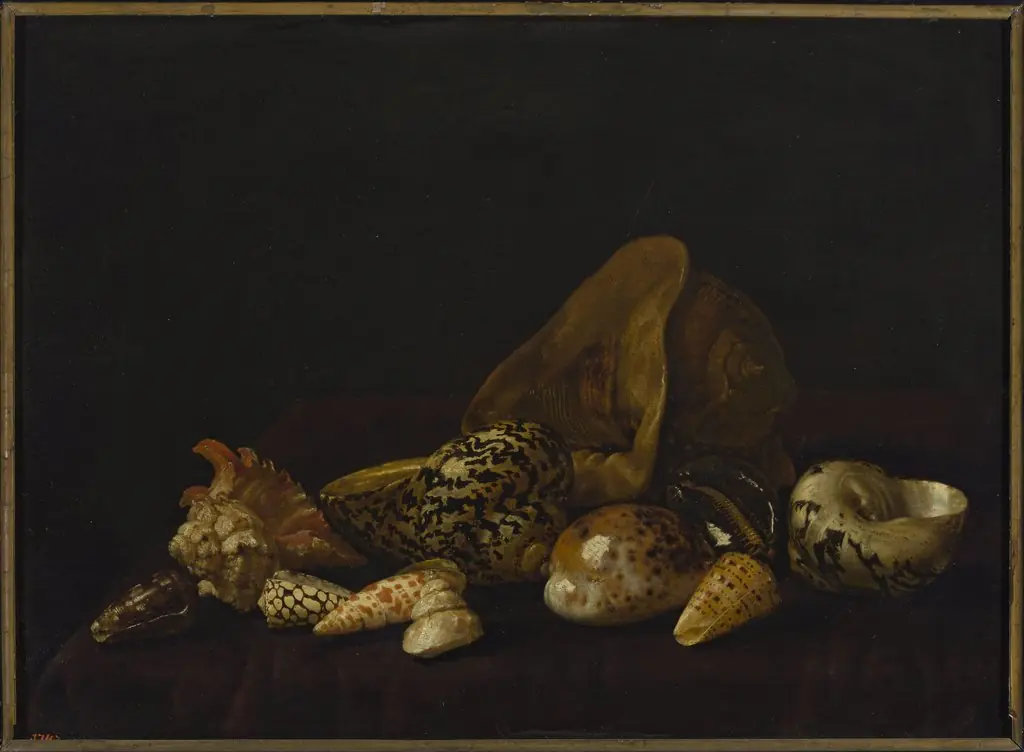
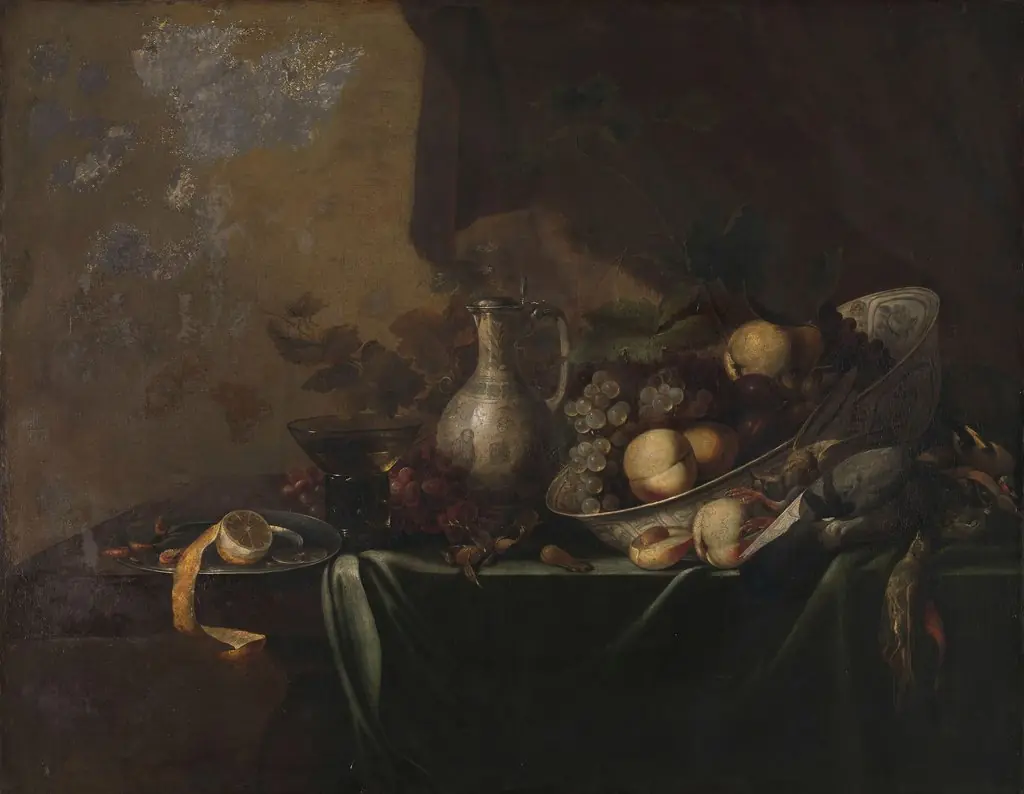
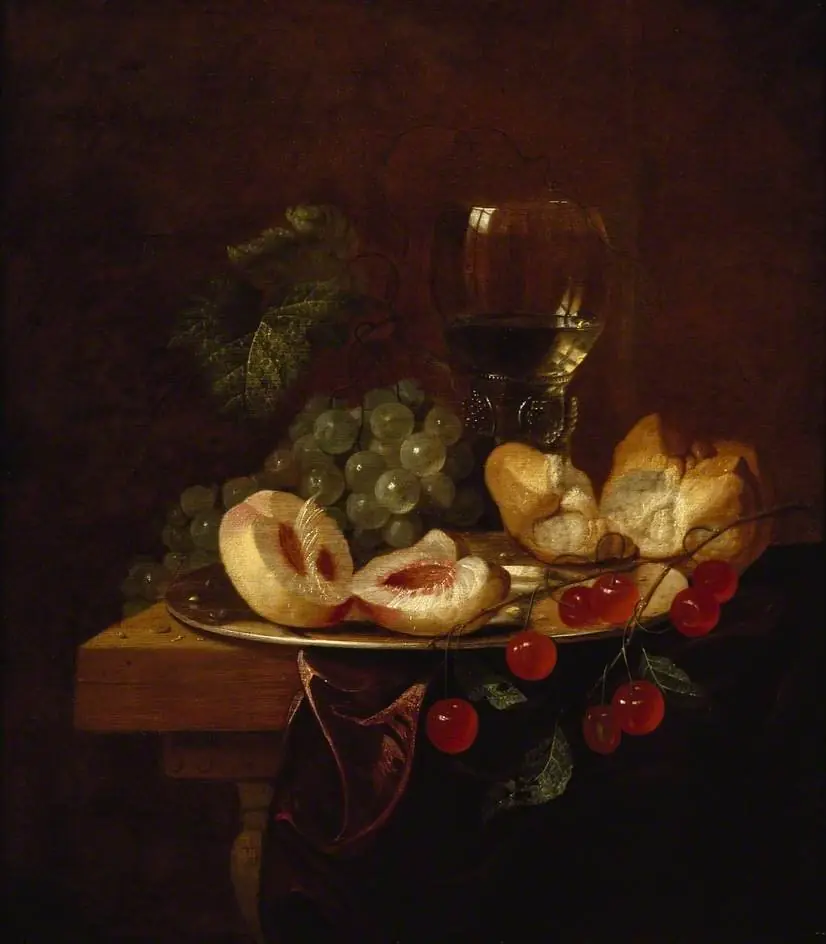
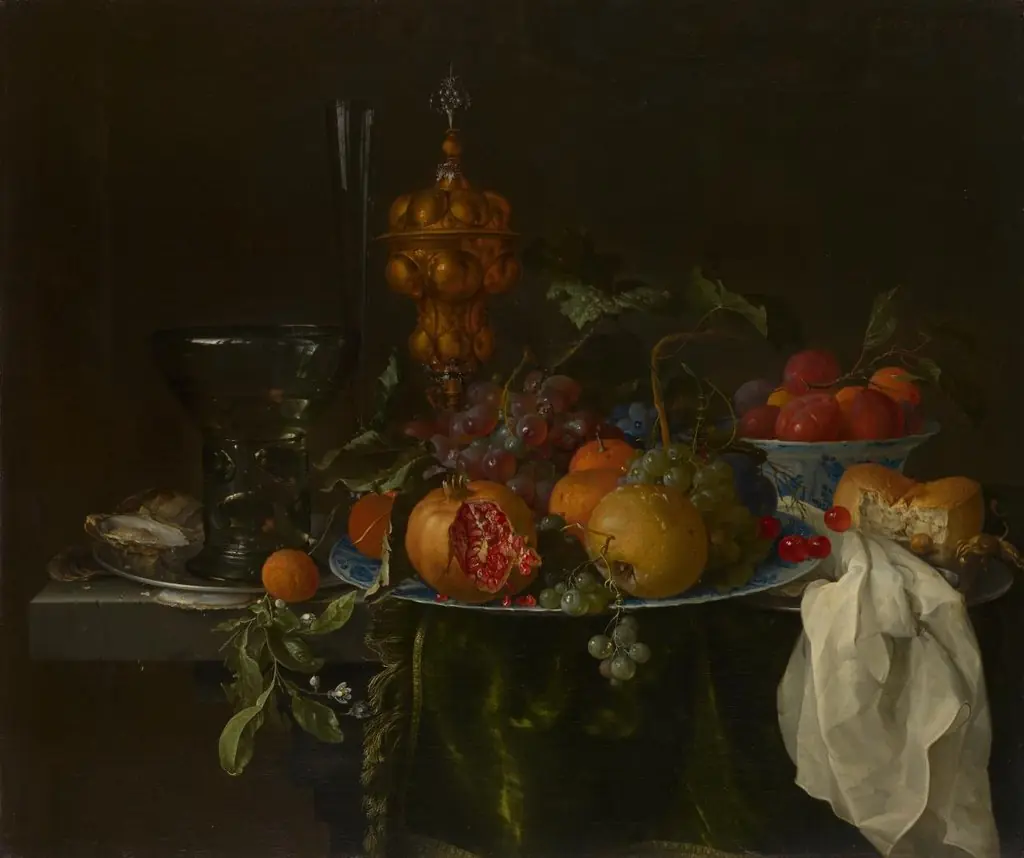
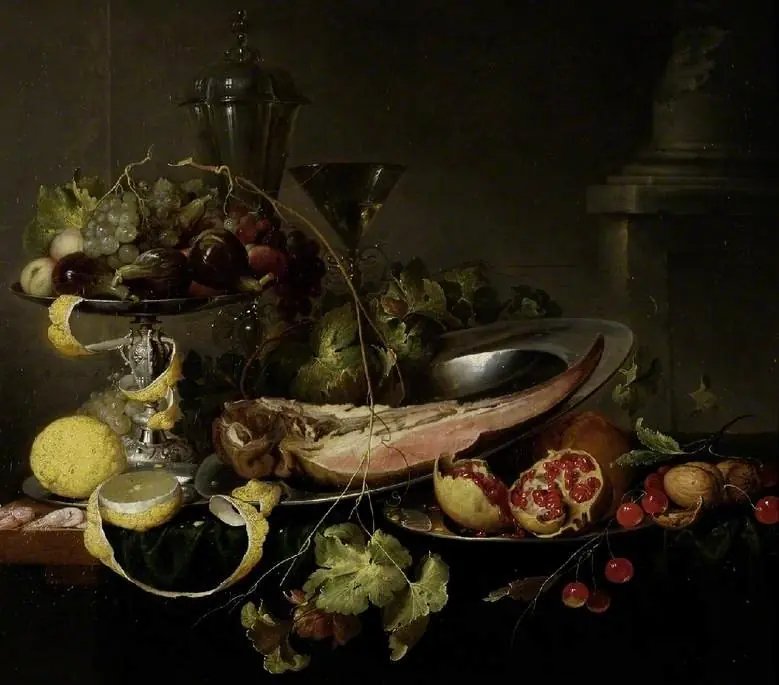
Still Life with Fruit is an oil painting by the Dutch Golden Age artist Abraham van Calraet. It dates from 1690 and is held in the collection of the Ashmolean Museum.
About this work
Overview
The painting is part of the Ashmolean Museum’s collection, where it exemplifies the period’s fascination with ordinary objects rendered with quiet precision.
Painted in 1690 by Abraham van Calraet, this oil-on-canvas still life presents a quiet arrangement of seasonal fruit on a draped table. Van Calraet, active during the Dutch Golden Age, specialized in domestic scenes and naturalistic compositions. The painting is part of the Ashmolean Museum’s collection, where it exemplifies the period’s fascination with ordinary objects rendered with quiet precision.
Subject & Meaning
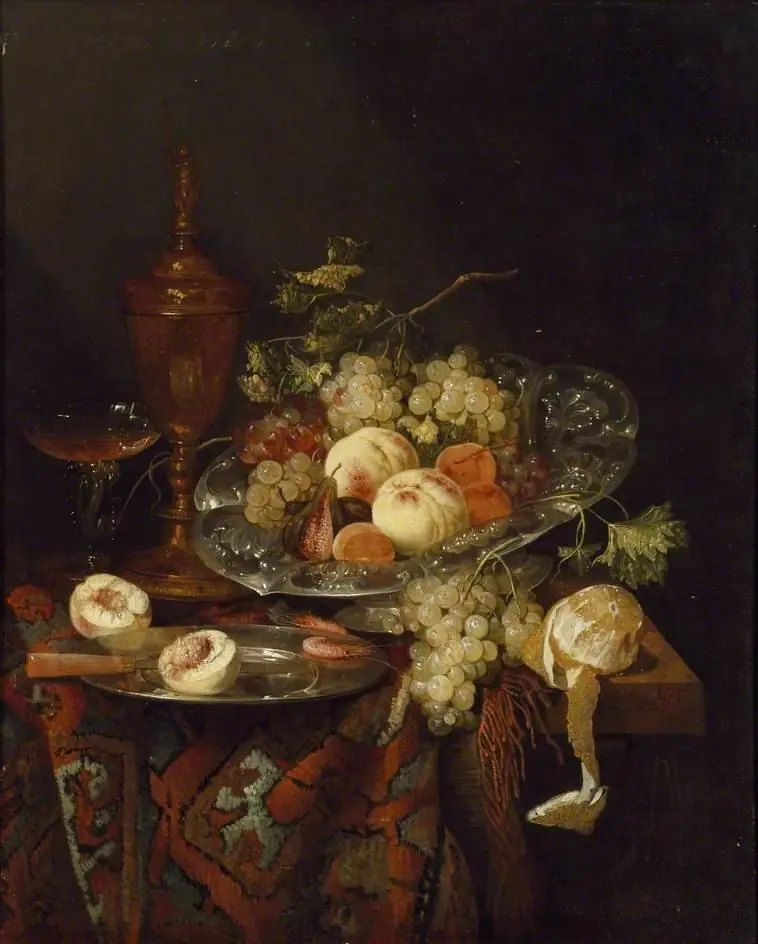
The composition features apples, grapes, and a pear, arranged with deliberate simplicity. These fruits, chosen for their seasonal availability and tactile variety, reflect the Dutch tradition of celebrating nature’s abundance. The absence of overt symbolism suggests an emphasis on presence rather than moral allegory, inviting contemplation of form, texture, and transience without explicit narrative.
Technique & Style
Van Calraet employs subtle gradations of light and shadow to model each fruit’s surface, enhancing their three-dimensionality. The white cloth is rendered with soft folds, contrasting with the matte skin of the apples and the glossy sheen of the grapes. Background elements are muted, drawing focus to the foreground objects. The brushwork is controlled, prioritizing realism over ornamentation.
History & Provenance
The painting entered the Ashmolean Museum’s collection in the 19th century, likely through a private donation or acquisition. Its attribution to van Calraet is consistent with his known output from the late 17th century. While its earlier ownership is undocumented, its preservation reflects sustained interest in Dutch still-life painting during the Enlightenment and Victorian eras.
Context
In late 17th-century Holland, still lifes like this one catered to a growing middle-class market that valued domestic harmony and material refinement. Artists such as van Calraet responded to this demand by refining compositions that balanced naturalism with restraint. Unlike more elaborate banquet scenes, this work emphasizes quietude, aligning with regional tastes for understated elegance.
Legacy
Van Calraet’s work contributed to the broader Dutch still-life tradition, influencing later artists who favored simplicity over spectacle. Though less celebrated than contemporaries like Willem Claesz Heda, his careful attention to texture and light helped sustain the genre’s credibility. Today, the painting remains a representative example of provincial Dutch realism in a major public collection.
Artist & collection
Artist
Abraham van Calraet, or Kalraat (7–12 October 1642, Dordrecht – 11 June 1722, Dordrecht) was a Dutch Golden Age still-life, portrait- and landscape painter.