Artwork
Felsküste mit Wachtturm
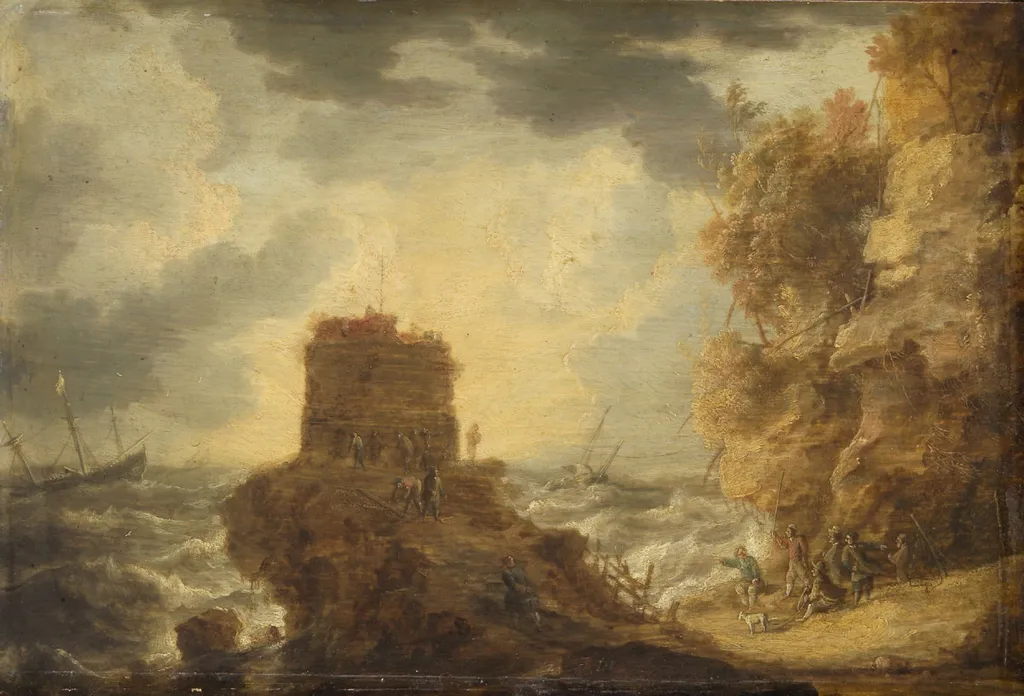
Felsküste mit Wachtturm is an unspecified painting by Jan Peeters the Elder. It dates from 1661 and is held in the collection of the Kunsthistorisches Museum.
About this work
Overview
Painted around 1661 by Jan Peeters the Elder, *Felsküste mit Wachtturm* is a maritime landscape that captures the raw energy of a North Sea coastline.
Painted around 1661 by Jan Peeters the Elder, *Felsküste mit Wachtturm* is a maritime landscape that captures the raw energy of a North Sea coastline. As a Flemish Baroque artist, Peeters devoted much of his career to coastal scenes, emphasizing natural forces and human presence within them. This work exemplifies his focus on precise topography and atmospheric tension, rendered with a keen eye for the interplay of land, sea, and sky.
Subject & Meaning
The painting portrays a rugged cliffside dominated by a stone watchtower with a red-tiled roof, positioned as a sentinel against the turbulent sea. Figures on the shore and cliff, carrying bundles or staffs, suggest daily coastal life—fishermen, travelers, or sentinels. Their small scale underscores nature’s dominance, while the tower implies vigilance, possibly referencing coastal defense or navigation. The scene conveys neither narrative nor myth, but a quiet, observed reality of maritime existence.
Technique & Style
Peeters employed thick, textured brushwork to convey the roughness of rock, the churning sea, and the weight of clouds. Chiaroscuro enhances depth, with dark cliff shadows contrasting against the pale, broken light of the sky and foam-capped waves. Colors are vivid but restrained—earthy browns, muted grays, and flashes of red—creating a sense of immediacy without theatricality. The composition balances verticality of the tower with horizontal motion of the waves, guiding the eye across the storm-lit expanse.
History & Provenance
Created during Peeters’s mature period in Antwerp, the painting aligns with his documented output of coastal views from the 1650s–1670s. While its early ownership is unrecorded, it entered institutional collections in the 19th or early 20th century, likely through European private collections that valued Dutch and Flemish marine art. Its survival reflects sustained interest in 17th-century seascapes, though it remains less studied than works by contemporaries like van de Velde.
Context
In mid-17th-century Flanders, maritime themes flourished amid growing trade and naval activity. Artists like Peeters responded to public fascination with the sea’s power and utility. Coastal watchtowers were common along the North Sea, serving both practical and symbolic roles. Peeters’s focus on unidealized, detailed landscapes distinguished him from more romanticized marine painters, grounding his work in the observable world of sailors and coastal communities.
Legacy
Though not widely celebrated in mainstream art history, Peeters’s coastal scenes contributed to the development of Northern European marine painting. His attention to geological accuracy and atmospheric conditions influenced later topographical artists. *Felsküste mit Wachtturm* stands as a quiet testament to the era’s observational rigor—valued today not for grandeur, but for its unembellished record of a harsh, beautiful coastline and those who lived beside it.
Artist & collection

Artist
Jan Peeters the Elder or Johannes Peeters (24 April 1624 – 1677) was a Flemish Baroque painter and draughtsman.

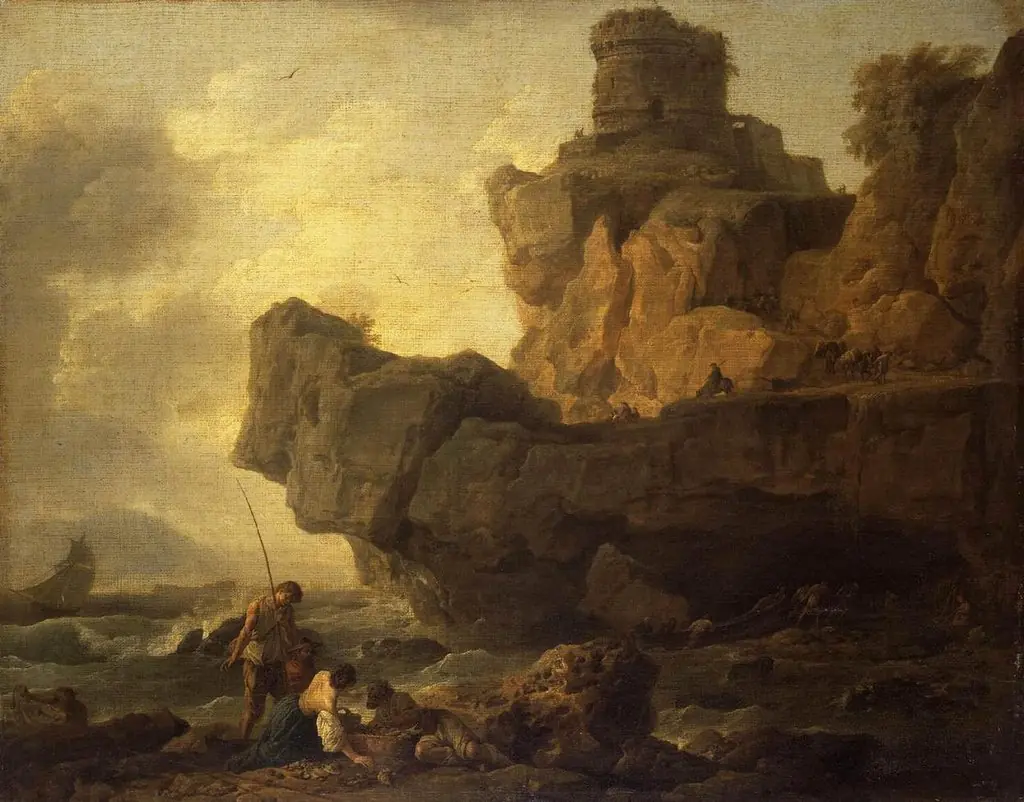 Rocks on a Seashore
 Krajobraz z rzeką i ruinami świątyni
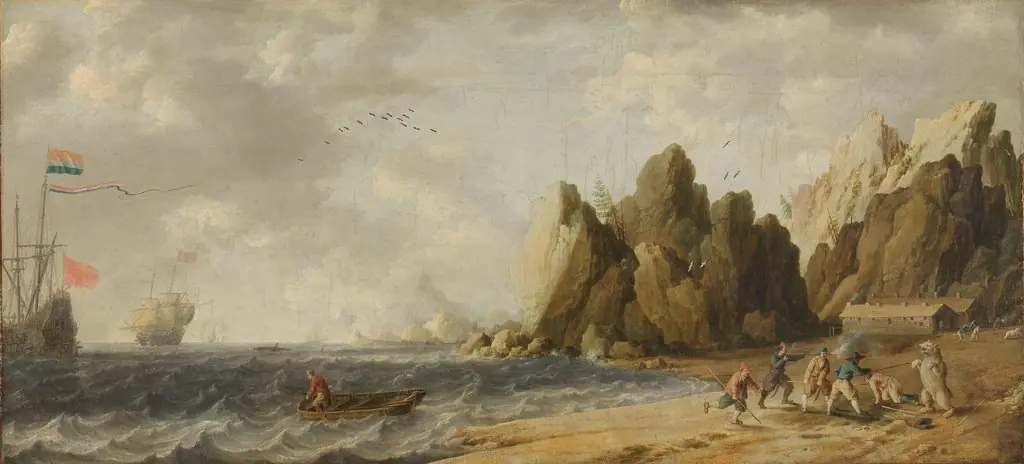 Polar bear hunt on the coast of Norway?
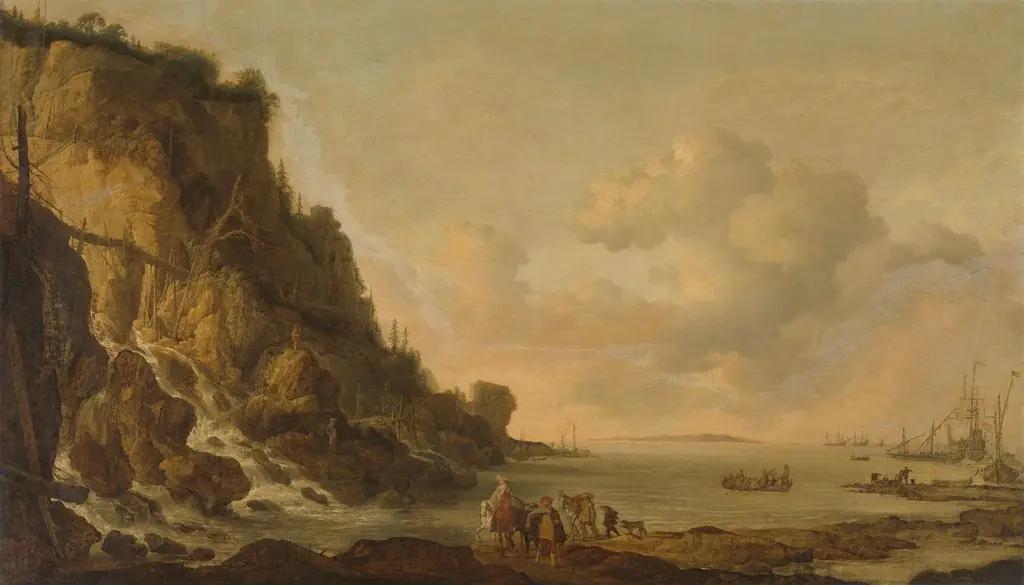 Rocky coast
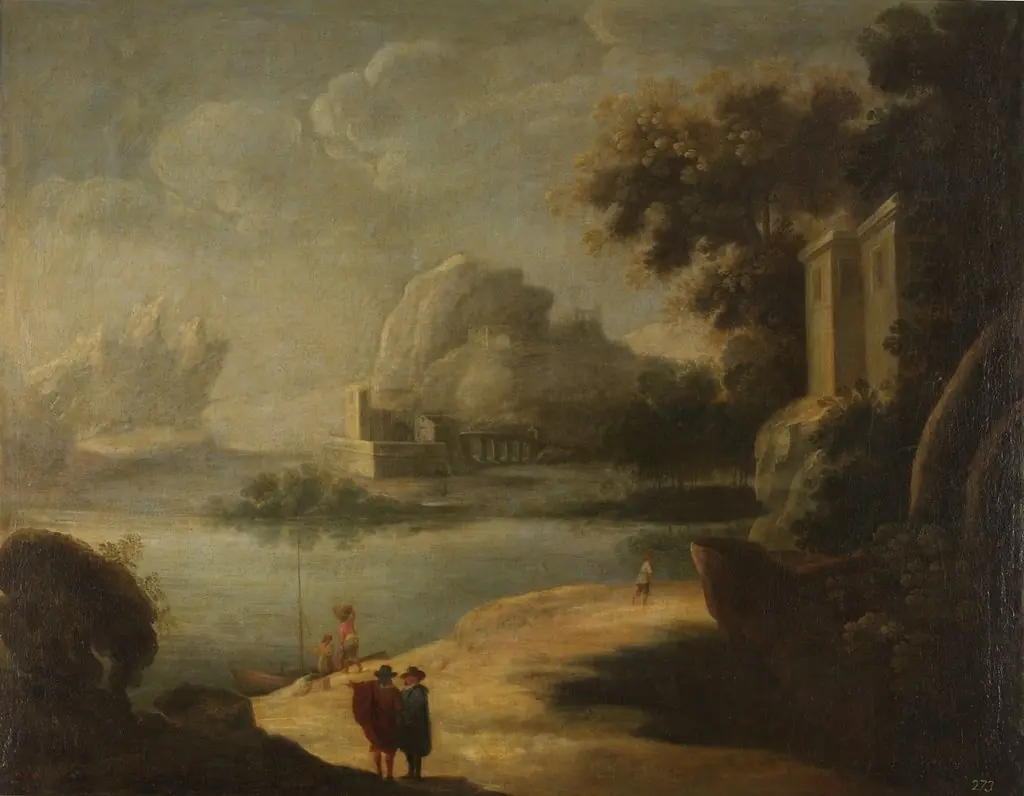 Paisaje
 Coastal Landscape
 Mountainous seashore
 Ships in a port
 Landscape with Rock and Fortress
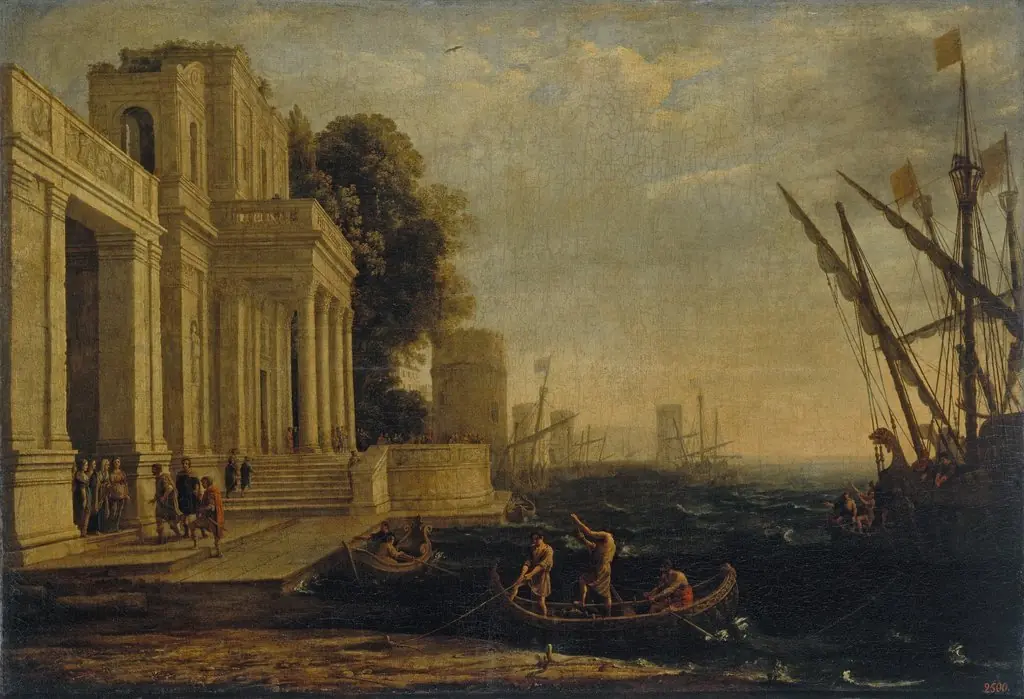 Ulysses Recieved by the Daughters of Lycomedes
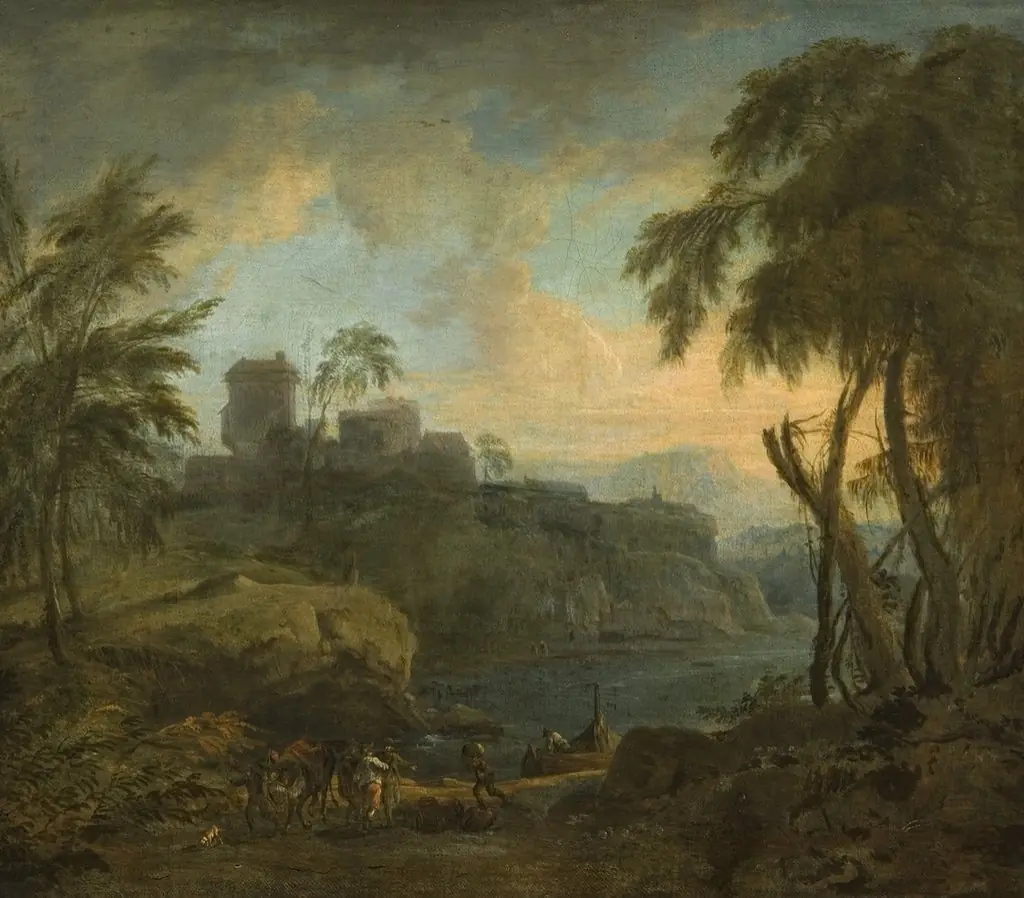 Ideal Landscape (Evening Mood)
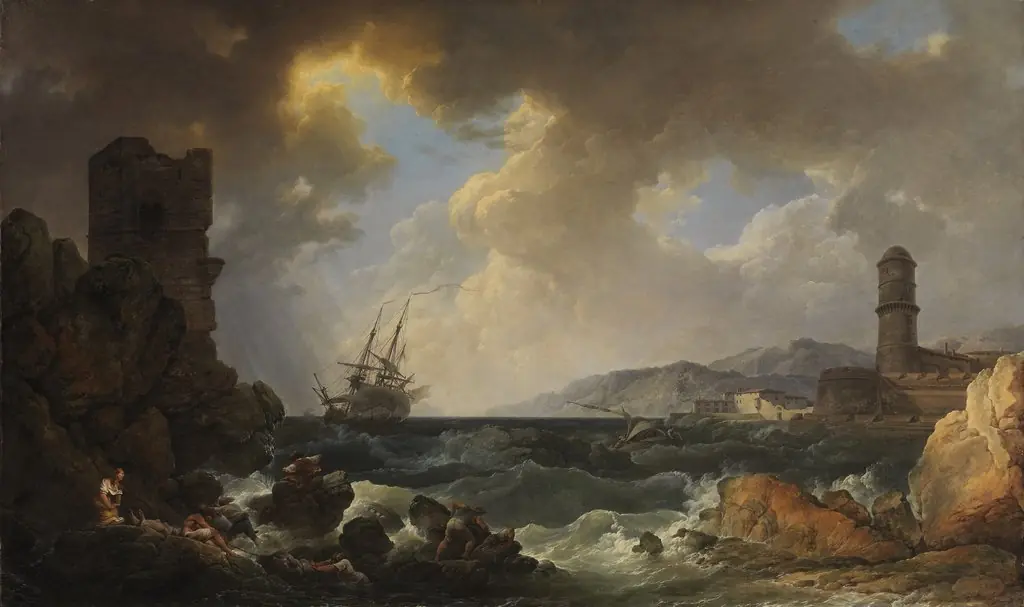 A Storm at the Entrance of a Mediterranean Port