Artwork
Ideal Landscape (Evening Mood)
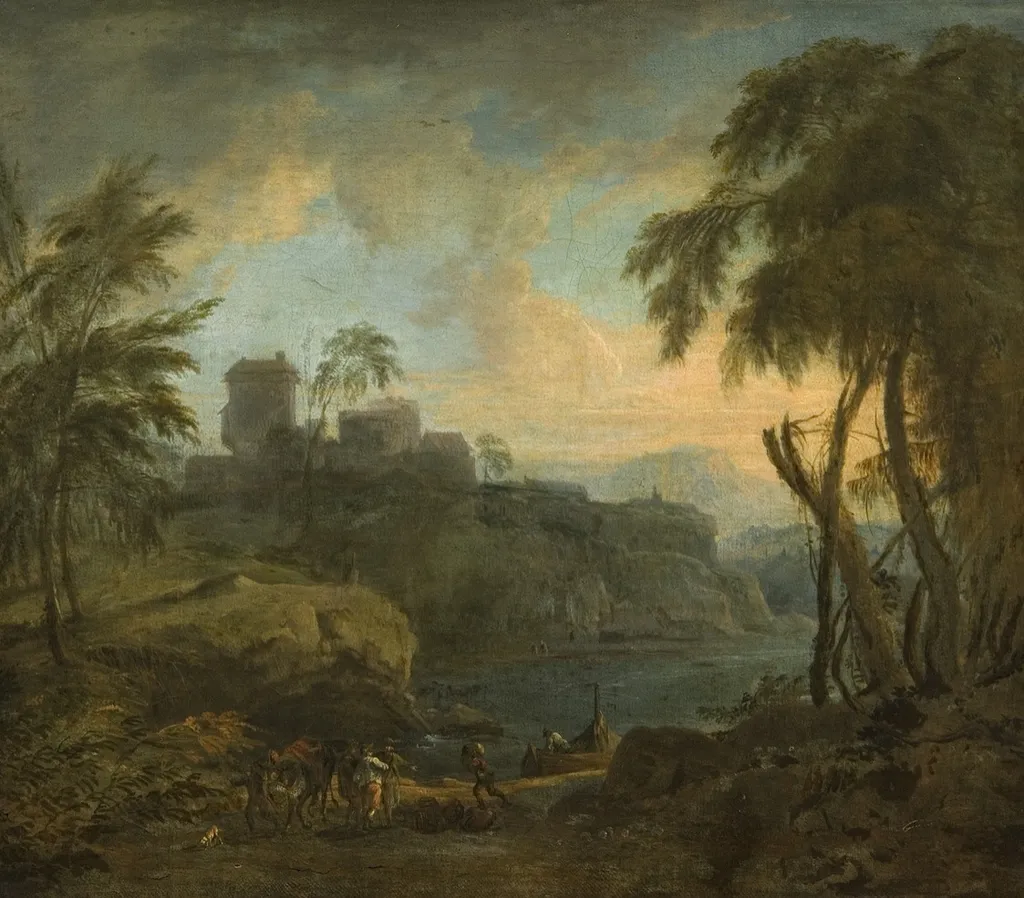
Ideal Landscape (Evening Mood) is an oil painting by the Rococo painting artist David Richter the Elder. It dates from 1717 and is held in the collection of the Kunsthistorisches Museum.
About this work
Overview
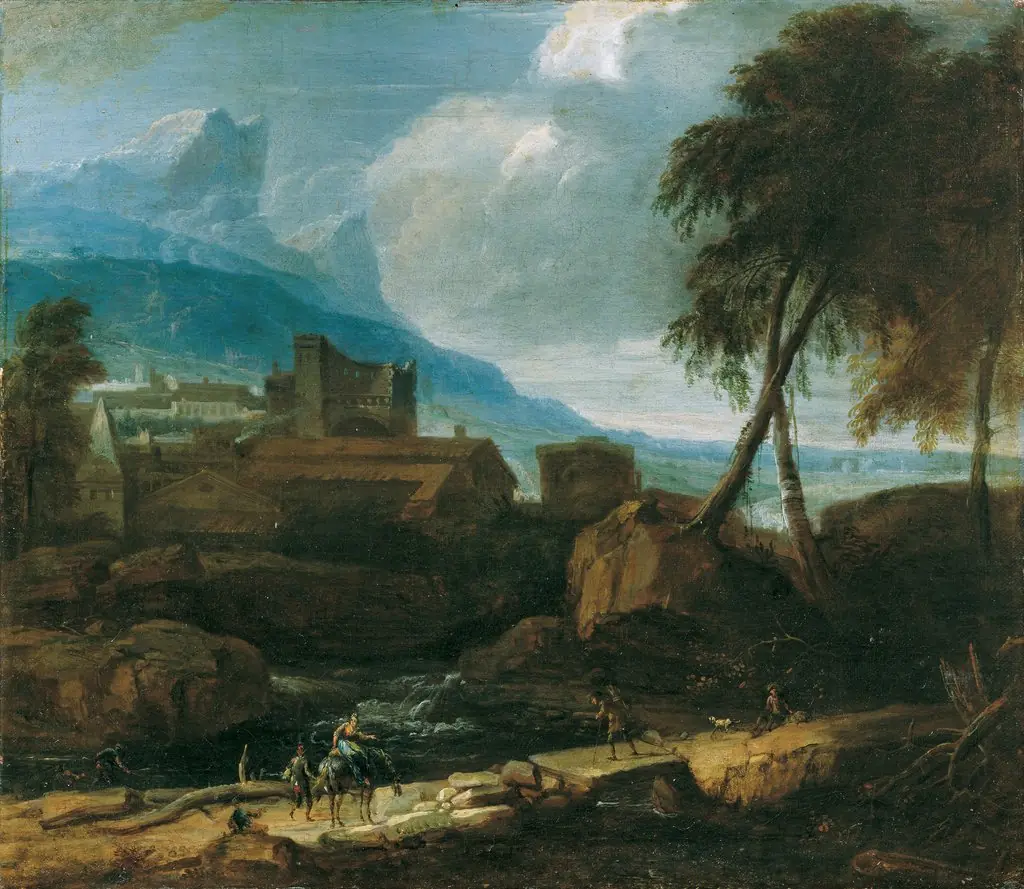
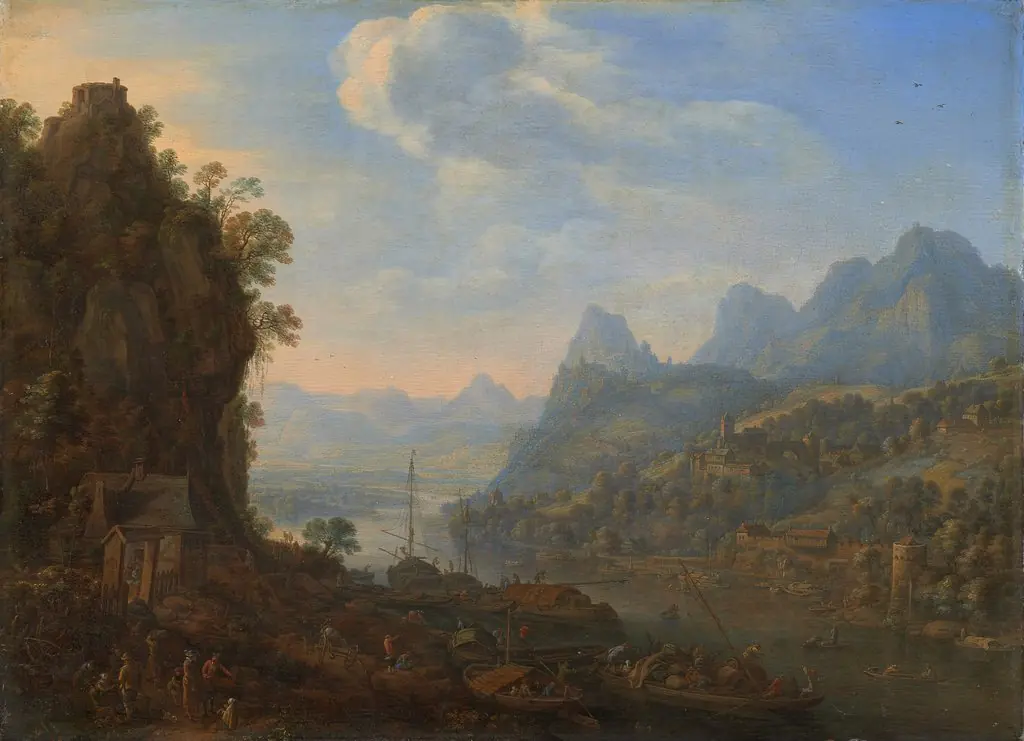
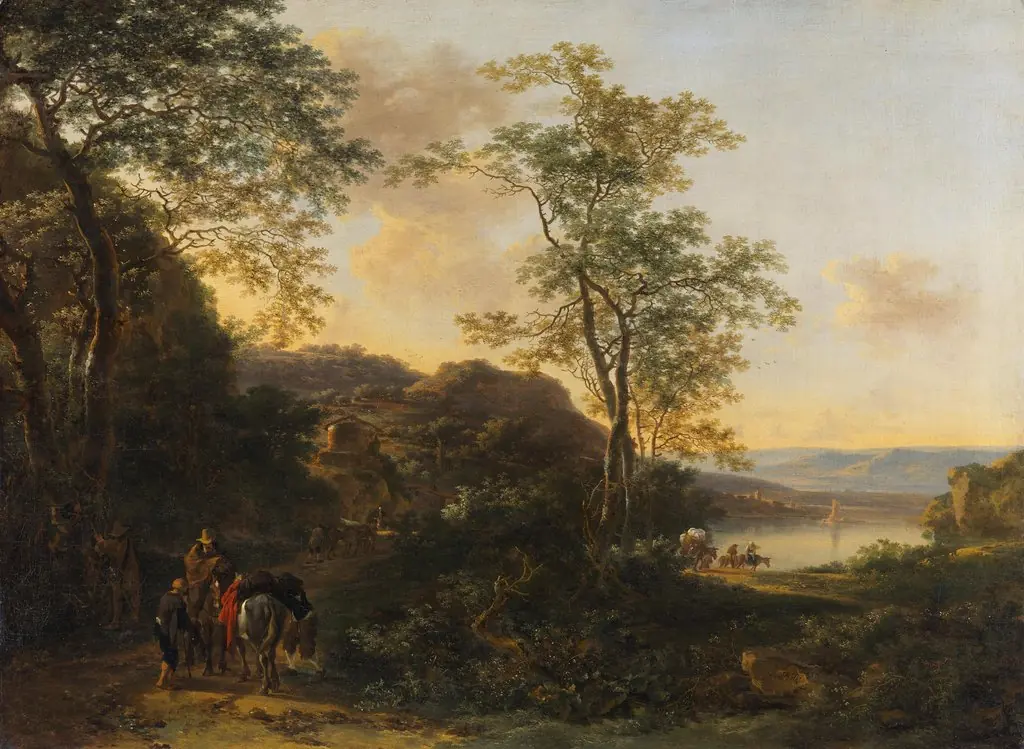
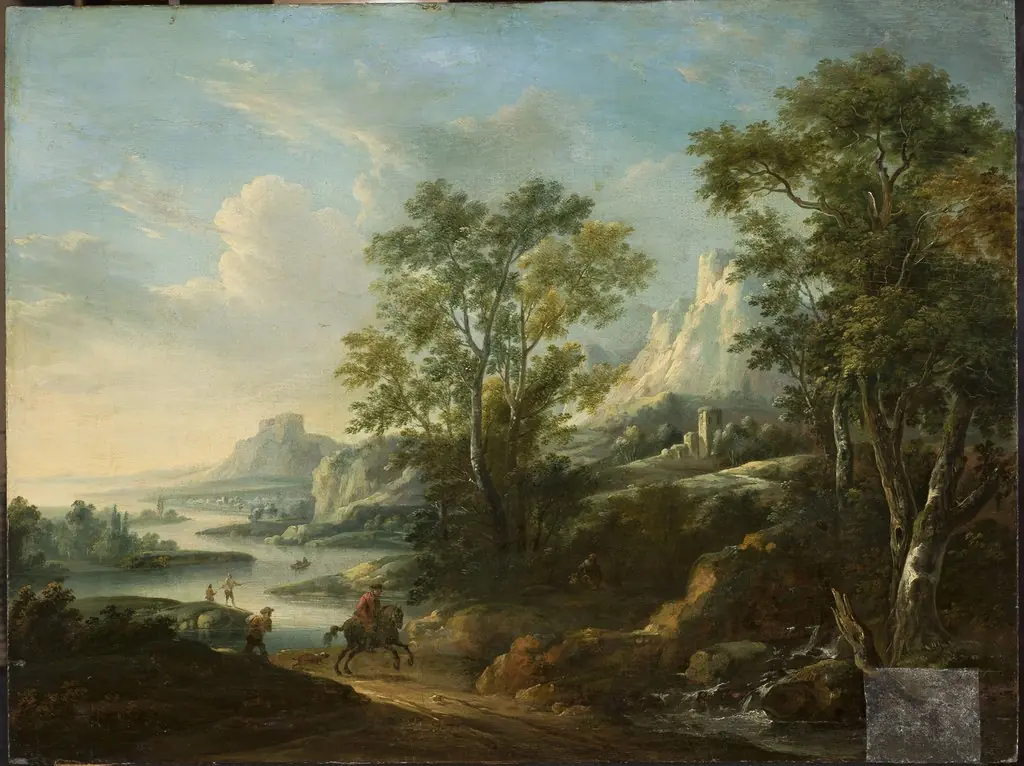
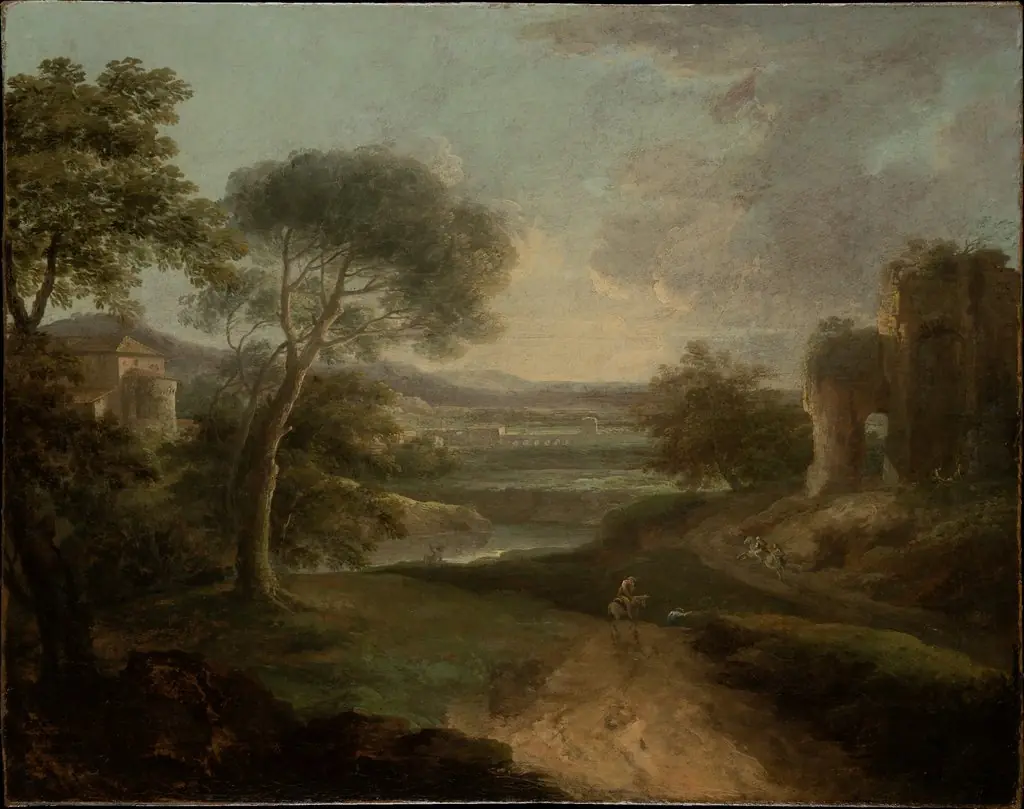
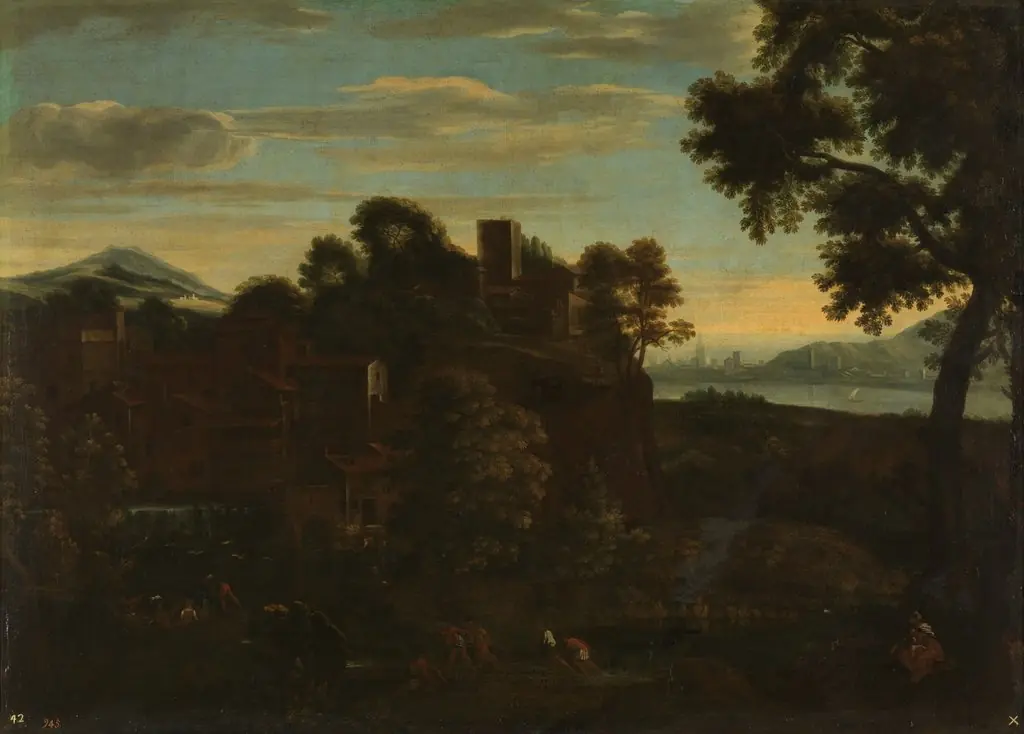
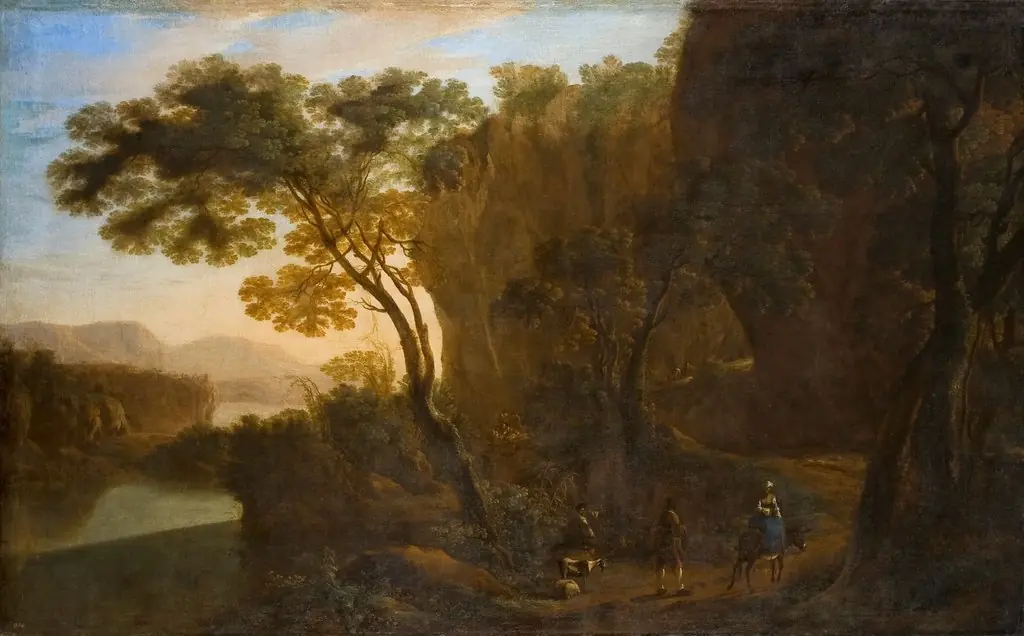
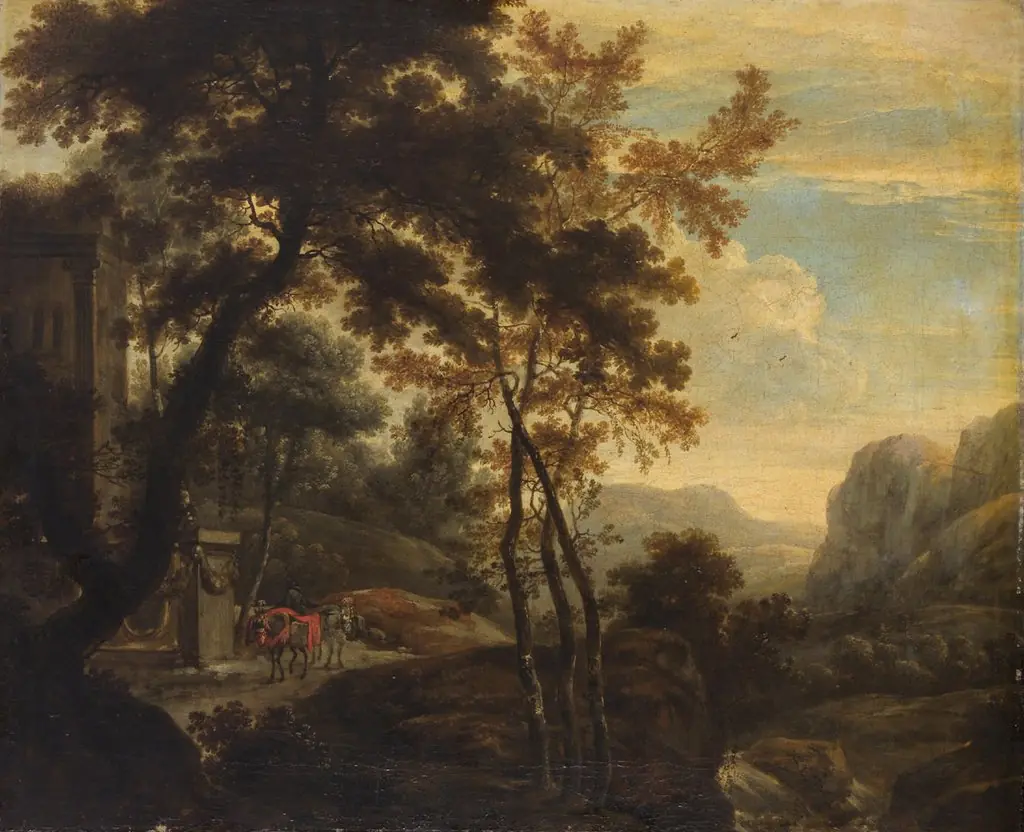
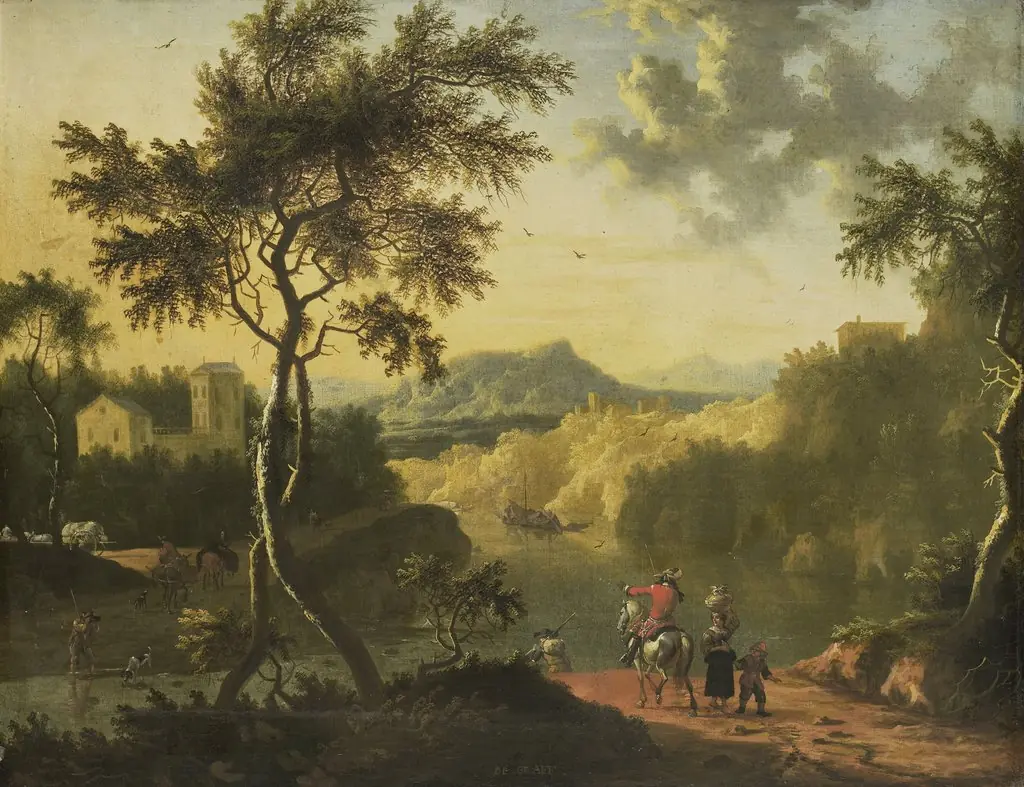
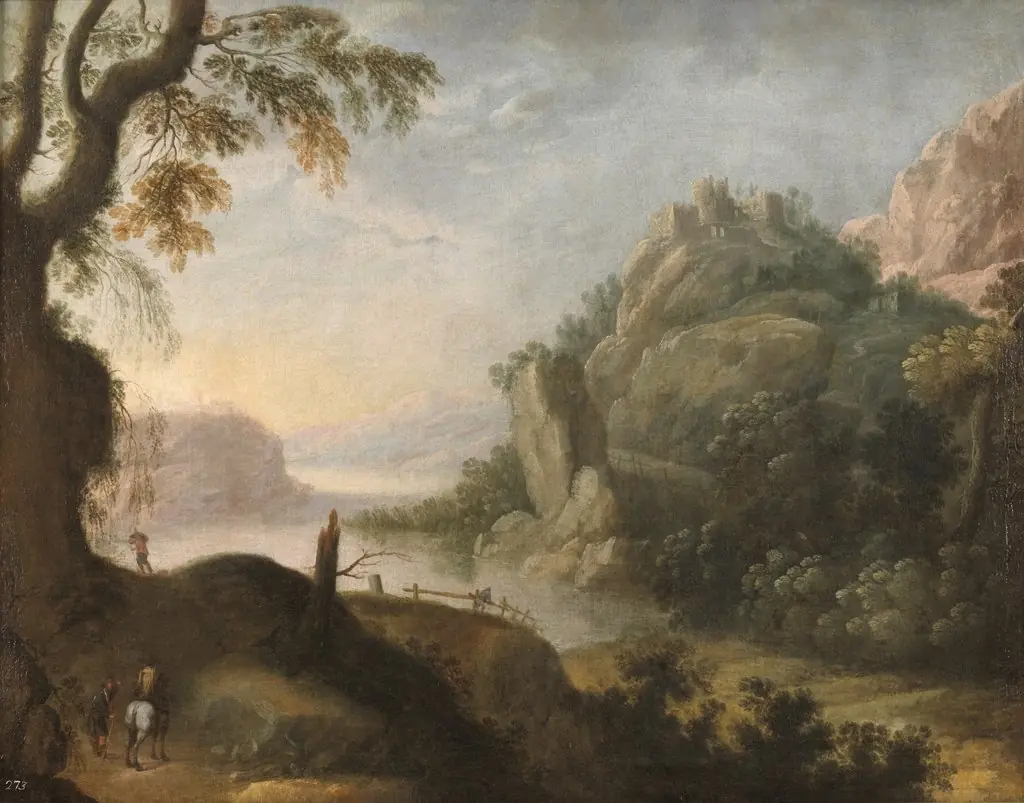
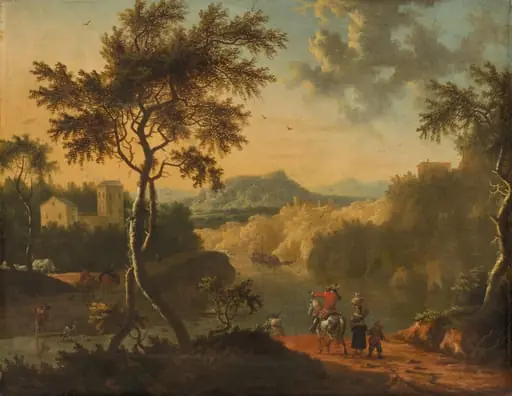
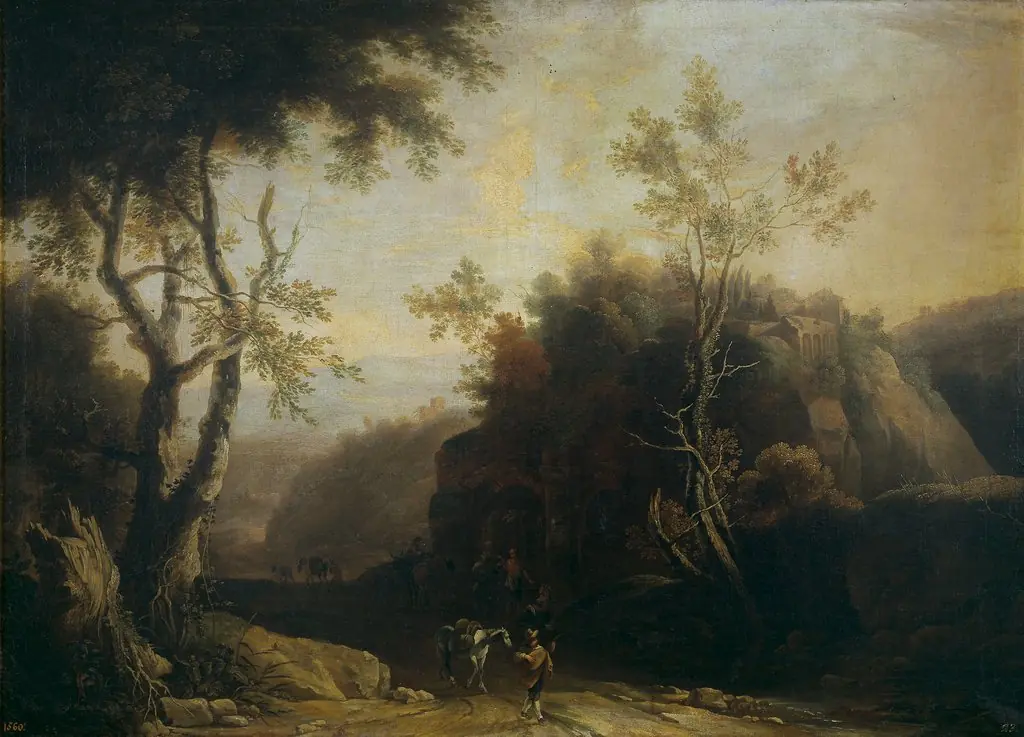
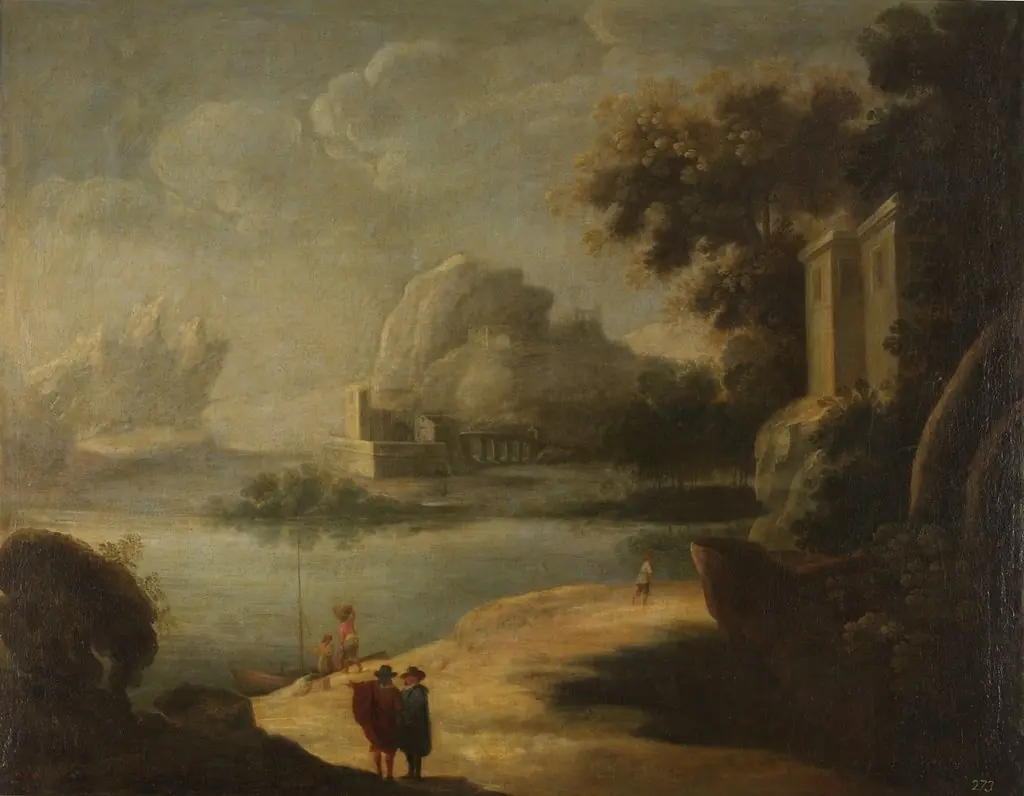
Created in 1717, this oil painting by David Richter the Elder depicts an expansive countryside scene under a cloud‑filled sky. A distant castle crowns a hill, while the foreground features trees, a water body, and a small group of figures on horseback. The overall atmosphere is tranquil, conveyed through muted browns and grays that dominate the palette.
Subject & Meaning
The composition balances human activity with the surrounding nature, suggesting a harmonious coexistence between people and the land. The elevated castle serves as a focal point, perhaps symbolizing authority or refuge, while the modest scale of the riders emphasizes the vastness of the environment and the contemplative mood of evening.
Technique & Style
Richter employs meticulous brushwork to render the foliage and architectural details, achieving a high degree of realism. The subdued tonal range, achieved through layered glazes of earth tones, creates depth and a soft atmospheric effect. Small figures are rendered with limited detail, reinforcing the dominance of the landscape over human presence.
History & Provenance
The work entered the collection of the Kunsthistorisches Museum in Vienna, where it remains on display. Its provenance traces back to the early 18th‑century Austrian court, reflecting the period’s interest in idealized pastoral scenes that combined topographical accuracy with poetic sentiment.
Context
Painted during the Baroque era, the piece aligns with contemporary trends that favored grand, yet intimate, depictions of nature. Richter’s approach mirrors the Austrian tradition of integrating architectural landmarks into bucolic settings, a practice that catered to aristocratic tastes for both landscape and heritage.
Legacy
While not as widely reproduced as later Romantic landscapes, the painting exemplifies early 18th‑century Austrian landscape painting and informs scholarly understanding of Richter’s oeuvre. Its preservation in a major museum ensures continued study of the period’s aesthetic priorities and technical methods.
Artist & collection
Artist
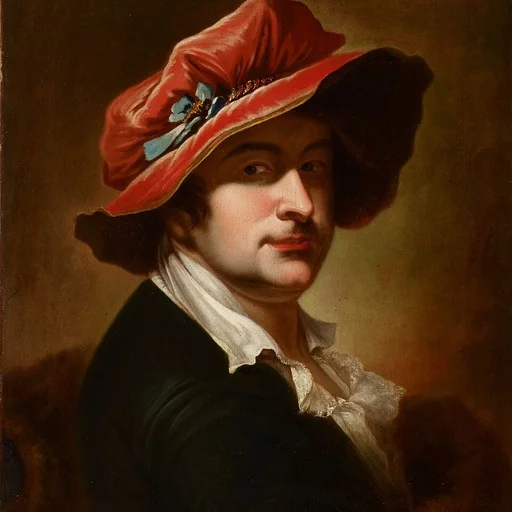
David Richter the Elder (1661–1735) was an artist, born in Stockholm.