Artwork
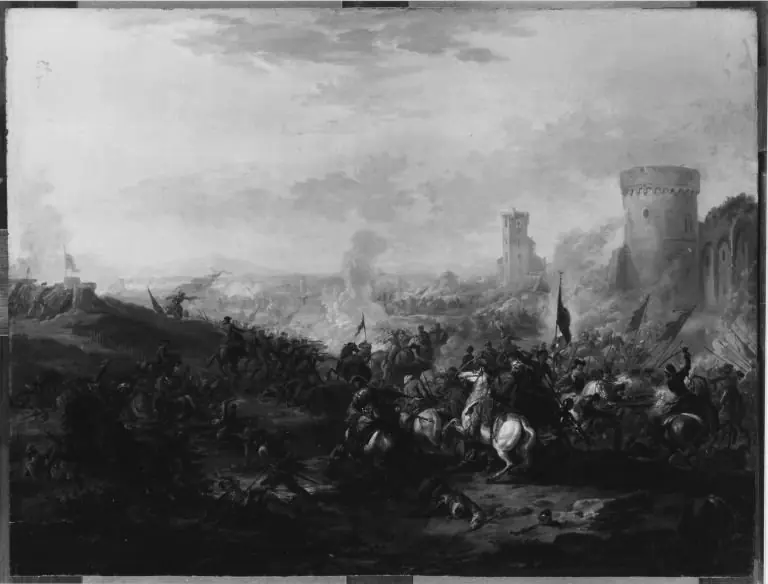
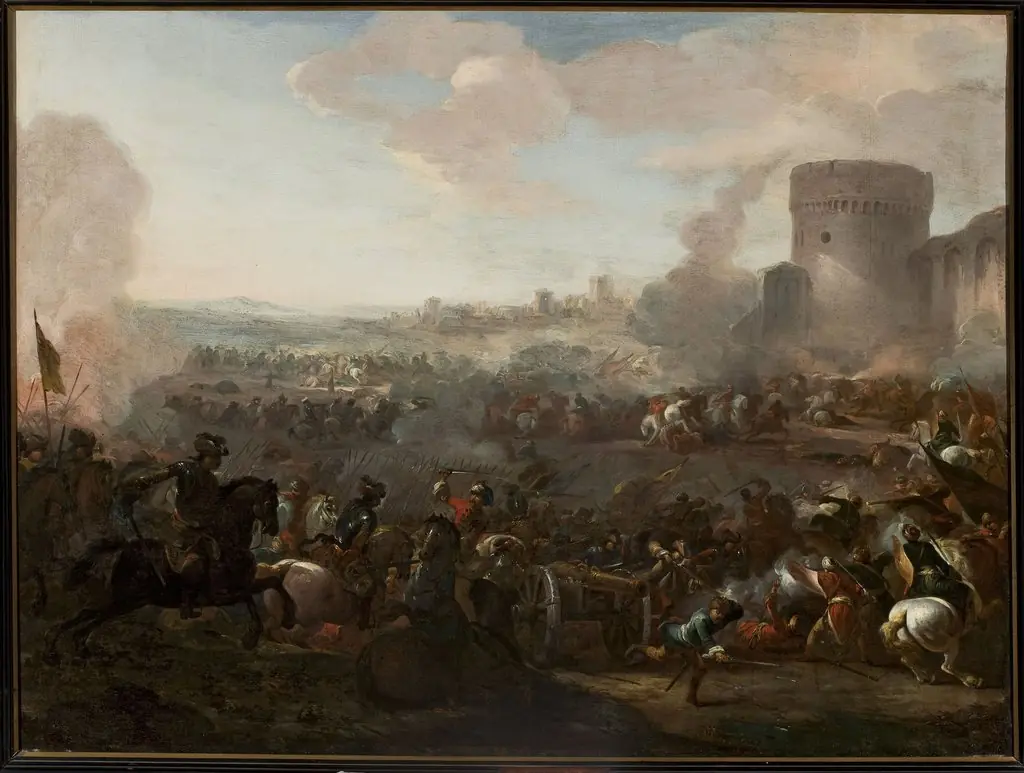
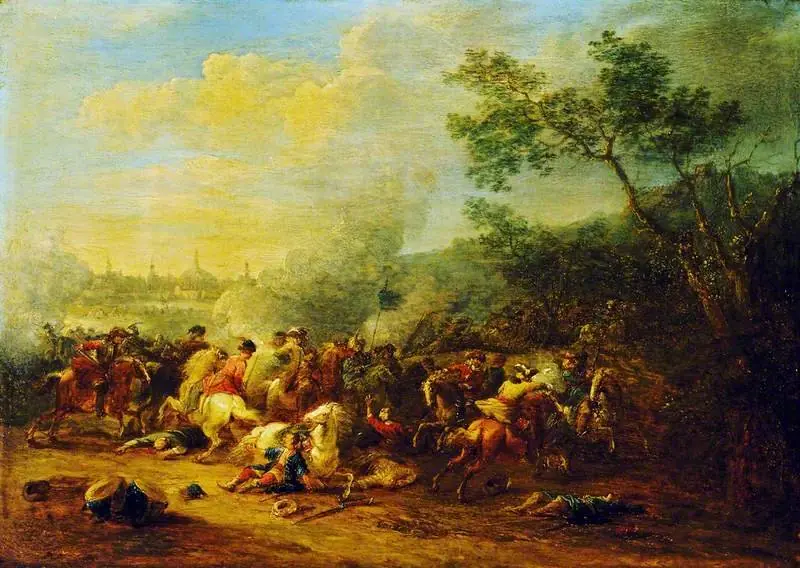
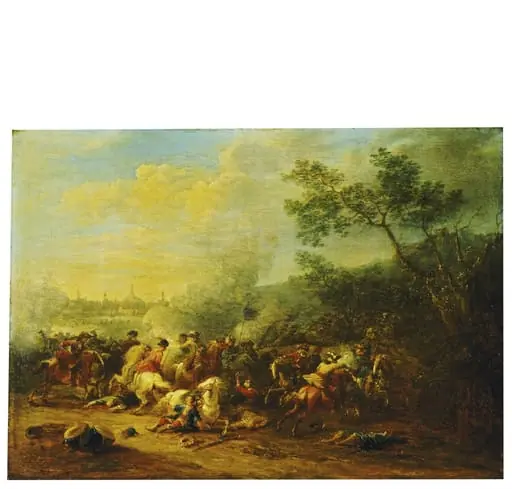
Cavalry Engagement against the Turks, with a Church in the Background
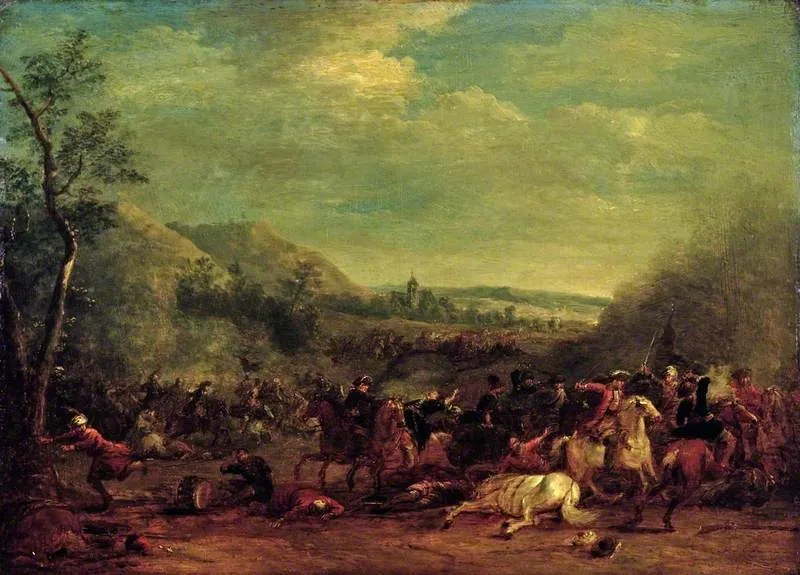
Cavalry Engagement against the Turks, with a Church in the Background is an oil painting by the Flemish Baroque painting artist Jan Pieter van Bredael. It dates from 1710 and is held in the collection of the Victoria and Albert Museum.
About this work
Overview
Painted in 1710 by Jan Pieter van Bredael the Younger, this oil-on-canvas work captures a cavalry clash between Christian forces and Ottoman troops.
Painted in 1710 by Jan Pieter van Bredael the Younger, this oil-on-canvas work captures a cavalry clash between Christian forces and Ottoman troops. Set against a hilly landscape with a distant church, the scene blends military action with architectural detail. Van Bredael, trained in the Antwerp artistic tradition, was known for dynamic battle scenes and genre-infused landscapes. The painting resides in the Victoria and Albert Museum, reflecting its historical and artistic significance within Flemish Baroque output.
Subject & Meaning
The painting portrays a moment of violent conflict between mounted troops, emphasizing chaos and movement. A fallen horse and a fleeing rider in red suggest disorder and retreat, while the distant church implies a sacred or civilizing presence amid warfare. The inclusion of architecture may reference the broader cultural and religious tensions of the era, framing the battle not merely as combat but as a clash of civilizations.
Technique & Style
Van Bredael employed oil paint to render motion and texture with precision, using chiaroscuro to heighten emotional intensity. Light falls selectively on figures and horses, casting deep shadows that define form and depth. The composition layers foreground action with a receding landscape, guiding the viewer’s eye toward the church. His brushwork balances energetic detail with atmospheric perspective, characteristic of Flemish Baroque narrative painting.
History & Provenance
Created during van Bredael’s tenure as a court painter in Prague and Vienna, the work reflects his exposure to Habsburg military culture and the political climate of Central Europe. It was likely commissioned or acquired by patrons interested in contemporary conflicts with the Ottoman Empire. The painting entered the Victoria and Albert Museum’s collection through documented acquisitions, preserving its link to early 18th-century artistic patronage.
Context
In the early 1700s, European powers frequently clashed with the Ottoman Empire along contested frontiers. Artists like van Bredael responded to public interest in these conflicts by producing dramatized battle scenes that blended fact with theatricality. His work fits within a broader tradition of Flemish painters who translated political events into visually compelling narratives for elite audiences.
Legacy
Van Bredael’s paintings contributed to the persistence of battle imagery in Flemish art beyond the 17th century. While not widely celebrated today, his works remain valuable for understanding how military themes were visualized in the early Enlightenment. The painting’s survival in a major public collection ensures its continued role as a historical document of artistic and geopolitical concerns in early 18th-century Europe.
Artist & collection
Artist
Jan Pieter van Bredael the Younger or Jan Peeter van Bredael the Younger (27 July 1683 – 1735) was a Flemish painter known for his cavalry battle scenes and landscapes with genre scenes of village festivals and fairs.