Artwork
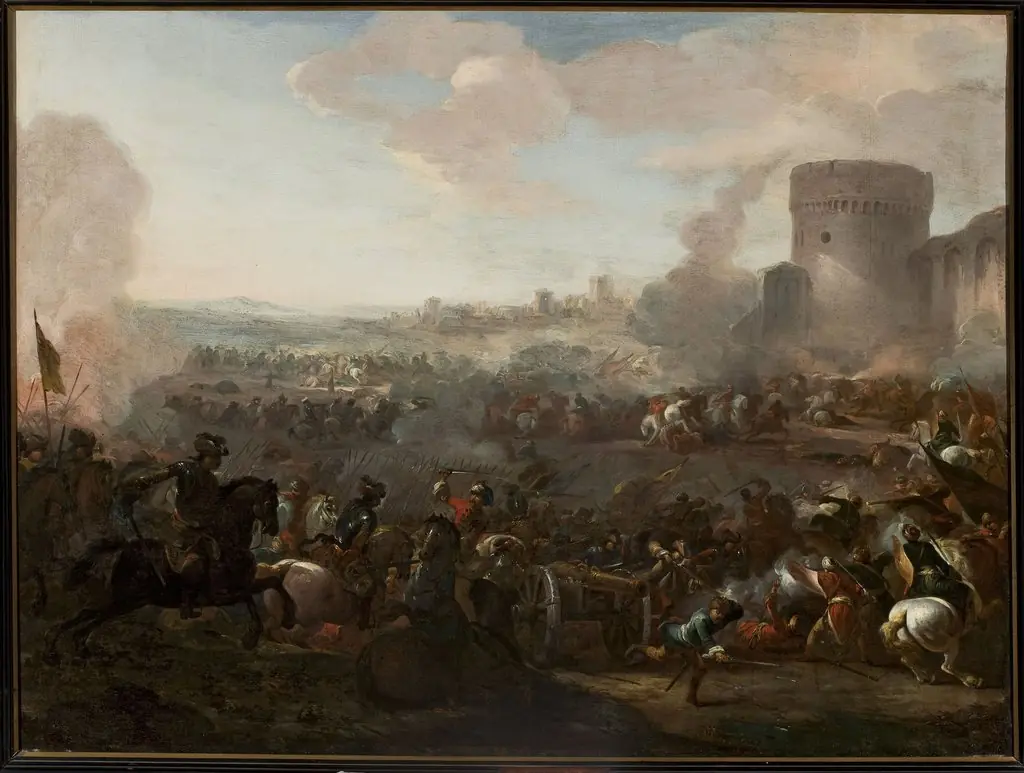
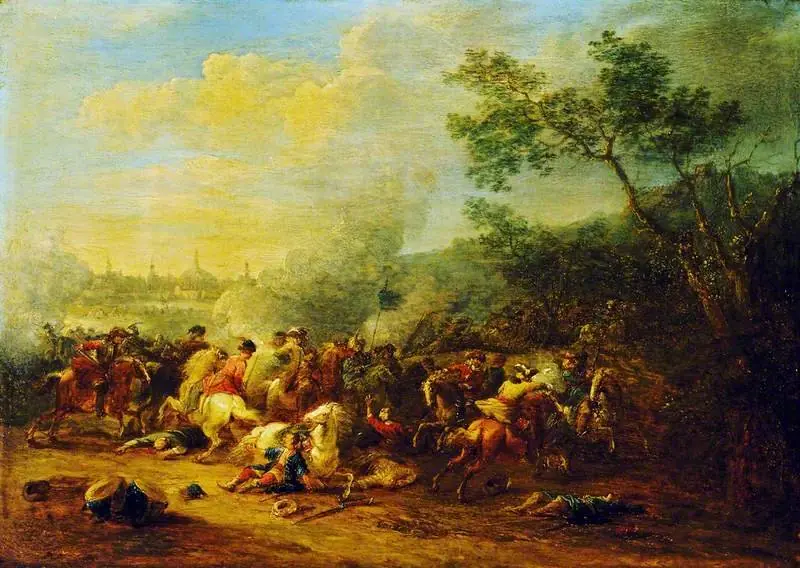
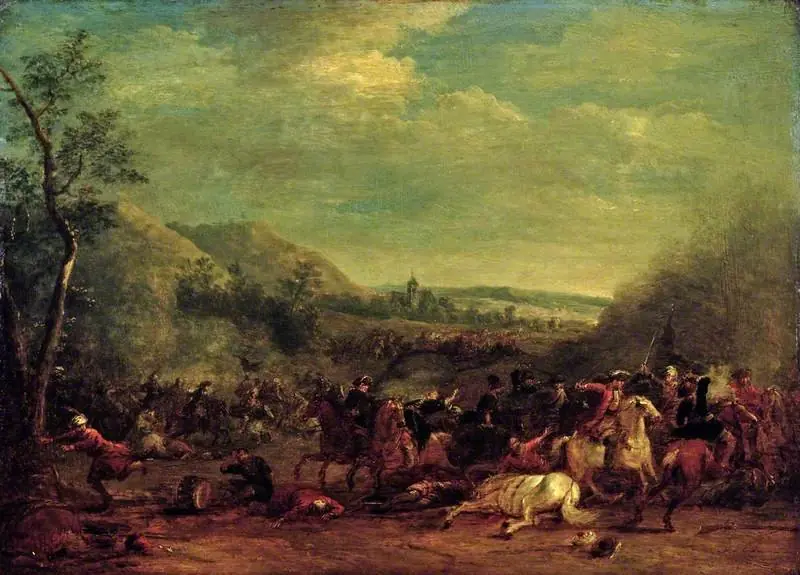
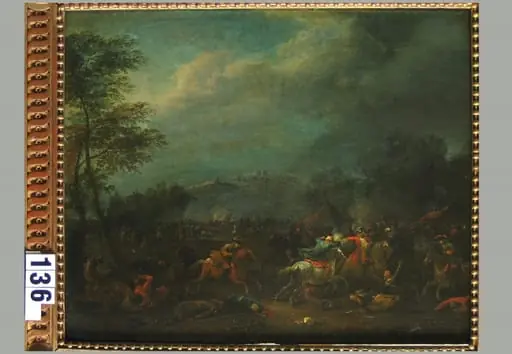
Cavalry Engagement against the Turks, with a Distant View of a Town
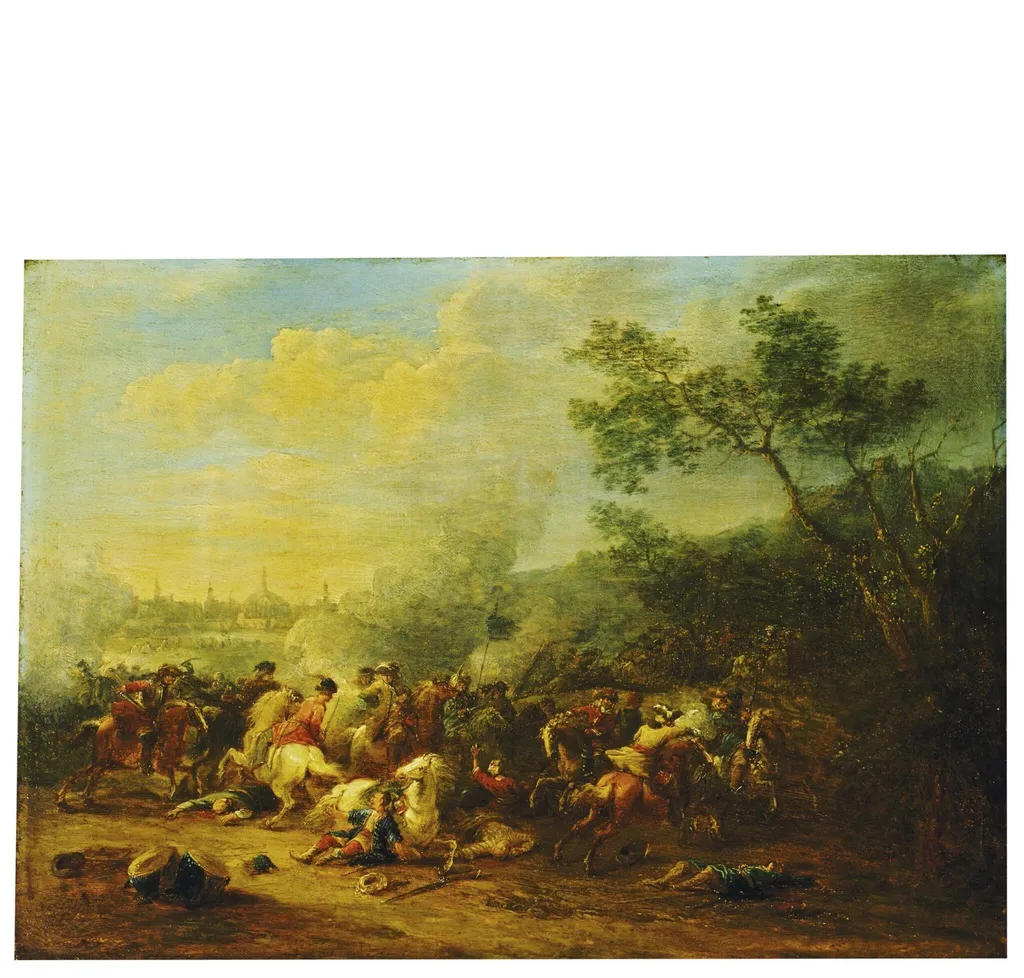
Cavalry Engagement against the Turks, with a Distant View of a Town is a paint painting by the Baroque artist Jan Pieter van Bredael. It dates from 1715 and is held in the collection of the Victoria and Albert Museum.
About this work
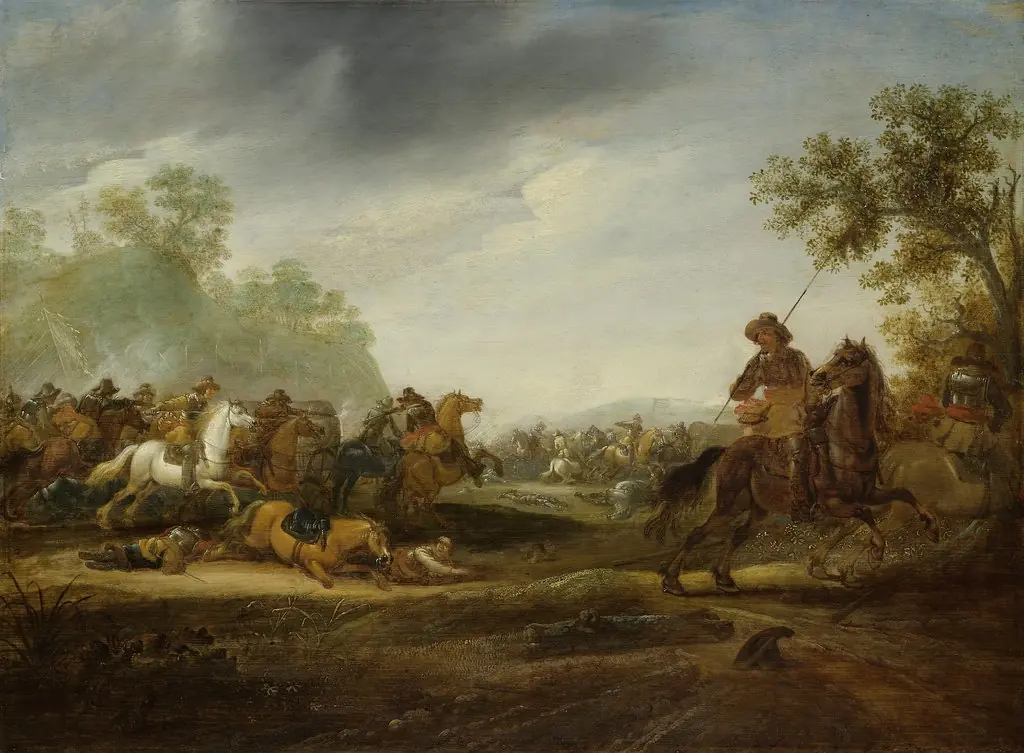
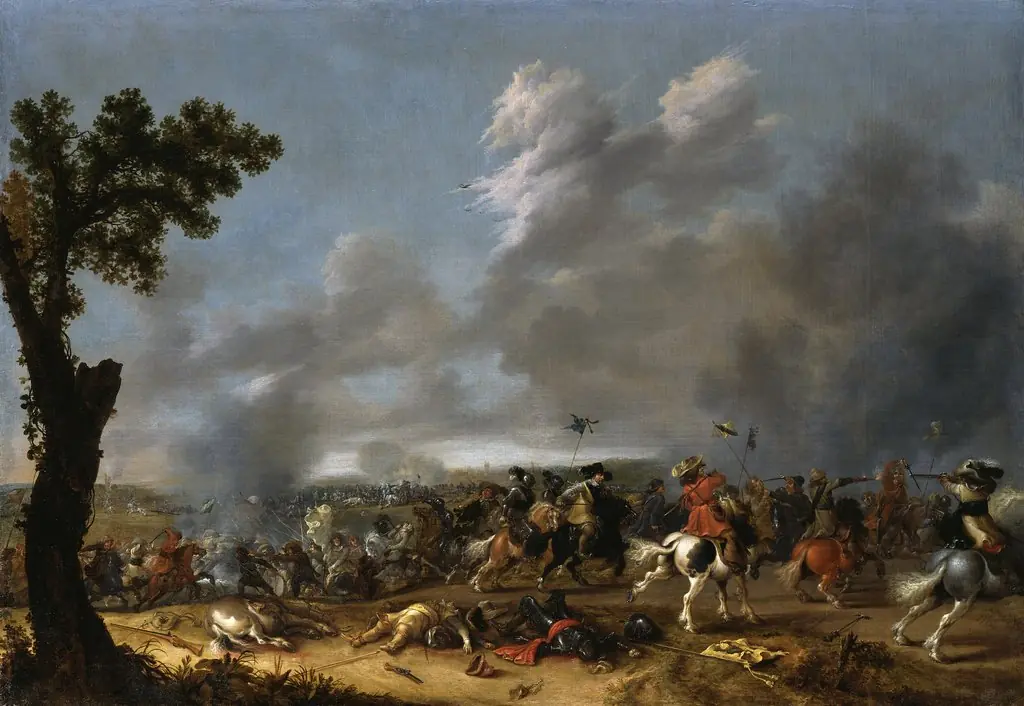
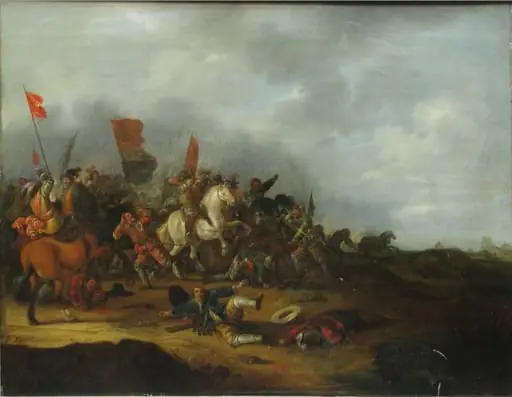
This painting shows a chaotic battle scene with soldiers on horseback and puffs of smoke in the air.
This painting shows a chaotic battle scene with soldiers on horseback and puffs of smoke in the air. The warriors wear colorful outfits, some in red, others in white and blue. Dust rises from their hooves as they clash near a walled town in the background.
The artist painted this during a real war—the Austrians fought the Turks in 1715. You can spot the Turkish soldiers by their tall hats and curved swords.
The sky glows golden in the distance, adding drama to the fight. If you like this battle style, check out Bredael, Jan Pieter van.
Overview
Painted by Jan Pieter van Bredael around the early 1720s, this work depicts a skirmish between cavalry forces, likely set during the Austro-Turkish War of 1715–1718. Though rooted in contemporary conflict, the scene avoids specific historical identification, instead presenting a generalized moment of mounted combat. The artist, active in both Antwerp and Prague, favored dynamic, loosely rendered battle scenes over documented events, focusing on motion and atmosphere rather than precision.
Subject & Meaning
The painting portrays a chaotic clash between mounted troops, with identifiable Turkish soldiers distinguished by their distinctive headgear and curved blades. The engagement appears less like a formal battle and more like a sudden ambush, emphasizing surprise and disorder. A distant walled town, bathed in golden light, frames the action, suggesting the broader context of territorial conflict without anchoring the scene to a specific location or moment.
Technique & Style
Bredael employed vivid, unblended pigments and a fluid brush technique to convey movement and energy. Smoke, dust, and swirling garments are rendered with loose strokes, enhancing the sense of turmoil. The composition avoids rigid structure, favoring diagonal energy and overlapping figures to simulate chaos. The luminous sky contrasts with the darker foreground, heightening drama without resorting to theatricality or idealization.
History & Provenance
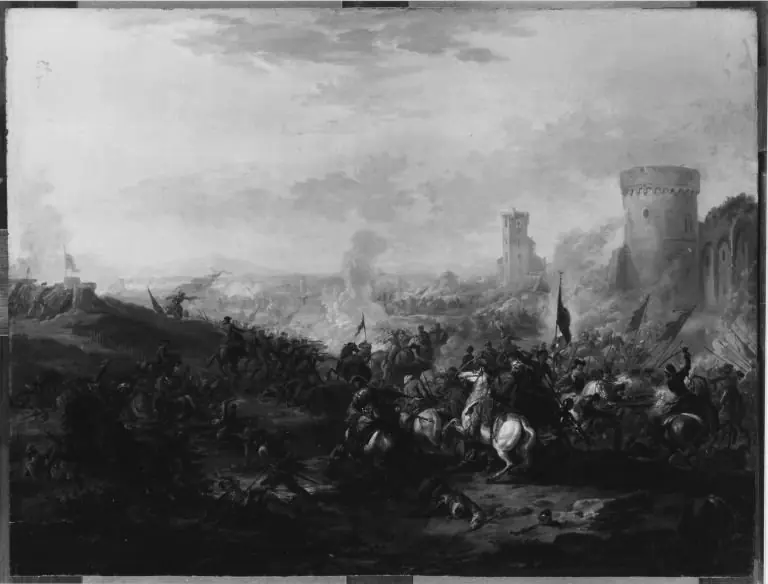
Bredael worked for Prince Eugene of Savoy in Prague before returning to Antwerp around 1720, where he joined the Guild of St Luke. This painting is part of a pair, its companion depicting a related military episode. While exact ownership history is undocumented, its subject aligns with commissions from aristocratic patrons interested in contemporary warfare. Its survival reflects the demand for such scenes among collectors seeking martial imagery without strict historical fidelity.
Context
The painting emerged during a period of sustained Habsburg-Ottoman conflict, particularly after Austria declared war on the Ottoman Empire in 1715. Though Bredael never witnessed the battles he depicted, he drew from reports, prints, and the visual culture of his time. His works catered to a European audience fascinated by the exoticism of Ottoman forces and the valor of Christian armies, blending fact with imaginative reconstruction.
Legacy
Bredael’s approach to battle painting influenced later genre-focused equestrian scenes in Central Europe. His emphasis on motion, color, and atmospheric effect, rather than topographical accuracy, set a precedent for artists treating military subjects as visual narratives rather than historical records. Though not widely celebrated today, his oeuvre remains a valuable record of how 18th-century audiences perceived and consumed images of war.
Own this work as a print
Artist & collection
Artist
Jan Pieter van Bredael the Younger or Jan Peeter van Bredael the Younger (27 July 1683 – 1735) was a Flemish painter known for his cavalry battle scenes and landscapes with genre scenes of village festivals and fairs.