Artwork
Judith
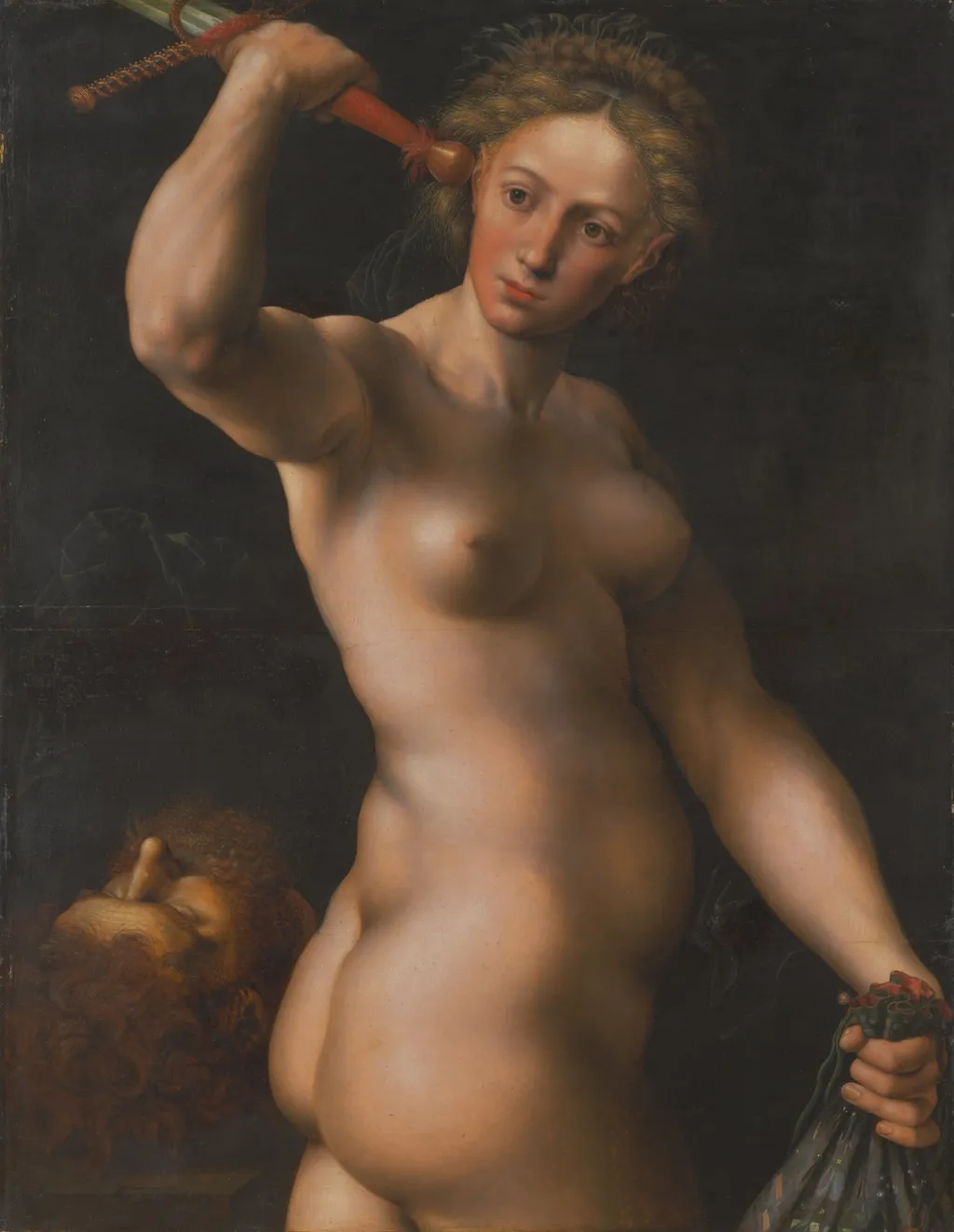
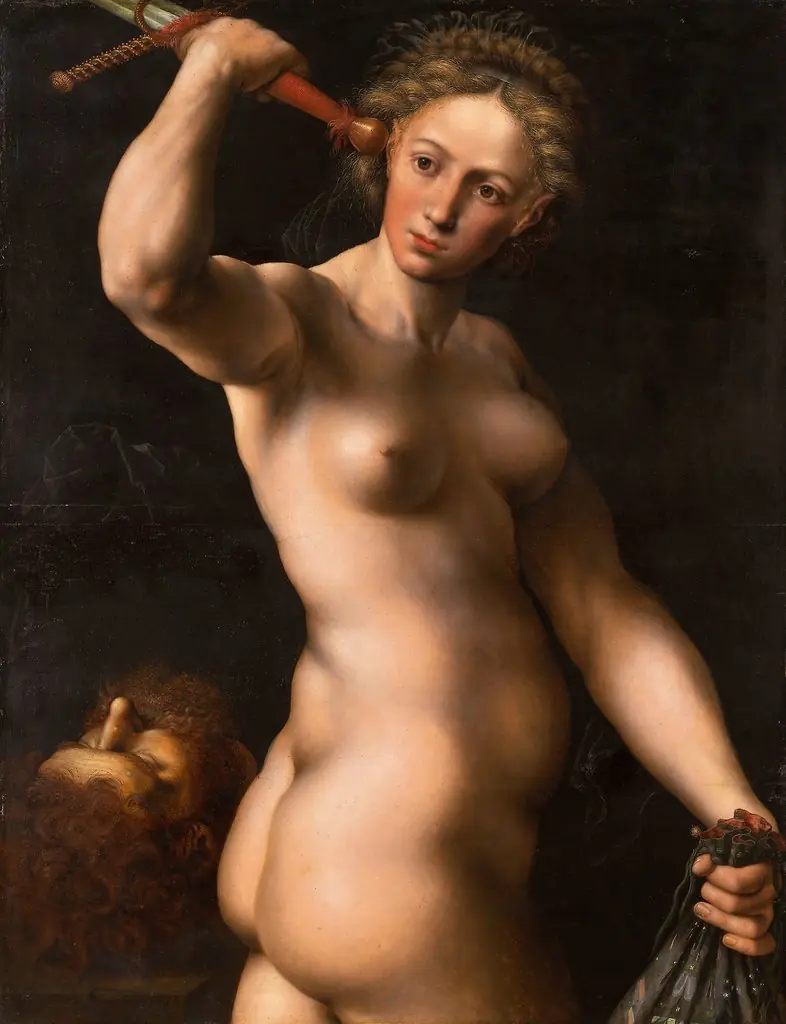
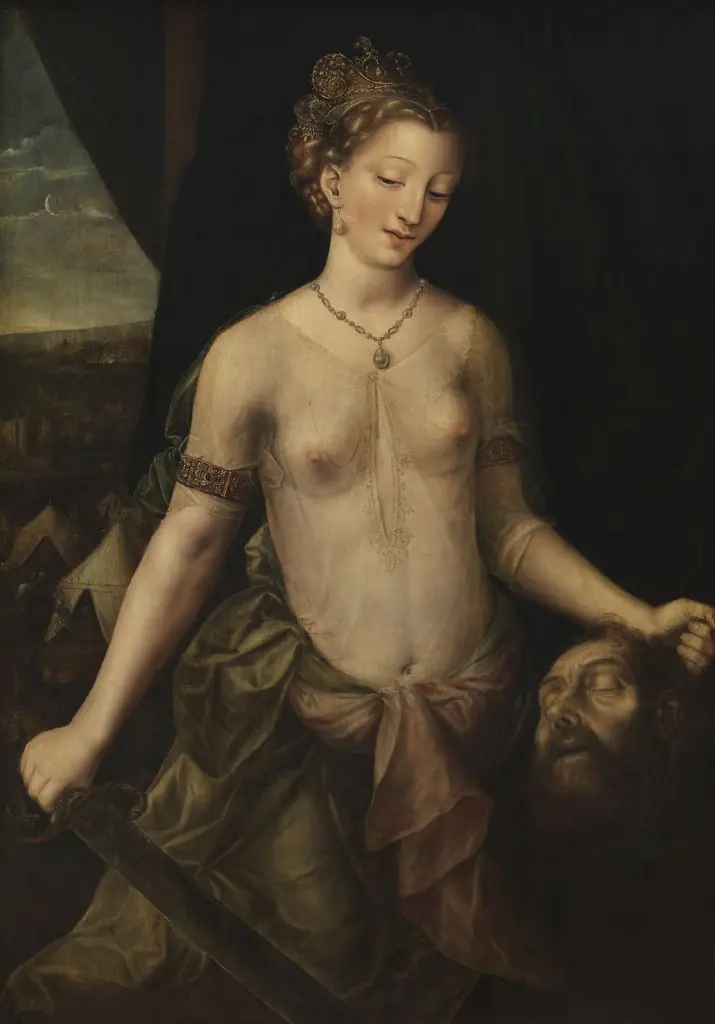
Judith is an oil painting by the Mannerist artist Jan Sanders van Hemessen. It dates from 1540 and is held in the collection of the Art Institute of Chicago.
About this work
Overview
Painted in the early 16th century, this oil on panel depicts Judith holding the severed head of Holofernes, the Assyrian general she slew to save her people.
Painted in the early 16th century, this oil on panel depicts Judith holding the severed head of Holofernes, the Assyrian general she slew to save her people. Life-size and rendered with intense realism, the work captures a moment of quiet aftermath rather than violent action. The figure stands nude, her posture taut with exertion, surrounded by meticulously detailed textures that ground the scene in physical presence.
Subject & Meaning
Judith’s act of decapitation is portrayed not as a divine miracle but as a calculated, human act of survival. Her nudity and muscular form emphasize both her physical power and the sexualized means by which she gained access to her enemy. The painting reflects contemporary unease with female autonomy: admiration for her courage is entangled with discomfort over the body that enabled it, revealing a tension between moral praise and eroticized fear.
Technique & Style
Van Hemessen fused the idealized anatomy of classical sculpture and Renaissance masters like Michelangelo with Northern European attention to detail. Judith’s twisting pose echoes classical contrapposto, while textures—her gauzy veil, the brocade of her bag, the coarse beard of Holofernes—are rendered with precision. Dramatic lighting enhances the sculptural volume of her form and intensifies the psychological weight of the scene.
History & Provenance
Created in the Netherlands during the 1520s–1530s, the painting belongs to a small group of works by Van Hemessen that reinterpret biblical heroines through a humanist lens. It was likely commissioned by a private patron interested in moral allegory and classical revival. The panel’s survival suggests it was valued as much for its artistic ambition as its thematic complexity.
Context
In early 16th-century northern Europe, depictions of Judith and other strong women served as vehicles to explore shifting gender roles amid religious and social upheaval. While such figures were celebrated for their virtue and courage, their physicality often provoked ambivalence. Van Hemessen’s work aligns with a broader trend of using myth and scripture to negotiate anxieties about female agency in a changing world.
Legacy
The painting contributed to a visual language in which female strength was inseparable from eroticized form, influencing later depictions of Judith by artists such as Caravaggio and Artemisia Gentileschi. Its fusion of idealized anatomy with psychological realism set a precedent for how moral narratives could be rendered with both physical immediacy and emotional ambiguity.
Own this work as a print
Artist & collection
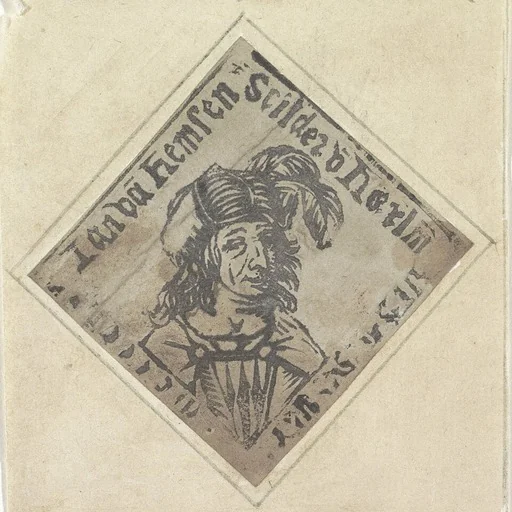
Artist
Jan Sanders van Hemessen (c. 1500 – c. 1566) was a leading Flemish Renaissance painter, belonging to the group of Italianizing Flemish painters called the Romanists, who were influenced by Italian Renaissance painting.…