Artwork
Still Life with a Barrel
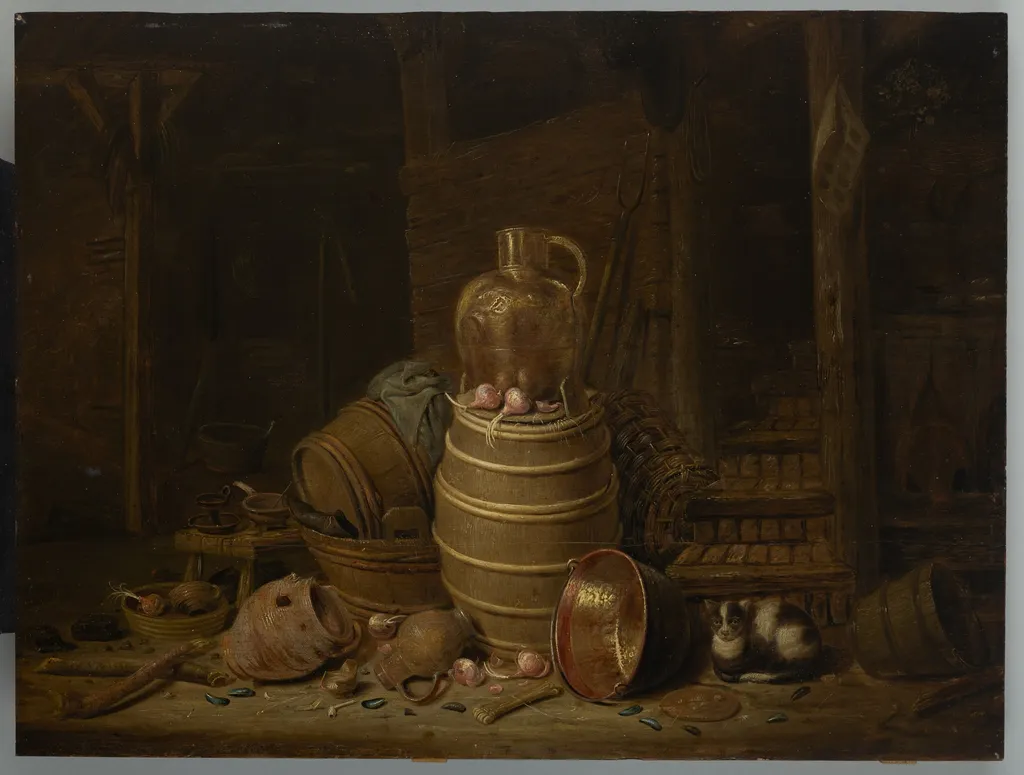
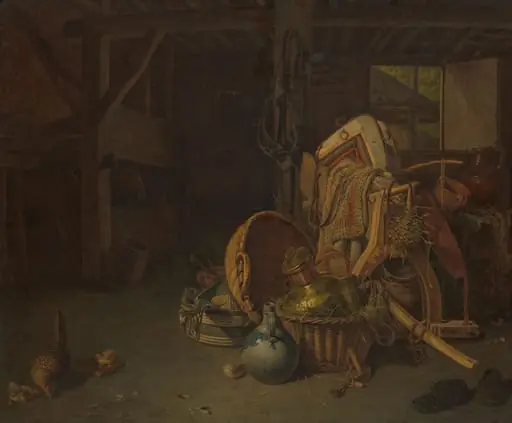
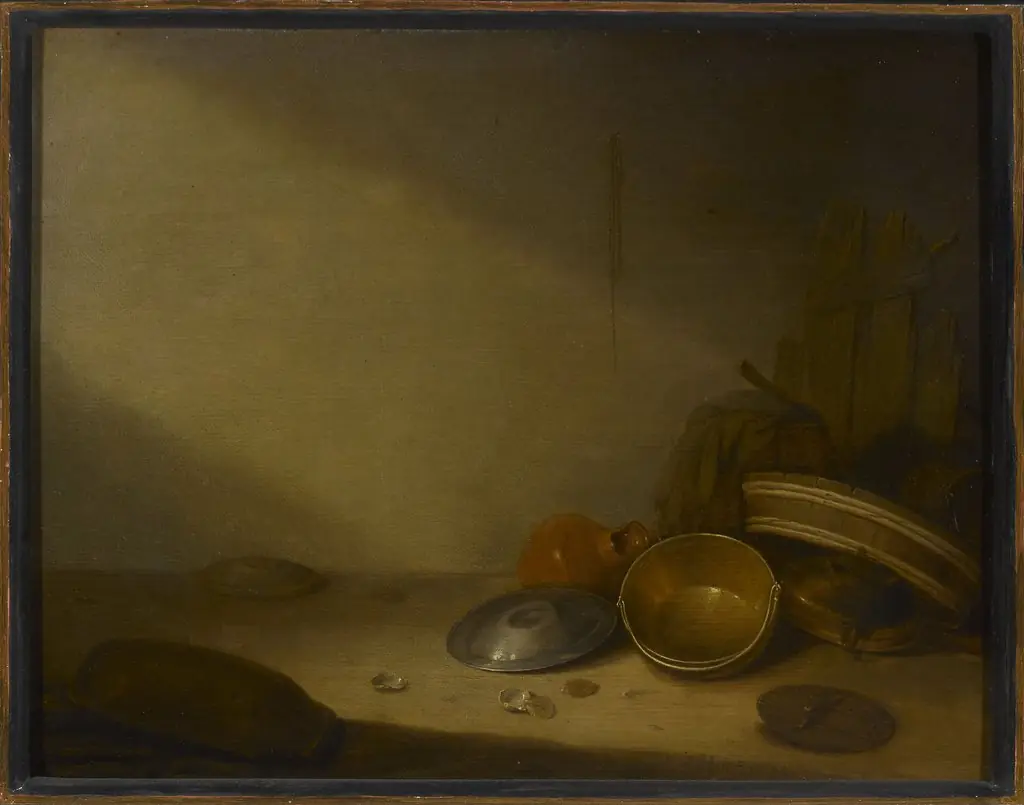
Still Life with a Barrel is an oil painting by the Dutch Golden Age artist Jan Spanjaert. It dates from 1640 and is held in the collection of the National Museum in Kraków.
About this work
Overview
The dim, enclosed space is shaped by a single directional light, casting deep shadows and highlighting surfaces with subtle gradations.
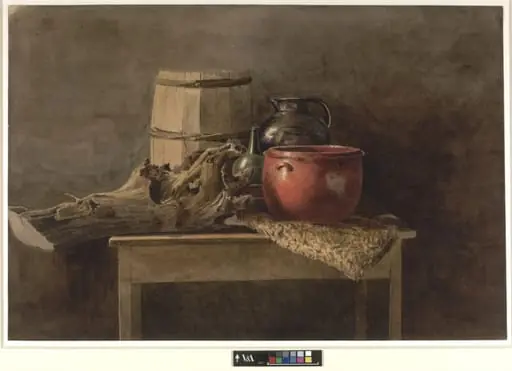
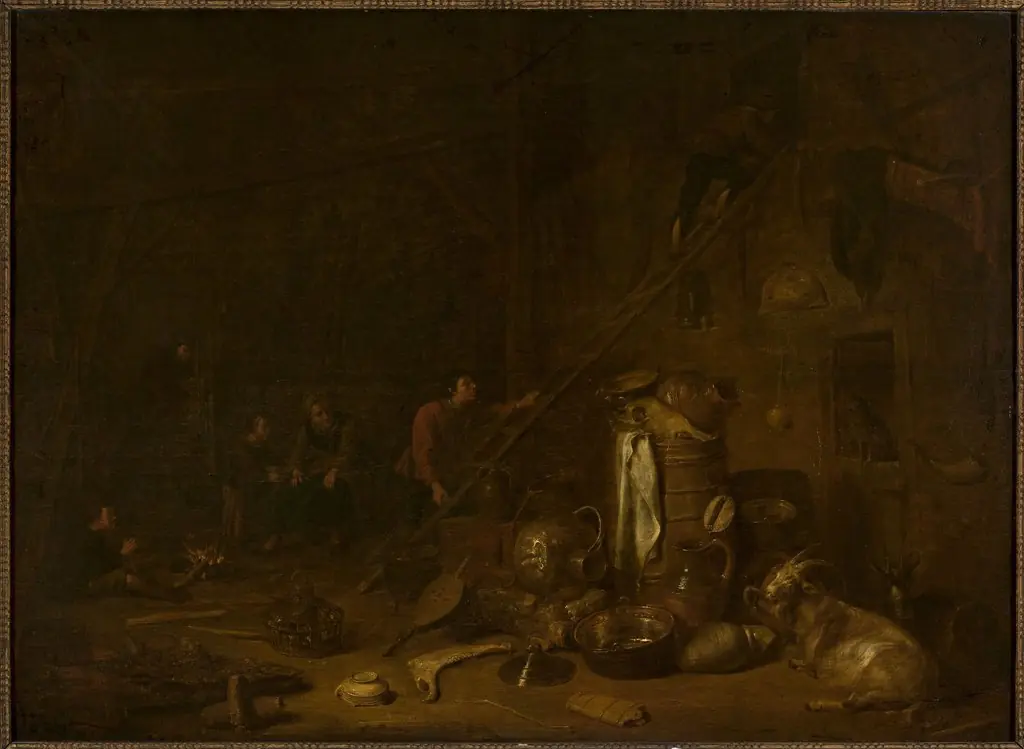
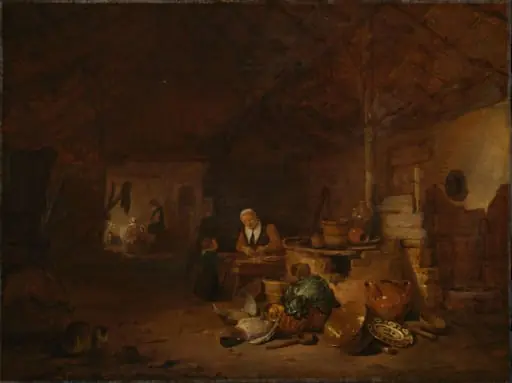
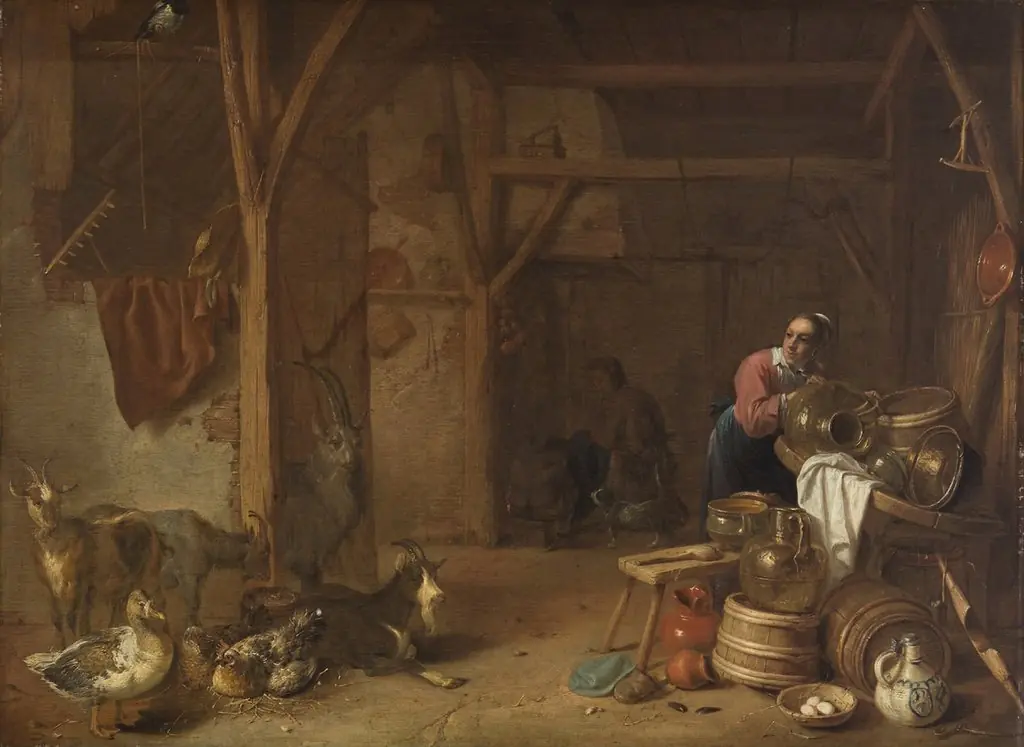
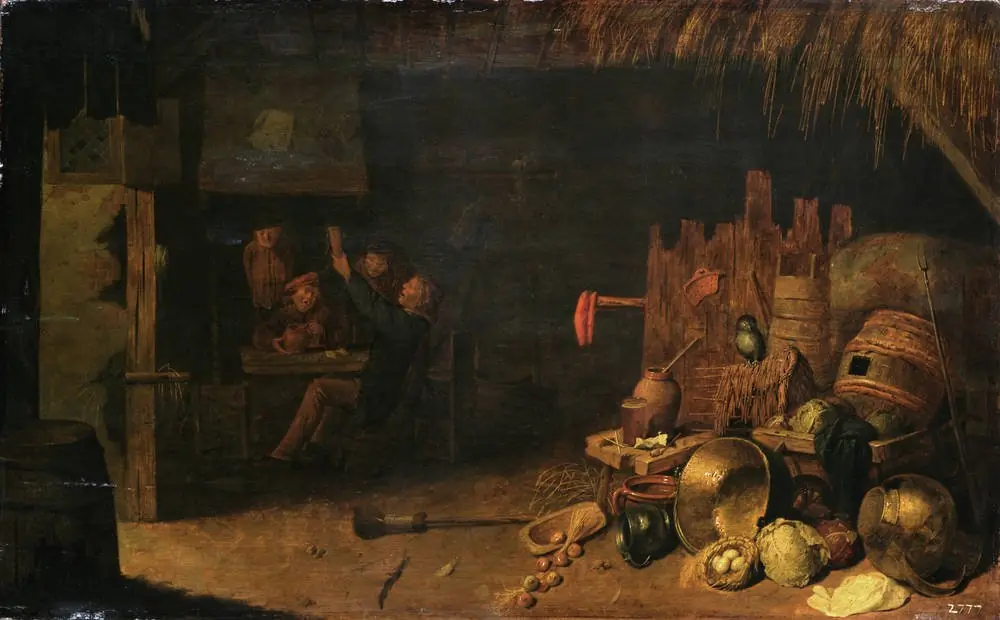
Painted in 1640 by Jan Spanjaert, this oil-on-canvas still life presents a modest interior scene dominated by a large wooden barrel. The composition gathers everyday objects—jugs, baskets, root vegetables—arranged with quiet precision. The dim, enclosed space is shaped by a single directional light, casting deep shadows and highlighting surfaces with subtle gradations. The work belongs to the National Museum in Kraków, where it remains a quiet example of Dutch-influenced Dutch Golden Age still life.
Subject & Meaning
The arrangement of humble domestic items—barrel, jug, vegetables—suggests themes of sustenance and labor rather than luxury. The barrel, central and sturdy, may imply storage, trade, or rural economy. The absence of human figures and the quiet disorder of the scene invite contemplation of ordinary life. No symbolic allegories are overt; meaning arises from the dignity given to utilitarian objects, reflecting a cultural appreciation for the material world.
Technique & Style
Spanjaert employs chiaroscuro to model forms with precision, using warm earth tones for the barrel and vegetables against a cool, receding background. Brushwork is restrained but attentive, capturing the grain of wood, the roughness of basket weave, and the sheen of ceramic. Light falls from the left, defining volume without theatricality. The palette is muted, avoiding bright hues, reinforcing the painting’s somber, introspective mood.
History & Provenance
The painting entered the National Museum in Kraków’s collection in the early 20th century, likely acquired through Polish or Central European networks that gathered Dutch and Flemish works. Its attribution to Jan Spanjaert, a lesser-known artist from the Dutch Republic, reflects scholarly consensus based on stylistic parallels with his documented works. No earlier ownership records are publicly documented, but its condition suggests it remained in private hands until institutional acquisition.
Context
Created during the Dutch Golden Age, the painting aligns with regional trends favoring quiet, domestic still lifes over grand narratives. While Dutch artists like Pieter Claesz and Willem Claesz Heda explored similar themes, Spanjaert’s work reflects a more localized, possibly Flemish-influenced sensibility. The emphasis on texture and light, without overt symbolism, places it within a broader Northern European tradition that valued observation over moralizing.
Legacy
Though not widely exhibited outside Poland, the painting contributes to understanding the diversity of still-life practice beyond major artistic centers. Its restrained composition and focus on materiality offer insight into how regional artists interpreted prevailing styles. It remains a reference point for studies of everyday life in 17th-century Northern Europe, valued for its quiet authenticity rather than its fame.
Artist & collection