Artwork
Happy Lovers
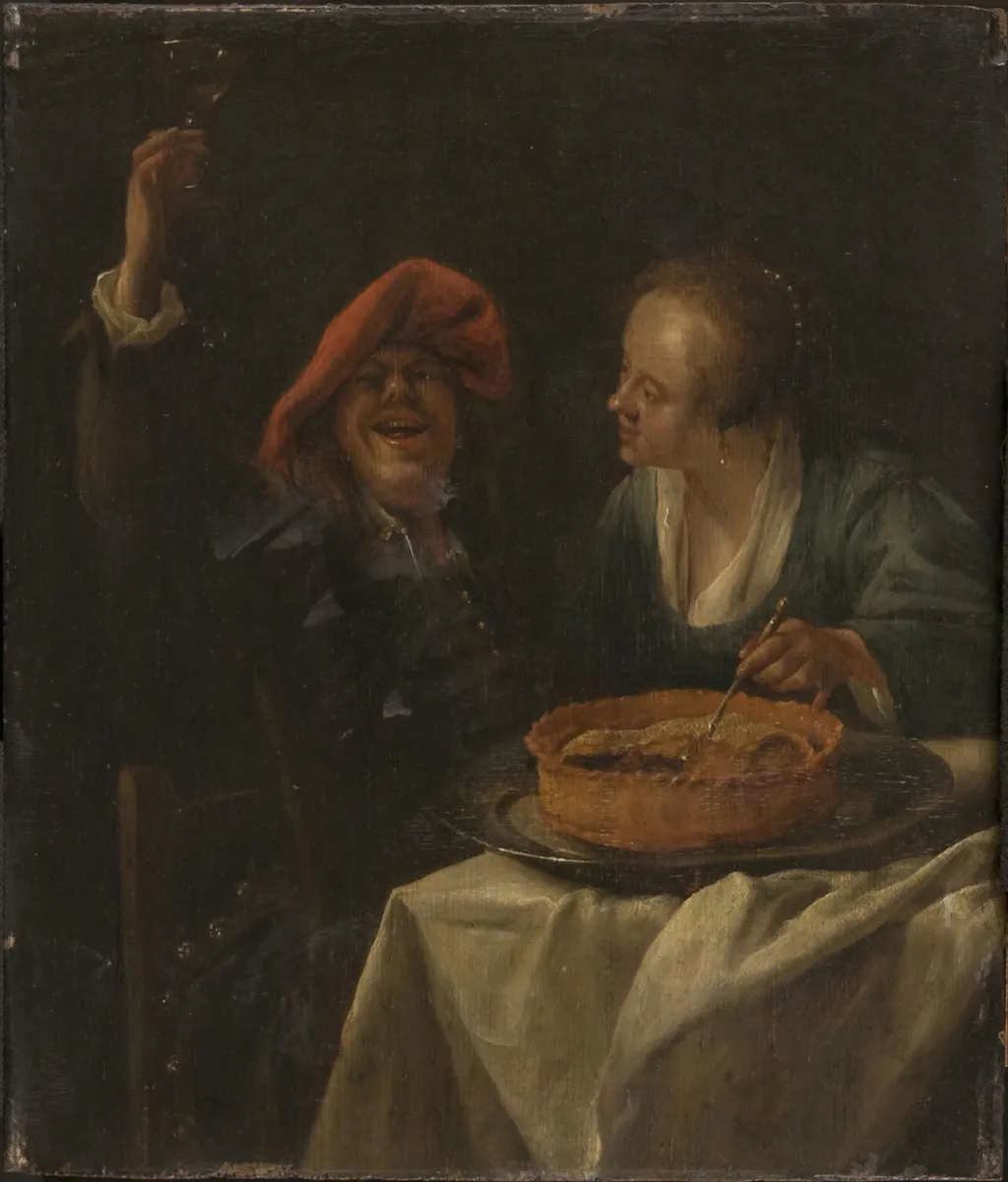
Happy Lovers is an oil painting by the Dutch Golden Age artist Jan Steen. It dates from 1660 and is held in the collection of the Philadelphia Museum of Art.
About this work
Overview
The work resides in the Philadelphia Museum of Art, where it exemplifies Steen’s interest in everyday life during the Dutch Golden Age.
Painted in 1660, Happy Lovers is an oil-on-canvas genre scene by Dutch artist Jan Steen. It depicts a domestic moment between two figures at a table, rendered with subtle narrative tension. The work resides in the Philadelphia Museum of Art, where it exemplifies Steen’s interest in everyday life during the Dutch Golden Age. Its intimate scale and focused composition invite close observation of human interaction.
Subject & Meaning
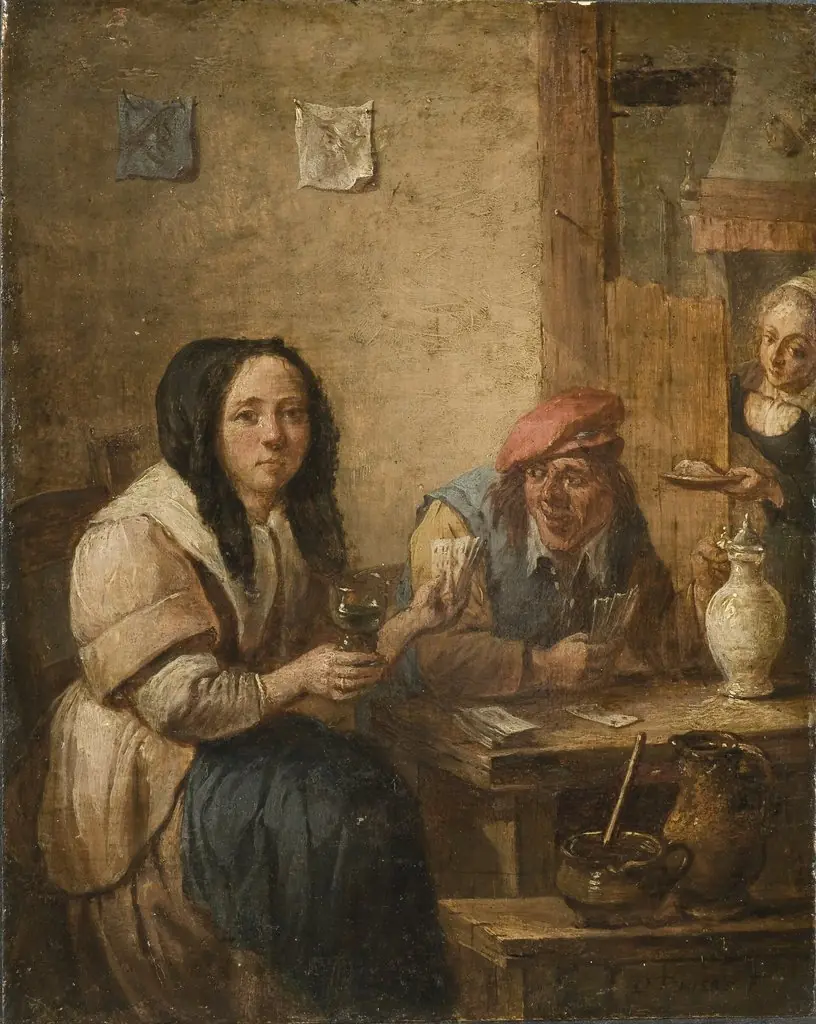
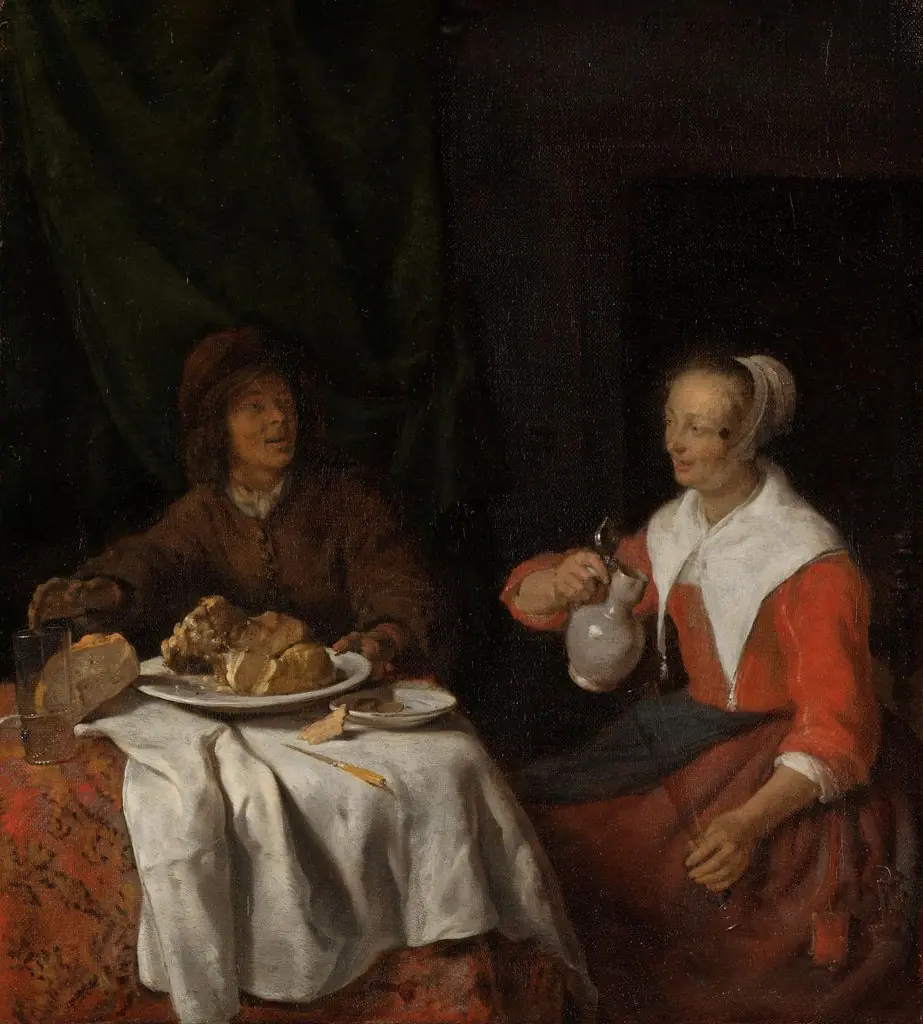
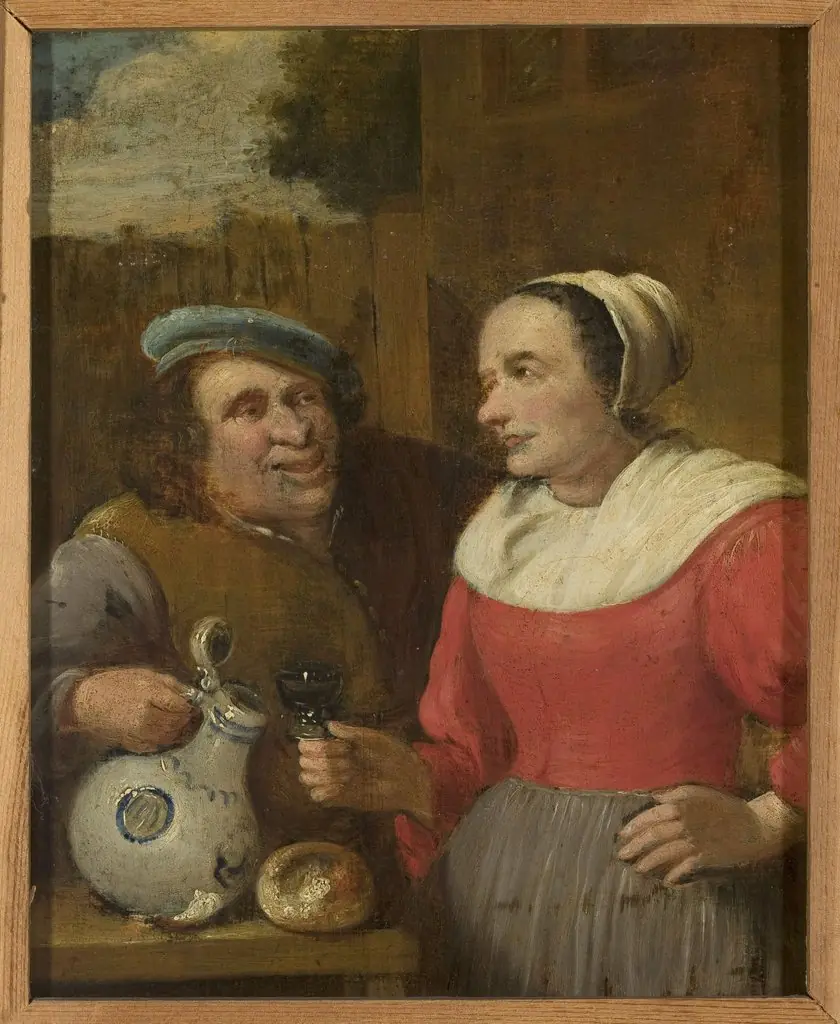
The painting captures a quiet exchange between a man raising a glass and a woman holding a spoon, her gaze fixed on him. While his expression suggests mirth, her demeanor is more contemplative, hinting at unspoken dynamics. The pie on the table may reference domestic abundance or seasonal celebration. Steen avoids moralizing, instead presenting a nuanced moment of connection, ambiguity, and possible courtship within a private setting.
Technique & Style
Steen employs a restrained palette with warm tones against a dark, receding background to draw attention to the figures. Brushwork is precise yet fluid, particularly in the rendering of fabric and facial expressions. The lighting is naturalistic, modeling forms without theatricality. The composition centers the pair at a diagonal table, creating visual rhythm and emphasizing their psychological proximity despite differing emotional states.
History & Provenance
The painting entered the Philadelphia Museum of Art’s collection in the early 20th century, acquired through established European channels common to American museums of the period. Its earlier ownership is undocumented, but its style and signature align with Steen’s mid-career output. It has been consistently attributed to him since its museum acquisition, with no evidence of significant restoration or alteration.
Context
Created during the Dutch Golden Age, Happy Lovers reflects the era’s fascination with domestic interiors and moral ambiguity in daily life. While many contemporaries painted scenes of revelry or vice, Steen often portrayed quieter, psychologically layered moments. This work fits within a broader tradition of genre painting that valued observation over idealization, capturing the subtleties of human behavior in middle-class homes.
Legacy
Happy Lovers remains a representative example of Steen’s ability to convey complex interpersonal dynamics through ordinary scenes. It influenced later genre painters who sought realism over sentimentality. Though not widely reproduced, it is studied for its nuanced portrayal of emotion and its quiet departure from overt moral narratives common in 17th-century Dutch art.
Artist & collection
Artist
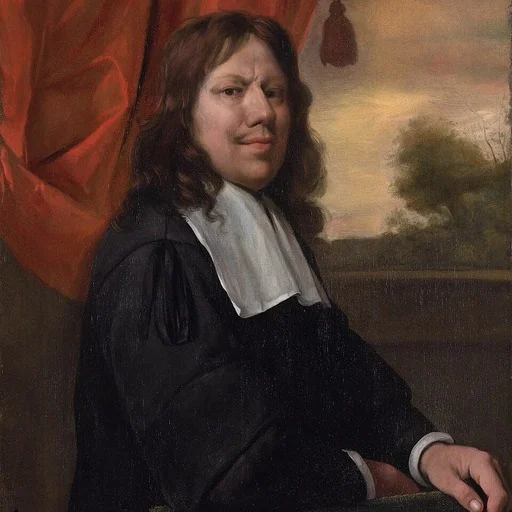
Jan Havickszoon Steen was a Dutch Golden Age painter, one of the leading genre painters of the 17th century.

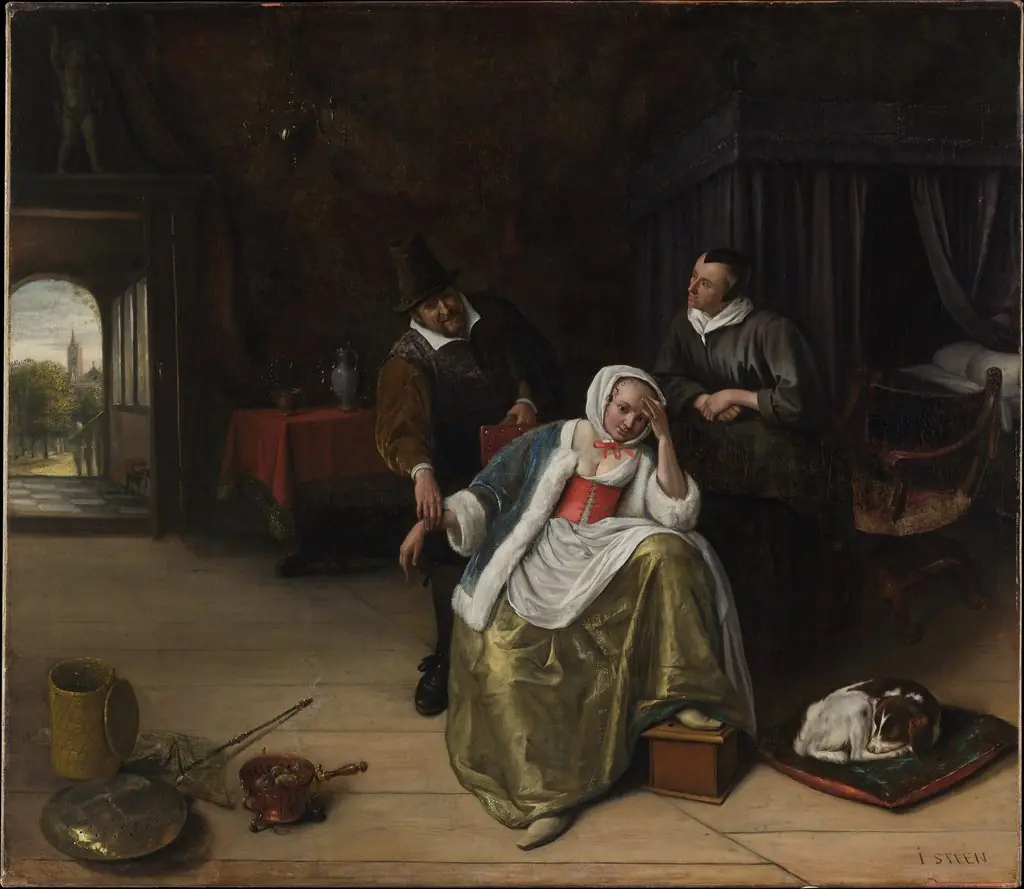 Paintings of physicians by Jan Steen
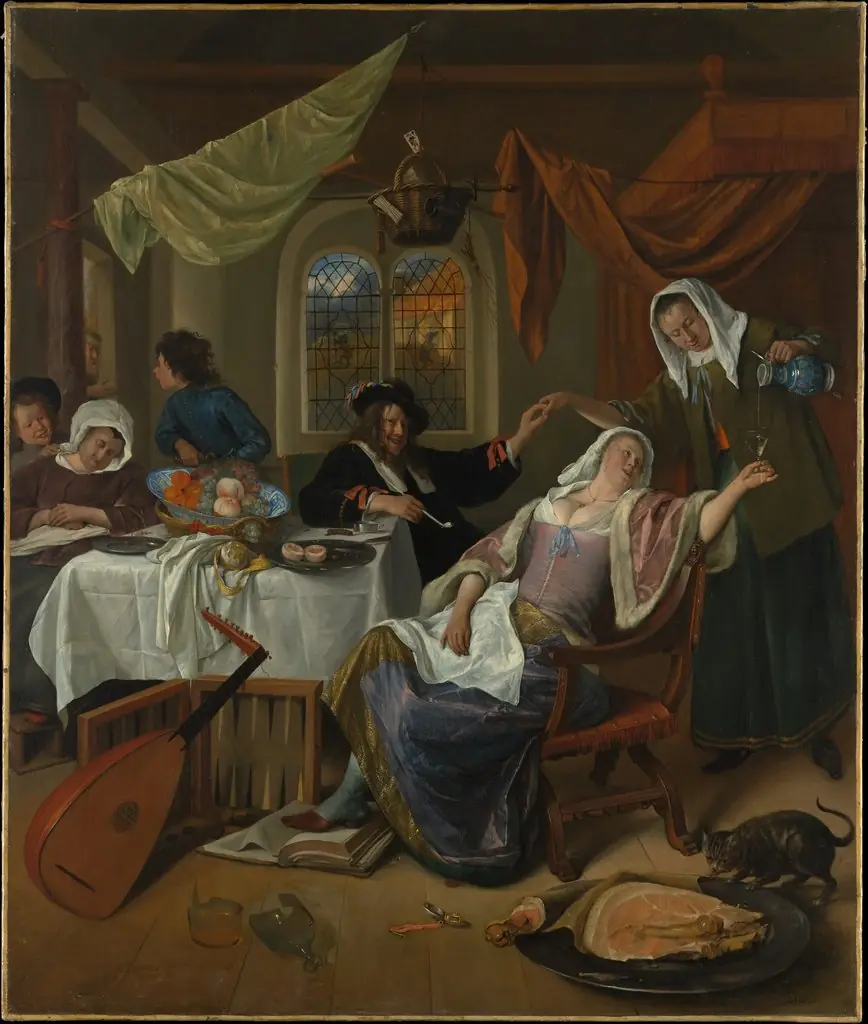 The Dissolute Household
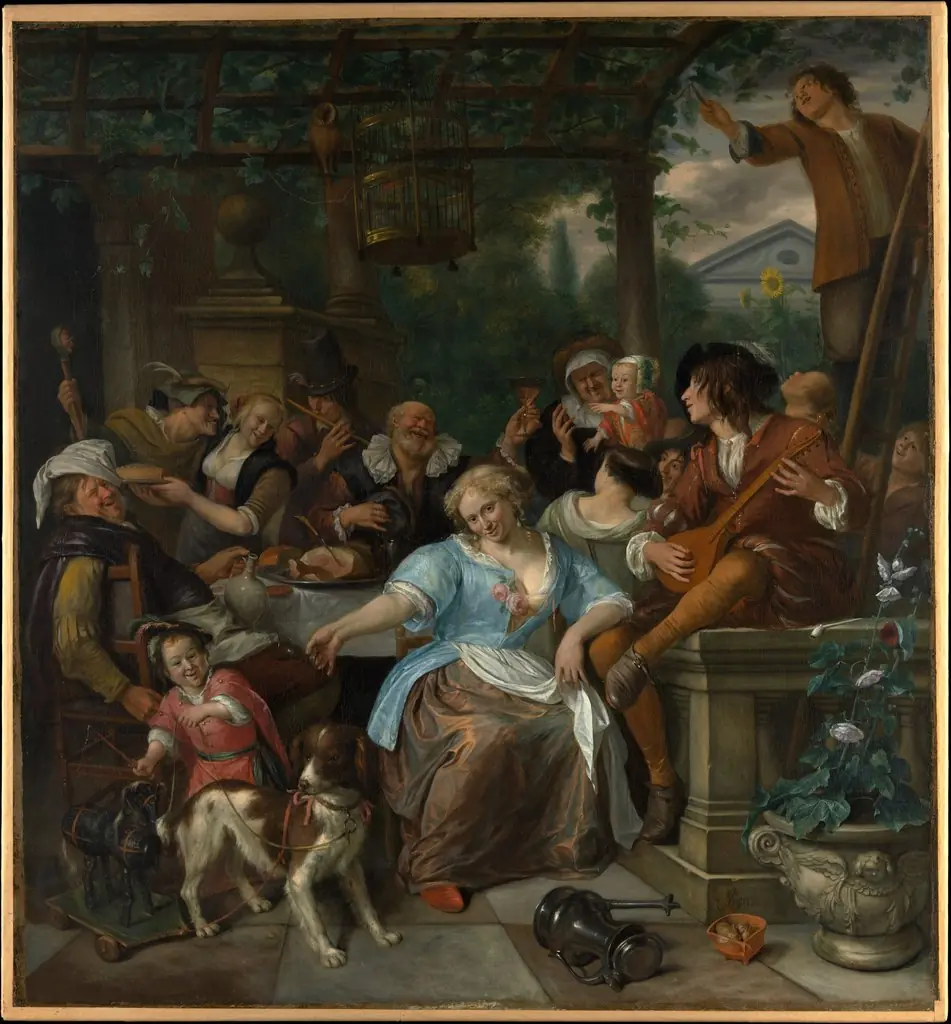 Merry Company on a Terrace
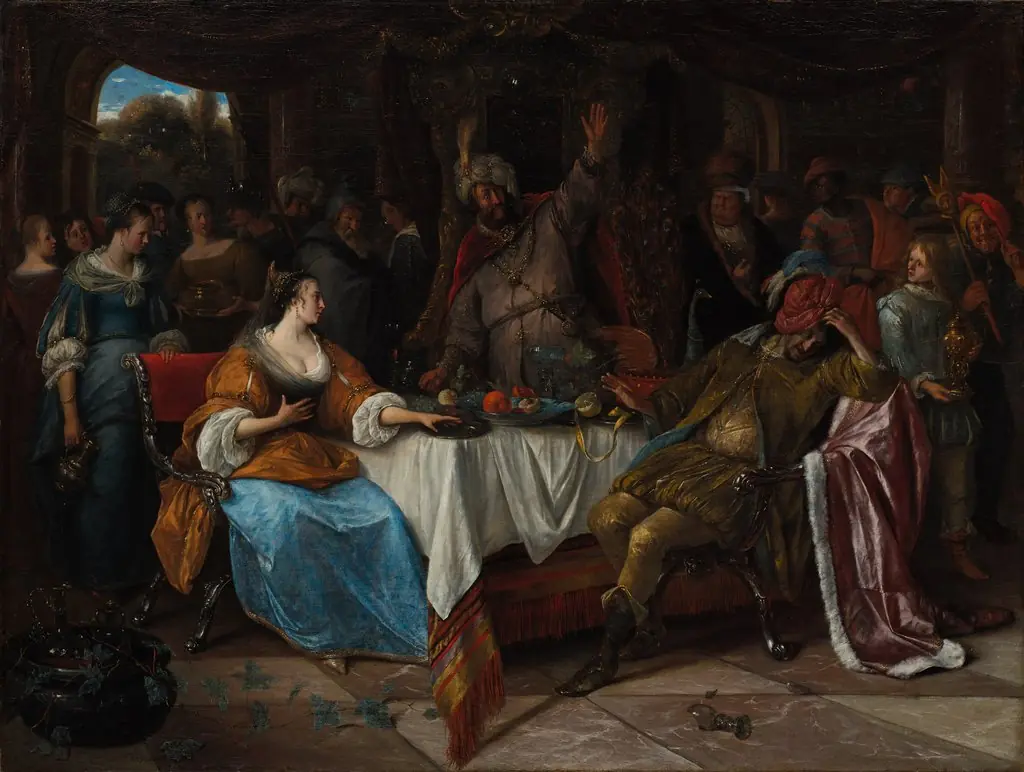 Esther, Ahasuerus, and Haman
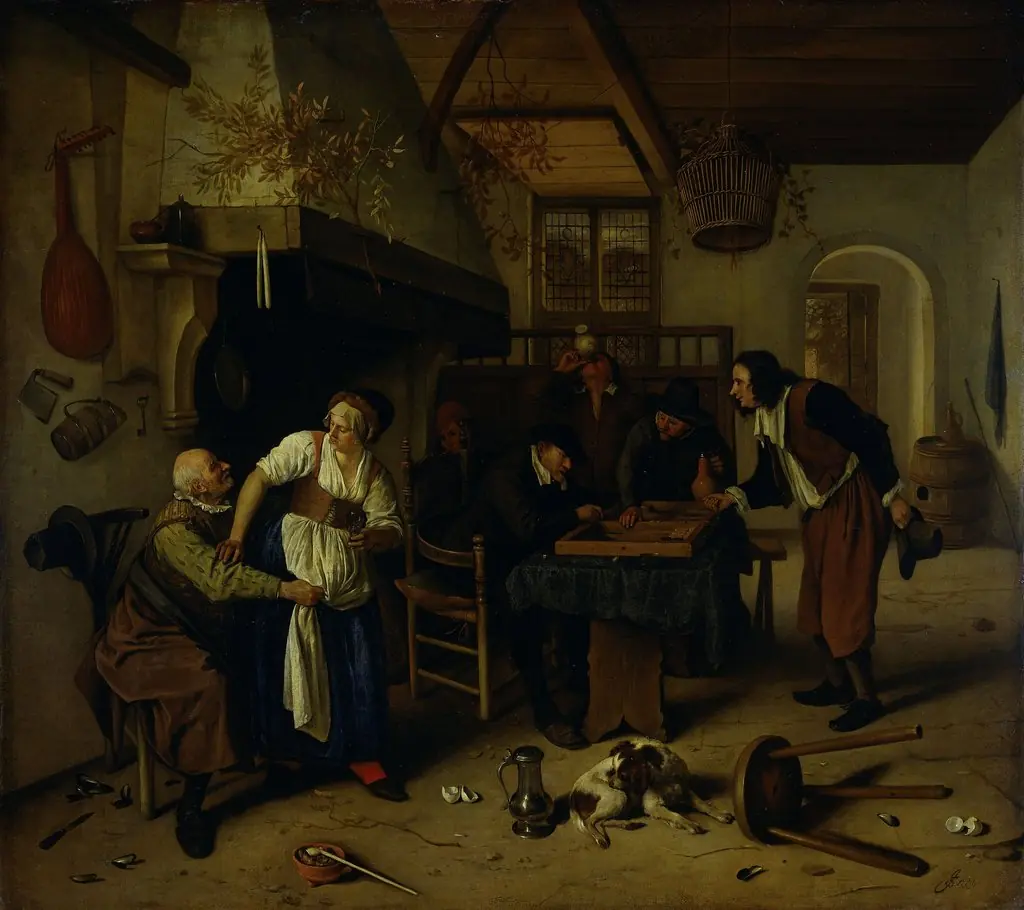 Interior of an inn with an old man amusing himself with the landlady and two men playing backgammon, known as 'Two kinds of games'
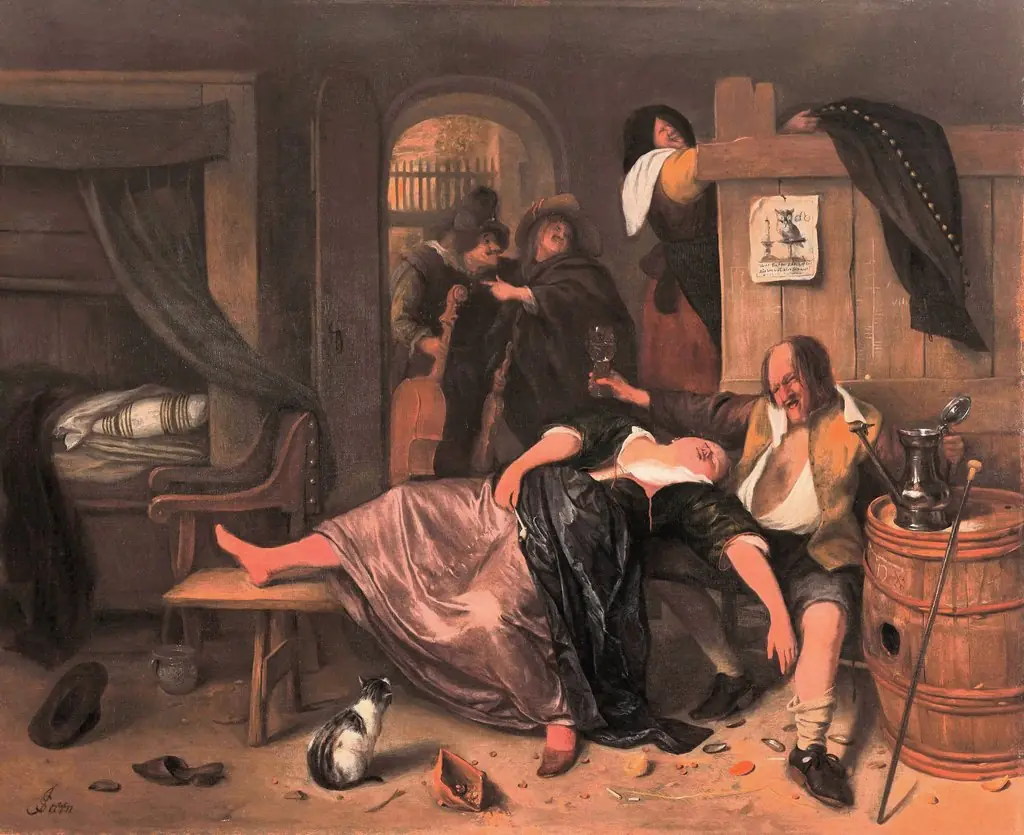 The Drunken Couple
 The Happy Family
 Bathsheba after the Bath