Artwork
El ogro
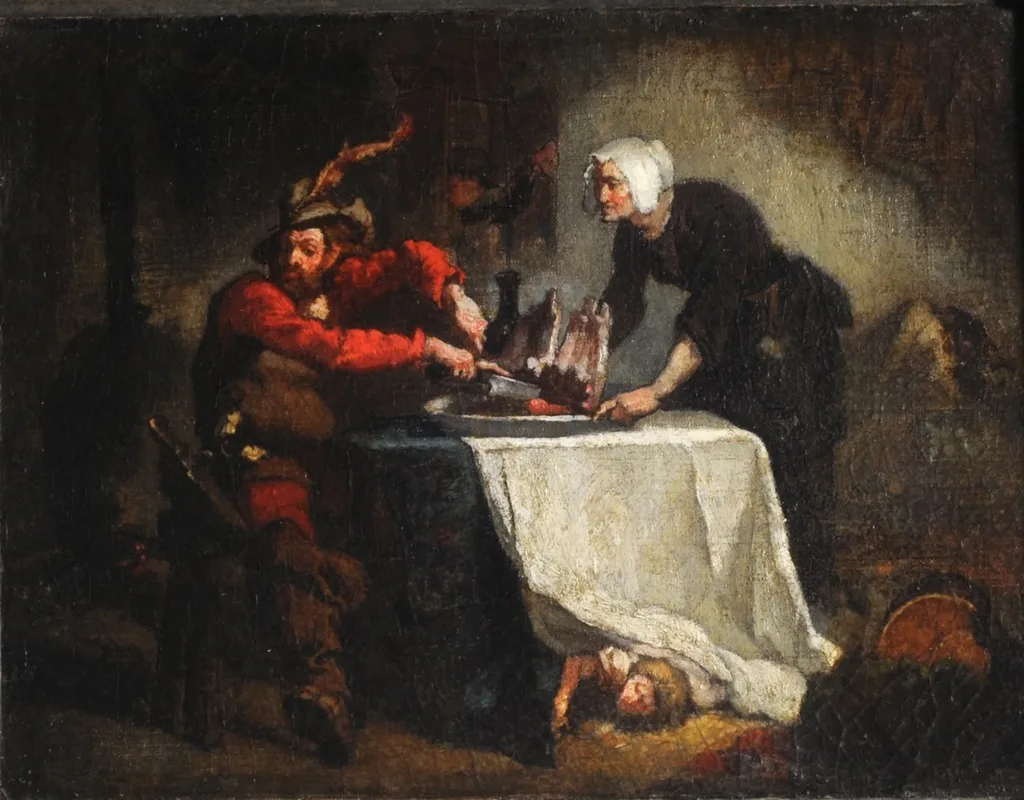
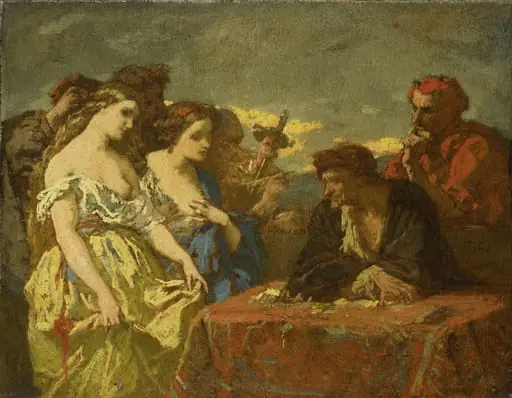
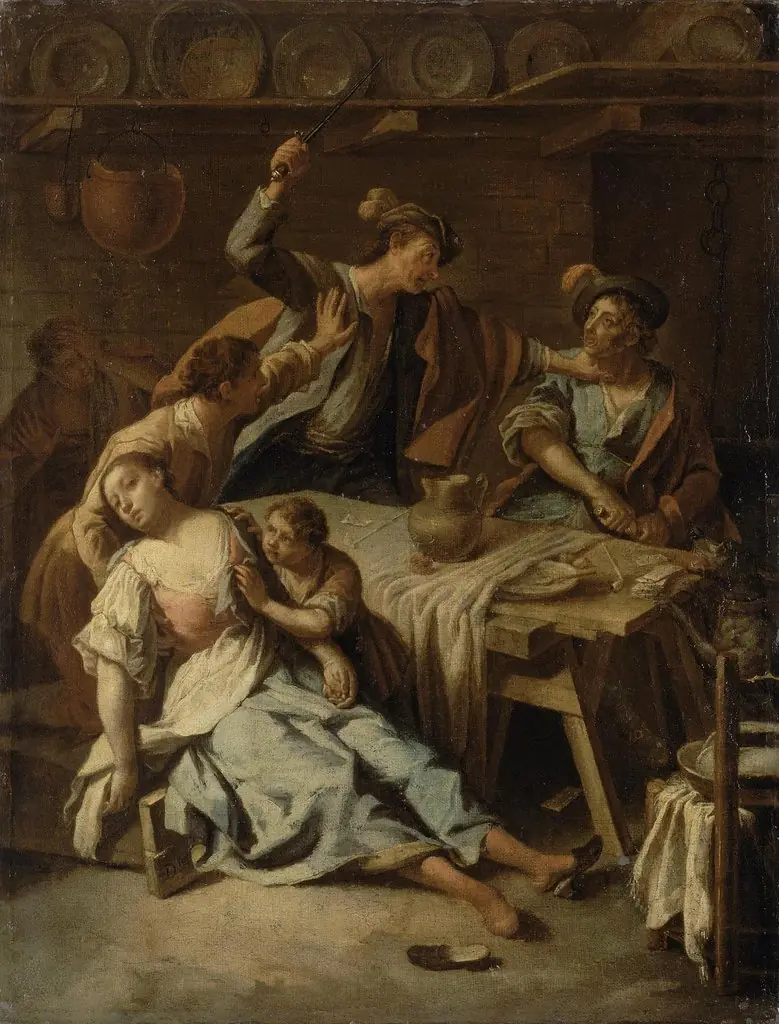
El ogro is an oil painting by the Realist artist Thomas Couture. It dates from 1857 and is held in the collection of the National Museum of Fine Arts, Argentina.
About this work
Overview
Though known for grand historical scenes, this work turns inward, focusing on a tense, intimate encounter.
Thomas Couture painted *El ogro* circa 1857 using oil on canvas, aligning with the Realist tendency to depict everyday or unsettling human moments with unembellished detail. Though known for grand historical scenes, this work turns inward, focusing on a tense, intimate encounter. It resides in the National Museum of Fine Arts in Buenos Aires, where it stands as an unusual example of Couture’s engagement with psychological rather than epic themes.
Subject & Meaning
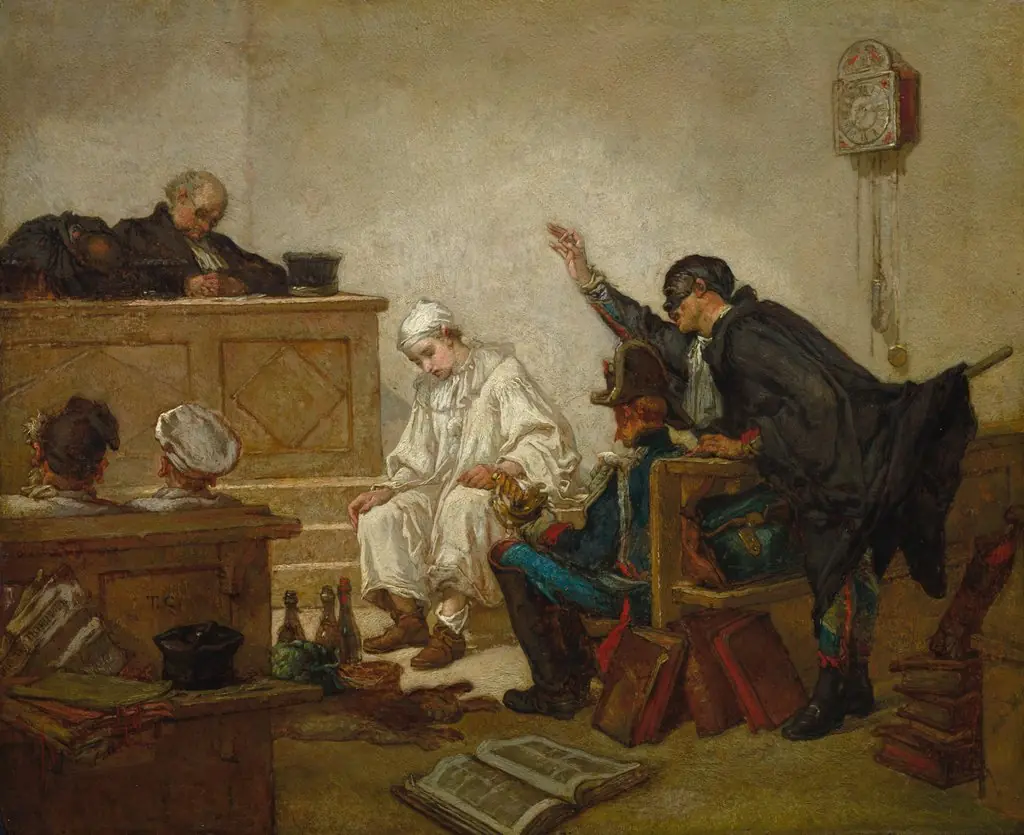
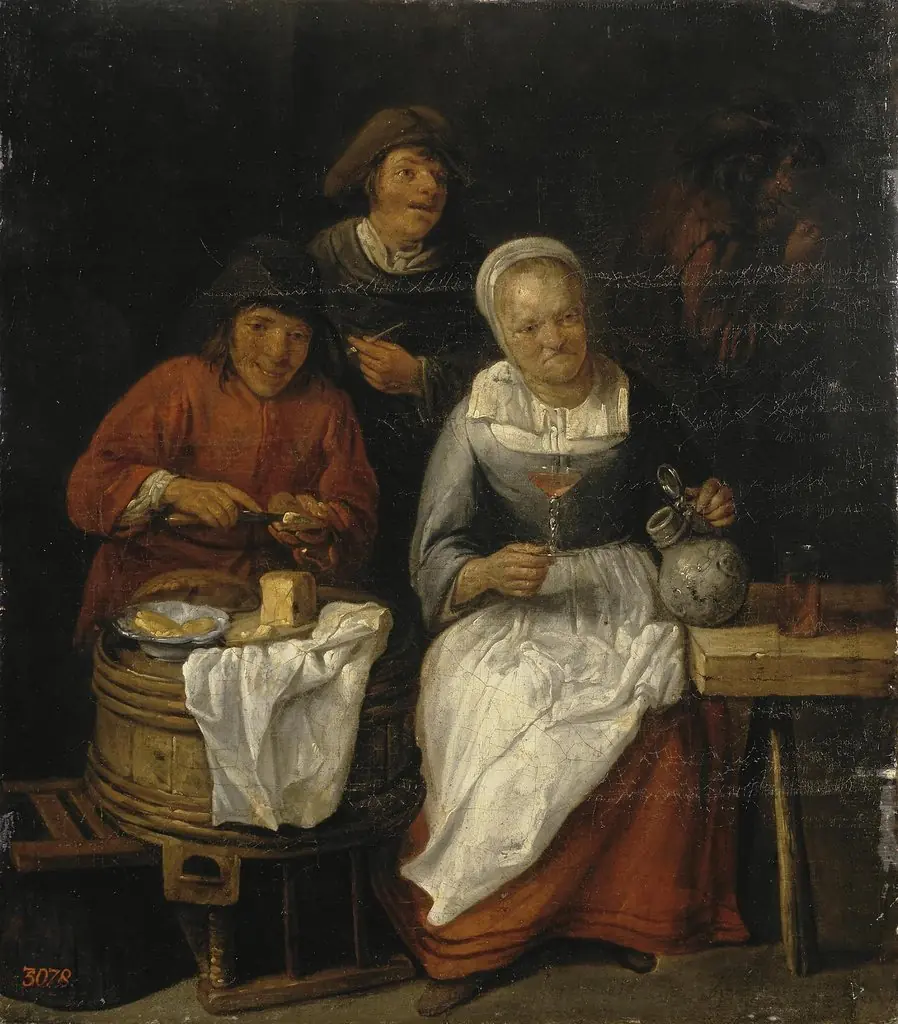
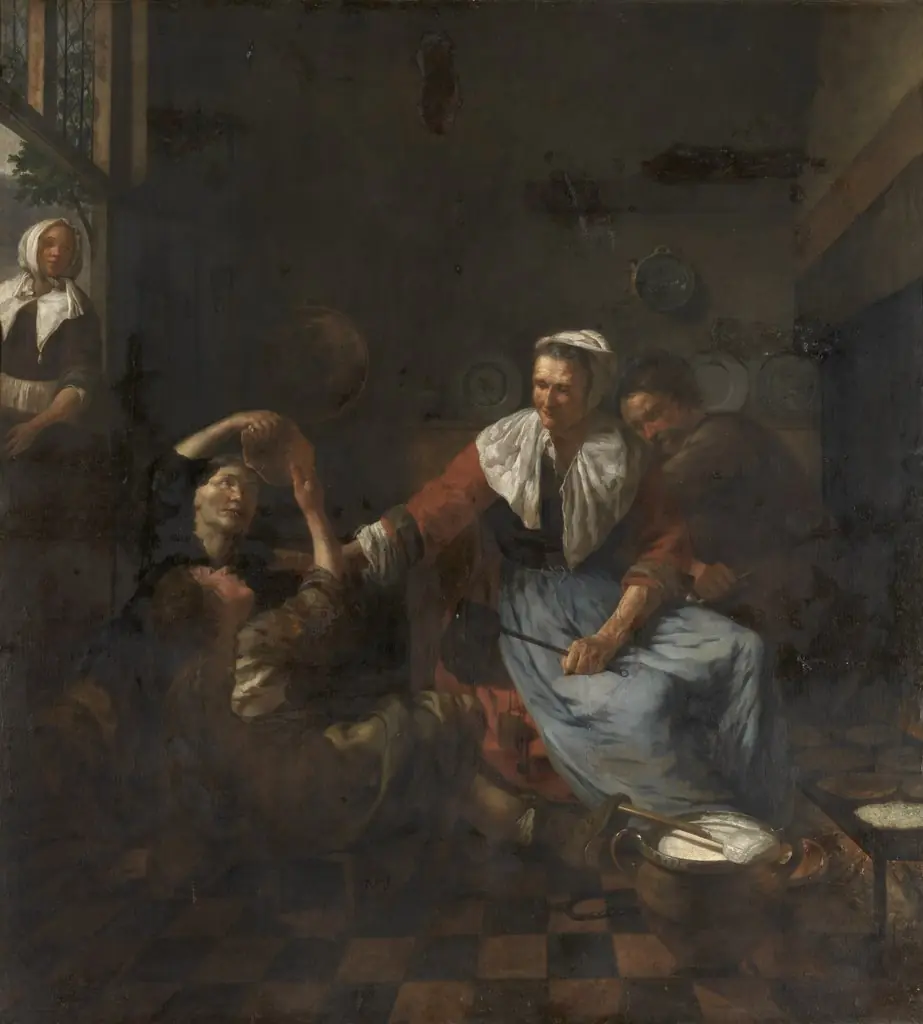
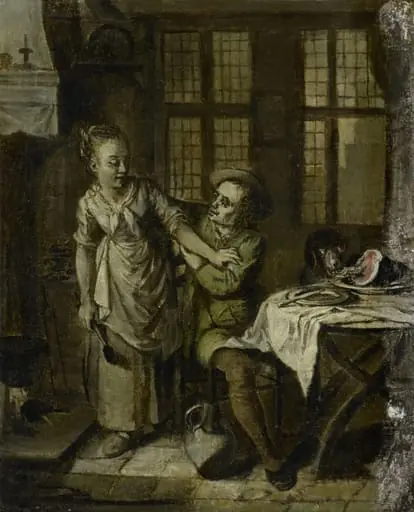
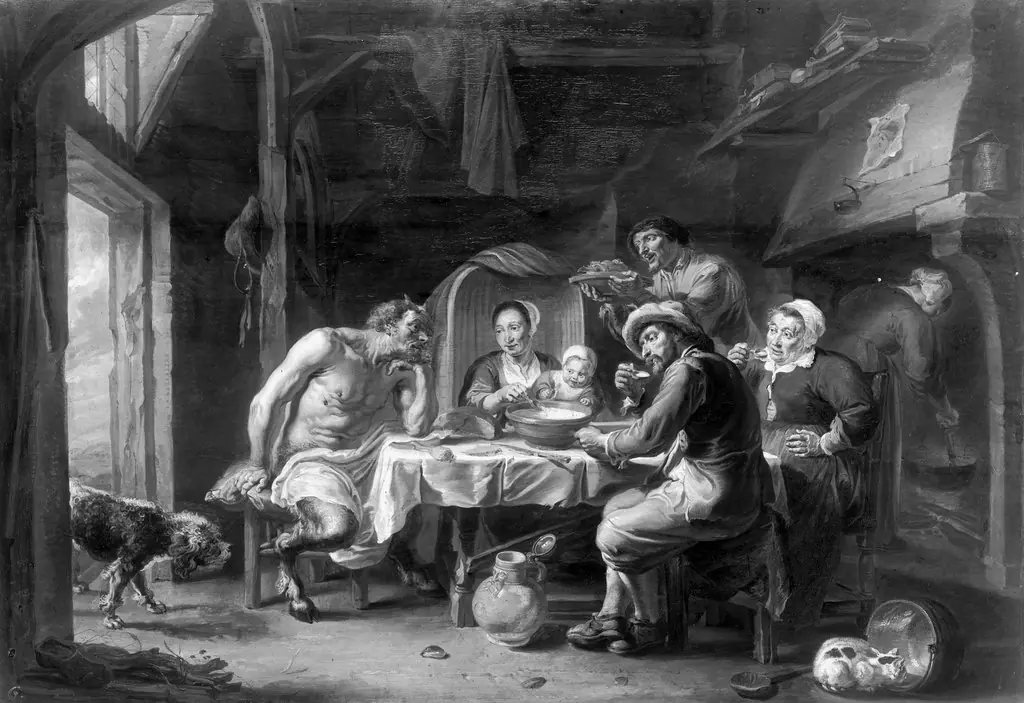
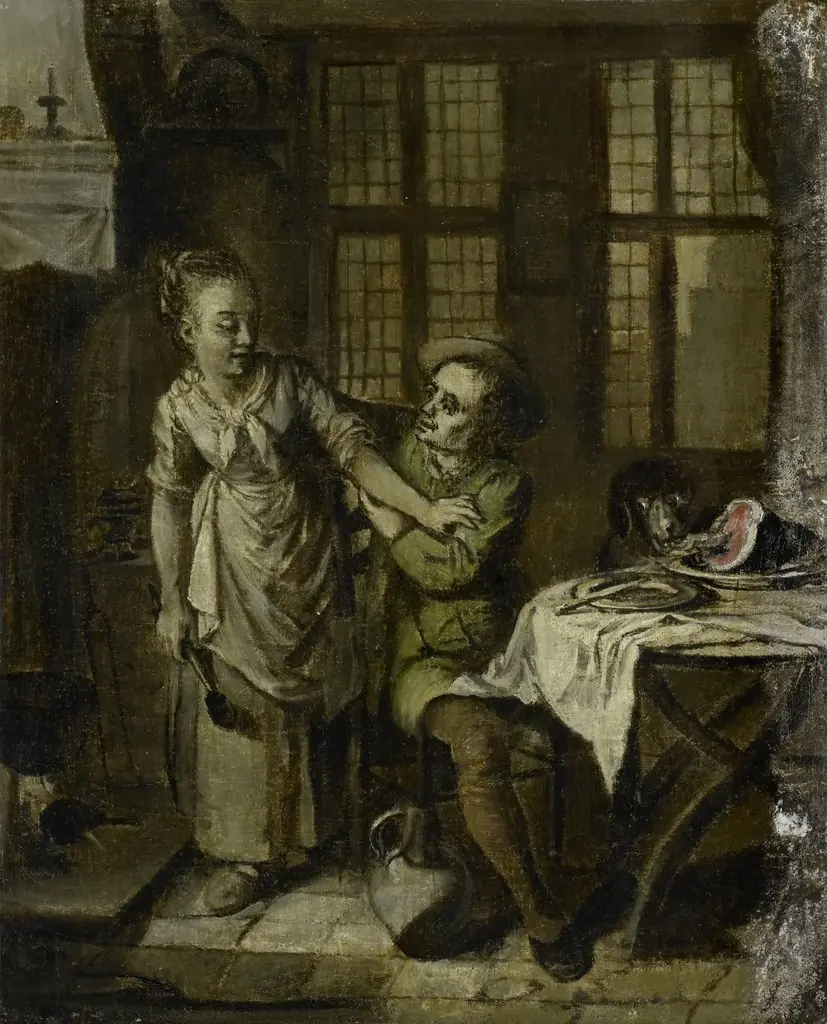
The painting shows two figures flanking a table: one in red, wielding a knife; the other in black, observing silently. The identity of the figures remains ambiguous, but the scene evokes ritual, violence, or labor under quiet duress. The title, referencing an ogre, suggests a metaphor for primal or monstrous behavior, though no fantastical elements appear. The stillness of the moment amplifies unease, inviting interpretation of power, complicity, or hidden ritual.
Technique & Style
Couture rendered the figures with precise, naturalistic modeling, emphasizing texture in fabric and skin. The red and black garments stand out sharply against the muted, shadowed interior, heightening visual tension. Brushwork is controlled yet expressive, avoiding theatricality. The composition is tightly framed, focusing attention on the table and the figures’ gestures, while the background recedes into near-abstract darkness, reinforcing the scene’s psychological weight.
History & Provenance
Created during Couture’s mature period, *El ogro* emerged from his interest in psychological realism rather than myth or history. It entered the collection of the National Museum of Fine Arts in Buenos Aires in the late 19th or early 20th century, likely through acquisition or donation. Its presence in Argentina reflects broader 19th-century cultural exchanges between Europe and Latin America, though its specific path to Buenos Aires remains undocumented.
Context
In the 1850s, French Realism challenged idealized academic subjects by portraying ordinary or disturbing truths. Couture, though trained in classical traditions, increasingly turned to raw human behavior. *El ogro* reflects this shift, paralleling contemporaneous works by Courbet and Daumier that examined social or moral ambiguity. Unlike his large-scale historical paintings, this piece isolates a private, ambiguous moment, aligning with Realism’s focus on the unvarnished present.
Legacy
Though less celebrated than Couture’s academic works, *El ogro* reveals his capacity for psychological depth beyond grand narrative. It influenced later artists interested in domestic tension and moral ambiguity. Its preservation in Buenos Aires underscores its role as a transatlantic artifact of 19th-century realism, offering a quiet counterpoint to the more overtly political or rural scenes typical of the movement.
Artist & collection

Artist
Thomas Couture (French pronunciation: ; 21 December 1815 – 30 March 1879) was a French history painter and teacher.

Museum
National Museum of Fine Arts, Argentina
Continue through works from the same source collection.