Artwork
The Gallant Offer
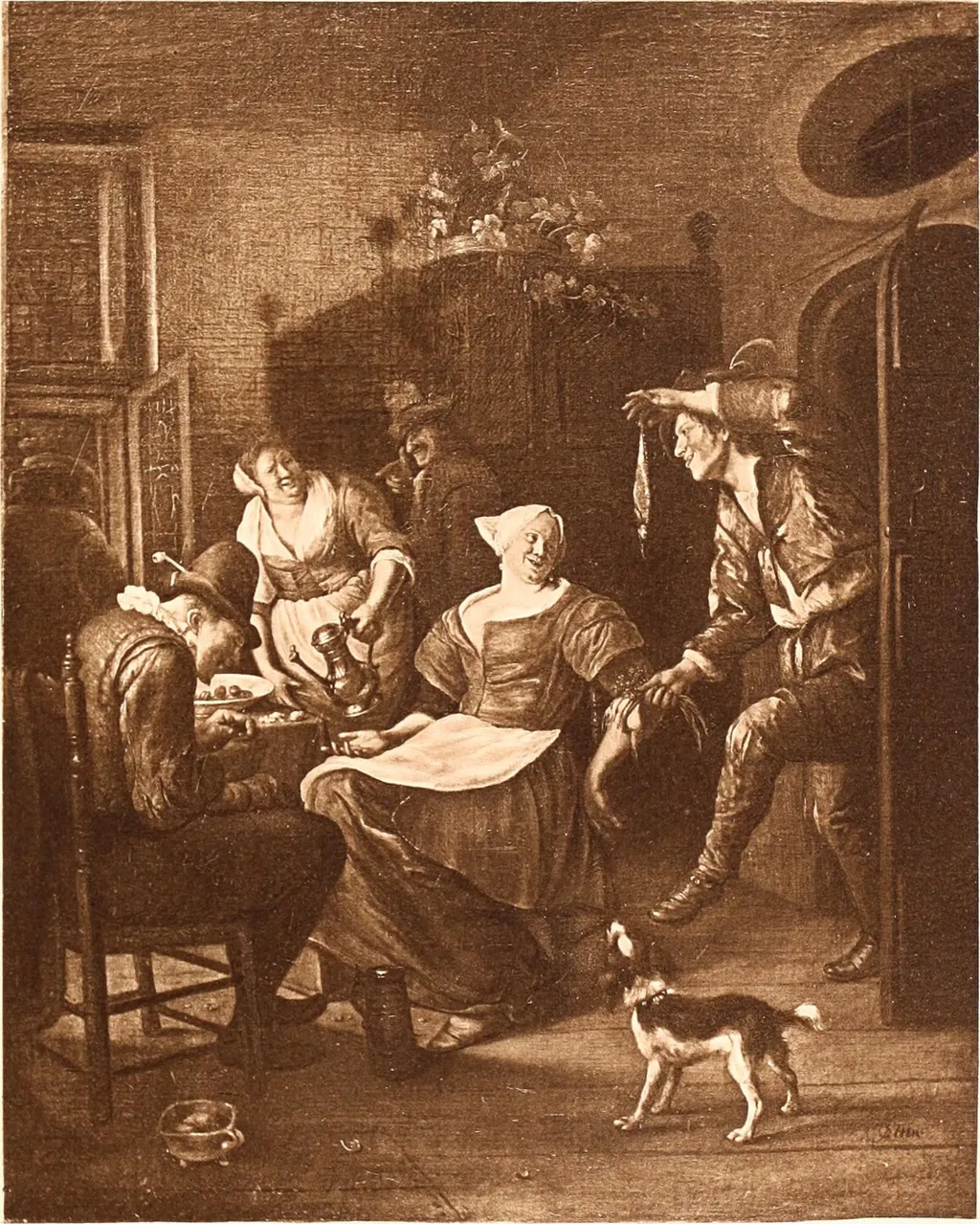
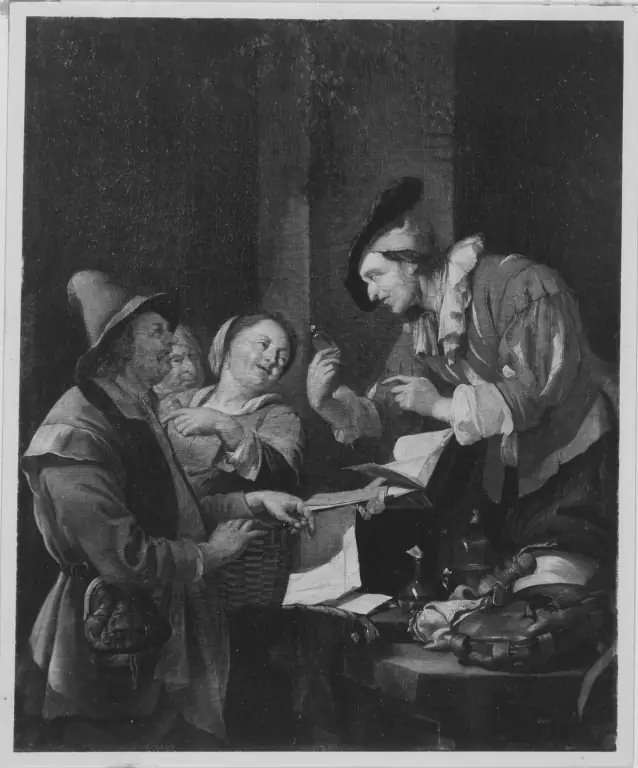
The Gallant Offer is an oil painting by the Dutch Golden Age artist Jan Steen. It dates from 1660 and is held in the collection of the Royal Museums of Fine Arts of Belgium.
About this work
Overview
Steen’s composition balances intimacy with narrative ambiguity, inviting viewers to infer the unspoken exchange between the figures.
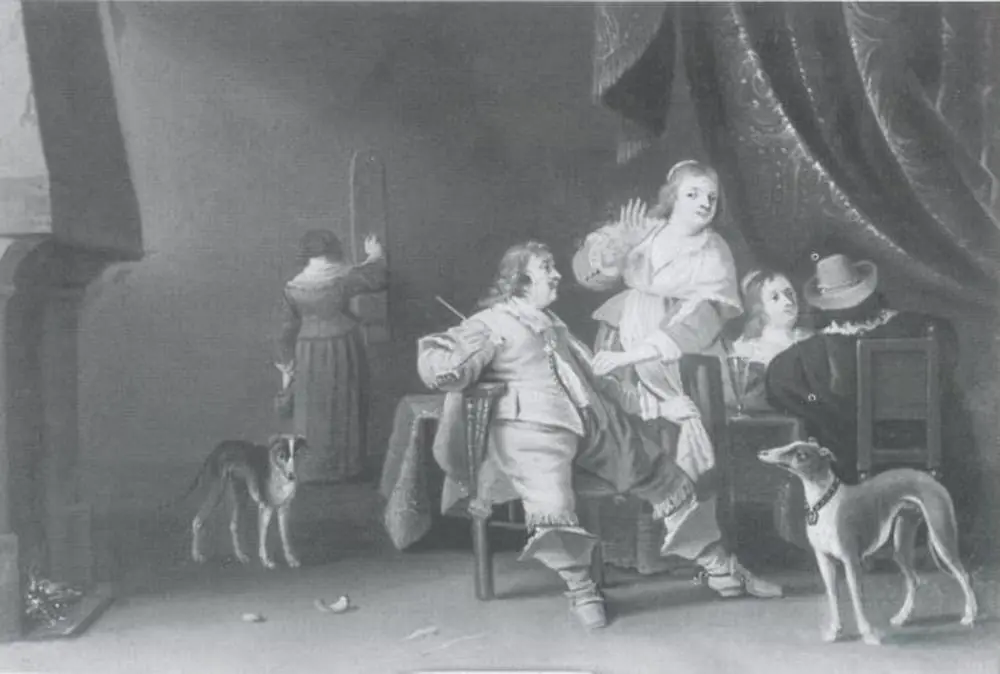
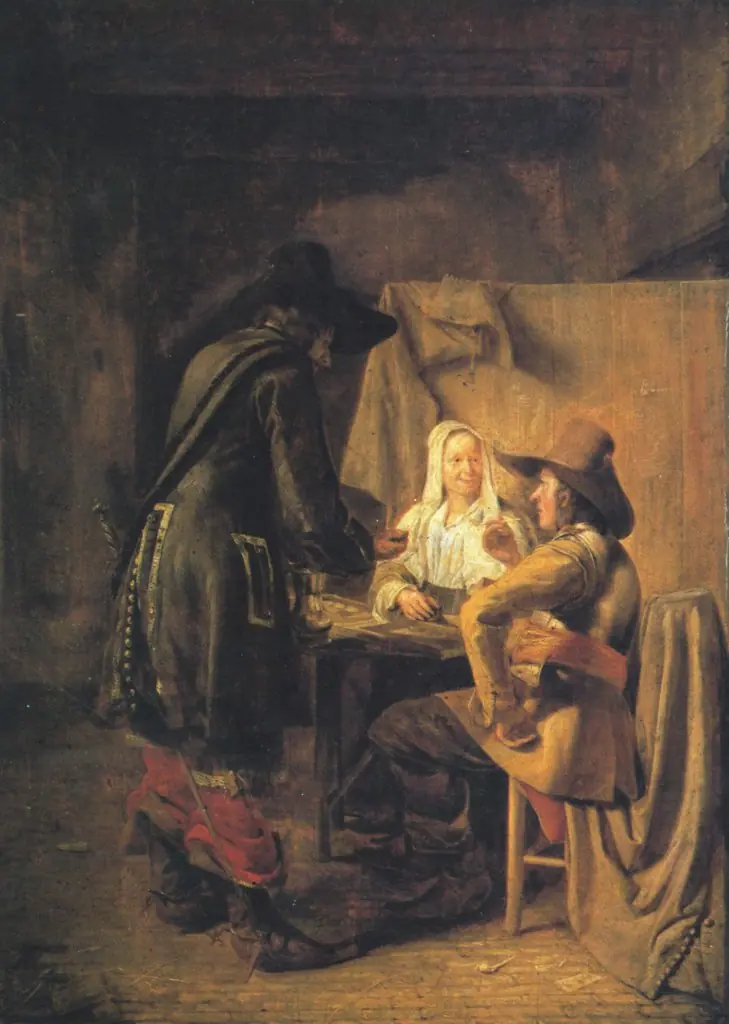
Painted in 1660 by Jan Steen, this oil-on-canvas work captures a quiet domestic moment in a modest interior. The scene centers on a table where four figures interact with subtle tension and warmth. A hanging herring and a sheet of paper suggest themes of commerce or domestic obligation. Steen’s composition balances intimacy with narrative ambiguity, inviting viewers to infer the unspoken exchange between the figures.
Subject & Meaning
The painting portrays a moment of social negotiation: a man leans forward with a smile, possibly offering something in exchange for the paper held by the woman. The herring on the wall, a common Dutch commodity, hints at economic undercurrents—perhaps a debt, a sale, or a meal. The lounging and standing figures act as observers, reinforcing the sense of a private transaction unfolding in public view. Steen often embedded moral or social commentary in such scenes.
Technique & Style
Steen employs soft, warm tonalities to render the dim interior, with gentle light falling across faces and textiles. Brushwork is loose yet deliberate, capturing texture in fabric, wood, and fur without excessive detail. The figures are arranged in a naturalistic grouping, their gestures conveying unspoken dynamics. The dog and hanging fish are rendered with quiet precision, adding layers of symbolic context without disrupting the scene’s realism.
History & Provenance
The painting has been in the collection of the Royal Museums of Fine Arts of Belgium since at least the 19th century. Its early provenance is undocumented, but it aligns with Steen’s known output from his Leiden period. Like many of his genre scenes, it passed through private hands before entering institutional care. No major restorations or alterations are recorded, preserving its original surface and composition.
Context
In mid-17th-century Holland, genre painting flourished as a reflection of civic life. Steen, influenced by his father’s tavern-keeping and his own observations of middle-class routines, depicted ordinary moments with psychological nuance. The herring, a staple food and trade item, was a frequent motif in Dutch art, symbolizing both sustenance and commerce. This work fits within a broader tradition of domestic narratives that balanced humor with quiet moral observation.
Legacy
Though not among Steen’s most widely reproduced works, this painting exemplifies his ability to transform mundane interactions into layered stories. It reflects his enduring interest in human behavior within domestic spaces, influencing later genre painters who sought to capture the subtleties of daily life. Its quiet complexity continues to invite interpretation, distinguishing it from more overtly theatrical or moralizing scenes of the era.
Artist & collection
Artist
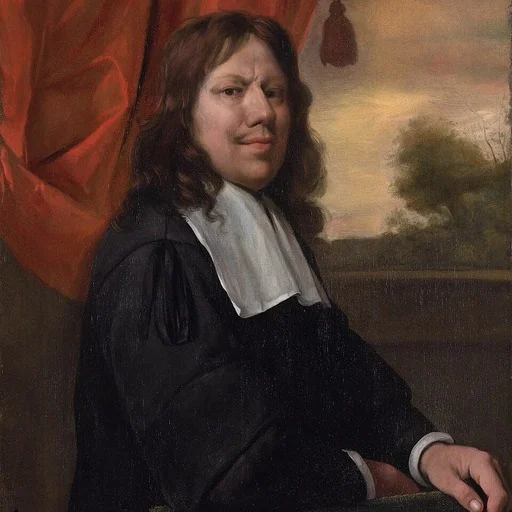
Jan Havickszoon Steen was a Dutch Golden Age painter, one of the leading genre painters of the 17th century.

Museum
Royal Museums of Fine Arts of Belgium
Continue through works from the same source collection.
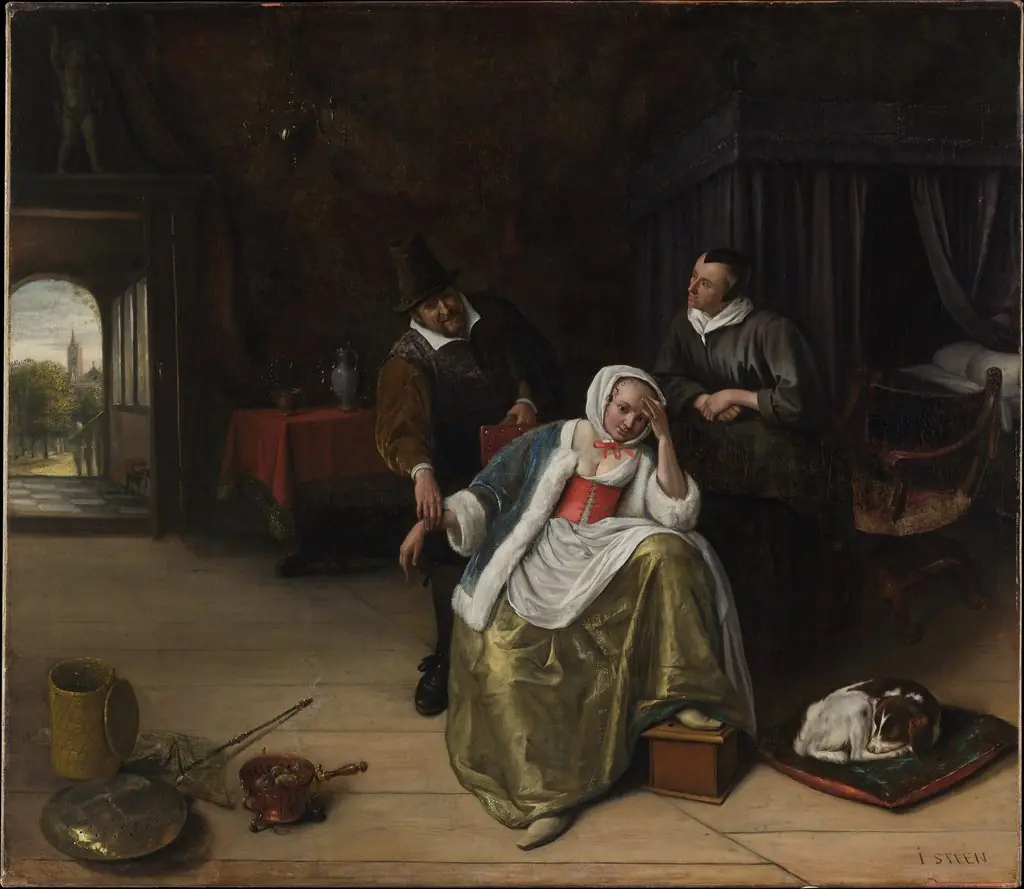 Paintings of physicians by Jan Steen
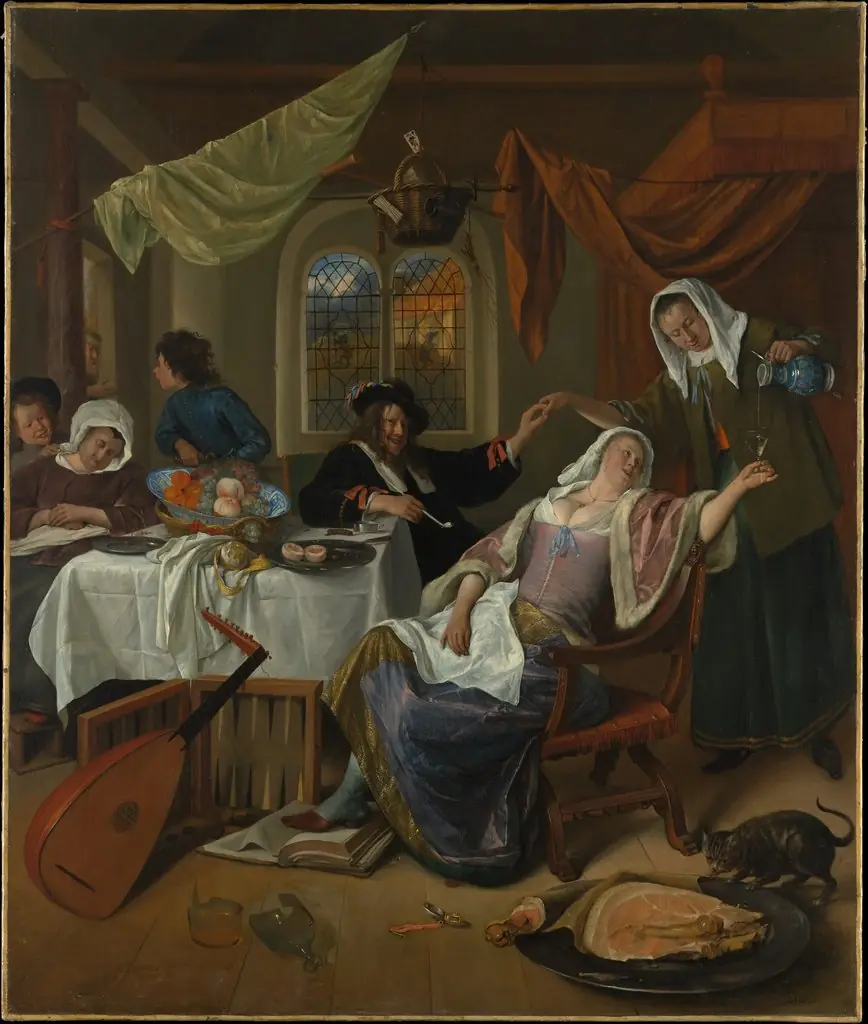 The Dissolute Household
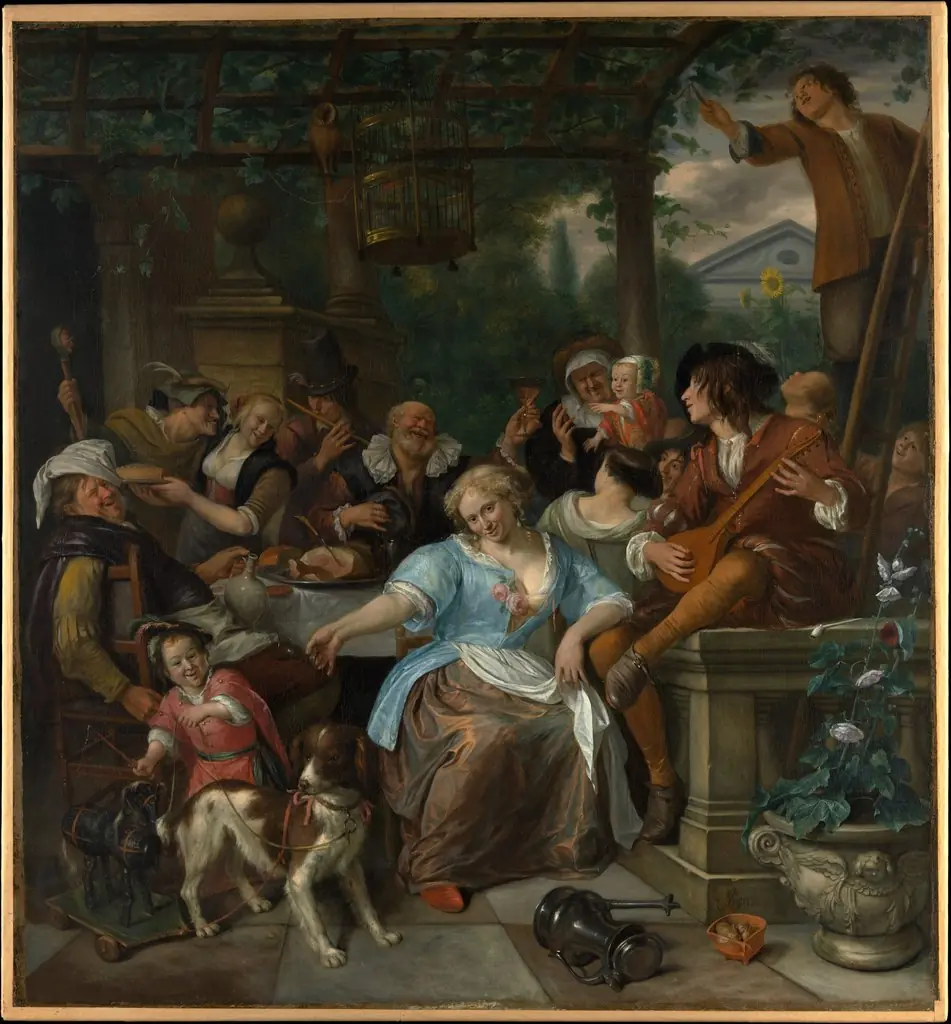 Merry Company on a Terrace
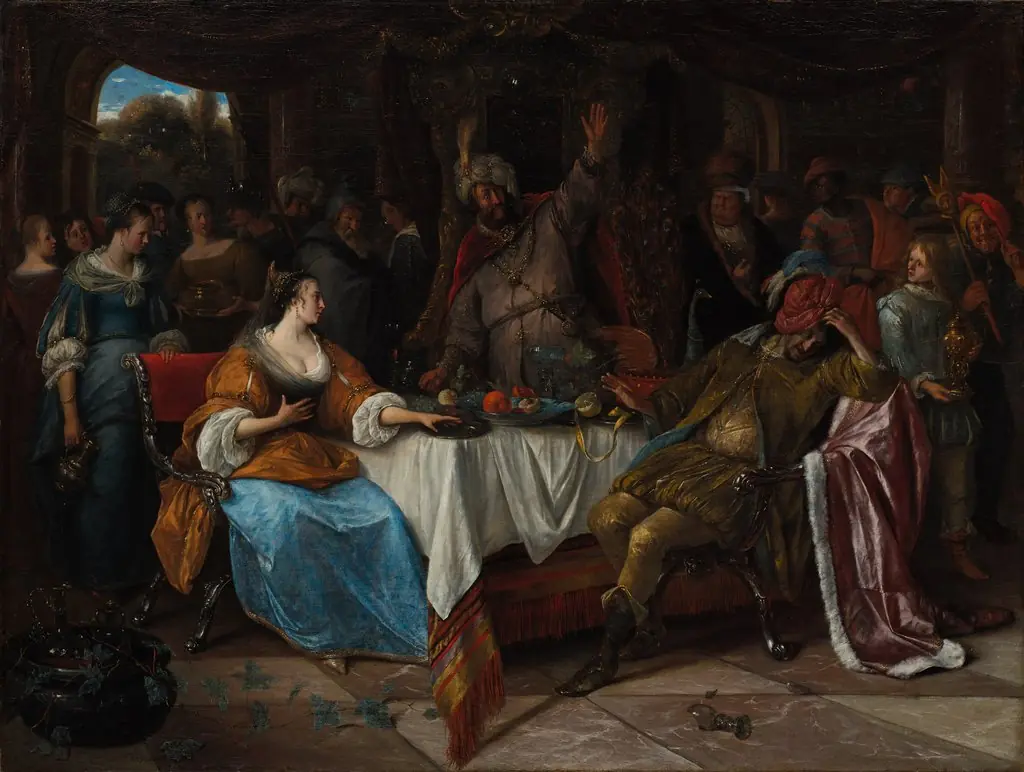 Esther, Ahasuerus, and Haman
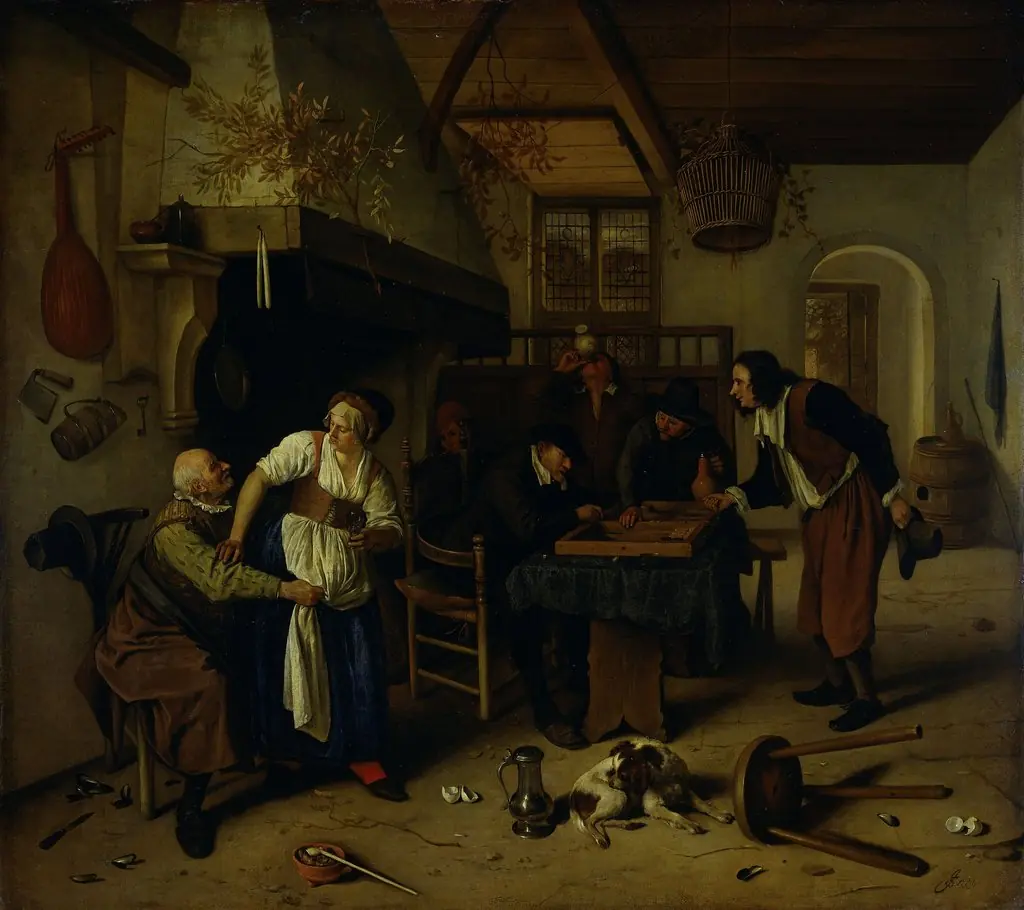 Interior of an inn with an old man amusing himself with the landlady and two men playing backgammon, known as 'Two kinds of games'
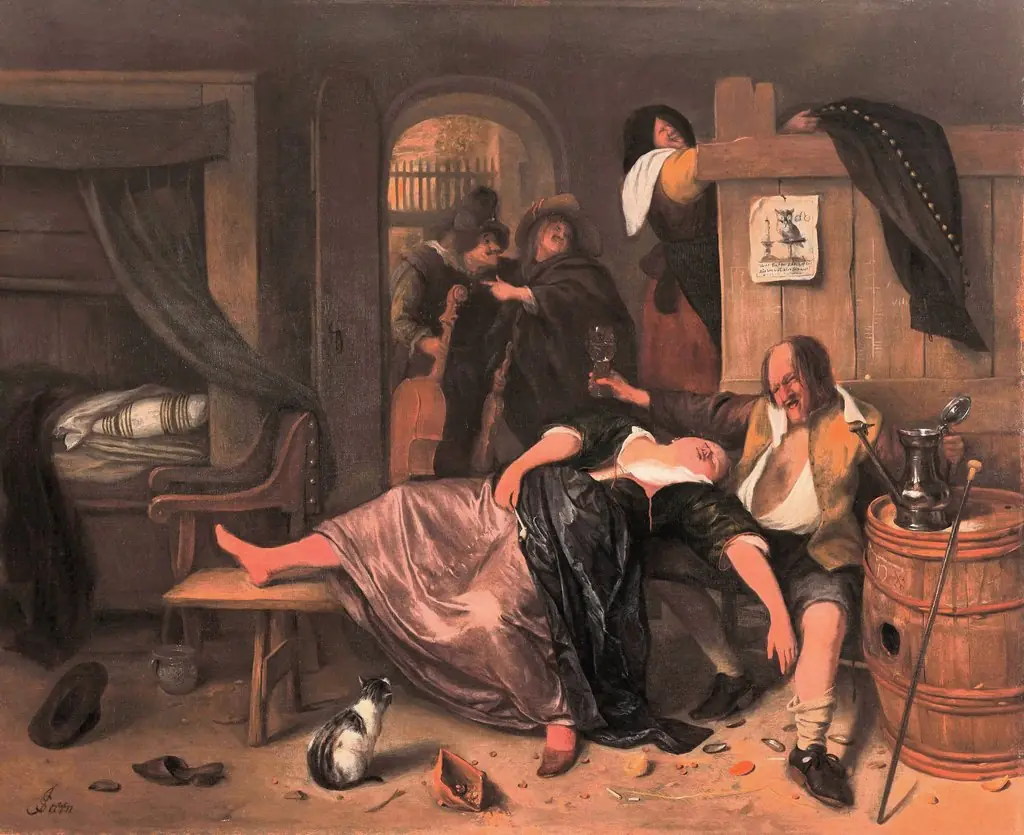 The Drunken Couple
 The Happy Family
 Bathsheba after the Bath