Artwork
Merry Company
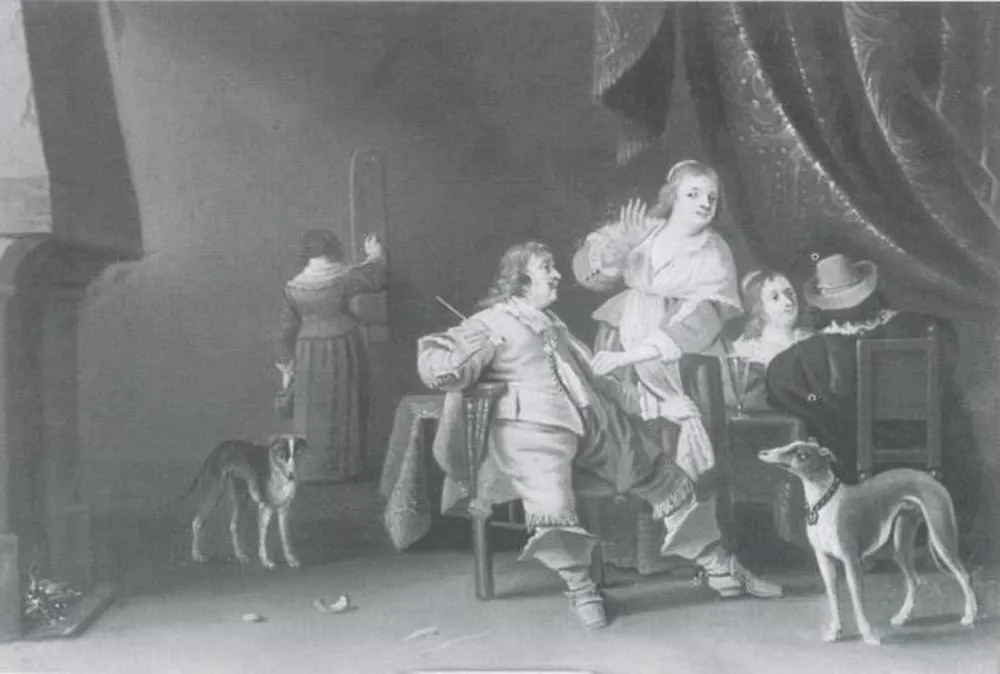
Merry Company is an oil painting by the Dutch Golden Age artist Unknown. It dates from 1620 and is held in the collection of the Nationalmuseum.
About this work
Overview
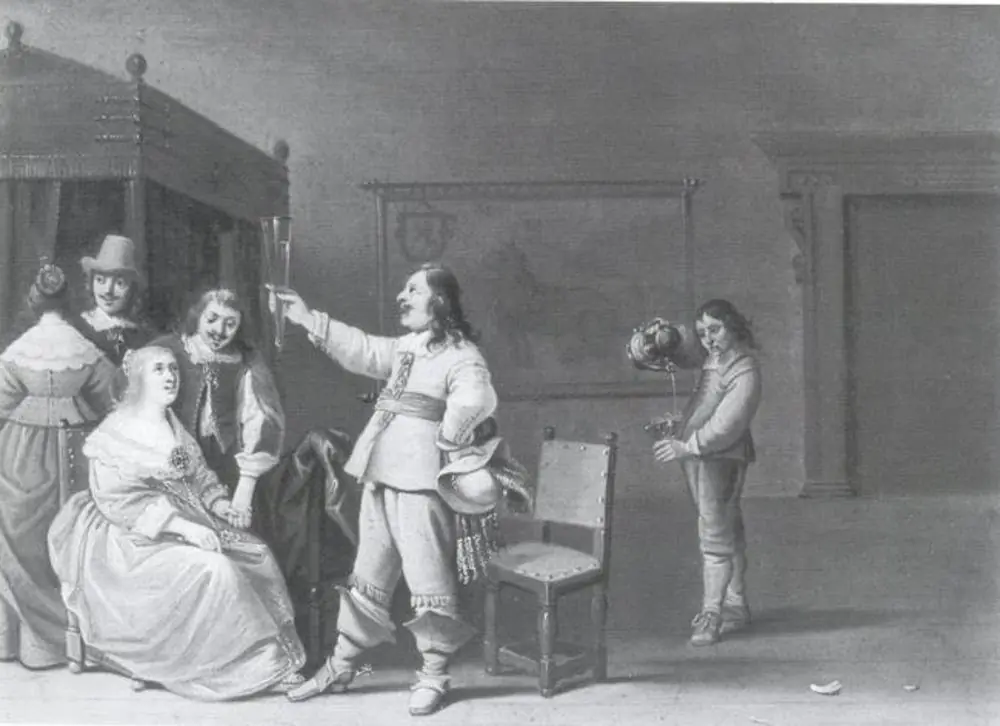
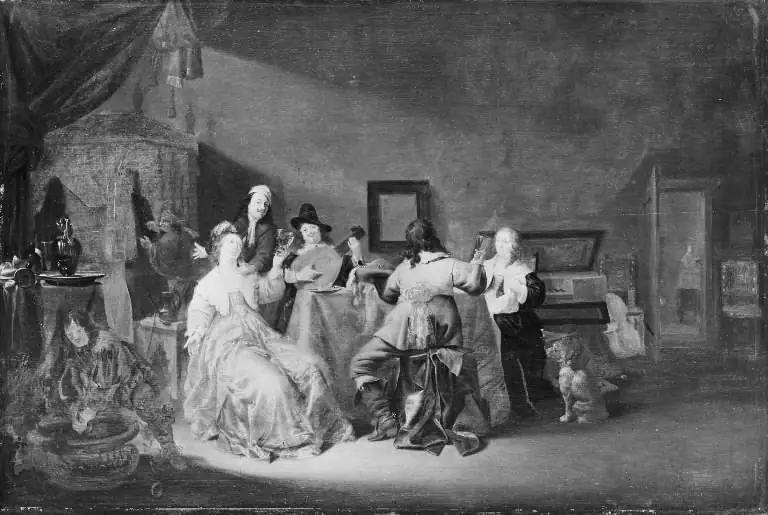
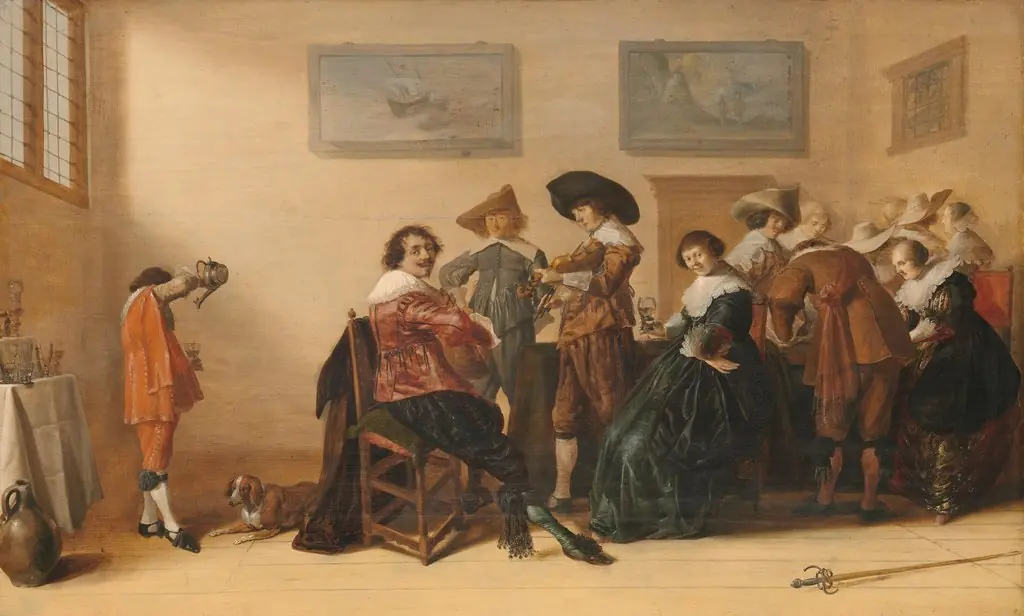
This oil painting captures a quiet domestic moment in a dimly lit interior, where a small group of individuals and two dogs share a space marked by informal relaxation. The figures are arranged in a loose, naturalistic grouping, suggesting an unposed, everyday encounter. The lighting is subdued, emphasizing the intimacy of the setting over theatrical drama.
Subject & Meaning
The scene portrays a moment of leisure among companions, likely from the urban middle class. A man holds a pipe, a woman gestures with her hand, and another sits quietly nearby, while a man in a hat stands behind her—suggesting social interaction without overt narrative. The presence of dogs reinforces a sense of domestic comfort, implying familiarity and ease rather than formal ceremony.
Technique & Style
The artist employs muted tones and soft contrasts to render the interior, using subtle shifts in light to define form without harsh shadows. Brushwork is restrained, favoring smooth transitions over visible texture. The composition is balanced yet casual, with figures placed to guide the eye naturally across the space, reinforcing the unscripted mood.
History & Provenance
The painting’s early ownership is undocumented, but its style and subject align with Dutch genre scenes from the early 17th century. It likely originated in the Netherlands, where depictions of domestic interiors were common among collectors seeking relatable, everyday imagery. Its survival suggests it was preserved within private collections rather than institutional ones.
Context
Created during a period when Dutch artists increasingly turned to intimate interior scenes, this work reflects broader cultural interests in domestic life, social interaction, and quiet leisure. Unlike grand historical or religious subjects, such paintings appealed to a growing urban middle class who saw their own lives reflected in these modest settings.
Legacy
Though not widely exhibited or reproduced, the painting contributes to the understanding of how Dutch painters captured unremarkable moments with dignity. It stands as an example of genre painting’s quiet influence, demonstrating how ordinary settings could convey psychological nuance and social observation without embellishment.
Artist & collection

 Domestic Scene
 Giacomo and Cardinal Marco, investing Andrea, Abbot of San Zeno, with his Benefice
 The Nymph of Fontainebleau
 Portrait of a Woman
 Madonna and Child with Saints in the Enclosed Garden
 Venus and Minerva
 Family Group of Four on Sofa
 Wall painting from Room H of the Villa of P. Fannius Synistor at Boscoreale