Artwork
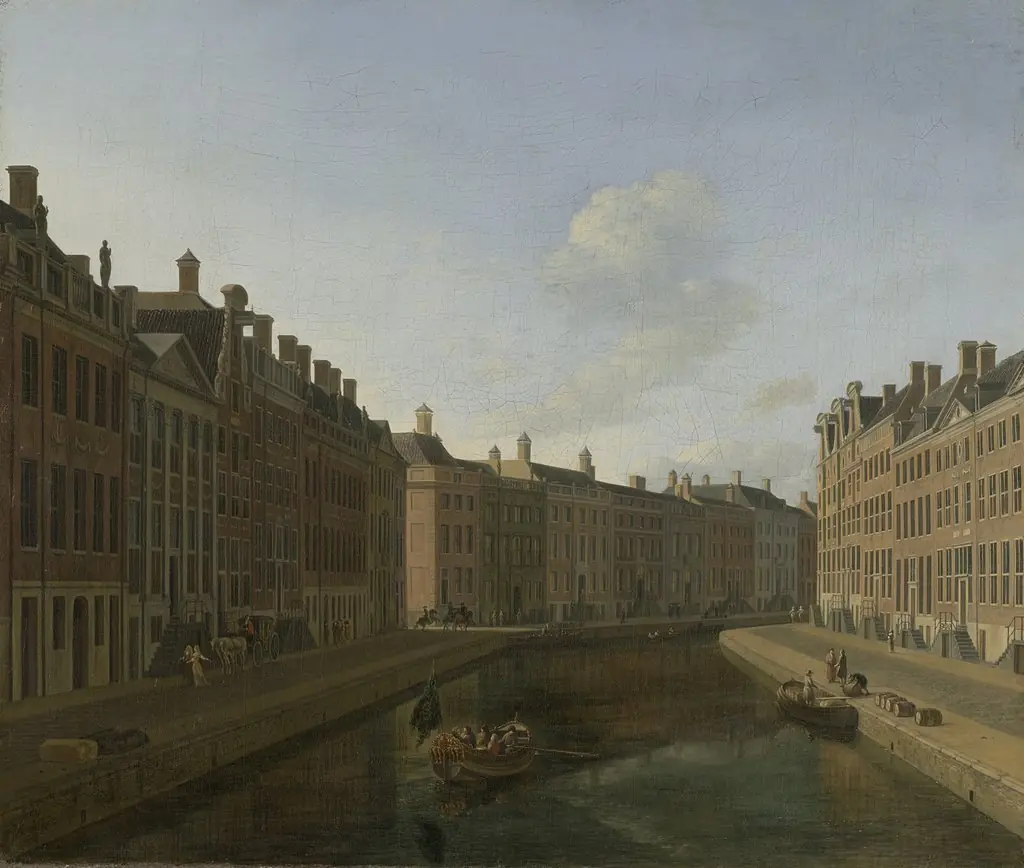
The Bierkade and Groenewegje at The Hague seen towards the Spui
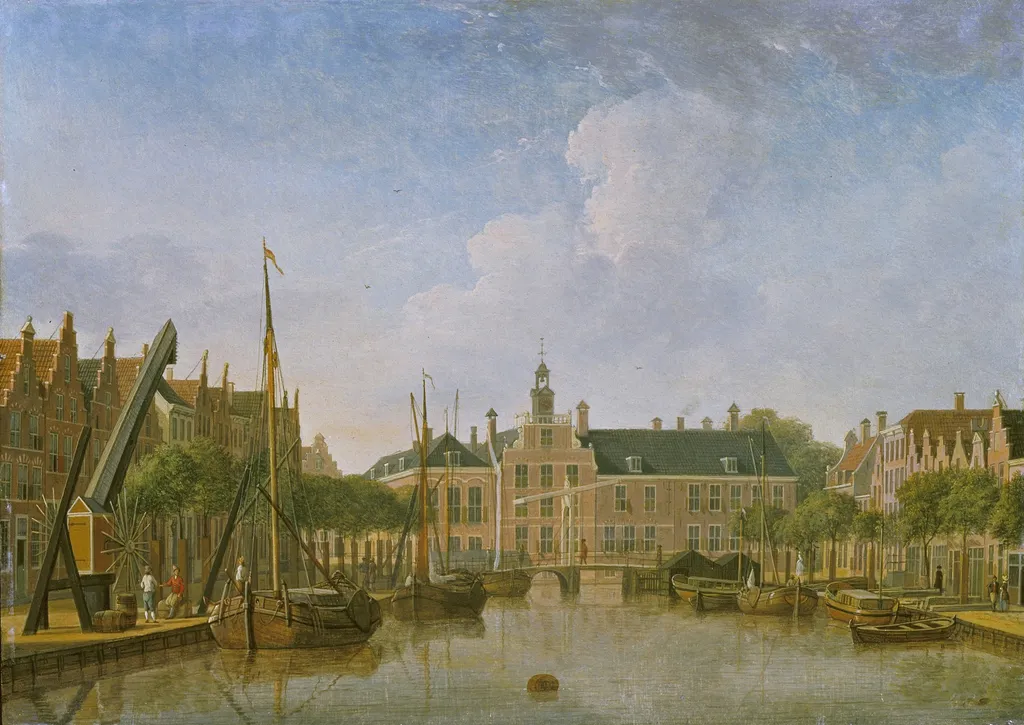
The Bierkade and Groenewegje at The Hague seen towards the Spui is an oil painting by the Rococo painting artist Jan ten Compe. It dates from 1760 and is held in the collection of the Hermitage Museum.
About this work
Overview
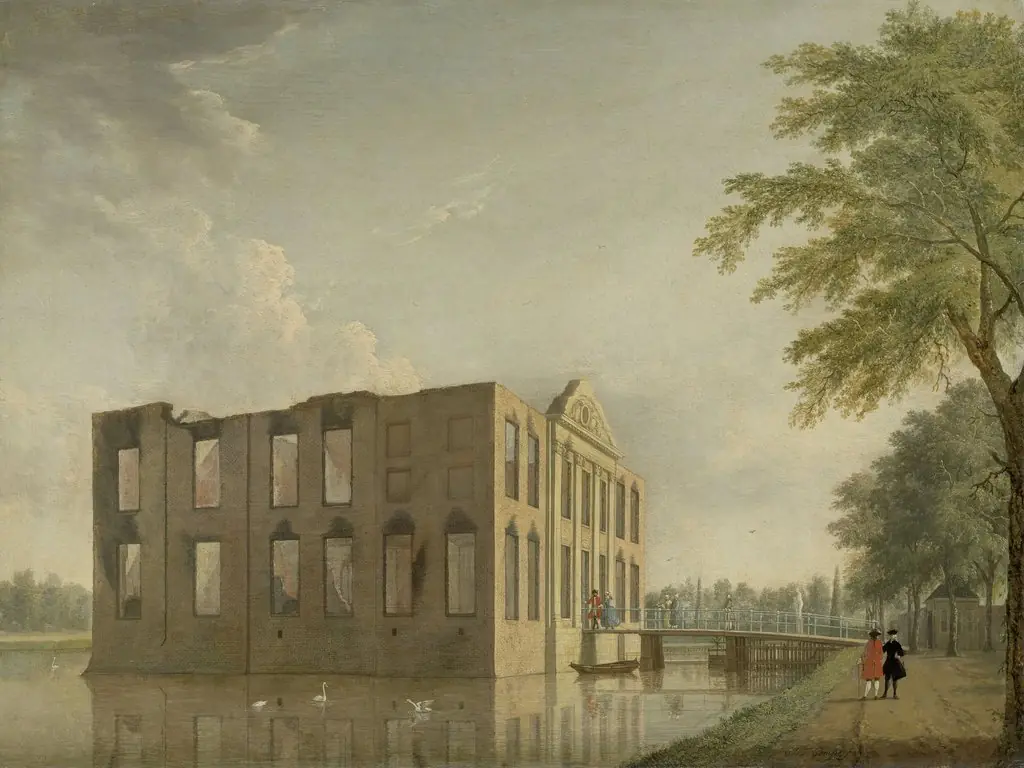
Jan ten Compe’s 1760 oil painting, titled *The Bierkade and Groenewegje at The Hague seen towards the Spui*, offers a measured view of a canal scene in the Dutch capital. The work captures a quiet stretch of water framed by modest architecture, with a few vessels moored along the quay and pedestrians gathered near the edge.
Subject & Meaning
The composition centers on the Bierkade and Groenewegje streets, directing the eye toward the Spui. The tranquil atmosphere, highlighted by subdued tones and the presence of everyday figures, suggests a leisurely urban moment rather than a grand historical narrative, emphasizing the routine beauty of 18th‑century The Hague.
Technique & Style
Executed in oil on canvas, the painting employs a restrained palette of warm, muted hues contrasted by touches of green foliage. Ten Compe renders the facades with careful attention to architectural detail, while subtle chiaroscuro models the steep roofs and creates a sense of depth across the canal’s reflective surface.
History & Provenance
Created in 1760, the work entered the collection of the State Hermitage Museum, where it remains on display. Its acquisition reflects the museum’s broader interest in European landscape painting and provides a rare visual record of The Hague’s urban environment during the mid‑eighteenth century.
Own this work as a print
Artist & collection