Artwork
Denial of Saint Peter
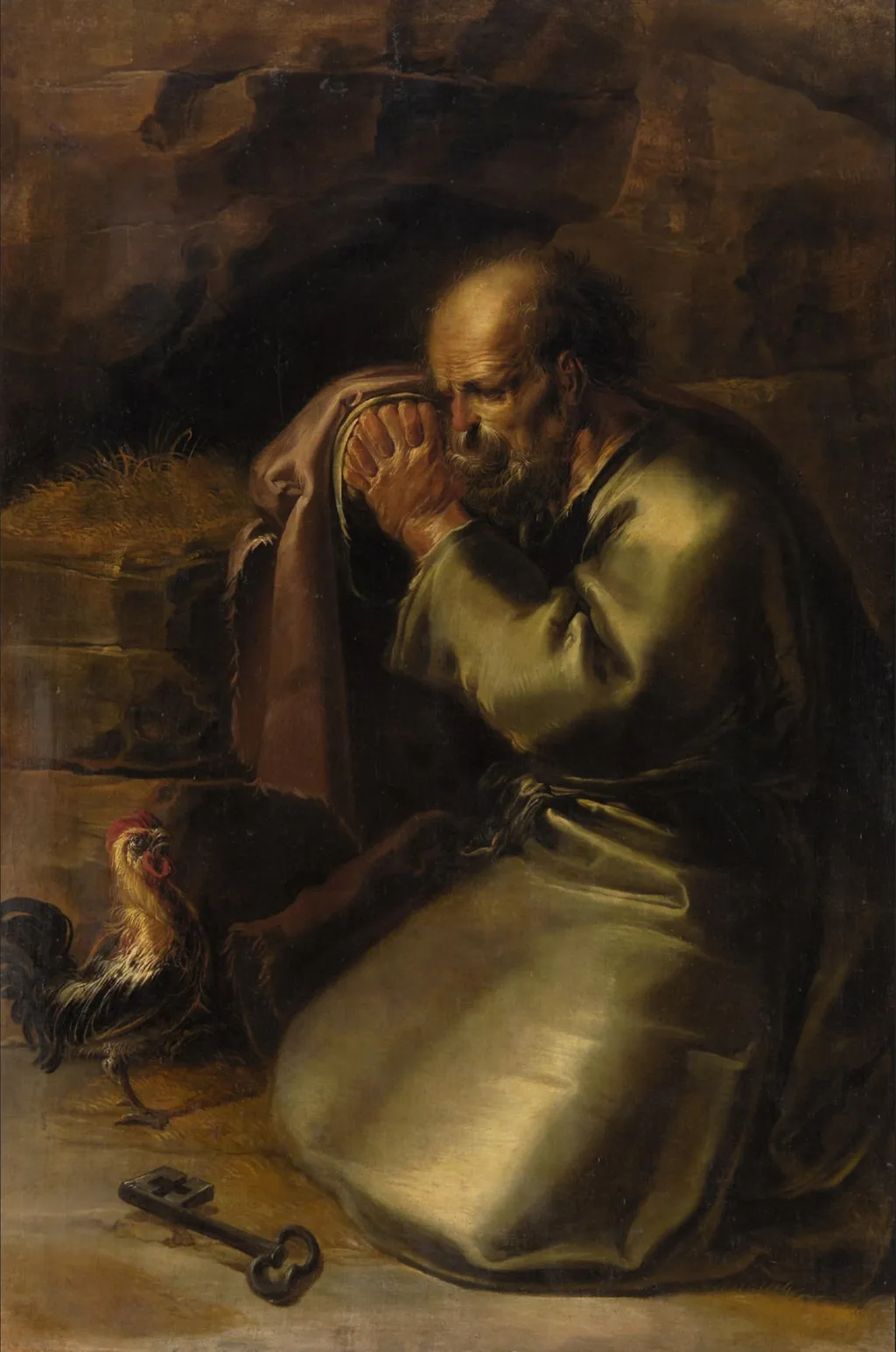
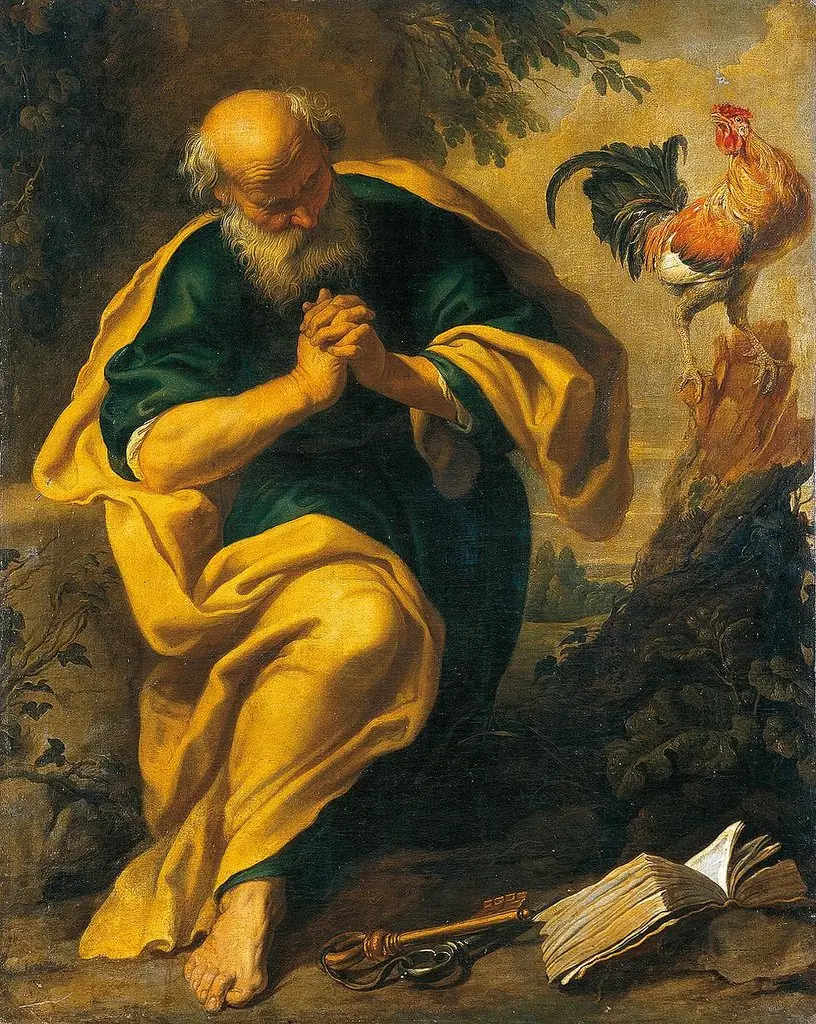
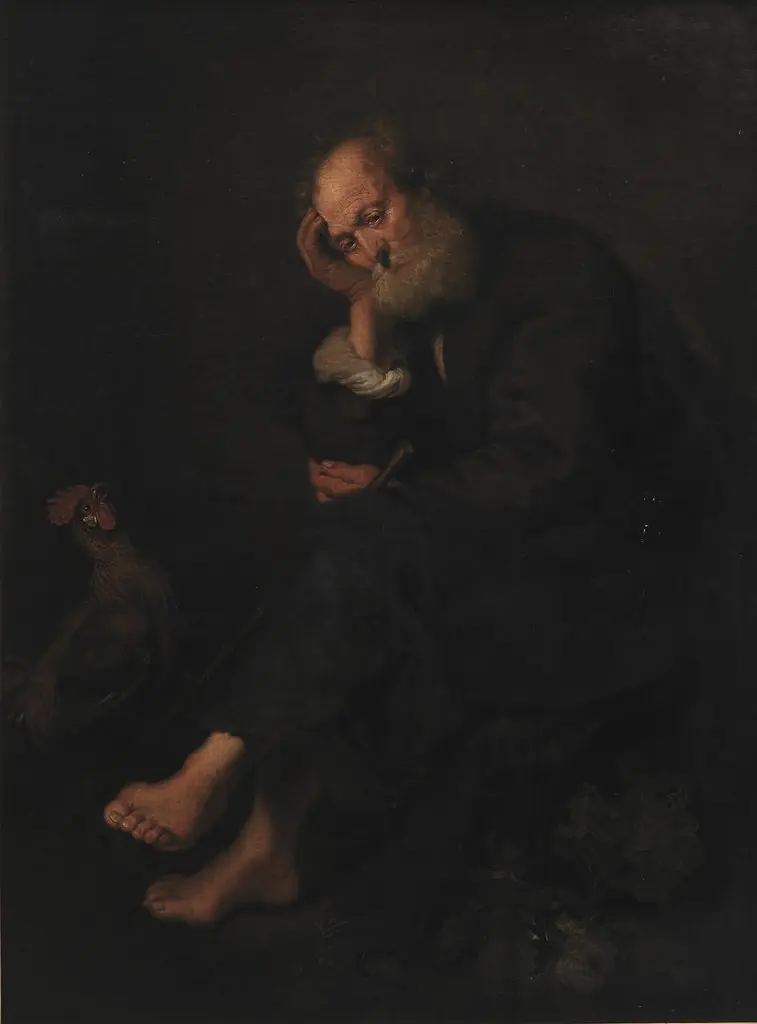
Denial of Saint Peter is an oil painting by the Dutch Golden Age artist Jan van der Venne. It dates from 1650 and is held in the collection of the Kunsthistorisches Museum.
About this work
Overview
Painted around 1650 by Jan van der Venne, this oil on panel work depicts a moment from the New Testament in which Saint Peter denies knowing Jesus. The painting is part of the Kunsthistorisches Museum’s collection in Vienna. Its quiet intensity and restrained composition reflect the Northern European tradition of intimate religious narrative, avoiding grandeur in favor of psychological depth.
Subject & Meaning
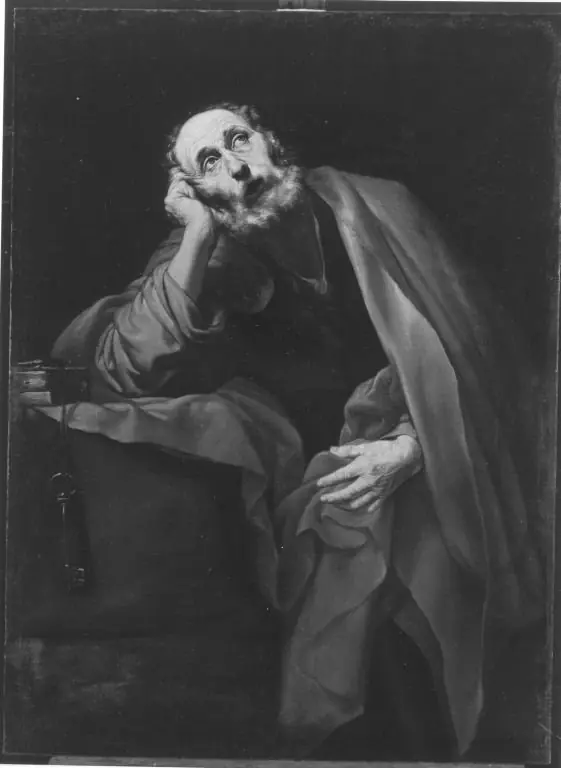
The key on the ground alludes to Peter’s later role as keeper of the keys to heaven, underscoring the tension between failure and redemption.
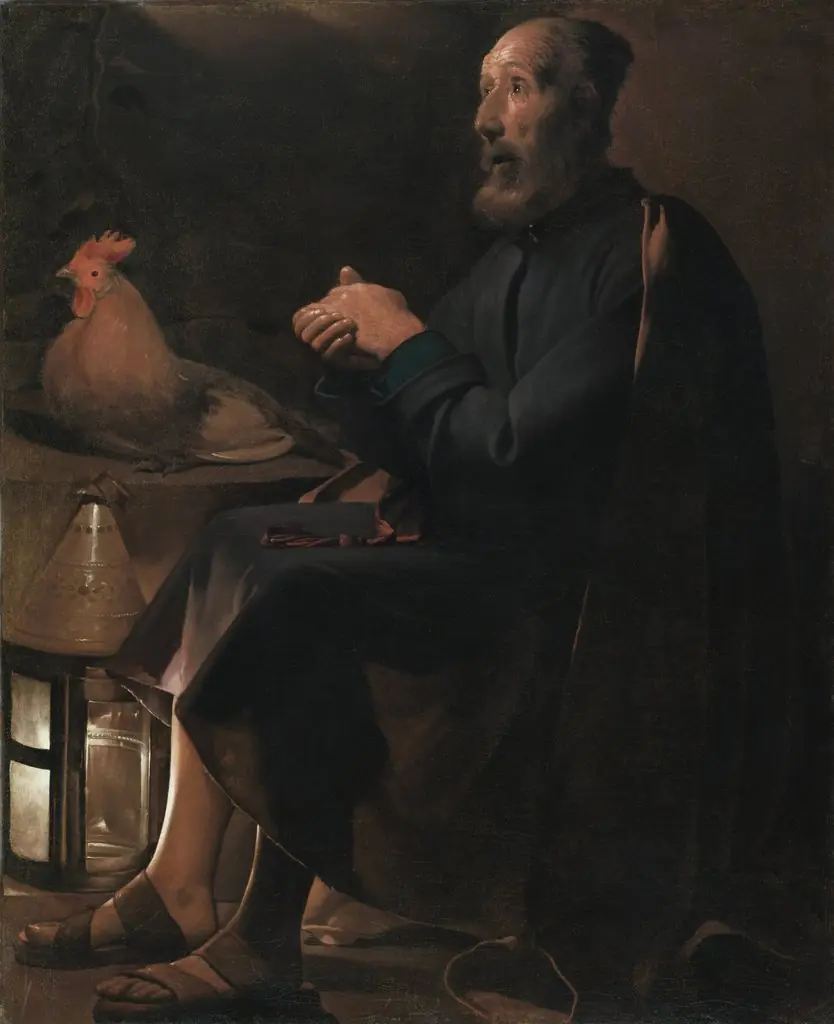
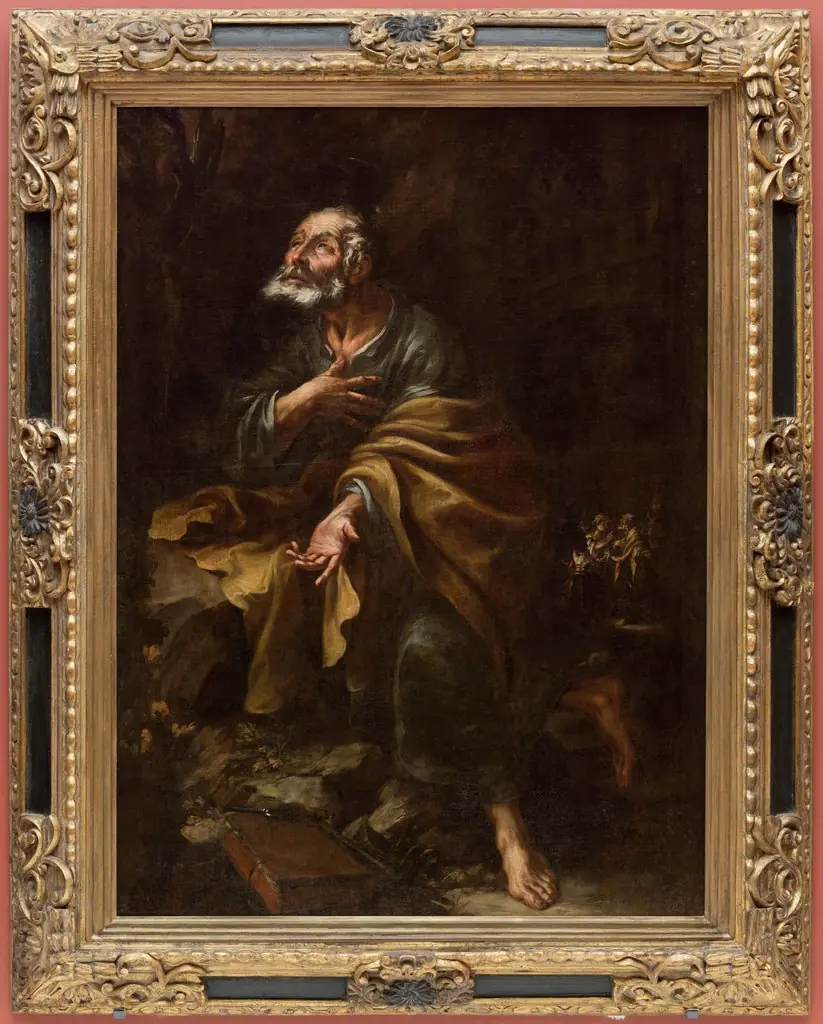
The scene captures Peter’s moment of remorse after his threefold denial of Christ, as foretold by Jesus. His bowed head and clasped hands convey inner torment, while the rooster—symbol of the prophecy’s fulfillment—stands nearby, its crimson plumage a stark counterpoint to the gloom. The key on the ground alludes to Peter’s later role as keeper of the keys to heaven, underscoring the tension between failure and redemption.
Technique & Style
Van der Venne employs subtle chiaroscuro to model form and emotion. Peter’s robe catches a soft, diffused light, contrasting with the deep shadows enveloping his face and the floor. The rooster’s vivid red feathers are rendered with precise detail, anchoring the viewer’s gaze. The background remains muted, focusing attention on the figure’s isolation and the symbolic objects scattered at his feet.
History & Provenance
The painting entered the Kunsthistorisches Museum’s collection in the 19th century, likely through imperial Austrian acquisitions of Dutch and Flemish works. Its attribution to Jan van der Venne is supported by stylistic parallels with his other religious scenes and signed works. No earlier documented ownership is known, suggesting it may have remained in private hands in the Low Countries before entering the museum’s holdings.
Context
Created during the Dutch Golden Age, this work reflects a broader trend of devotional imagery tailored for private contemplation rather than public altarpieces. While Italian art favored dramatic gestures, Northern painters like van der Venne emphasized quiet psychological realism. The inclusion of symbolic animals and objects aligns with Protestant devotional practices that encouraged personal moral reflection.
Legacy
Though not widely reproduced, the painting exemplifies how Northern artists translated biblical narratives into intimate, emotionally resonant scenes. Its restrained palette and focus on interiority influenced later generations of genre painters interested in moral and spiritual ambiguity. It remains a quiet but potent example of 17th-century Dutch religious painting’s capacity for understated drama.
Own this work as a print
Artist & collection