Artwork
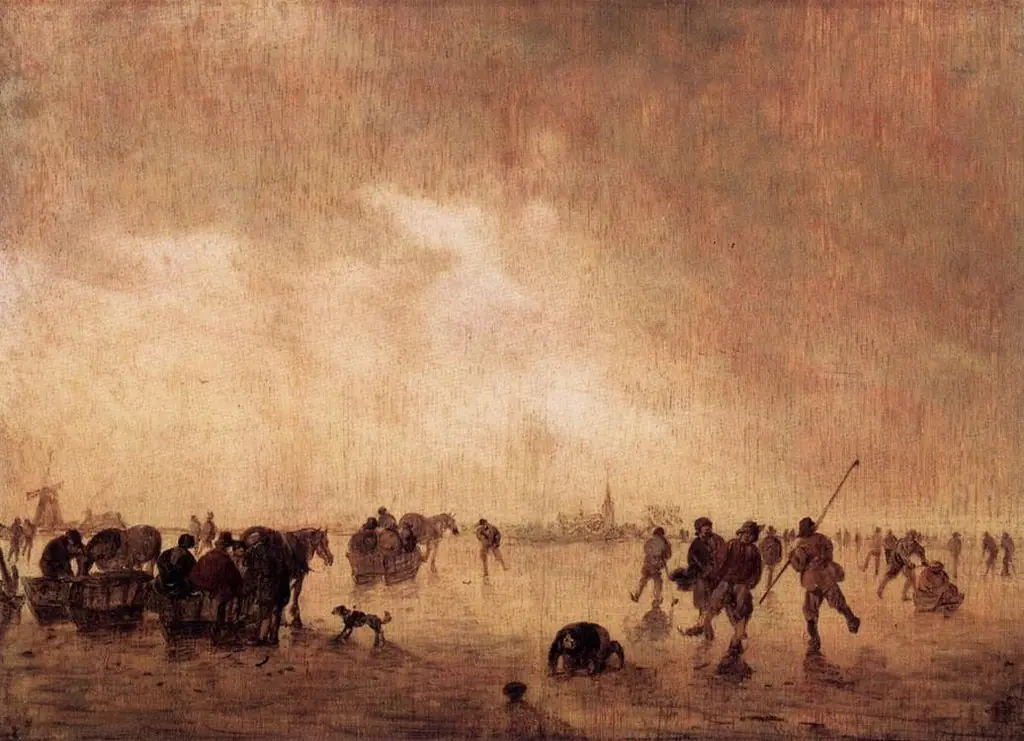
An Ice Track on a Frozen River
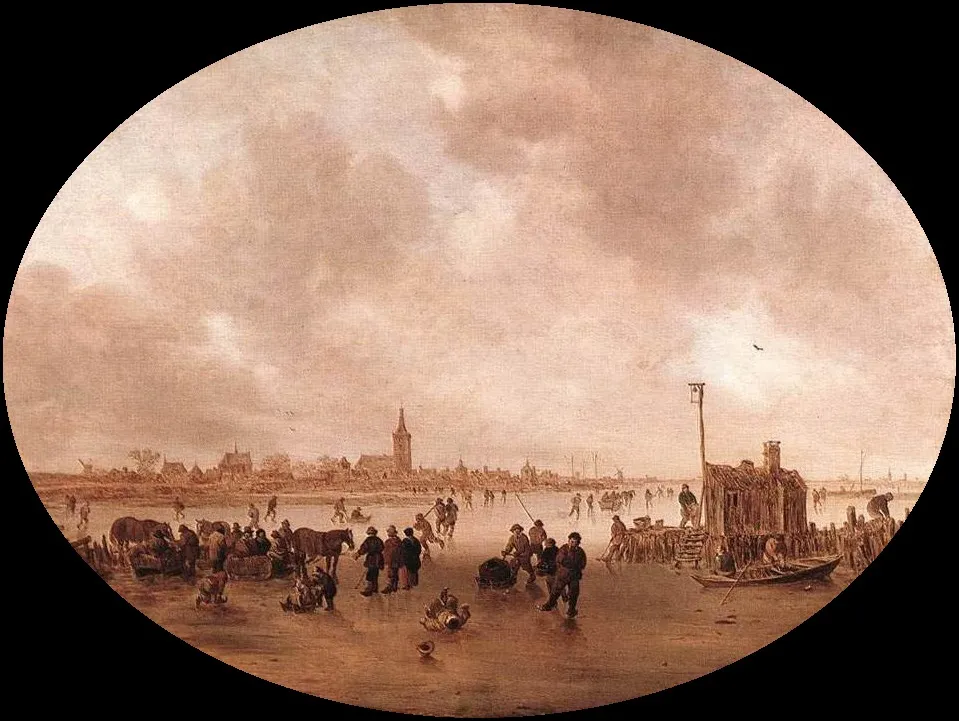
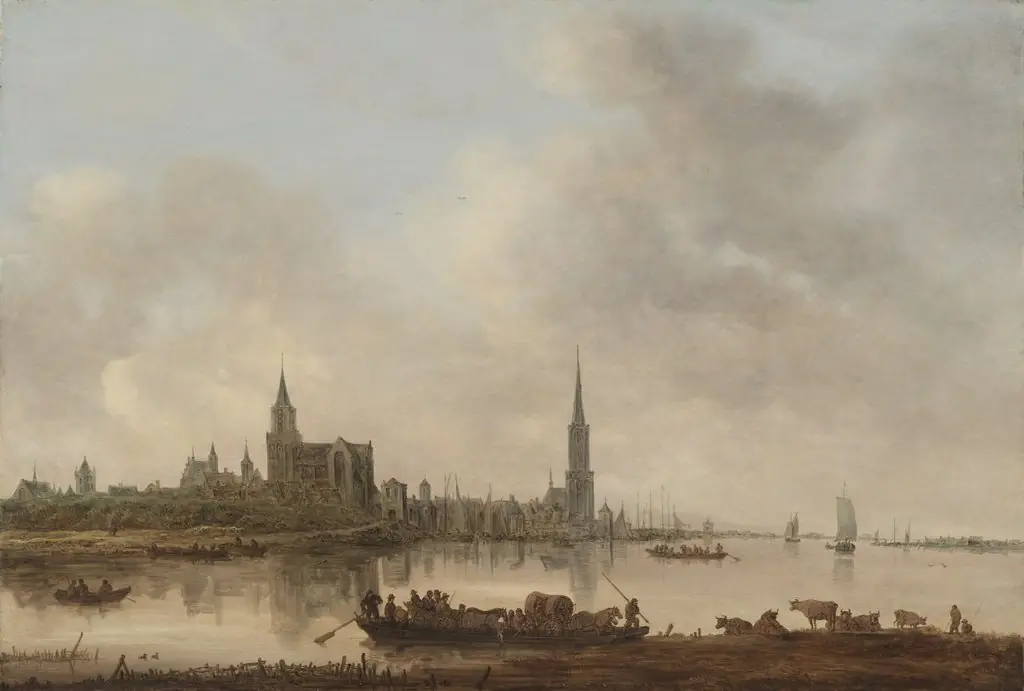
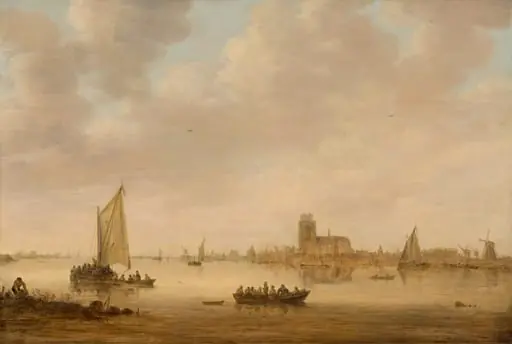
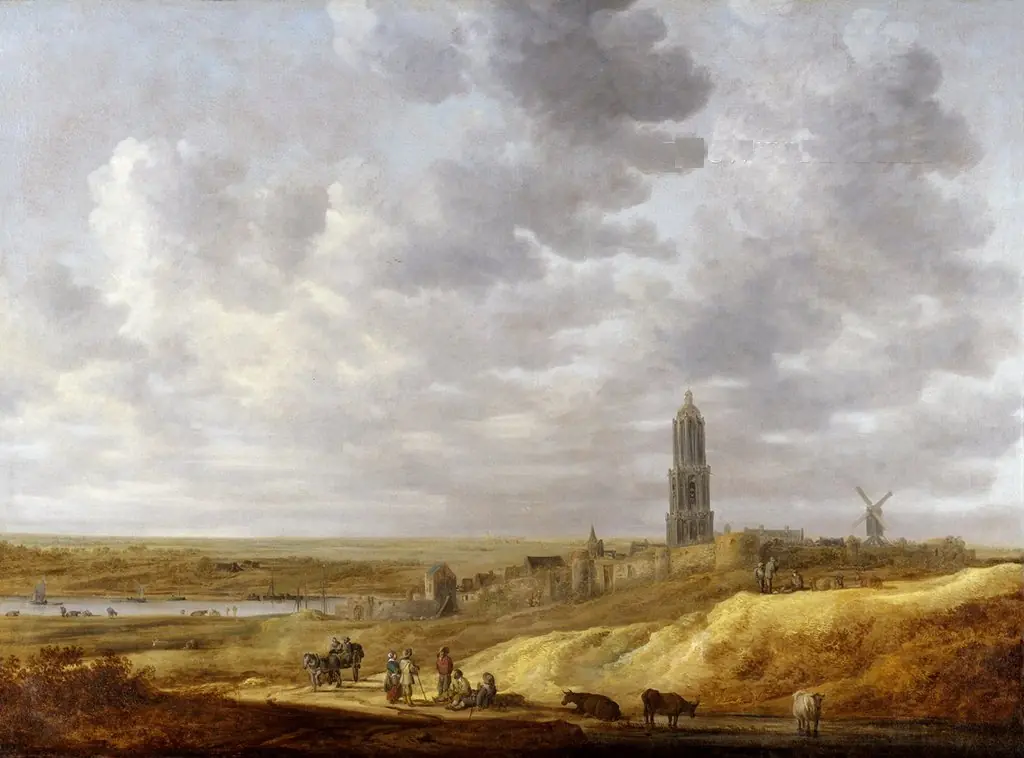
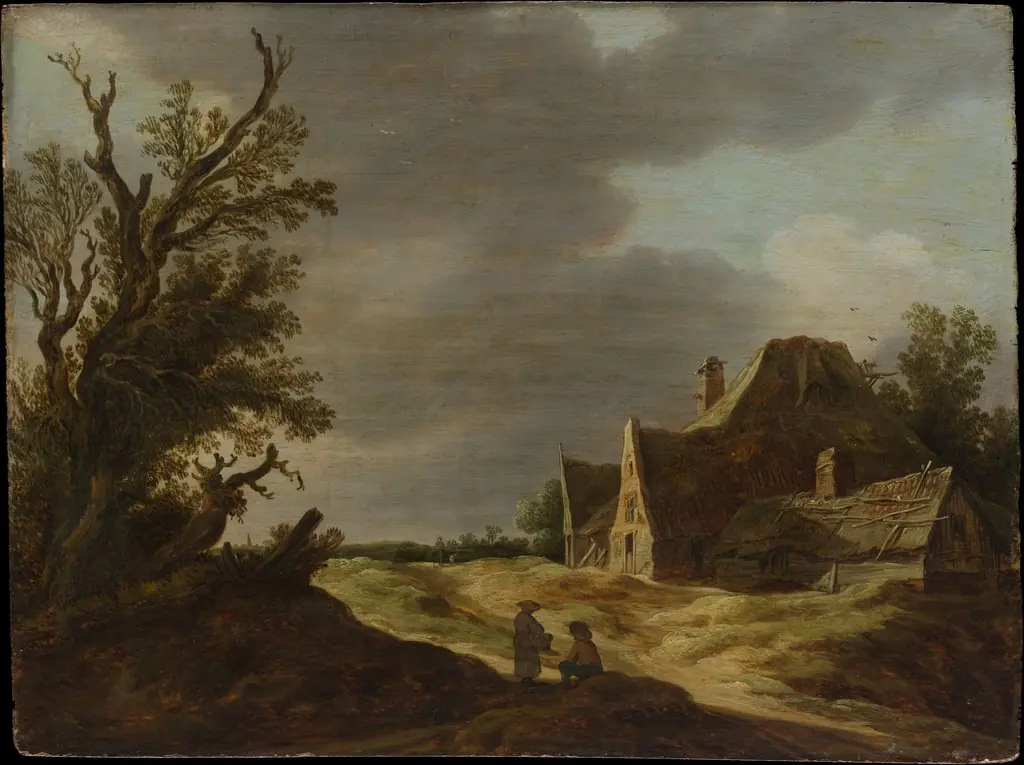
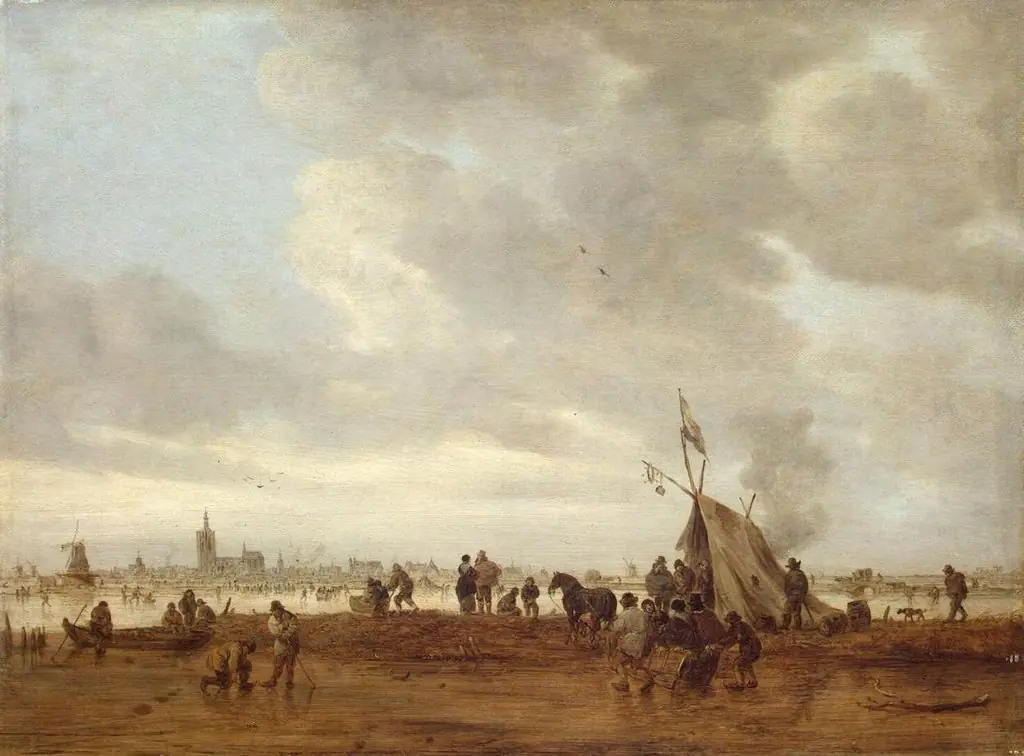
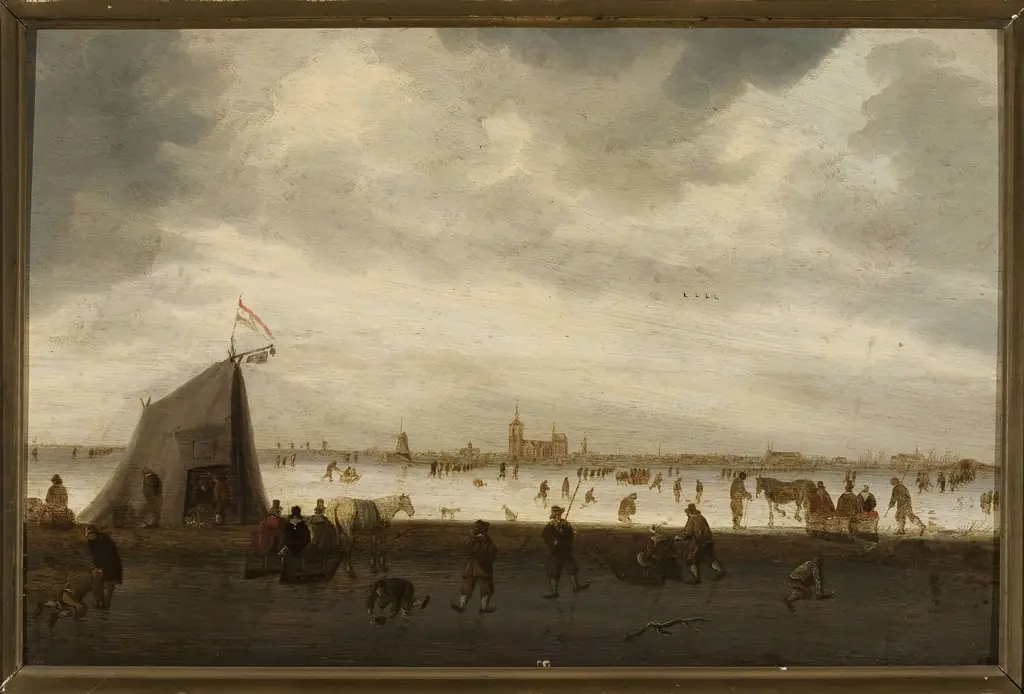
An Ice Track on a Frozen River is an oil painting by the Dutch Golden Age artist Jan van Goyen. It dates from 1643 and is held in the collection of the Staatliche Kunstsammlungen Dresden.
About this work
Overview
Van Goyen, known for his extensive landscape output, rendered this composition with quiet precision, emphasizing atmospheric tone over dramatic action.
Painted in 1643 by Jan van Goyen, this oil-on-panel work captures a winter scene along a frozen river in the Dutch countryside. Van Goyen, known for his extensive landscape output, rendered this composition with quiet precision, emphasizing atmospheric tone over dramatic action. The painting belongs to a series of winter views he produced during the height of the Dutch Golden Age, reflecting a broader cultural interest in seasonal rural life.
Subject & Meaning
The scene depicts everyday winter activity: figures skating, horse-drawn sleds moving along the ice, and distant villagers going about their routines. A church steeple rises above low buildings, anchoring the composition in a recognizable community. There is no overt narrative, but the quiet hum of human presence against the muted landscape suggests a contemplative harmony between people and their environment during the cold season.
Technique & Style
Van Goyen employed thin, layered oil glazes to achieve subtle gradations in tone, favoring a palette of muted browns, grays, and soft whites. The brushwork is precise yet unobtrusive, allowing the texture of ice, fabric, and snow to emerge without overt flourish. Atmospheric perspective is carefully managed, with distant elements softened to enhance depth, a hallmark of his mature landscape style.
History & Provenance
The painting entered the collection of the Gemäldegalerie Alte Meister in Dresden, where it remains today. Its documented history traces back to early 18th-century German collections, suggesting it was acquired by a patron familiar with Dutch art. Unlike some of van Goyen’s more celebrated works, this piece was not widely reproduced or altered, preserving its original condition and intent.
Context
During the 1640s, Dutch artists increasingly turned to everyday landscapes as subjects worthy of serious attention. Winter scenes, in particular, resonated with a public that experienced harsh seasonal cycles and valued domestic stability. Van Goyen’s approach—unembellished, observational—aligned with broader trends in Dutch realism, rejecting idealized scenery in favor of authentic, unheroic environments.
Legacy
Van Goyen’s winter landscapes, including this one, influenced later generations of Dutch and Flemish painters who sought to capture transient weather and quiet rural life. While not as widely exhibited as some of his contemporaries’ works, this painting exemplifies his consistent focus on naturalism and tonal harmony, contributing to the enduring appreciation of Dutch landscape painting in institutional collections.
Artist & collection
Artist
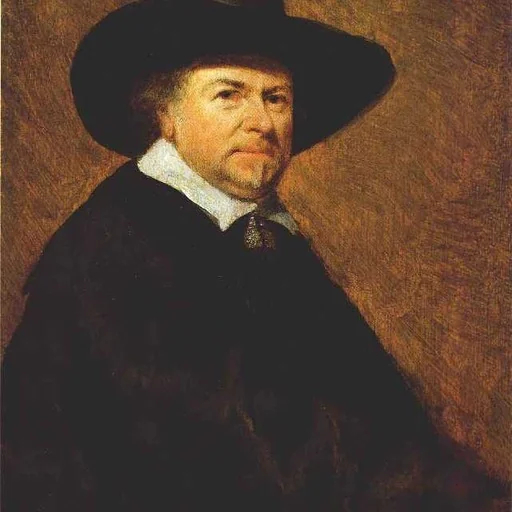
Jan Josephszoon van Goyen (Dutch pronunciation: ; 13 January 1596 – 27 April 1656) was a Dutch landscape painter.