Artwork
Skating near the city
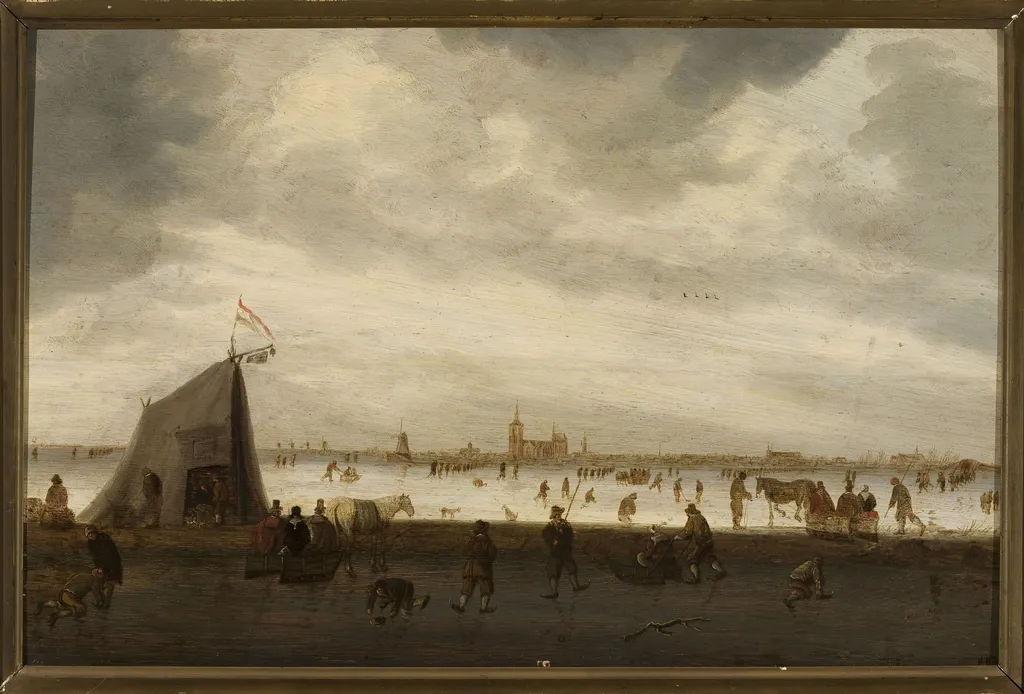
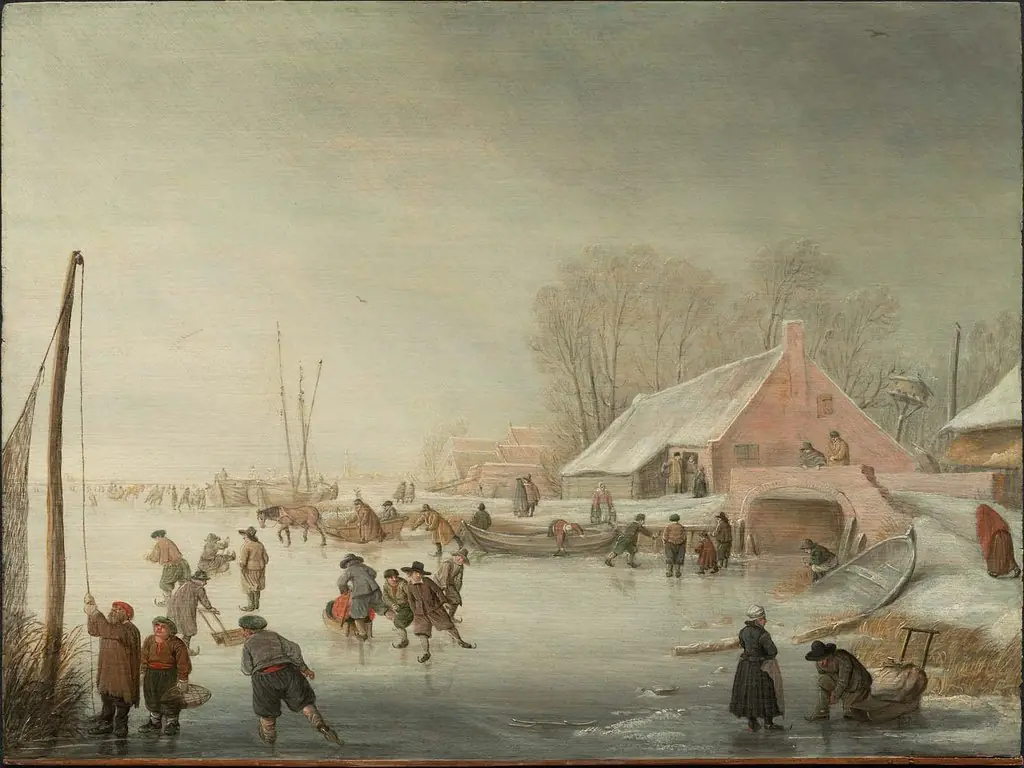
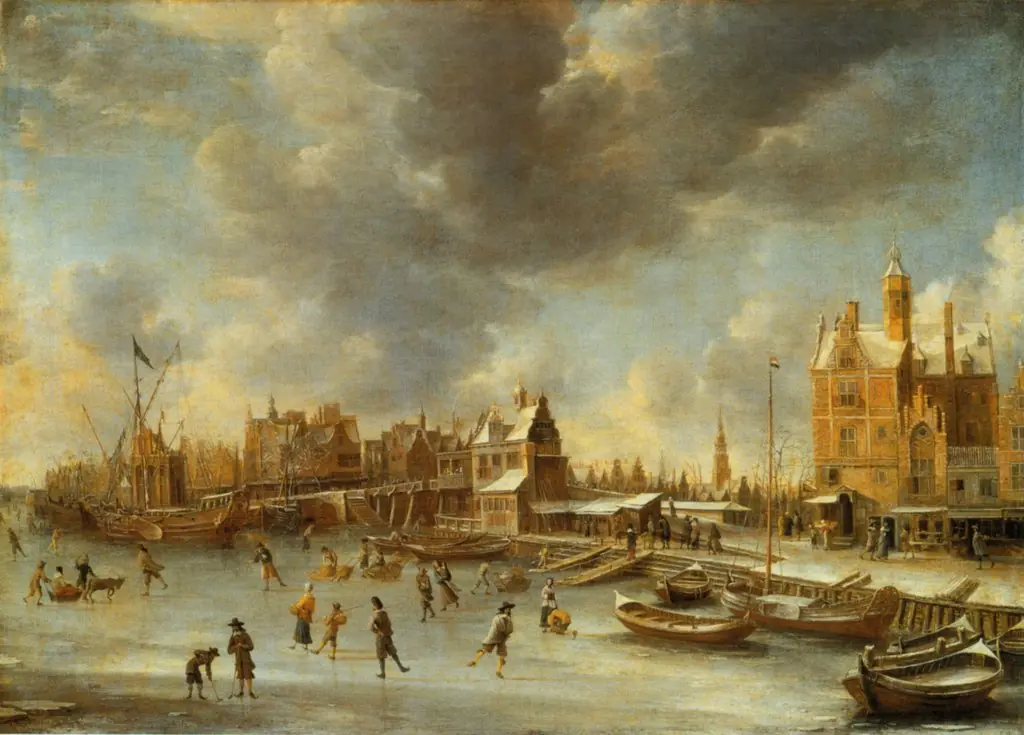
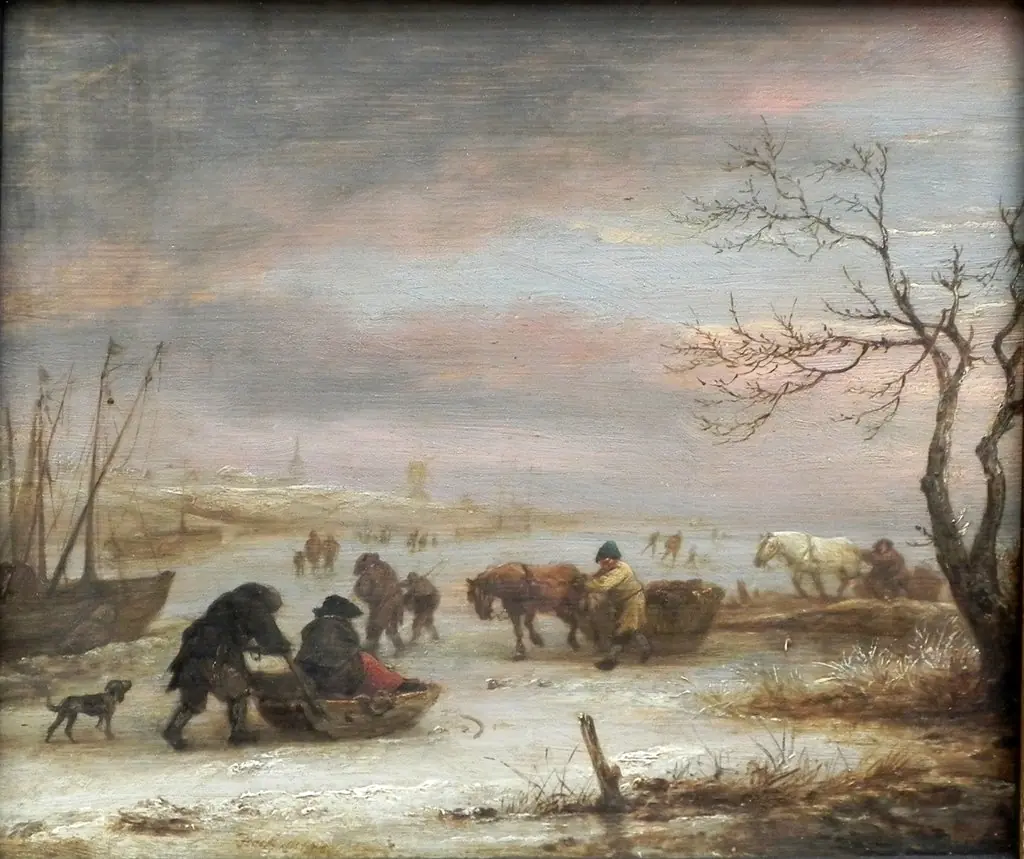
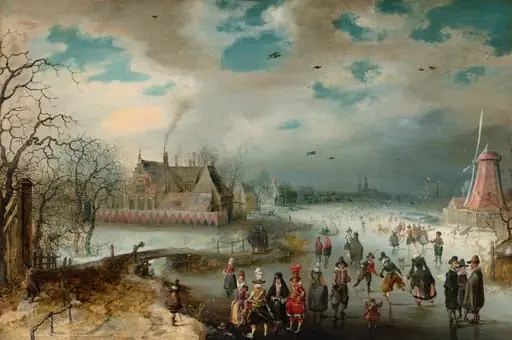
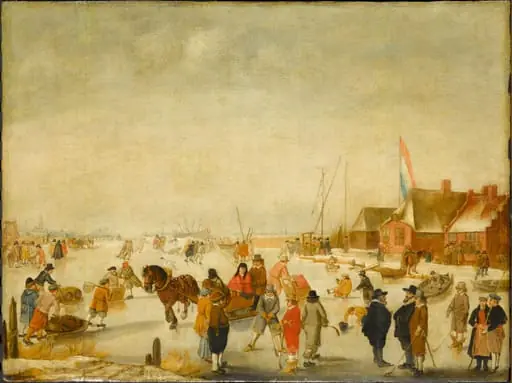
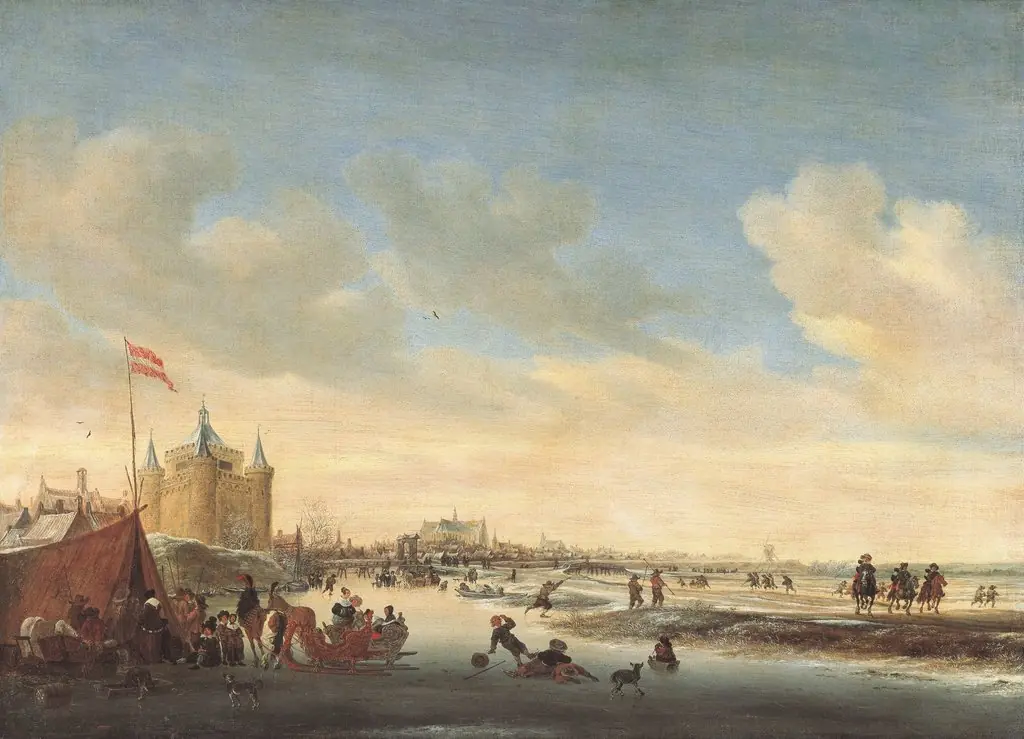
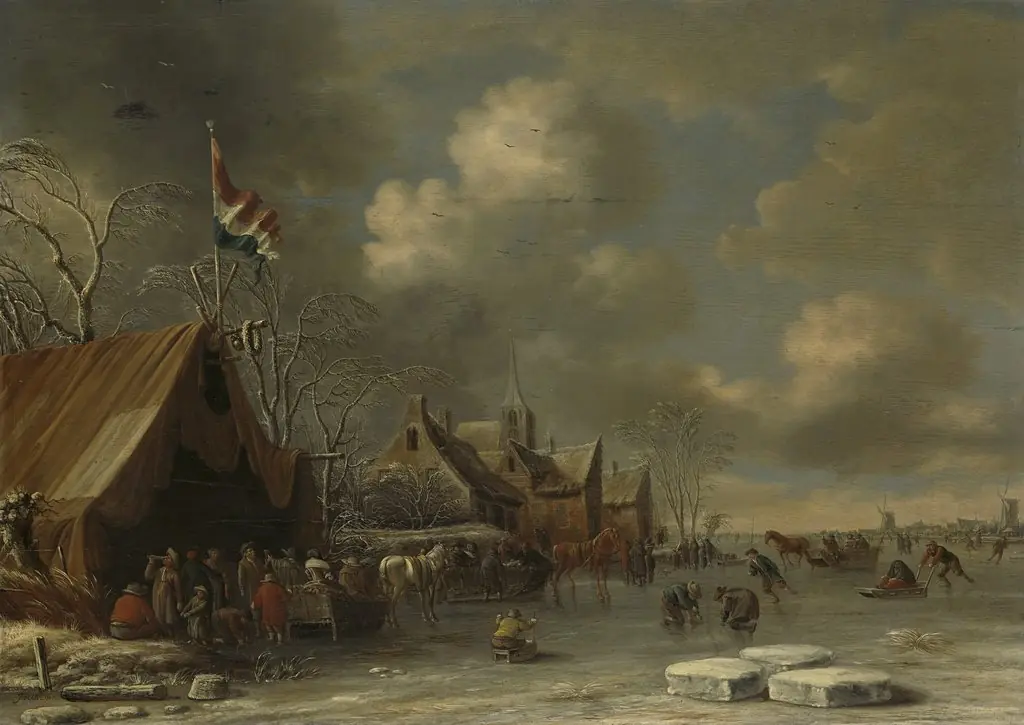
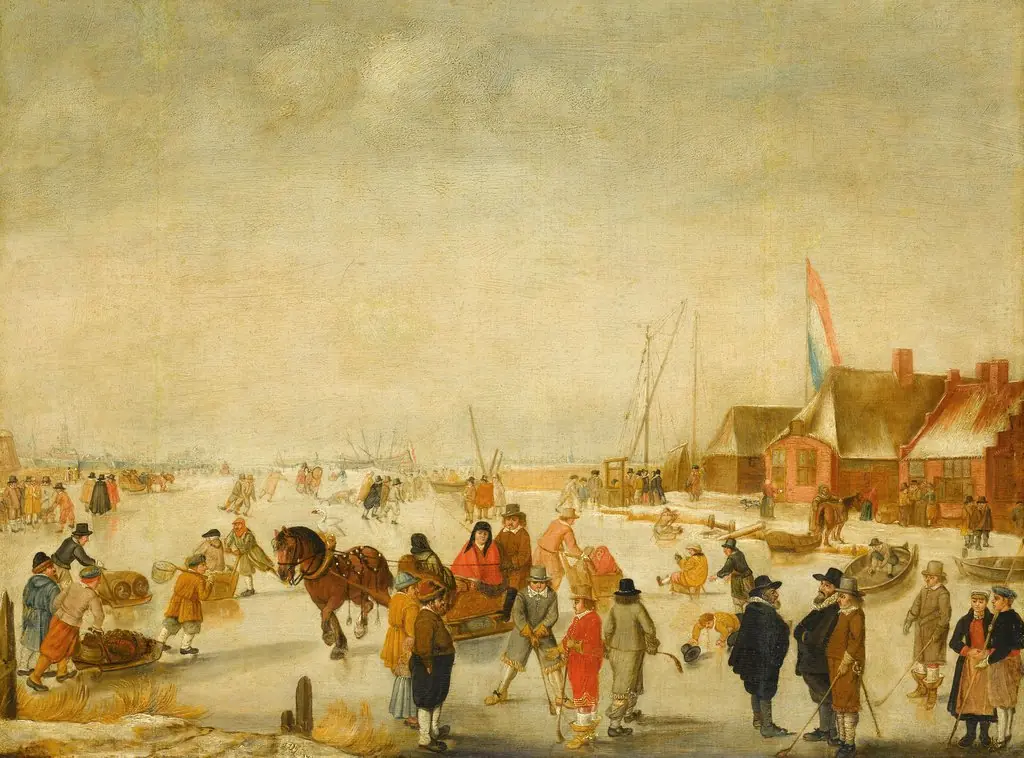
Skating near the city is an oil painting by Unknown. It dates from 1648 and is held in the collection of the National Museum in Warsaw. This oil painting captures a winter landscape near an urban center, where figures glide across a frozen expanse.
About this work
Overview
The scene blends natural and built environments, with modest architecture and a church steeple rising behind the ice.
This oil painting captures a winter landscape near an urban center, where figures glide across a frozen expanse. The scene blends natural and built environments, with modest architecture and a church steeple rising behind the ice. Visible brushwork lends texture to the surface, while a palette of cool grays and blues contrasts with the warmer hues of clothing and buildings, suggesting both chill and human activity.
Subject & Meaning
The painting portrays everyday winter recreation, showing individuals skating, some carrying sticks, possibly for hockey or balance. No grand narrative is present; instead, it documents ordinary life in a cold season. The presence of a church steeple anchors the scene in a specific community, hinting at the integration of leisure with daily routines in a pre-industrial urban setting.
Technique & Style
Oil paint is applied with discernible, loose brushstrokes that define movement and texture without fine detail. The artist uses tonal shifts to suggest depth—cool blues for ice and sky, earthier tones for structures and garments. Light appears diffused, consistent with overcast winter conditions, and the composition directs attention toward the skating figures while keeping architectural elements as contextual backdrop.
History & Provenance
The work resides in the National Museum in Warsaw, indicating its significance within Polish artistic heritage. While its exact date and artist remain unconfirmed in available records, its style aligns with 19th-century regional painting traditions that documented local life. Its preservation suggests it was valued early as a record of seasonal customs and urban surroundings.
Context
In the 19th century, ice skating was a common winter pastime in Northern European cities, especially where rivers and canals froze reliably. Paintings of such scenes often reflected a growing interest in domestic, non-elite life. This work fits within a broader trend of artists turning away from mythological or aristocratic subjects toward scenes of ordinary people engaging with their environment.
Legacy
The painting contributes to a visual archive of seasonal urban life in Eastern Europe. Though not widely reproduced, its presence in a national collection affirms its role as a document of cultural practice. It remains a quiet testament to how ordinary activities were observed and preserved in art during a period of social and industrial change.
Artist & collection

 Domestic Scene
 Giacomo and Cardinal Marco, investing Andrea, Abbot of San Zeno, with his Benefice
 The Nymph of Fontainebleau
 Portrait of a Woman
 Madonna and Child with Saints in the Enclosed Garden
 Venus and Minerva
 Family Group of Four on Sofa
 Wall painting from Room H of the Villa of P. Fannius Synistor at Boscoreale