Artwork
Reiterüberfall
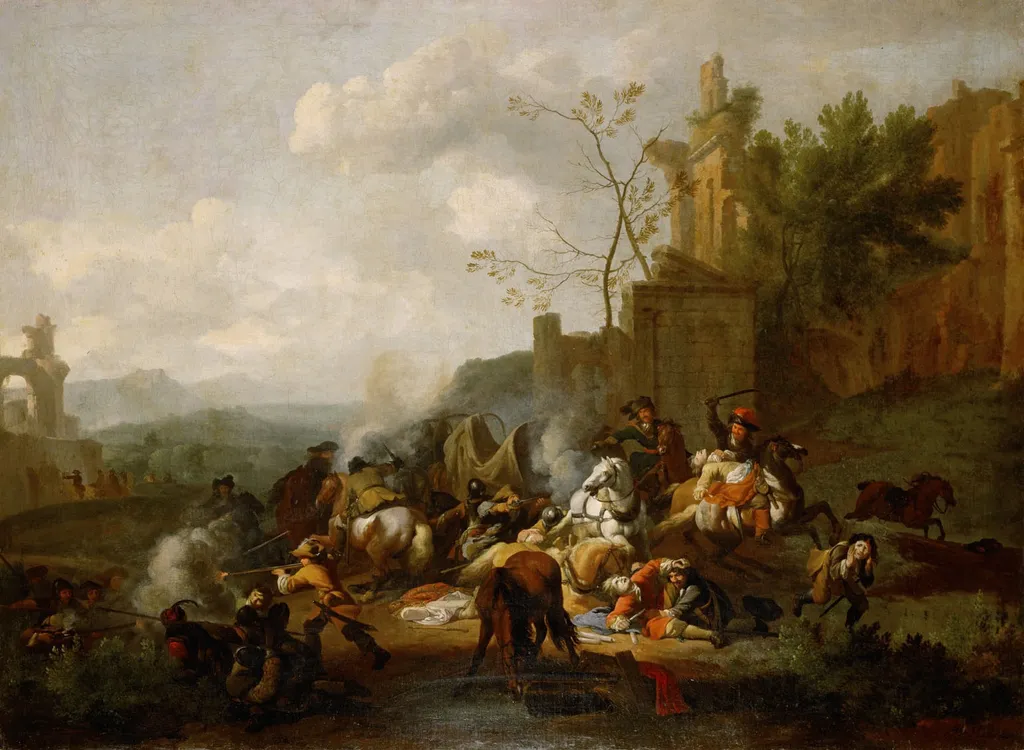
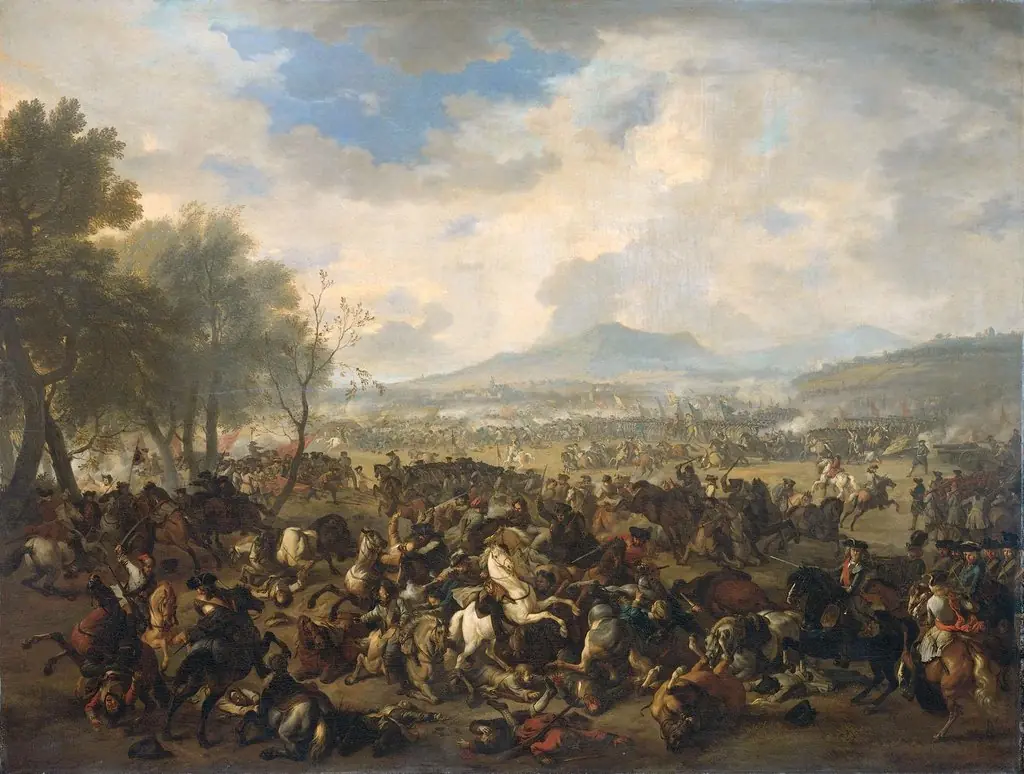
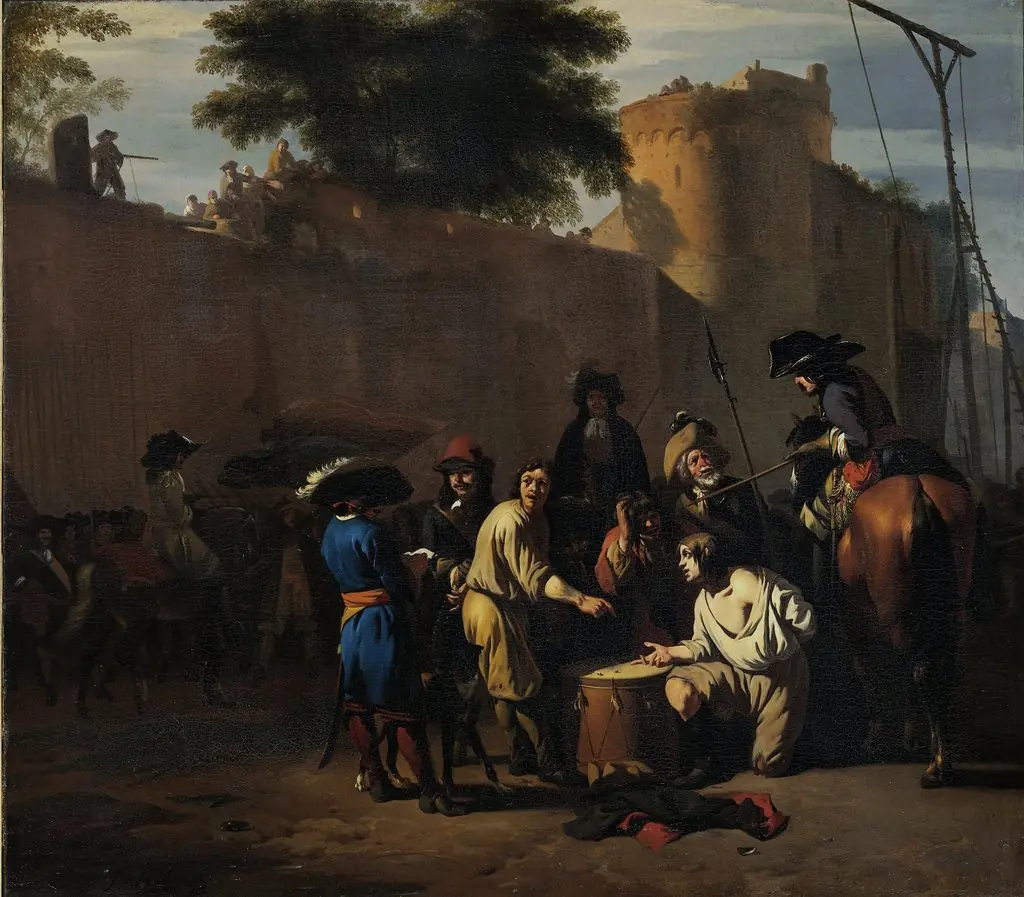
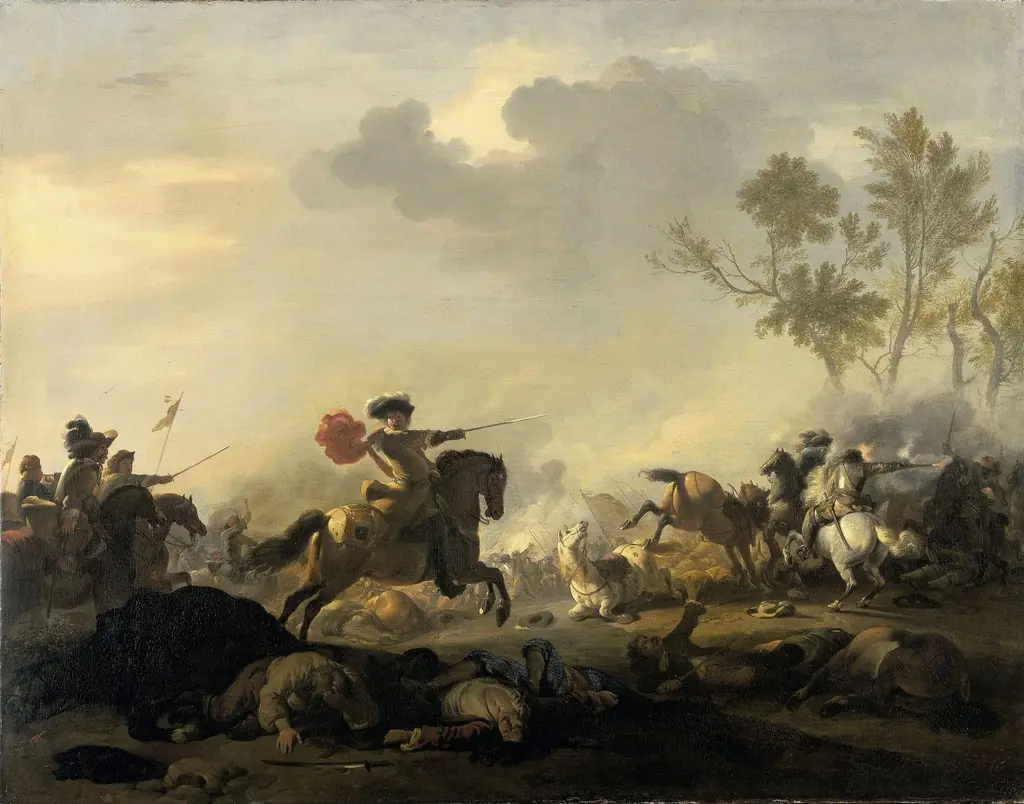
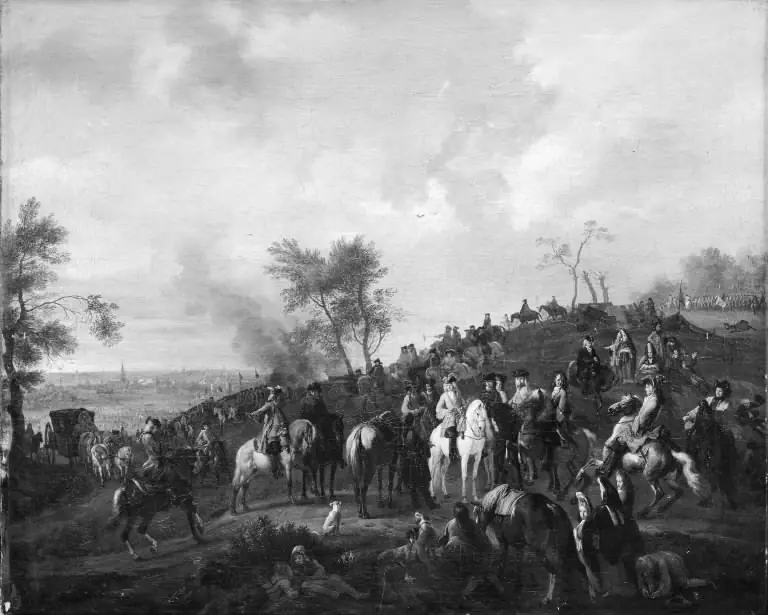
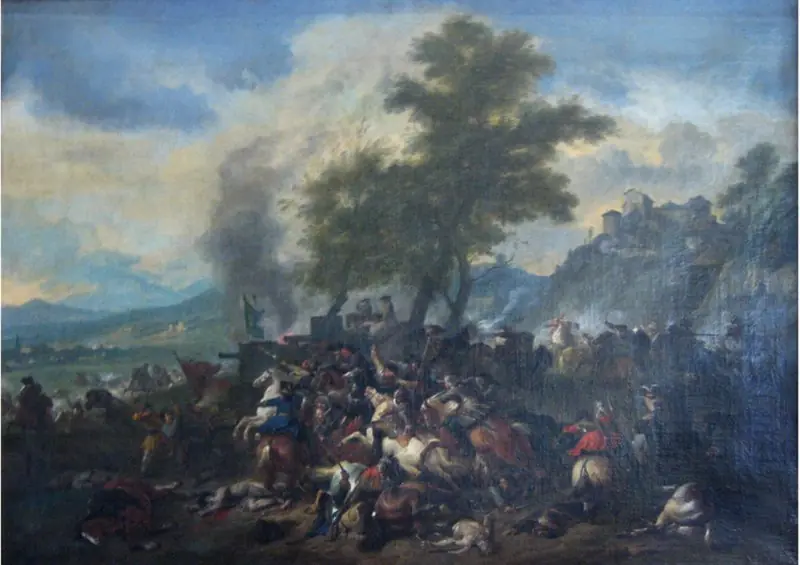
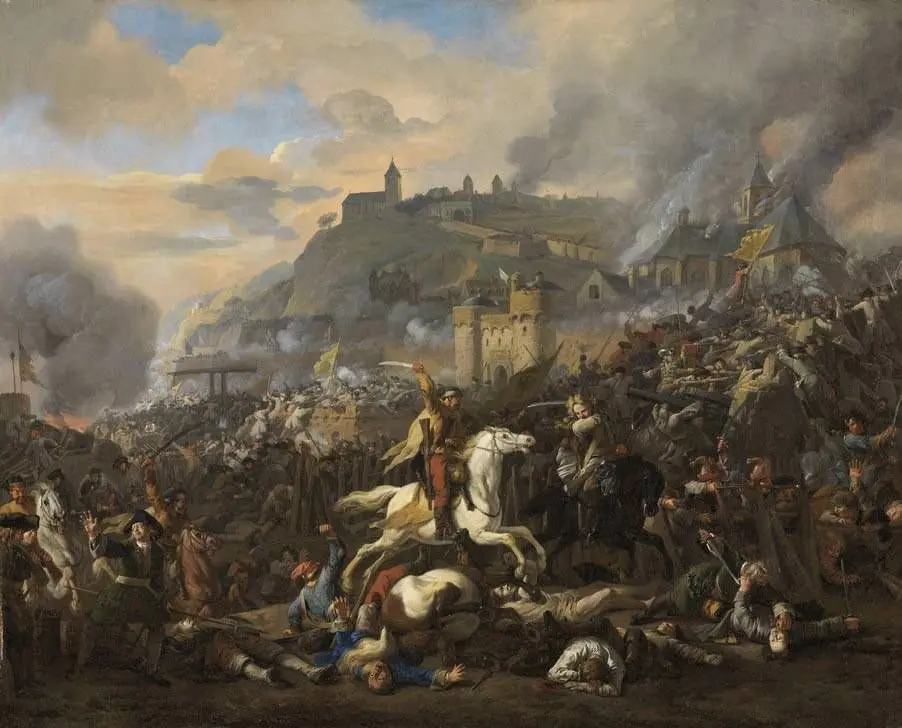
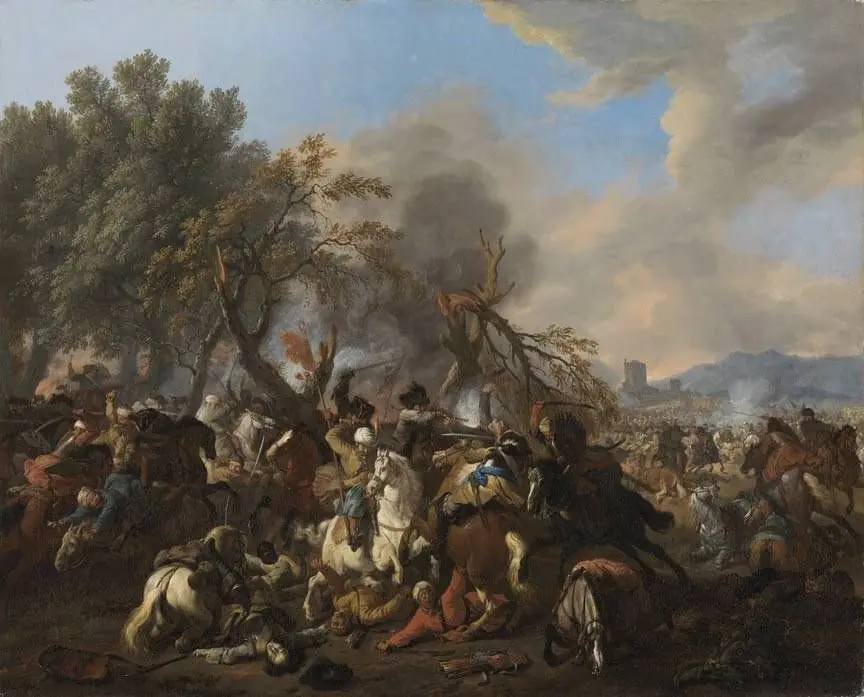
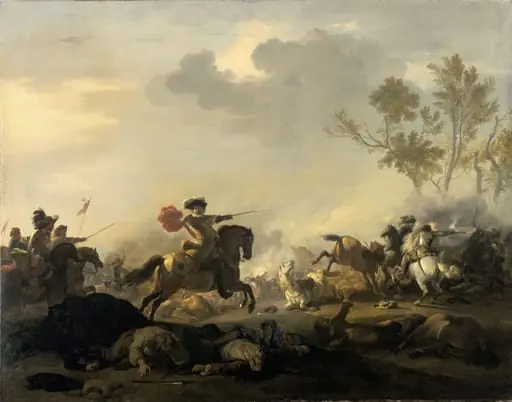
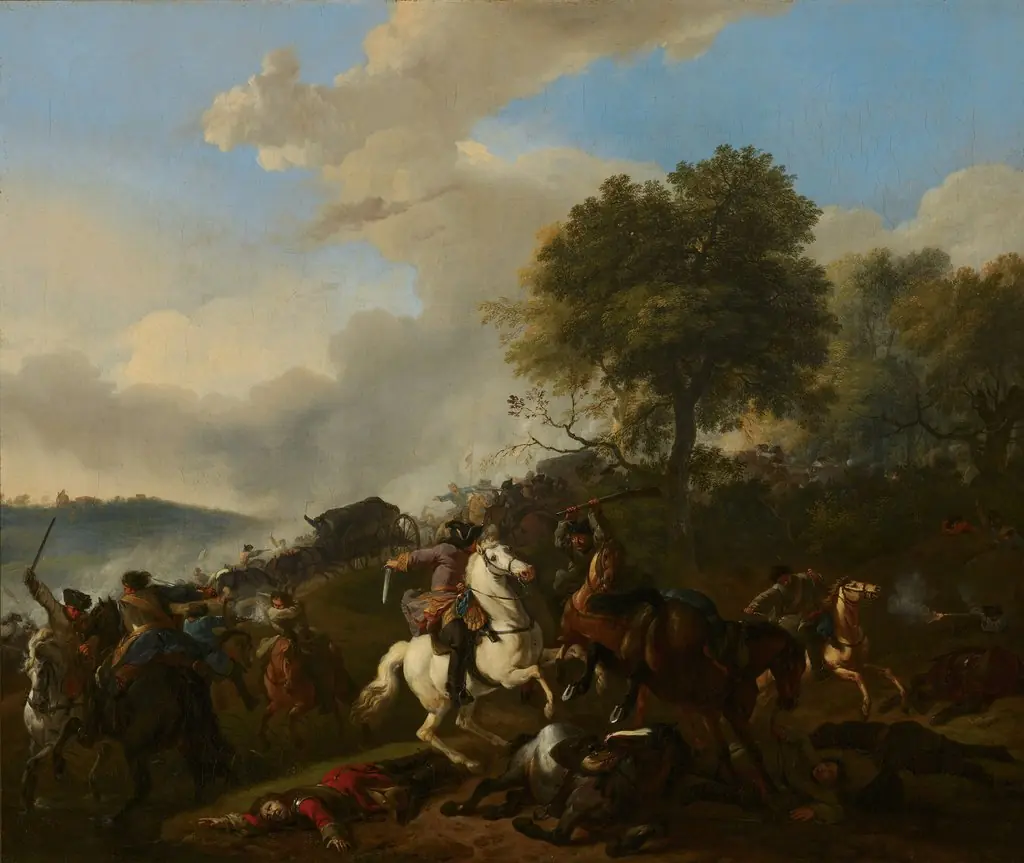
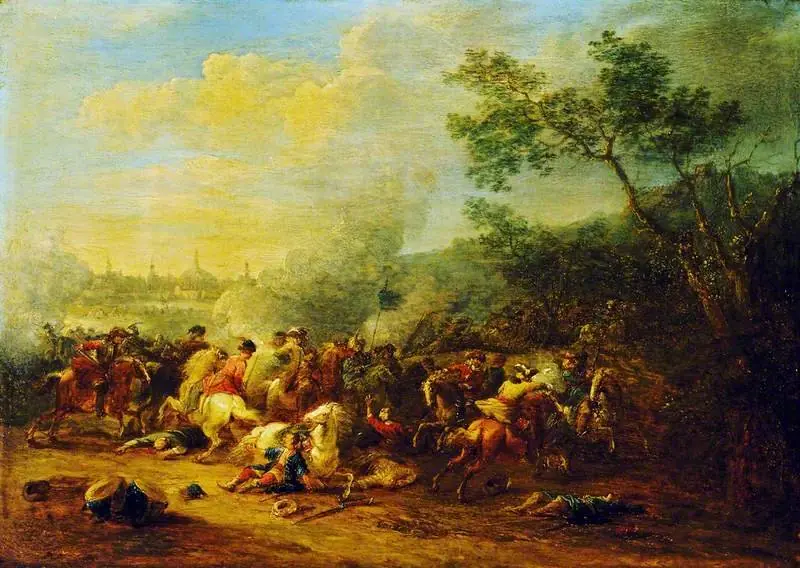
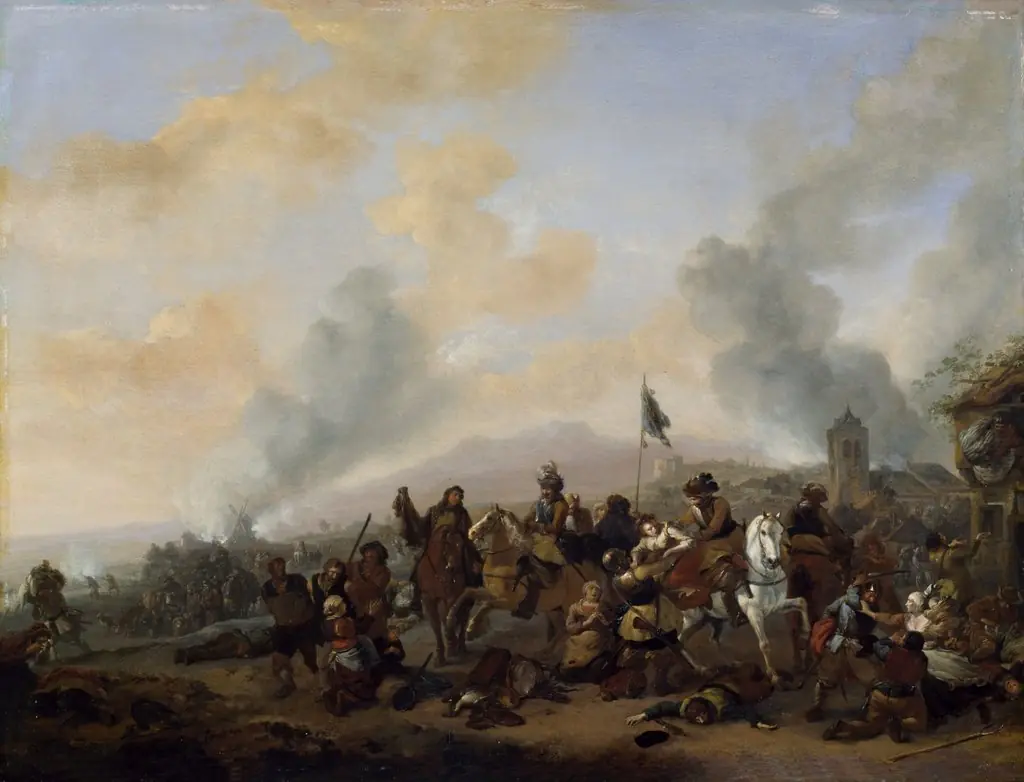
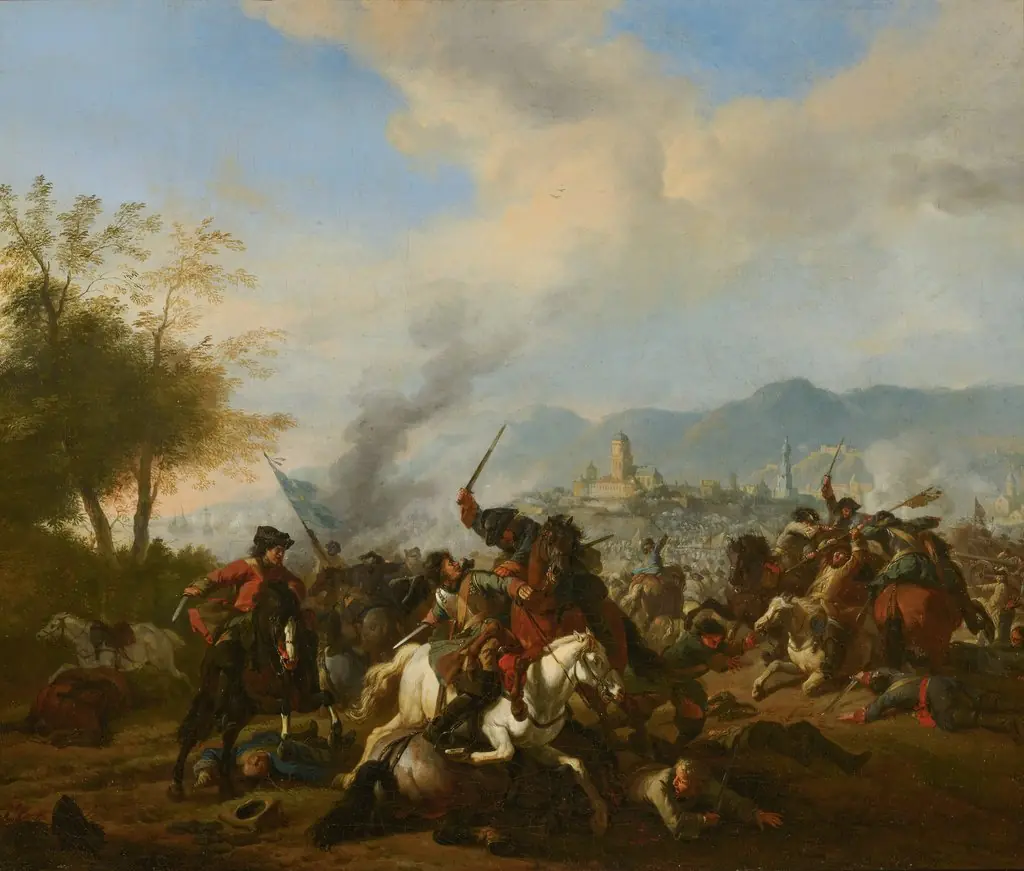
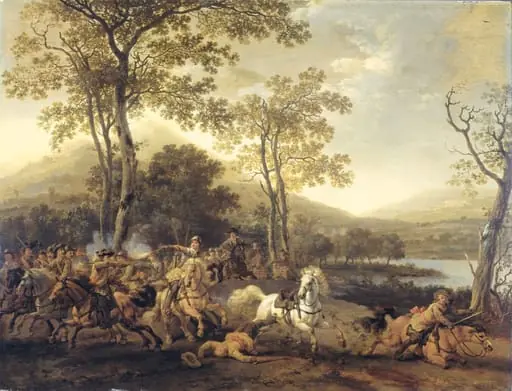
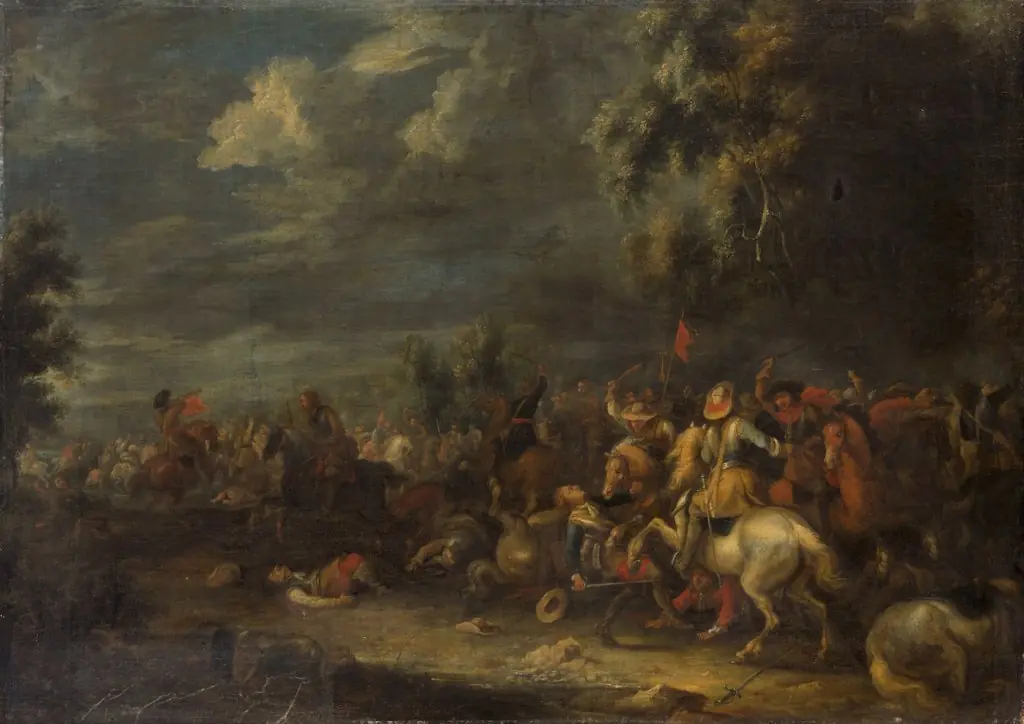
Reiterüberfall is an unspecified painting by the Rococo painting artist Jan van Huchtenburgh. It dates from 1700 and is held in the collection of the Kunsthistorisches Museum.
About this work
Overview
It resides today in the Kunsthistorisches Museum in Vienna, part of a broader collection of 17th- and early 18th-century European military art.
Painted in 1700 by Jan van Huchtenburgh, *Reiterüberfall* is a dynamic depiction of a cavalry ambush. Van Huchtenburgh, trained by Thomas Wijck and active as both artist and dealer, focused on military equestrian subjects. The work reflects his specialization in battlefield chaos, rendered with attention to movement and disorder. It resides today in the Kunsthistorisches Museum in Vienna, part of a broader collection of 17th- and early 18th-century European military art.
Subject & Meaning
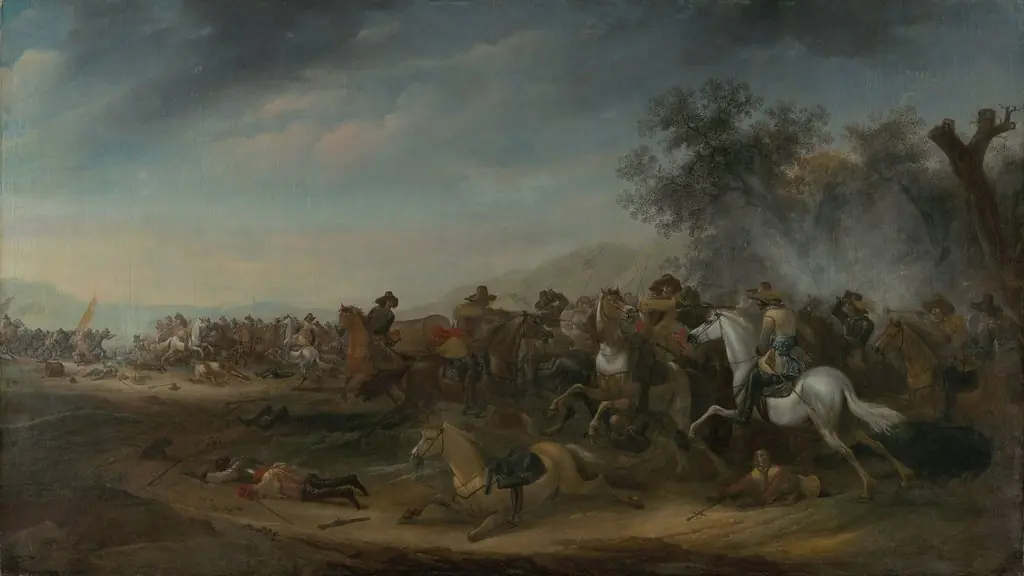
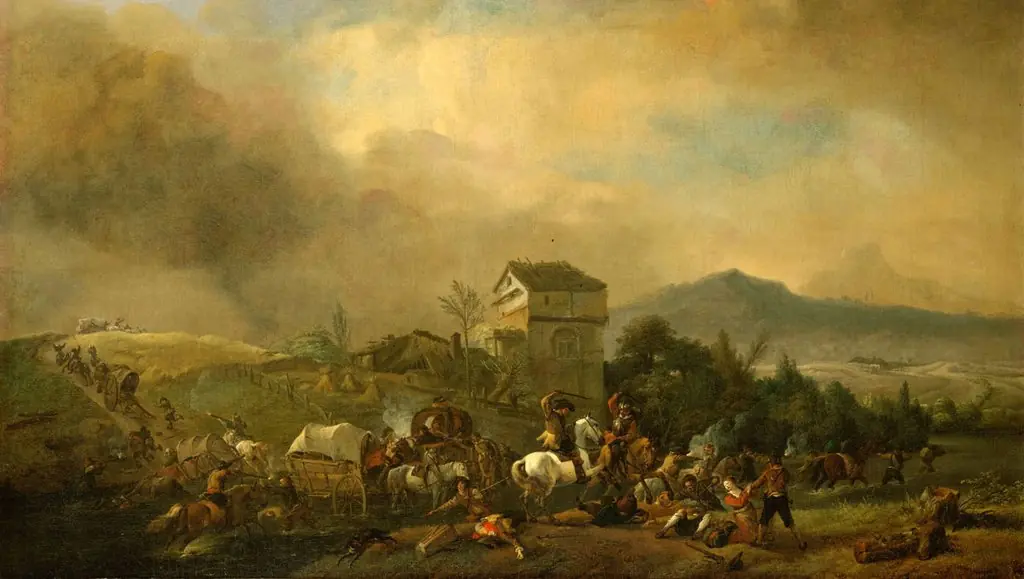
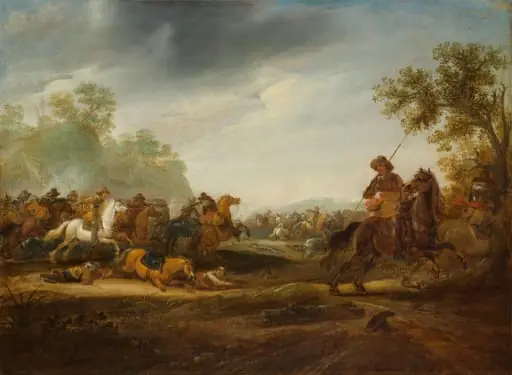
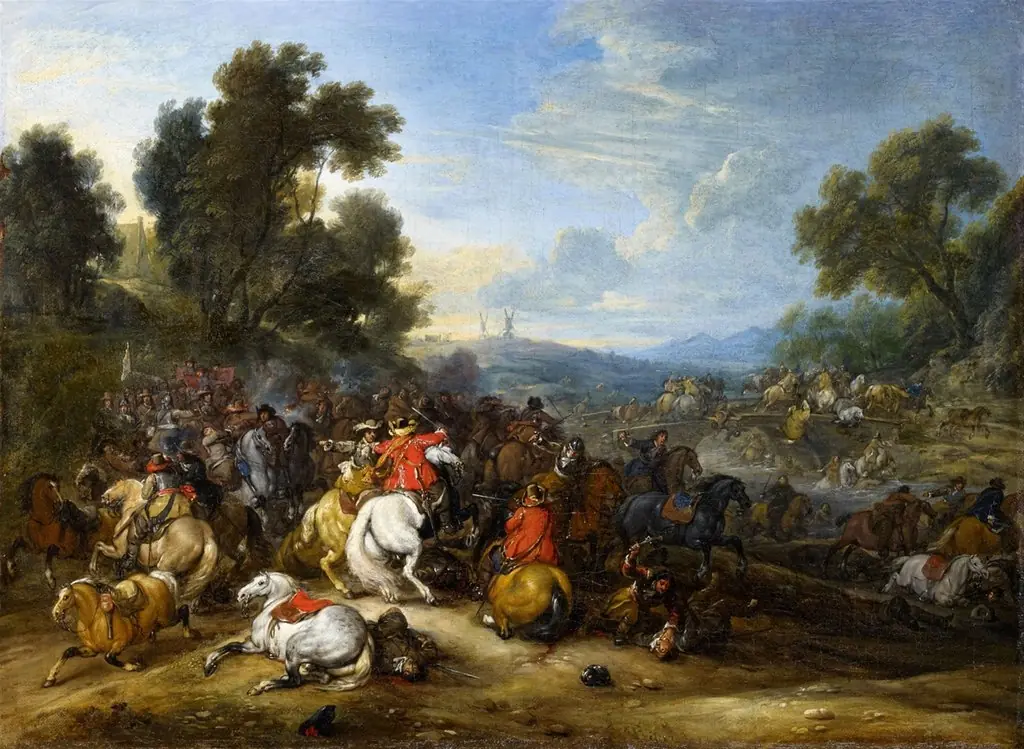
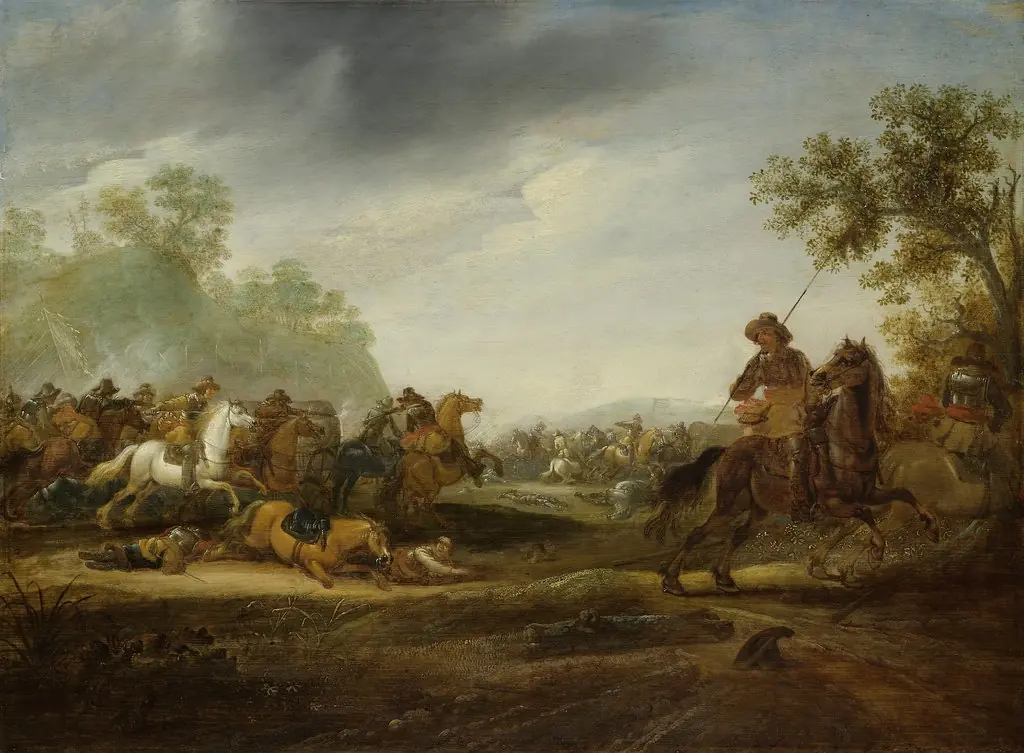
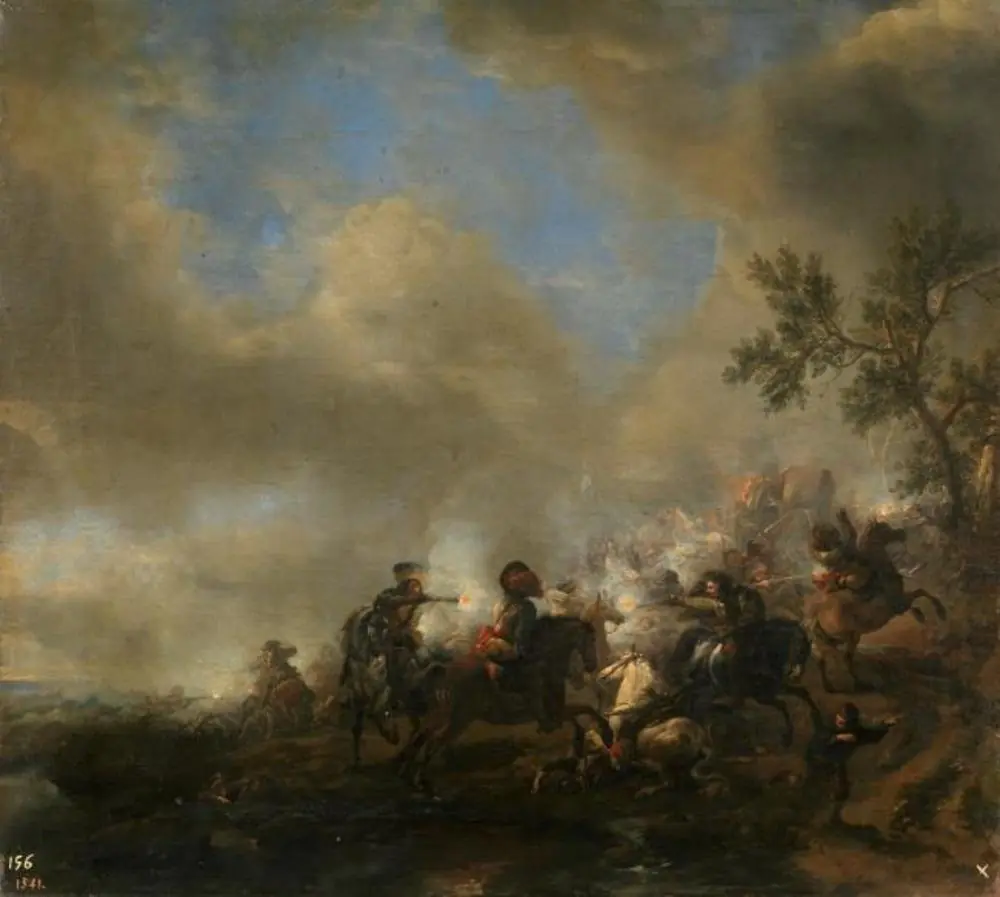
The painting captures a sudden cavalry attack, with riders in motion, fallen soldiers, and scattered gear suggesting violent disruption. A tent or draped fabric in the foreground hints at a disrupted encampment. No clear side is identified, emphasizing the unpredictability of conflict rather than glorifying victory. The scene conveys the confusion and brutality of skirmishes common in early modern warfare, avoiding narrative clarity in favor of visceral immediacy.
Technique & Style
Van Huchtenburgh employs muted earth tones—browns, olives, and grays—to ground the scene in realism. Brushwork is brisk but controlled, capturing the thrashing of horses and the tangle of limbs without excessive detail. The composition is deliberately cluttered, with figures overlapping and receding into a hazy background of trees and distant structures. This visual density enhances the sense of disarray, aligning with his training in Dutch genre and battle painting traditions.
History & Provenance
Created during the early 18th century, the painting entered the Kunsthistorisches Museum’s collection through established Habsburg patronage networks. Van Huchtenburgh’s reputation as a battle scene specialist ensured his works were sought by collectors with military interests. Biographical records from Arnold Houbraken confirm his professional activities in the Netherlands and his collaborations with fellow artists, though the specific acquisition path of this piece remains undocumented.
Context
In the decades after the Thirty Years’ War, European courts maintained interest in military imagery as both record and spectacle. Van Huchtenburgh’s work emerged amid a tradition of Dutch and Flemish battle painting, distinct from grand historical narratives. His focus on skirmishes rather than decisive battles reflected a growing appetite for scenes of tactical chaos, aligning with contemporary military treatises and the increasing professionalization of cavalry units.
Legacy
Van Huchtenburgh’s approach influenced later equestrian and military painters through his emphasis on kinetic energy and atmospheric realism. While not widely celebrated in modern art history, his works remain important examples of how 18th-century artists translated battlefield experience into visual form. *Reiterüberfall* endures as a representative piece of a niche but persistent genre, valued for its unembellished portrayal of war’s disorder.
Artist & collection
Artist
Jan van Huchtenburg also written as Johan van Huchtenburg (1646 – 1733) was a Dutch painter of equestrian and battle scenes, as well as an engraver of mezzotints, publisher, and art dealer.