Artwork
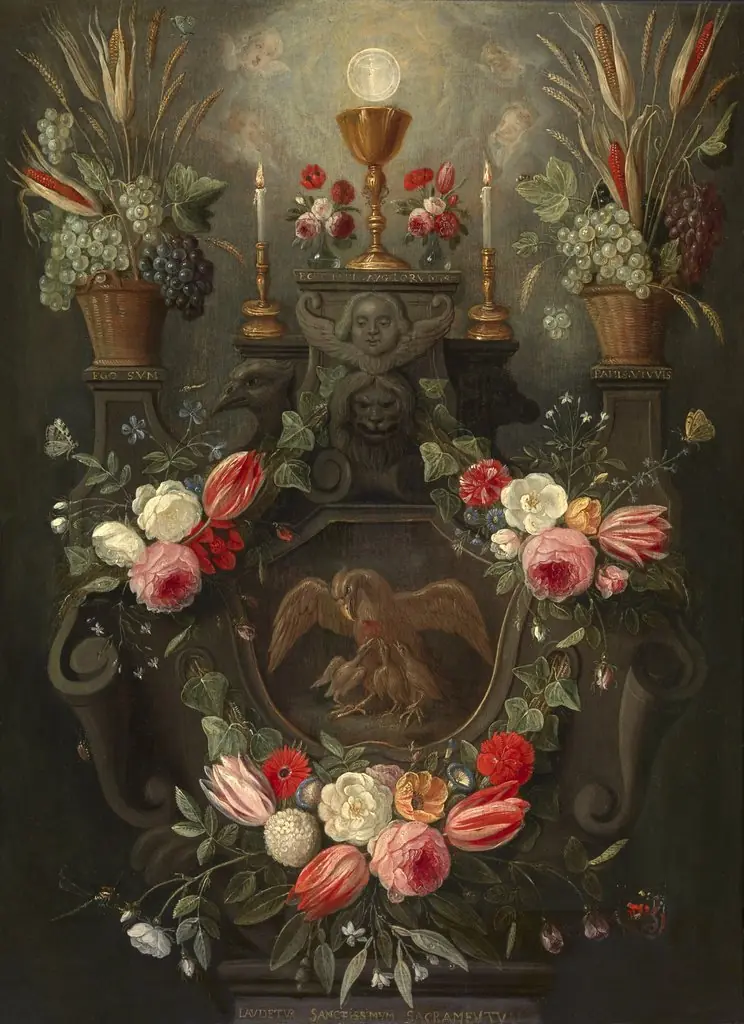
Still Life of Flowers and Grapes encircling a Monstrance in a Niche
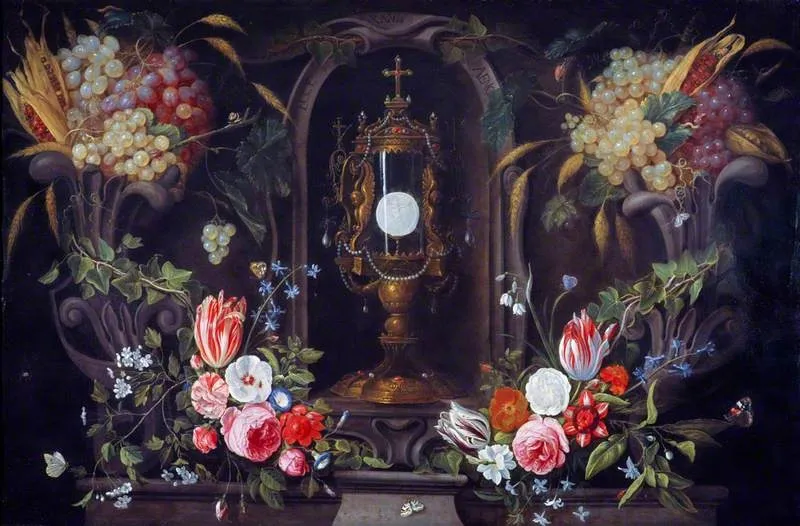
Still Life of Flowers and Grapes encircling a Monstrance in a Niche is an oil painting by the Flemish Baroque painting artist Jan van Kessel the Younger. It dates from 1670 and is held in the collection of the National Galleries Scotland.
About this work
If you like this painting, you might also like the work of artist Jan van Kessel the Younger.
This painting is a still life of flowers and grapes surrounding a monstrance in a niche. The flowers are colorful and varied, with some blooming and others wilting. The grapes are green and red, and they're arranged in a decorative pattern.
The monstrance is gold and ornate, with intricate designs and patterns. It's placed in the center of the painting, surrounded by the flowers and grapes. The background is dark, which helps the colors of the flowers and grapes stand out.
The painting is done in a realistic style, with a lot of detail and texture. It's a beautiful example of still life painting from the 17th century. If you like this painting, you might also like the work of artist Jan van Kessel the Younger.
Overview
Created in 1670, this copper painting presents a meticulously arranged still life in which vibrant flowers and clusters of green and red grapes encircle a richly ornamented gold monstrance set within a recessed niche. The dark background intensifies the luminous colors and metallic sheen, drawing attention to the interplay of natural forms and sacred object.
Subject & Meaning
The composition juxtaposes earthly abundance, symbolized by the varied blossoms and fruit, with the religious significance of the monstrance, a vessel for displaying the consecrated host. This contrast may reflect contemporary devotional practices, emphasizing the transience of material beauty against the enduring spiritual presence.
Technique & Style
Executed on a copper plate, the work showcases the fine brushwork typical of Flemish Baroque still lifes, allowing for precise rendering of texture—from the delicate petals and glossy grapes to the intricate gilded details of the monstrance. The artist employs chiaroscuro, using deep shadows to heighten the vivid coloration and three‑dimensional effect.
History & Provenance
The painting is attributed to Jan van Kessel the Younger, an Antwerp‑born artist (1654–c.1708) who later served as a court painter in Spain. Though primarily known for portraiture, this piece demonstrates his versatility. It entered the collection of the Scottish National Gallery, where it remains on display.
Context
Produced during the height of the Flemish Baroque period, the work reflects the era’s fascination with detailed naturalism and the integration of religious iconography into domestic settings. Copper as a support was favored for its smooth surface, enabling the high level of finish that collectors of the time prized.
Artist & collection
Artist
Jan van Kessel the Younger or Jan van Kessel II (Antwerp, 23 November 1654 – Madrid, 1708), known in Spain as Juan Vanchesel el Mozo or el Joven, was a Flemish painter who after training in Antwerp worked in Spain.

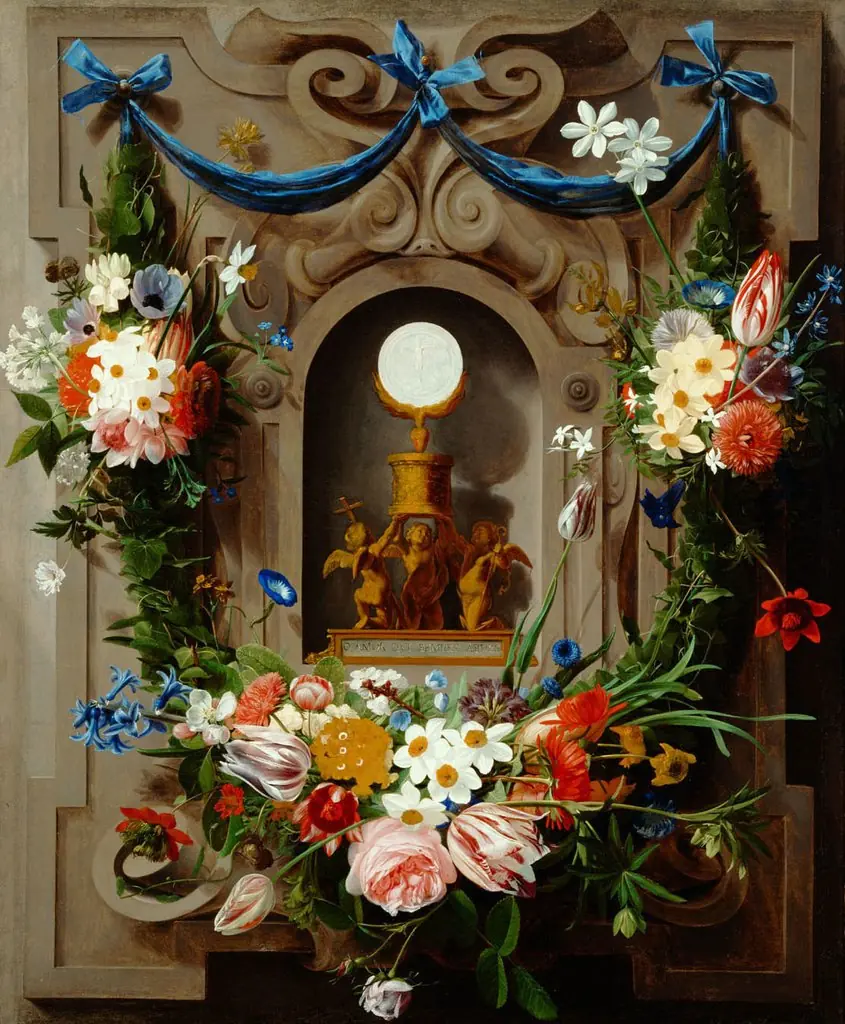 Eucharist in a Garland
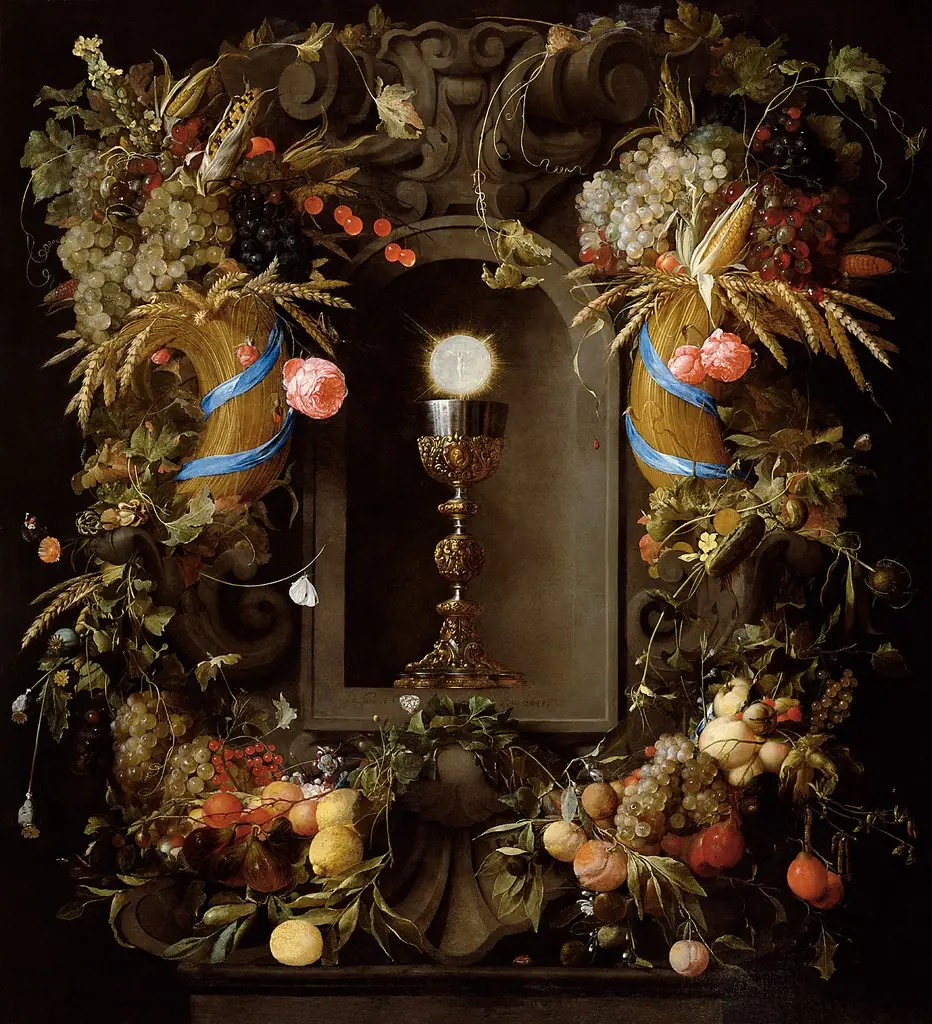 Chalice and Host in a Niche, within a Cartouche of Roses and Fruit
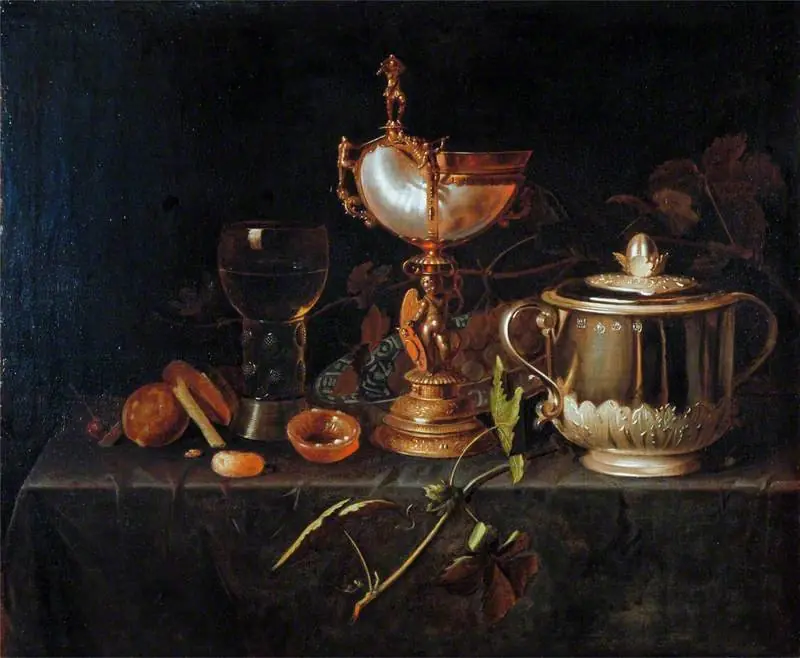 Porringer and Nautilus Cup
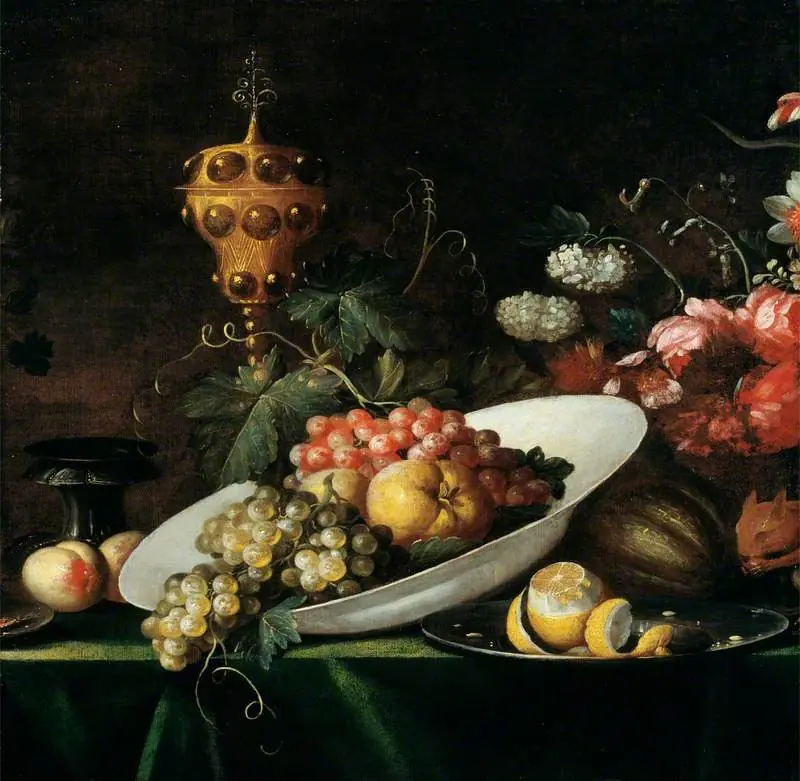 Fruit Piece with Covered Gilt Goblet
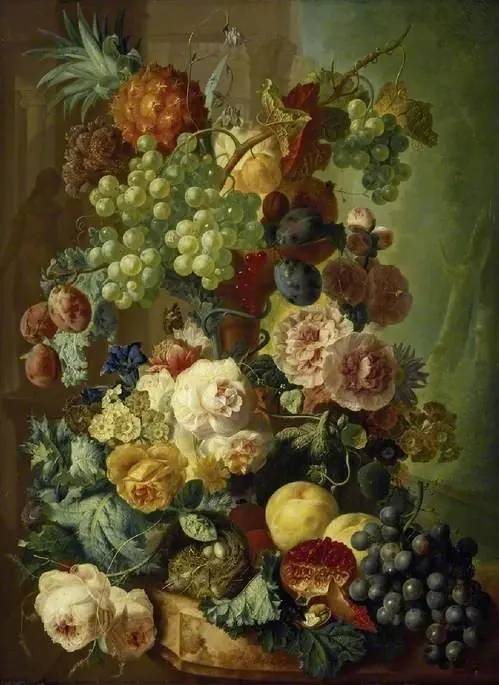 Fruits and flowers
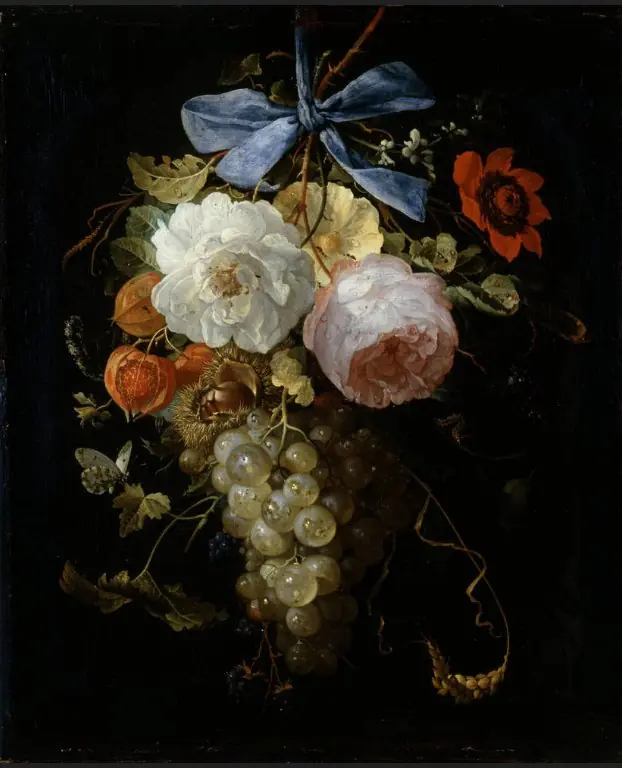 Fruits and flowers on a blue ribbon
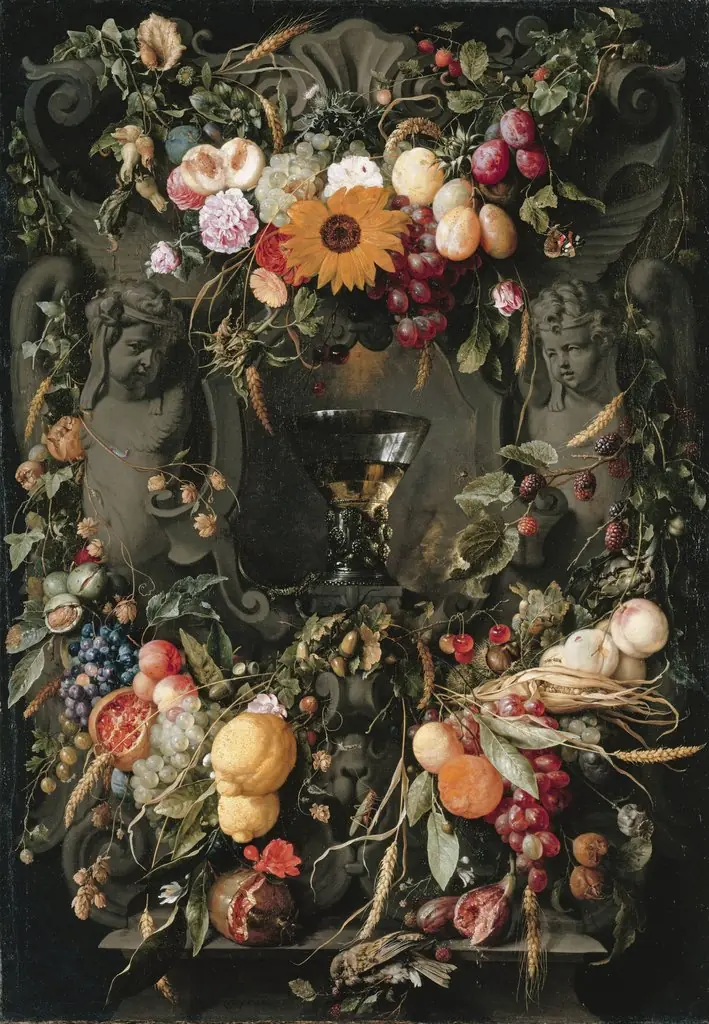 Cartouche with fruit and flowers and wine glass
 A Vase of Flowers with two Carnations
 The Holy Sacrament of the Altar