Artwork
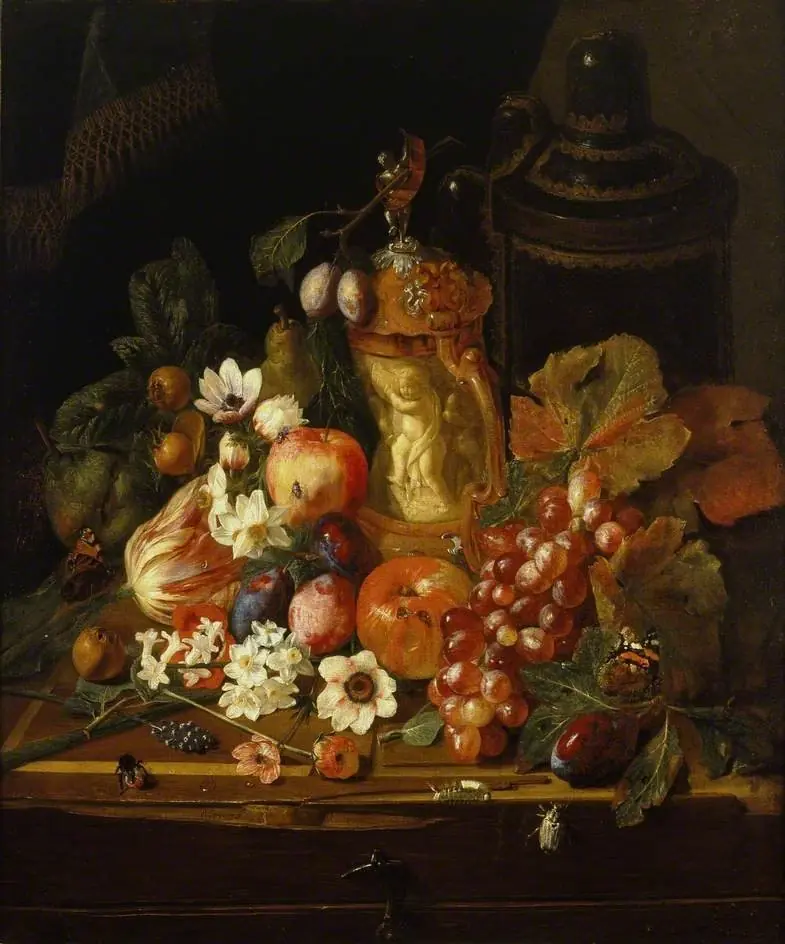
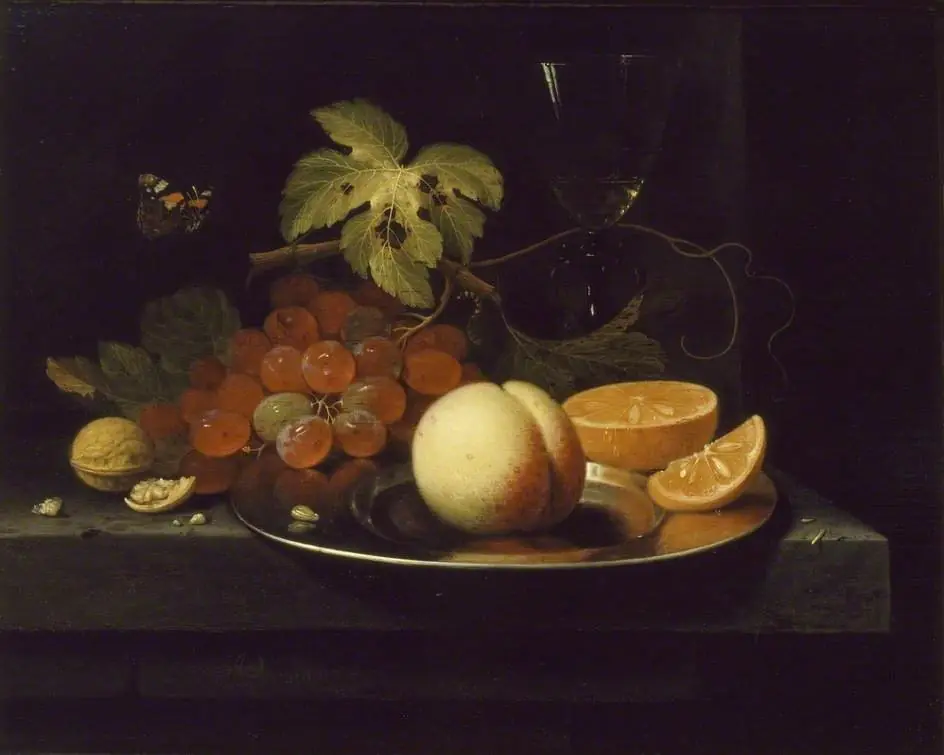
Fruit Piece with Covered Gilt Goblet
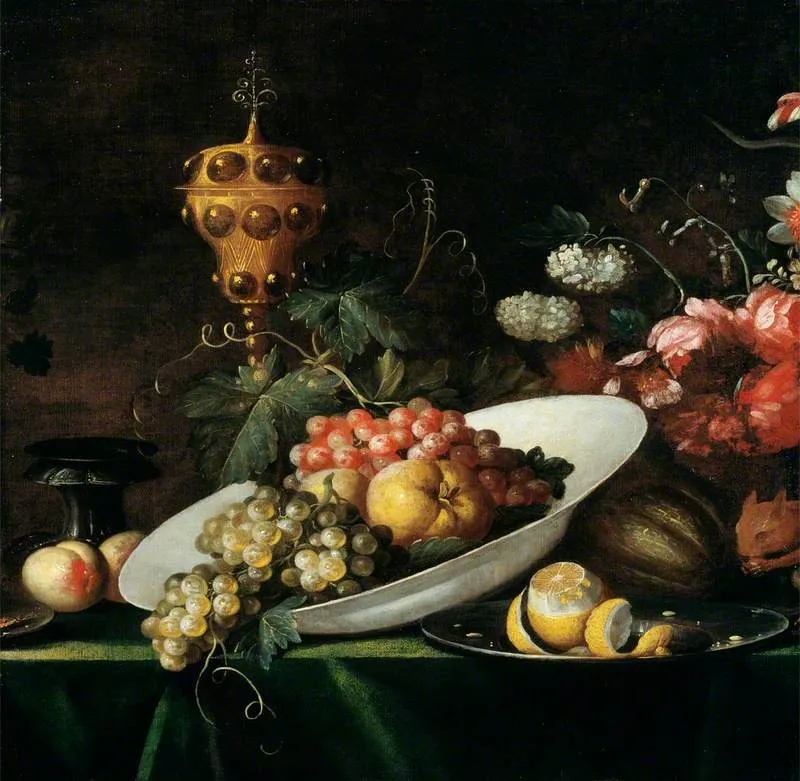
Fruit Piece with Covered Gilt Goblet is an oil painting by Unknown. It is held in the collection of the Victoria and Albert Museum.
About this work
Overview
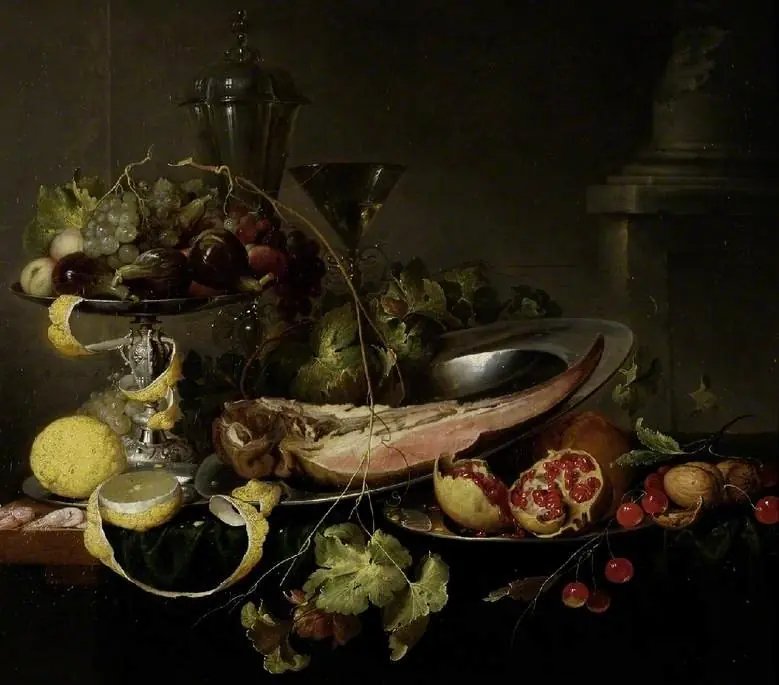
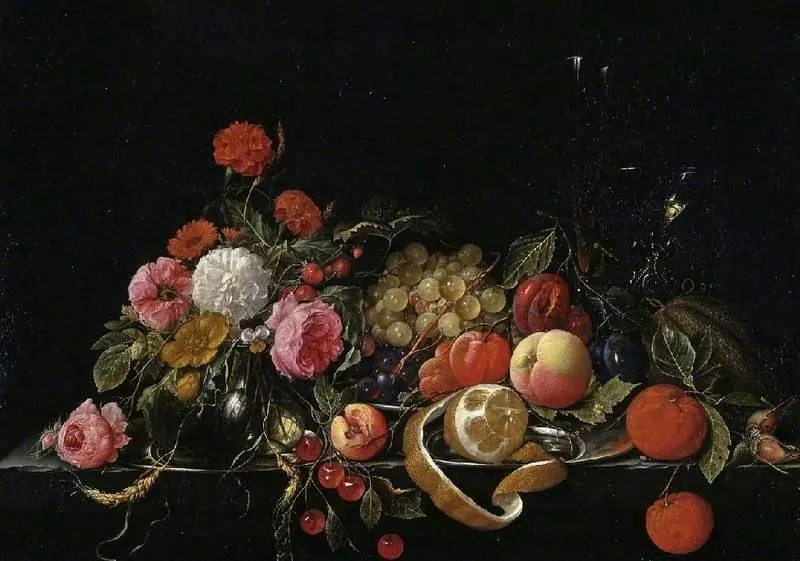
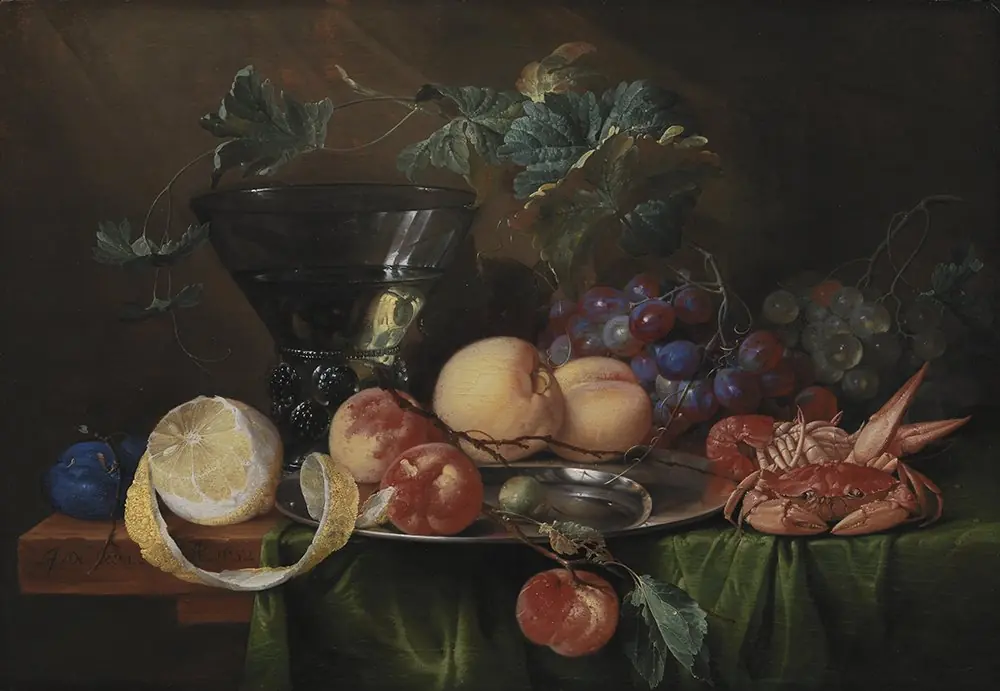
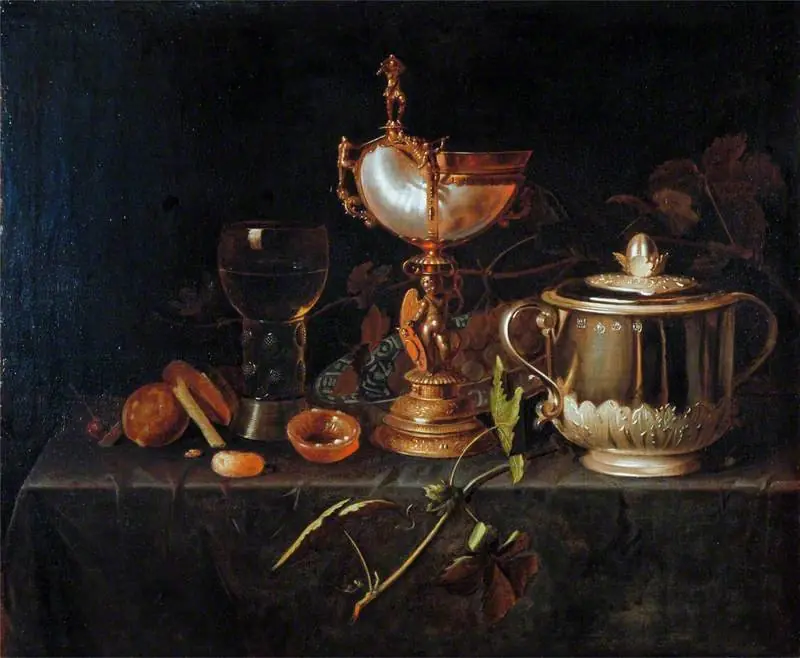
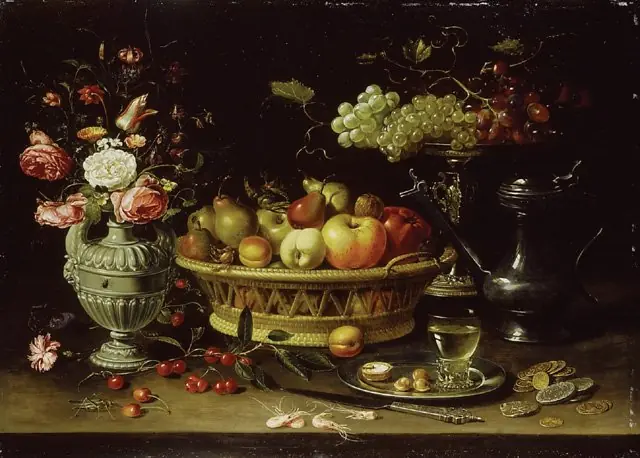
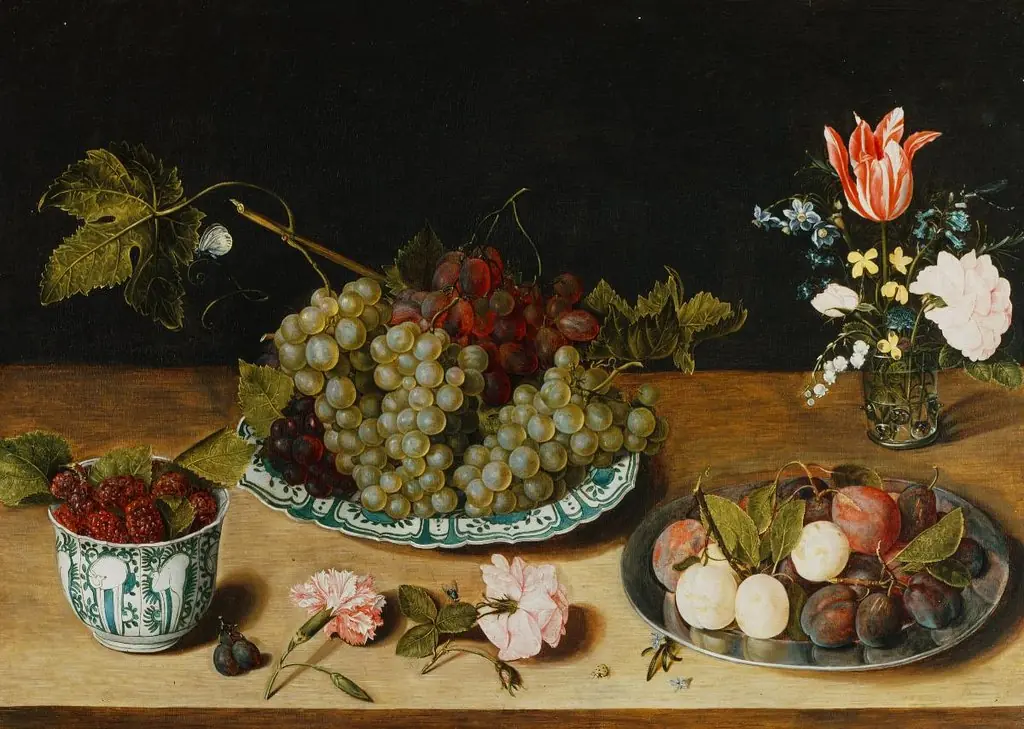
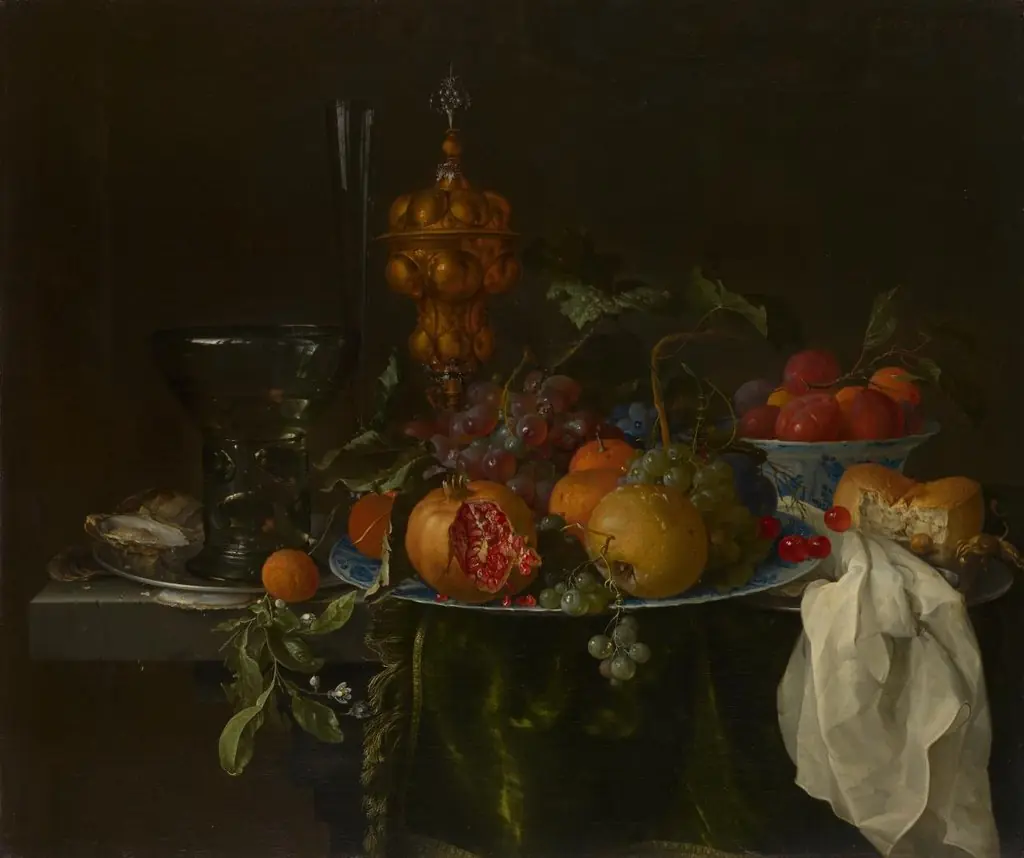
This oil painting presents a still life composed of common fruits—grapes, lemons, and peaches—arranged on a white bowl resting atop a green tablecloth. Behind the bowl stands a covered goblet crafted in gilt, its metallic surface catching subtle light. The dark background recedes, allowing the textures and hues of the objects to emerge with clarity, emphasizing material presence over narrative.
Subject & Meaning
The arrangement of perishable fruits alongside a luxurious goblet suggests a quiet meditation on transience and abundance. The lemons’ wrinkled rinds and the grapes’ delicate sheen hint at ripeness nearing decay, while the gilt goblet, though ornate, remains unused. Together, they evoke a contemplative tone, common in Dutch still lifes of the period, where beauty and impermanence coexist.
Technique & Style
The artist employs fine brushwork to render the varied surfaces: the waxy sheen of peaches, the porous texture of lemon skin, and the reflective curvature of the goblet’s cover. Shading is subtle and precise, creating volume without harsh outlines. The dark backdrop enhances contrast, drawing attention to the tactile qualities of each object, a hallmark of Northern European still-life traditions.
History & Provenance
The painting’s origins trace to the Dutch Golden Age, likely created in the early to mid-17th century. While its early ownership is undocumented, its style aligns with regional still-life practices of Haarlem or Leiden. It entered institutional collection in the 20th century, preserved with minimal restoration, retaining its original surface and tonal harmony.
Context
During the 17th century, Dutch still lifes often combined everyday items with symbols of wealth or mortality. This work reflects a broader cultural interest in material detail and moral reflection. The inclusion of a gilt goblet, though not extravagant, signals affluence, while the fruit’s fragility underscores themes of ephemerality, resonating with contemporary vanitas conventions.
Legacy
The painting contributes to a well-established tradition of Dutch still life, valued for its quiet precision and restrained symbolism. It does not seek dramatic effect but instead invites sustained observation. Its endurance in museum collections reflects an enduring appreciation for the discipline of rendering ordinary objects with quiet dignity and technical rigor.
Artist & collection

 Domestic Scene
 Giacomo and Cardinal Marco, investing Andrea, Abbot of San Zeno, with his Benefice
 The Nymph of Fontainebleau
 Portrait of a Woman
 Madonna and Child with Saints in the Enclosed Garden
 Venus and Minerva
 Family Group of Four on Sofa
 Wall painting from Room H of the Villa of P. Fannius Synistor at Boscoreale