Artwork
Solomon and the Queen of Sheba
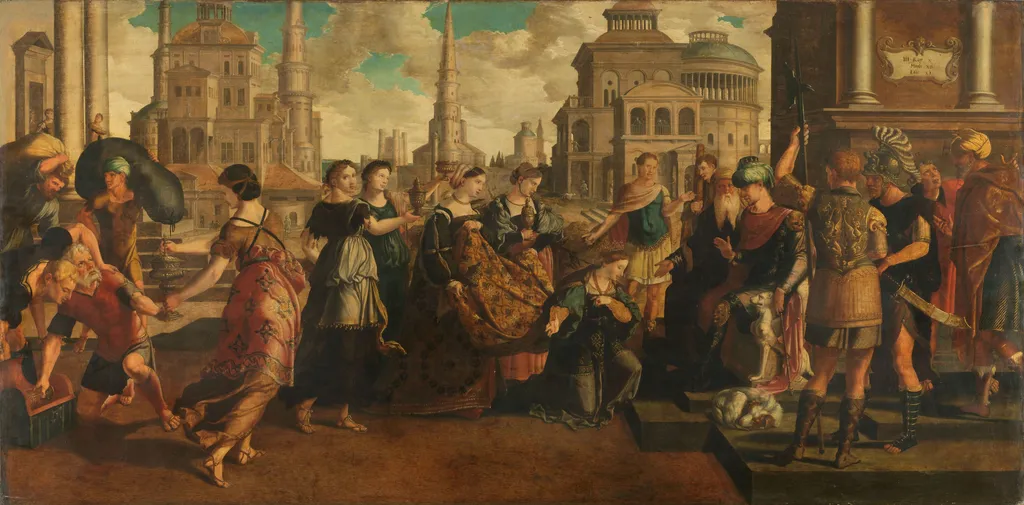
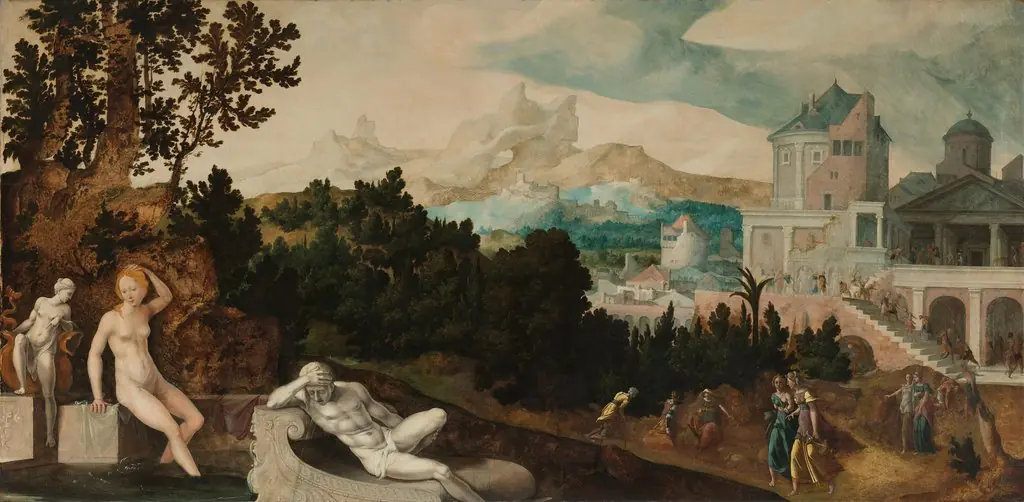
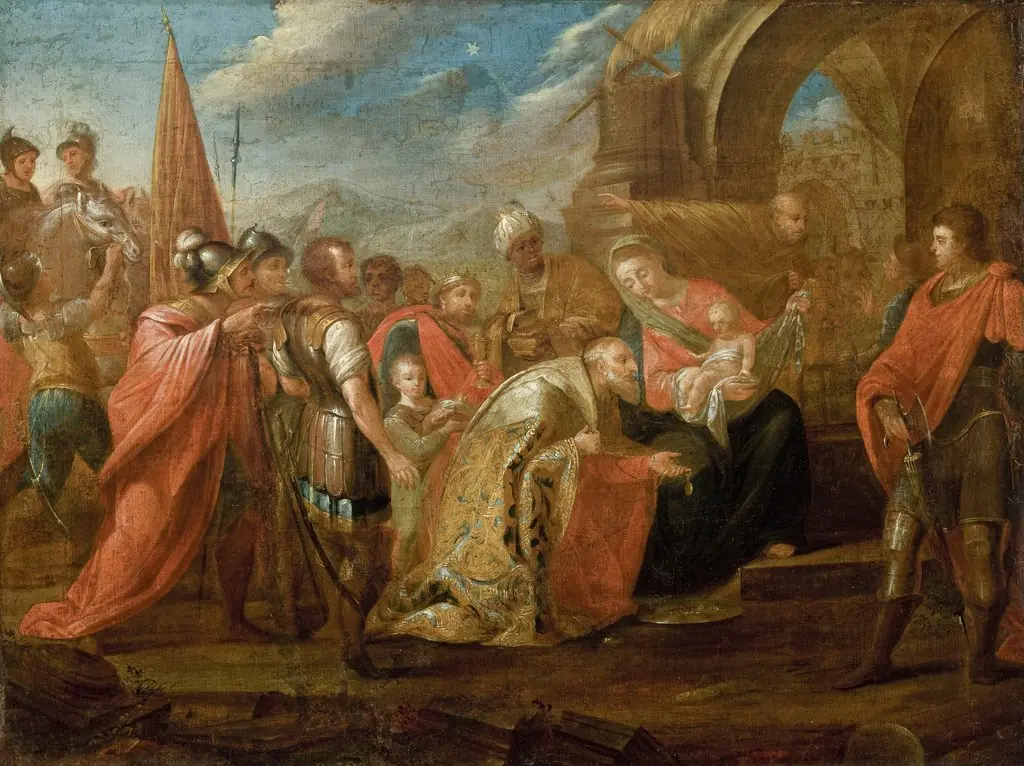
Solomon and the Queen of Sheba is an oil painting by the Northern Renaissance artist Jan van Scorel. It dates from 1540 and is held in the collection of the Rijksmuseum.
About this work
Overview
Jan van Scorel's painting, Solomon and the Queen of Sheba, was completed in 1540 using oil on panel. This religious work depicts the biblical encounter between the Queen of Sheba and King Solomon. The artwork is currently part of the collection at the Rijksmuseum, where it offers insight into Northern Renaissance religious painting.
Subject & Meaning
This scene illustrates the Queen's visit to Jerusalem to witness Solomon's wisdom and wealth, a significant narrative from the Old Testament.
The composition centers on the interaction between the regal figures of Solomon and the Queen of Sheba, who are surrounded by an entourage within an elaborate architectural setting. Solomon appears in armor, holding a spear, while the Queen is adorned with a crown and an elegant gown. This scene illustrates the Queen's visit to Jerusalem to witness Solomon's wisdom and wealth, a significant narrative from the Old Testament.
Technique & Style
Van Scorel employed oil paint to create a textured surface, evident in the visible brushstrokes across the panel. The artist utilized a palette blending warm and cool tones, allowing the prominent figures' attire, such as Solomon's armor and the Queen's dress, to contrast with the more subdued background elements. The application of chiaroscuro further enhances the painting's depth, creating a sense of volume through dramatic shifts between light and shadow.
Own this work as a print
Artist & collection

Artist
Jan van Scorel was a Dutch painter, who played a leading role in introducing aspects of Italian Renaissance painting into Dutch and Flemish Renaissance painting.