Artwork
Leda and the Swan
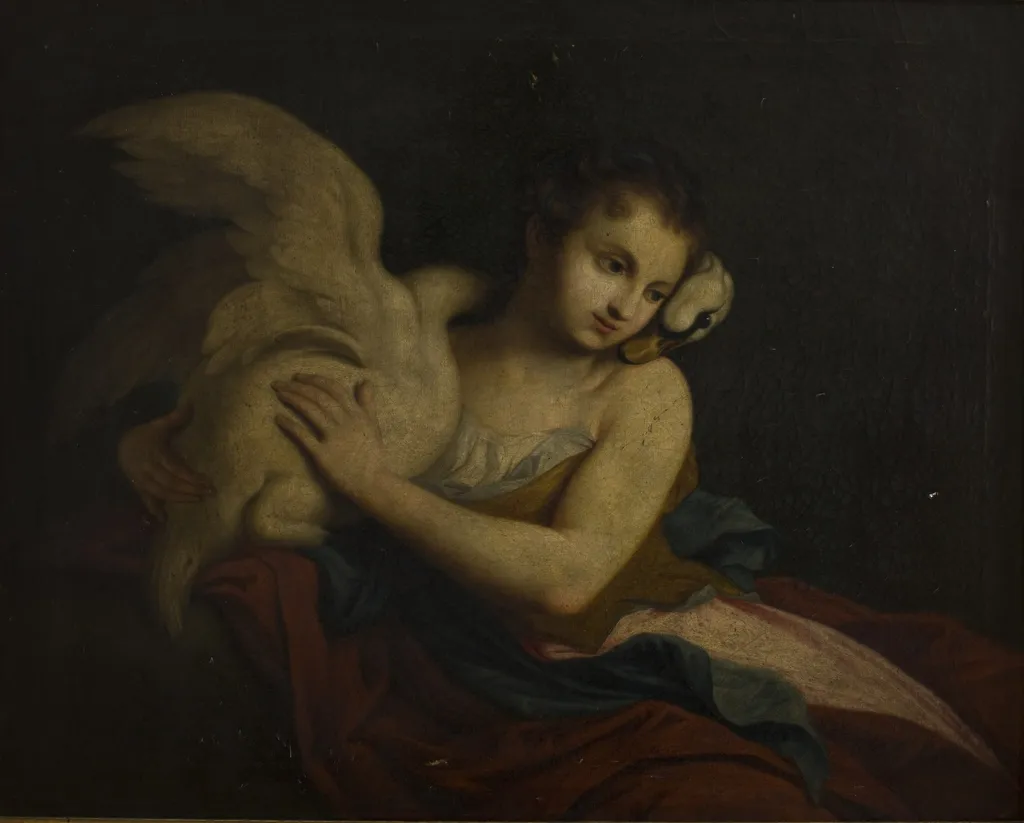
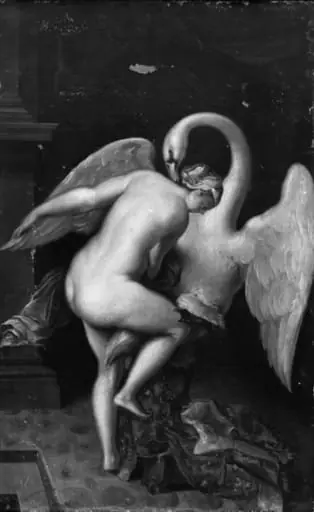
Leda and the Swan is an oil painting by Jan Wincenty Kopff. It dates from 1810 and is held in the collection of the National Museum in Kraków.
About this work
Overview
Painted in 1810 by Jan Wincenty Kopff, this oil-on-canvas work depicts the mythological encounter between Leda and the swan. The painting resides in the National Museum in Kraków, where it forms part of the institution’s collection of early 19th-century Polish art. Its subject draws from classical mythology, rendered in a style reflective of academic traditions of the period.
Subject & Meaning
The scene illustrates the moment when Zeus, in the form of a swan, approaches Leda, a queen of Sparta. The narrative, rooted in ancient Greek myth, alludes to the conception of Helen of Troy and the Dioscuri. Kopff presents the moment with restrained drama, focusing on the physical closeness between the figures rather than overt violence or divine spectacle.
Technique & Style
Kopff employed smooth brushwork and a muted palette to convey a sense of quiet intimacy. The figures are rendered with attention to anatomical accuracy, consistent with academic training of the era. The background is softly modeled, directing focus to the central group without distracting detail. Lighting is even, avoiding theatrical contrasts.
History & Provenance
The painting was completed in 1810 and entered the collection of the National Museum in Kraków shortly thereafter. Its early acquisition suggests it was recognized within Polish artistic circles as a significant work. No major alterations or restorations are documented, and it has remained in the museum’s holdings since the 19th century.
Context
Created during the Partitions of Poland, the painting reflects a cultural effort to engage with classical themes as a means of preserving European artistic identity. Kopff, trained in Warsaw and influenced by Neoclassical ideals, contributed to a generation of artists who sought to align Polish art with broader continental traditions despite political fragmentation.
Legacy
Though not widely reproduced or publicly celebrated, the painting remains a representative example of early 19th-century Polish academic painting. It contributes to scholarly understanding of how mythological subjects were interpreted in regions under foreign rule, offering insight into the quiet persistence of classical education in Polish artistic practice.
Own this work as a print
Artist & collection