Artwork
Omakuva
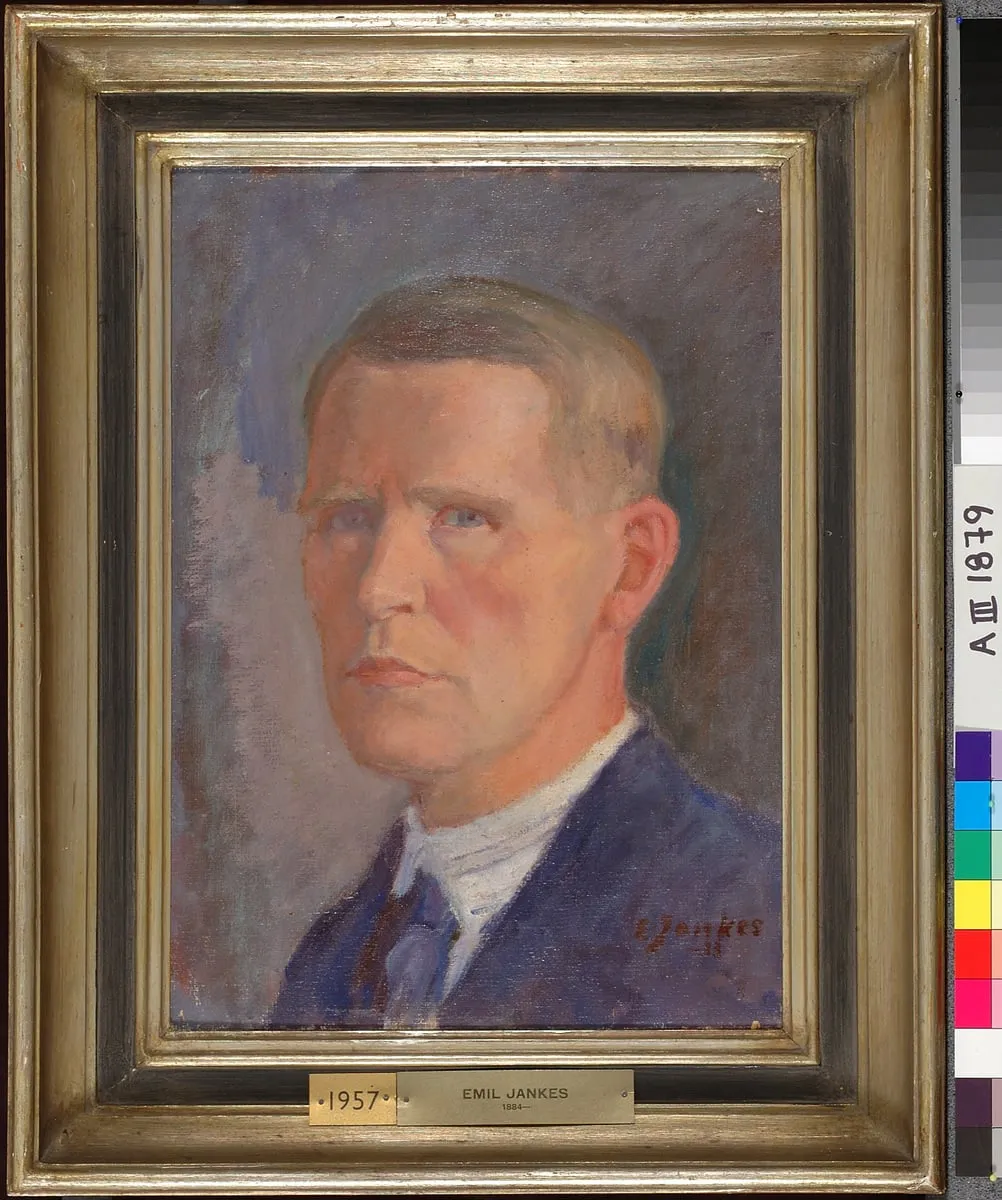
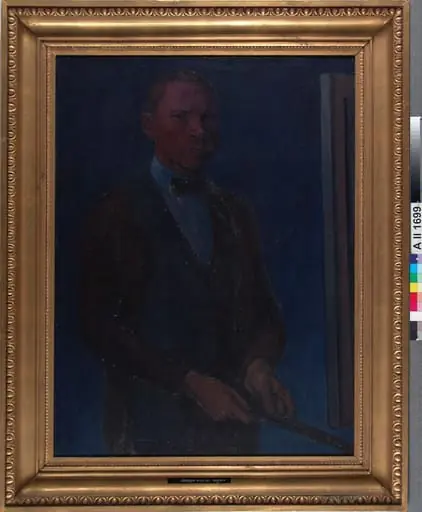
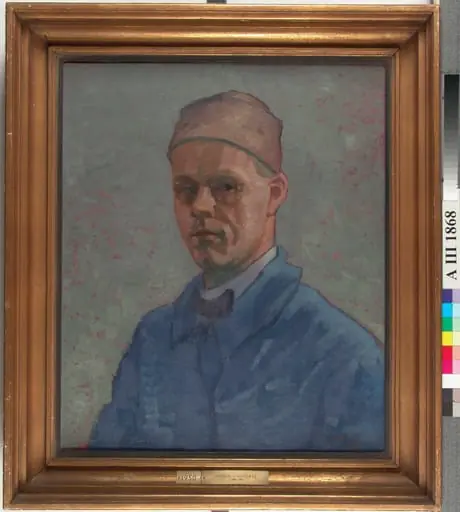
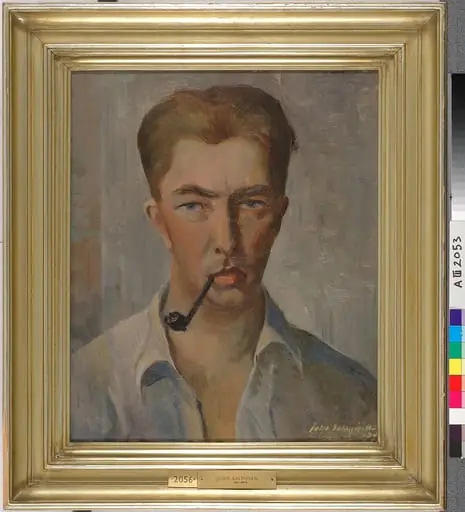
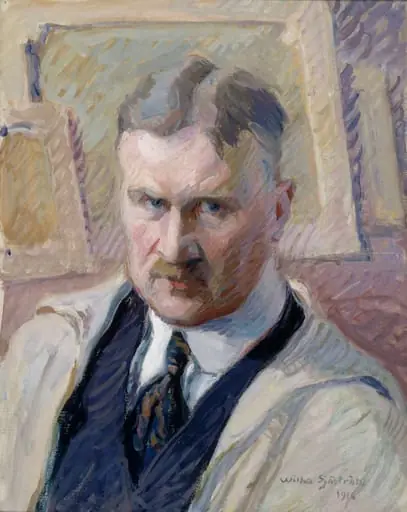
Omakuva is an unspecified painting by Emil Jankes. It is held in the collection of the Finnish National Gallery.
About this work
Overview
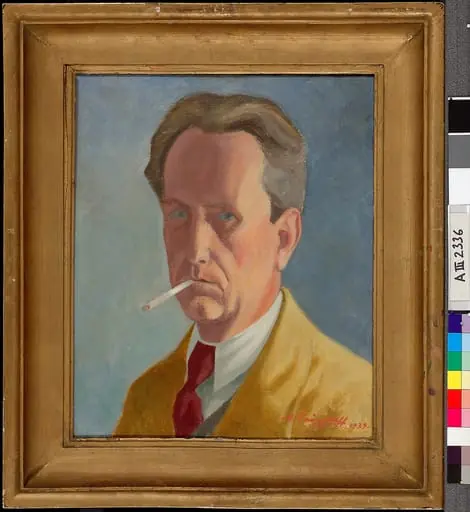
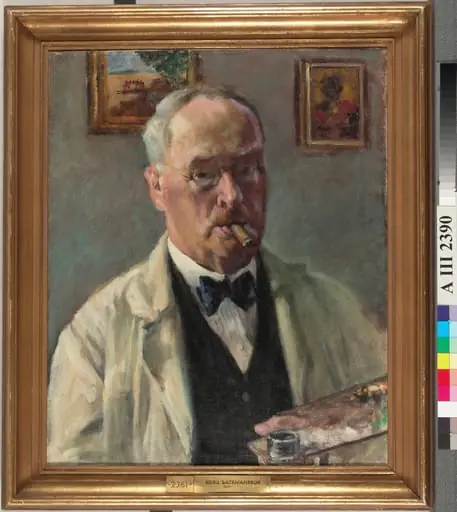
Rendered with restrained tones and precise brushwork, it presents the artist in formal attire against a neutral background, emphasizing stillness over drama.
Emil Jankes created this oil painting as a self-portrait, capturing himself in a composed, introspective pose. The work is held in the collection of the Museum of Ethnography. Rendered with restrained tones and precise brushwork, it presents the artist in formal attire against a neutral background, emphasizing stillness over drama. The medium and scale align with traditional portrait conventions of the early 20th century.
Subject & Meaning
The subject is the artist himself, depicted with a calm demeanor and direct gaze. His dark jacket, white shirt, and tie suggest a professional or formal identity, while the absence of external context focuses attention on his expression. The quiet intensity of the portrait conveys self-reflection rather than performance, inviting viewers to consider the inner state of the sitter without narrative embellishment.
Technique & Style
Jankes employed a realistic approach, carefully modeling facial features with subtle gradations of light and shadow. The brushwork is controlled, avoiding overt expressionism, and the muted background enhances the figure’s presence without distraction. Attention to texture—such as the weave of fabric and the sheen of skin—demonstrates a commitment to observational accuracy over stylistic flourish.
History & Provenance
The painting entered the collection of the Museum of Ethnography following Jankes’s lifetime, though specific acquisition details are not widely documented. As a self-portrait by a lesser-known artist, it likely remained in private hands until donated or transferred to the institution. Its preservation suggests recognition of its value as a personal and cultural artifact rather than a public statement.
Context
Created during a period when portraiture remained a key medium for personal and professional identity, Jankes’s work reflects the quiet realism favored in Central European art circles. Unlike grand public portraits, this piece avoids theatricality, aligning instead with intimate, introspective traditions. Its placement in an ethnographic museum hints at its role in documenting individual lives within broader cultural frameworks.
Legacy
Though not widely exhibited beyond institutional archives, the portrait endures as a quiet testament to the artist’s self-perception. It contributes to the understudied corpus of early 20th-century Central European self-portraiture, offering insight into how non-celebrated artists represented themselves. Its preservation underscores the museum’s interest in personal narratives alongside cultural artifacts.
Artist & collection
Artist
Emil Jankes painted moody cityscapes and quiet harbors in oil and watercolor during Finland’s 1920s–40s.