Artwork
Omakuva
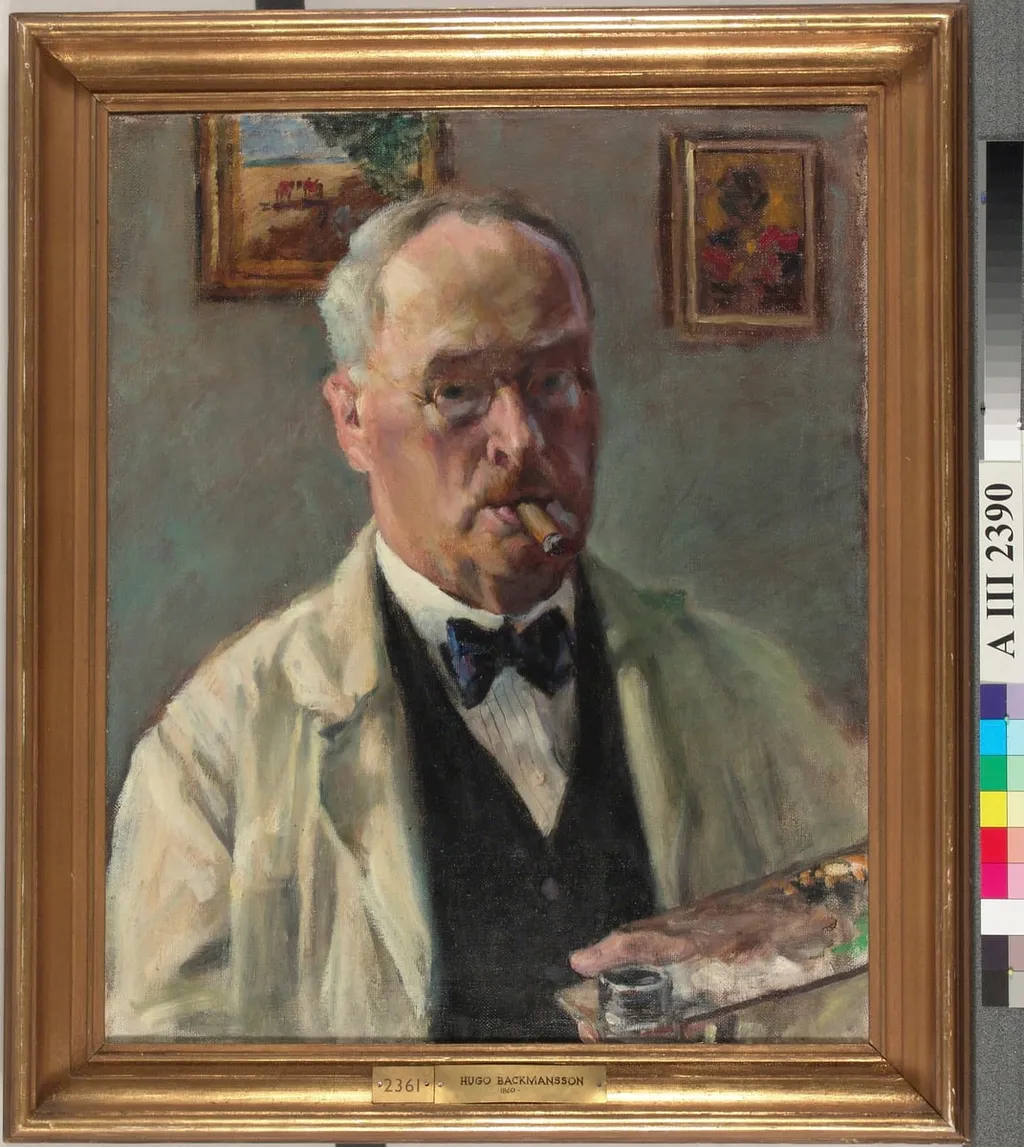
Omakuva is an unspecified painting by Hugo Backmansson. It is held in the collection of the Finnish National Gallery.
About this work
Overview
Soft modeling of his face and loose brushwork in the clothing and background convey a sense of immediacy and personal reflection.
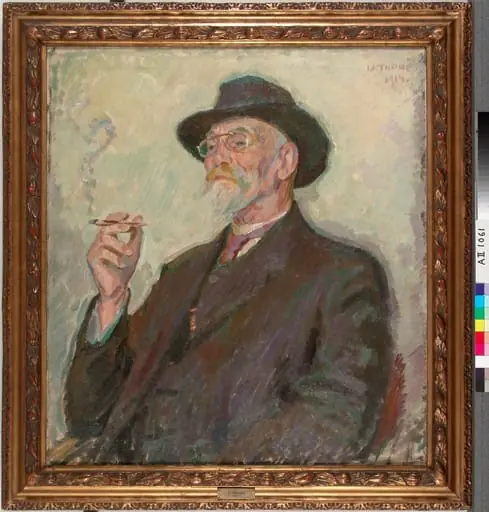
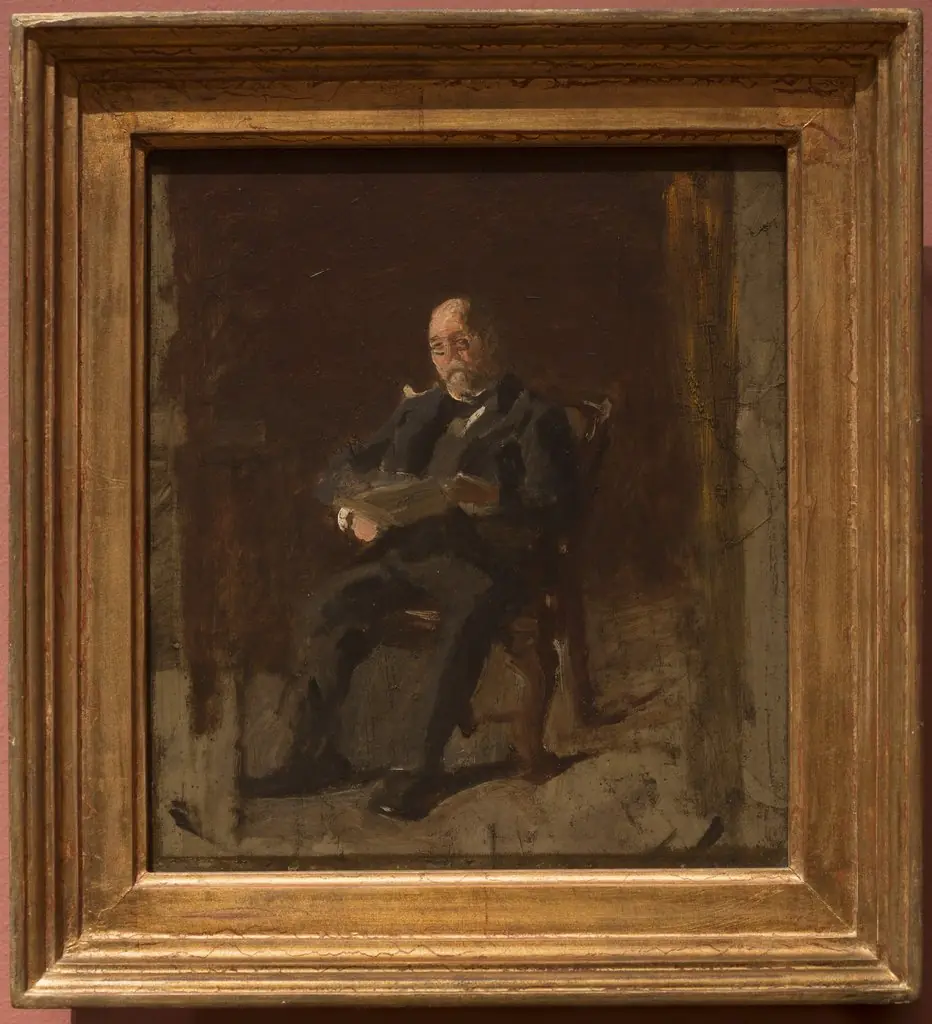
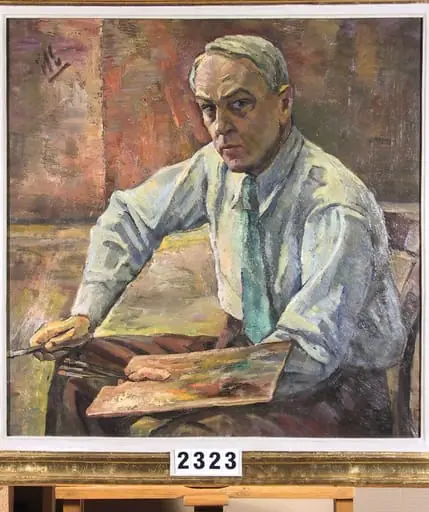
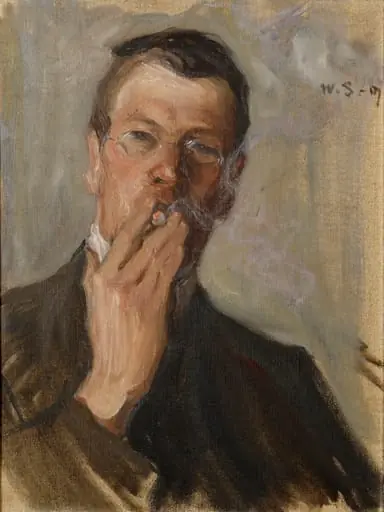
This portrait depicts Hugo Backmansson, the artist himself, engaged in the act of painting. Dressed in a white coat and bow tie, he holds a brush and palette while smoking a cigarette. The composition is intimate and unidealized, focusing on the quiet rhythm of creative labor. Soft modeling of his face and loose brushwork in the clothing and background convey a sense of immediacy and personal reflection.
Subject & Meaning
The self-portrait presents the artist not as a grand figure, but as a working individual immersed in his craft. The cigarette, the worn coat, and the modest studio setting suggest humility and routine. The two small paintings behind him hint at his artistic influences or past works, framing his identity as both creator and observer. The image resists heroism, favoring authenticity over spectacle.
Technique & Style
Loose, expressive brushstrokes define the jacket and background, creating texture without detail. The face is rendered with subtle gradations of pink and gray, suggesting delicate skin under studio light. The muted green wall recedes softly, avoiding distraction. The signature at the bottom is unobtrusive, reinforcing the painting’s quiet tone. The handling of light and form leans toward observation rather than dramatic contrast.
History & Provenance
The work is attributed to Hugo Backmansson, who signed it at the lower edge. No documented exhibition or ownership history is available. Its survival suggests it was kept within personal or familial circles, possibly as a studio piece rather than a public commission. The absence of formal provenance aligns with its informal, introspective character.
Context
Created in a period when many artists embraced realism or impressionism, this portrait reflects a quiet personal tradition. It avoids the theatricality of academic portraiture and the boldness of modernist experiments. Instead, it aligns with understated self-representations common among working artists who valued process over public image, particularly in regional or non-institutional circles.
Legacy
Though not widely exhibited, the painting offers a modest but resonant example of an artist’s private self-image. Its unadorned realism and focus on daily ritual provide insight into the quiet life behind artistic production. It stands as a quiet counterpoint to more celebrated self-portraits, valued for its sincerity rather than its scale or fame.
Artist & collection
Artist
A painter from Finland’s late 19th century, Hugo Backmansson left self-portraits and scenes of daily life in oils and metalwork.