Artwork
Seated Woman
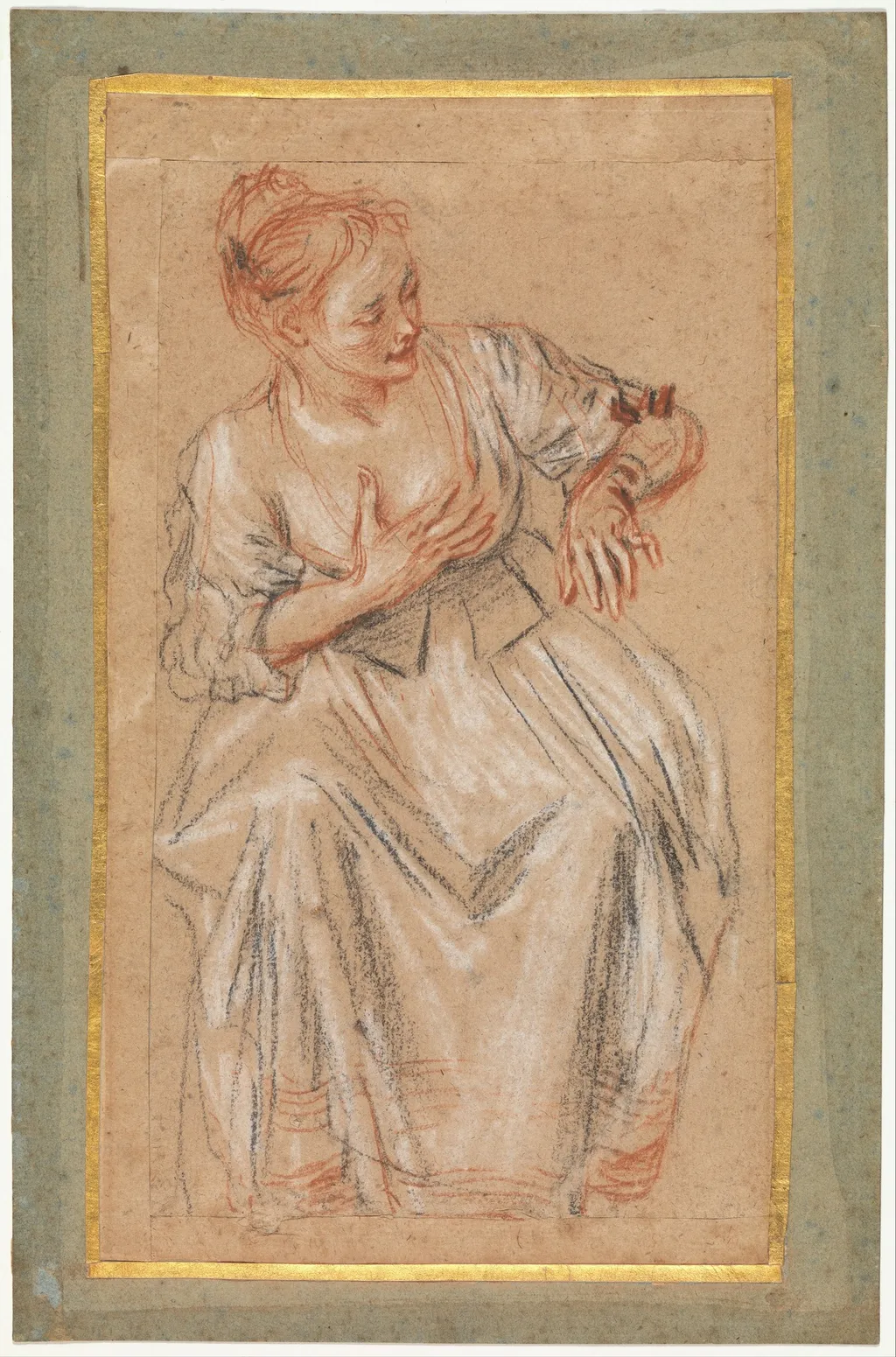
Seated Woman is an unspecified painting by the Rococo painting artist Jean Antoine Watteau. It dates from 1716 and is held in the collection of the Metropolitan Museum of Art.
About this work
Overview
Created in 1716, Seated Woman is an early eighteenth‑century work by French painter Jean‑Antoine Watteau. The piece portrays a solitary female figure rendered in a loose, sketch‑like manner and is part of the collection of the Metropolitan Museum of Art in New York.
Subject & Meaning
The composition presents a woman seated with her torso turned toward the viewer. She wears a flowing dress with a high neckline and puffed sleeves, her hair gathered back. In her right hand she holds a small object—interpreted as a fan or a letter—suggesting a moment of private contemplation.
Technique & Style
Executed with rapid, gestural lines, the drawing conveys a sense of immediacy. Soft shadows merge into the pale skin tones, while the palette is restrained to muted pinks, browns, and grays. The paper’s worn edges and unfinished appearance indicate a study rather than a finished painting, reflecting Watteau’s practice of quick observational sketches.
History & Provenance
Seated Woman entered the Metropolitan Museum of Art’s holdings through acquisition in the twentieth century, though earlier ownership details remain sparse. Its presence in the museum allows scholars to examine Watteau’s preparatory methods alongside his more polished oil paintings.
Context
The work belongs to a period when Watteau was developing the fêtes galantes genre, blending aristocratic leisure with intimate portraiture. Though less elaborate than his large canvases, this study reveals his interest in capturing fleeting gestures and the nuanced expression of a solitary figure within a domestic setting.
Artist & collection
Artist
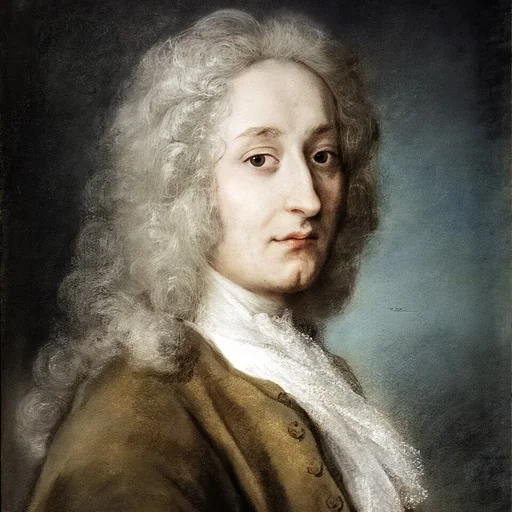
Jean-Antoine Watteau was a French painter and draughtsman whose brief career spurred the revival of interest in colour and movement, as seen in the tradition of Correggio and Rubens.