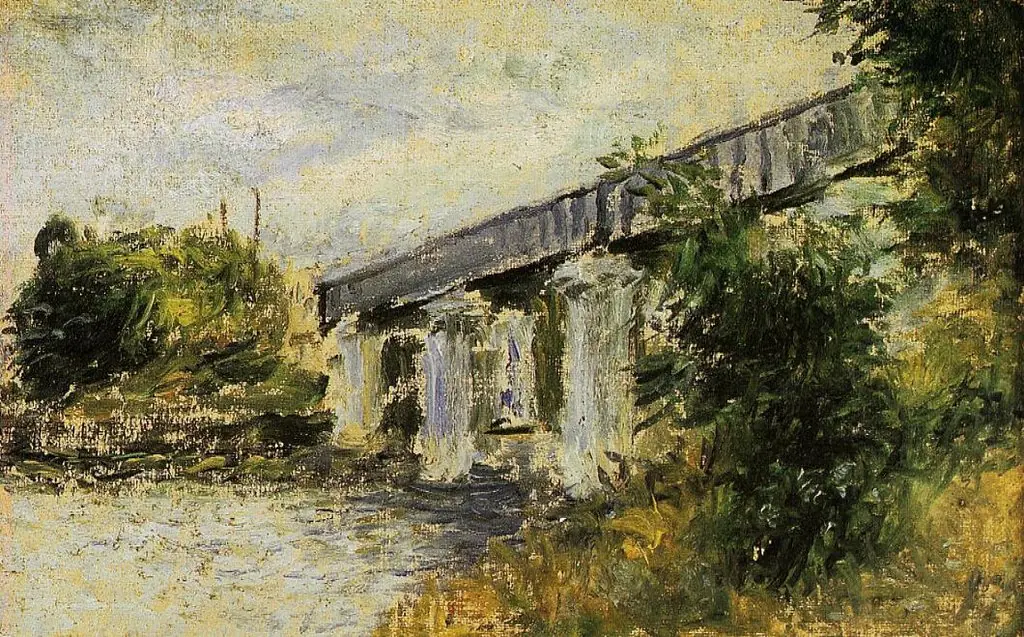
Artwork
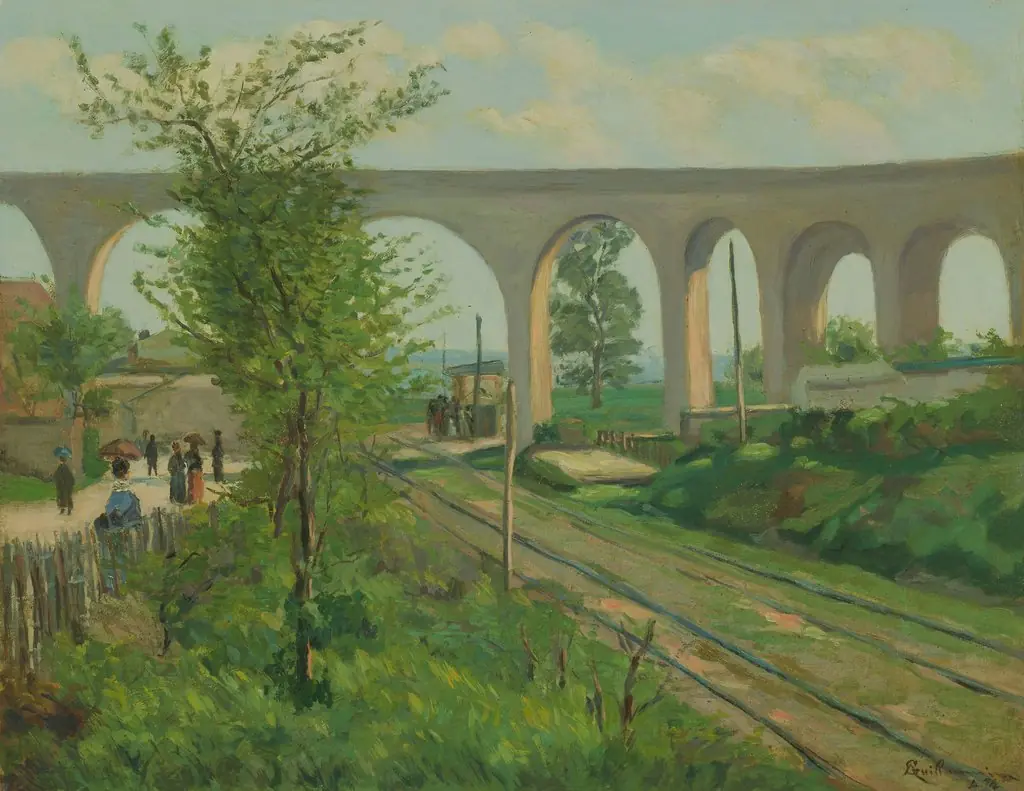
The Arcueil Aqueduct at Sceaux Railroad Crossing
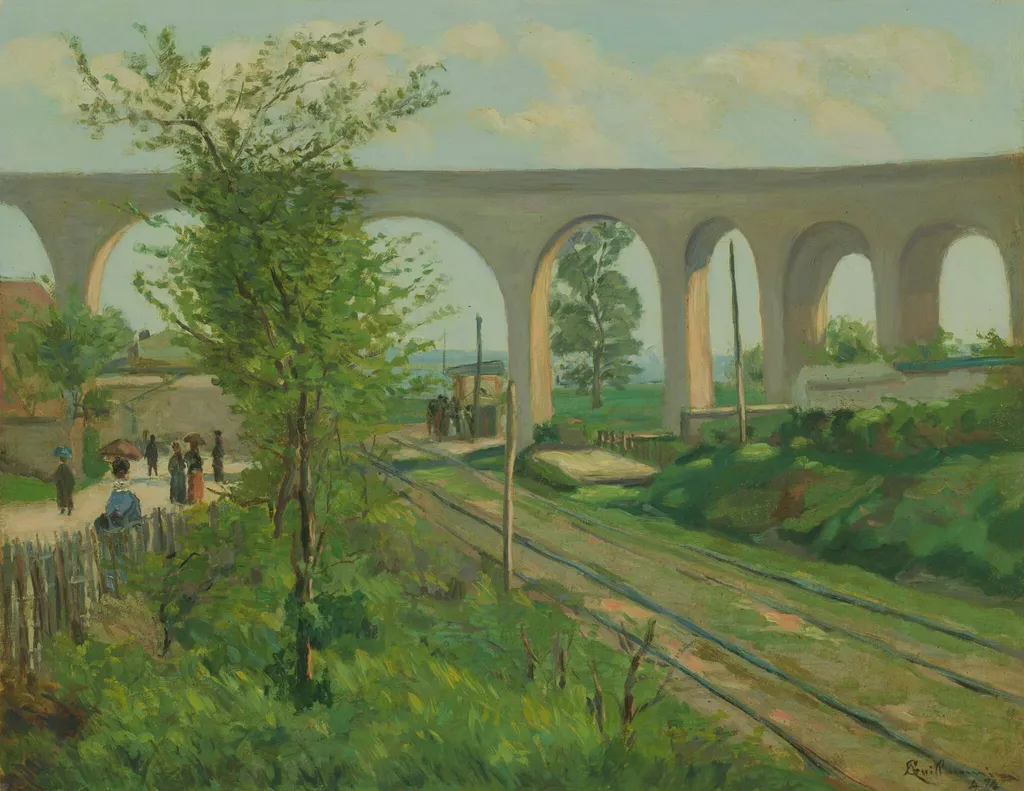
The Arcueil Aqueduct at Sceaux Railroad Crossing is an oil painting by the Impressionist artist Armand Guillaumin. It dates from 1874 and is held in the collection of the Art Institute of Chicago.
About this work
Overview
Armand Guillaumin’s oil painting captures the newly erected Arcueil aqueduct as it spans a railway leading to Sceaux, a suburb south of Paris. The work presents the structure against a modest landscape of trees and distant buildings, emphasizing the engineering feat within a rural‑urban fringe that was rapidly expanding in the late nineteenth century.
Subject & Meaning
The composition foregrounds the massive stone aqueduct, highlighting its role in transporting water across the rail line. By situating this utilitarian object within a tranquil setting, Guillaumin reflects the interplay between industrial progress and the surrounding countryside, a theme shared by many Impressionists who turned their attention to the evolving outskirts of the capital.
Technique & Style
Executed in oil, the painting employs a muted palette and contrasts of light and shadow to model the aqueduct’s volume, a subtle use of chiaroscuro that gives the stone a sense of solidity. Guillaumin’s brushwork balances detail in the architectural elements with looser treatment of foliage, aligning the work with the broader Impressionist interest in atmospheric effects.
History & Provenance
Created shortly after the aqueduct’s completion, the canvas was shown at the third Impressionist exhibition in 1877, marking Guillaumin’s participation alongside contemporaries such as Cézanne and Pissarro, who also explored suburban scenes. The artist’s position with a railway company provided access to such sites, enabling him to document the transformative infrastructure of the Paris region.
Own this work as a print
Artist & collection