Artwork
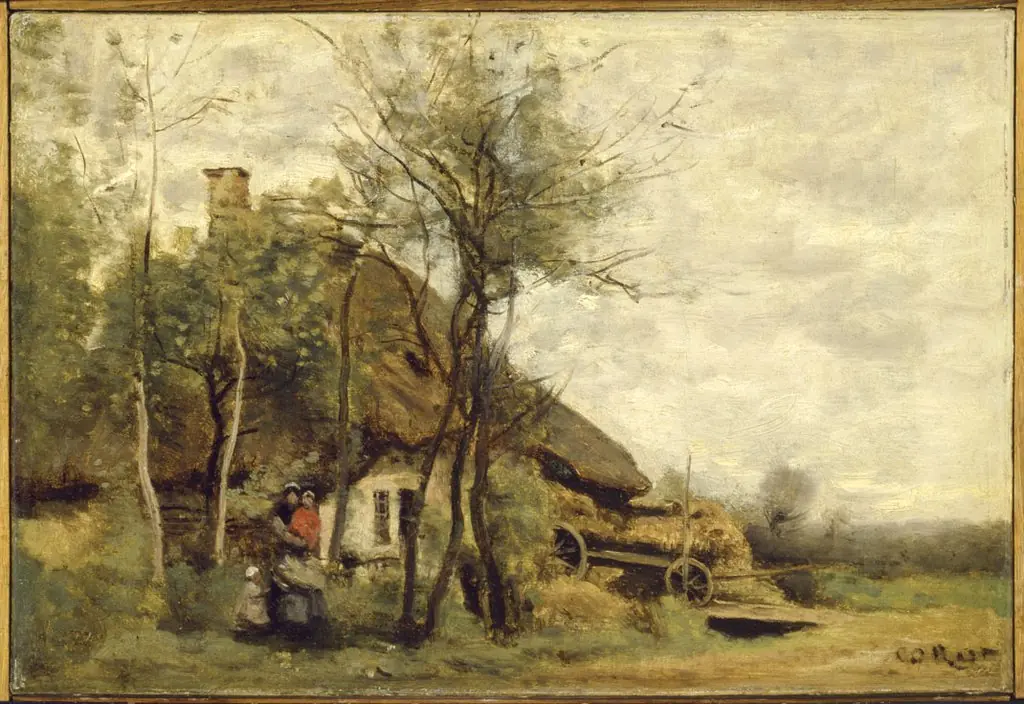
Farmyard at Sin, near Douai, with Children at Play
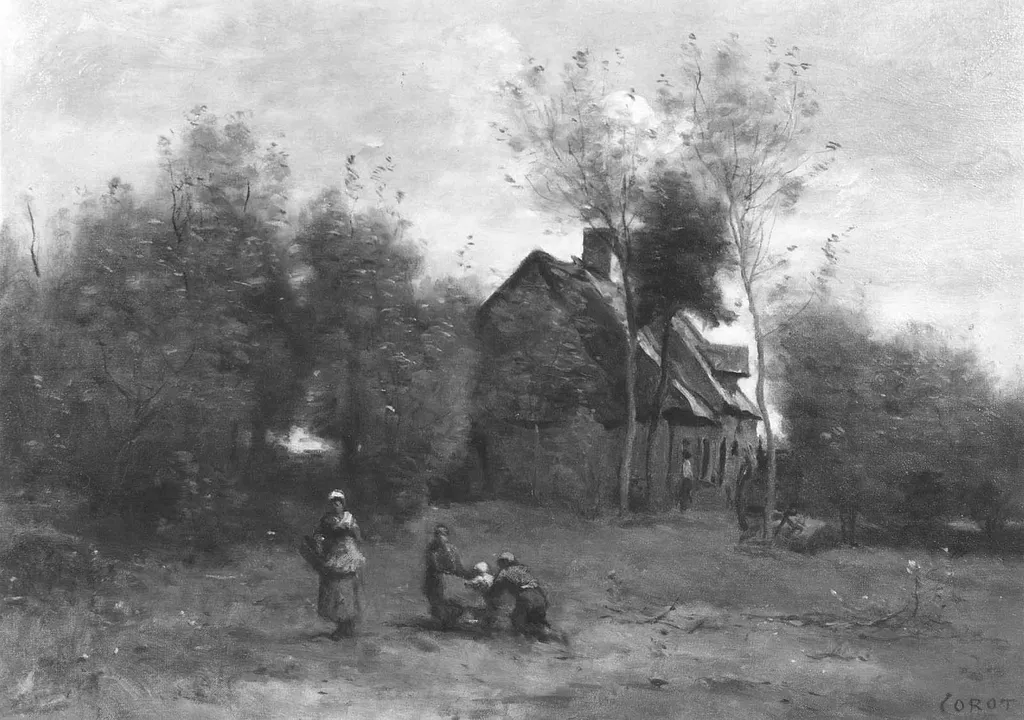
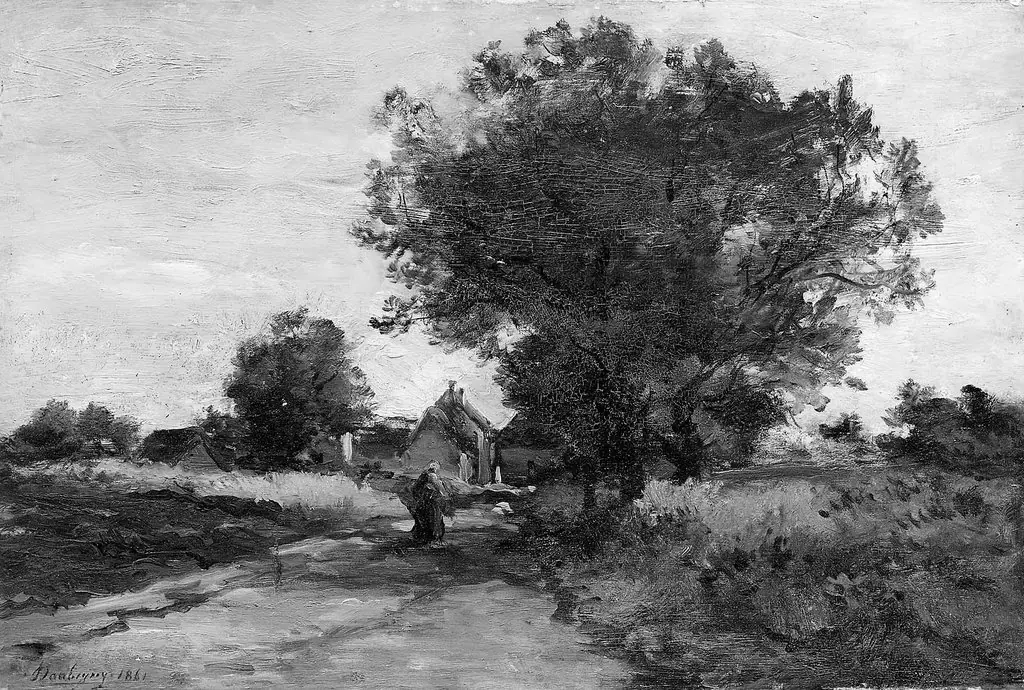
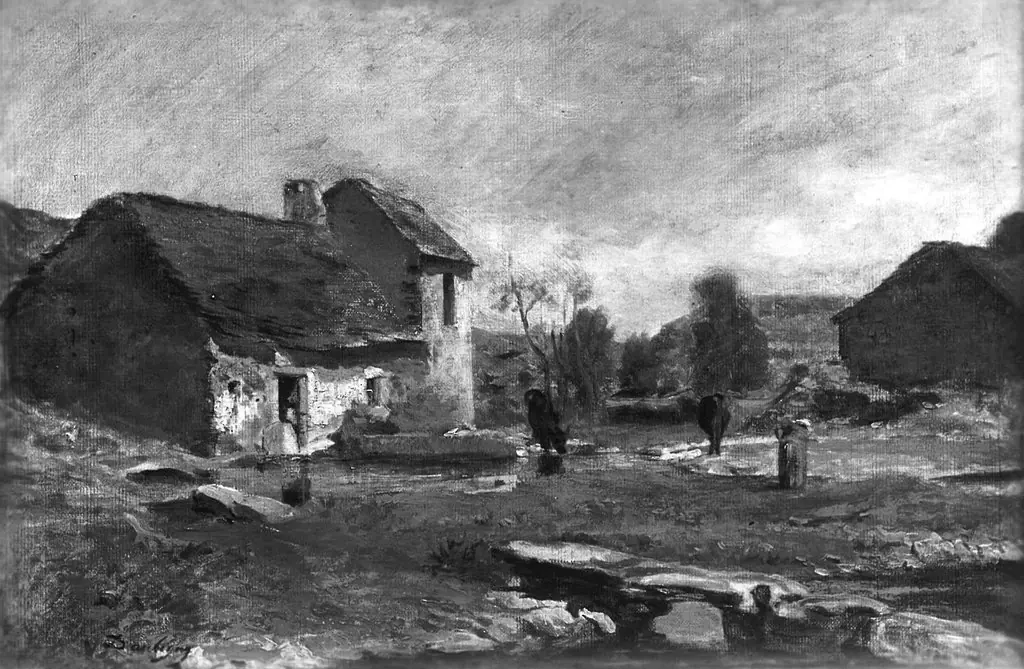
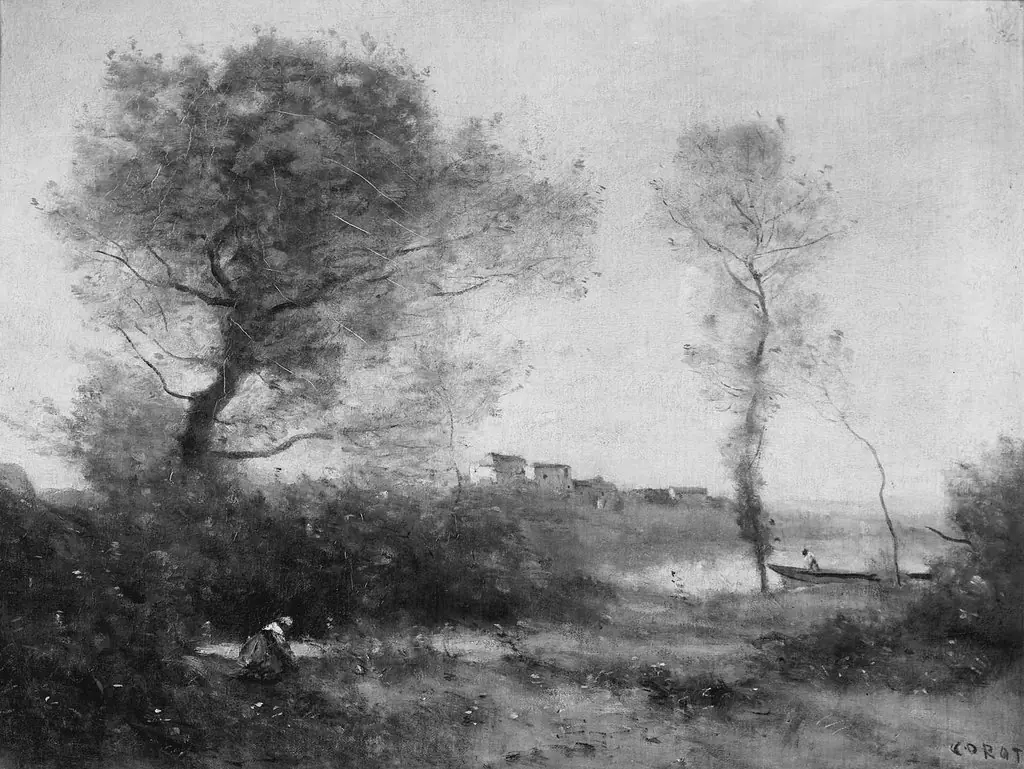
Farmyard at Sin, near Douai, with Children at Play is an oil painting by the Realist artist Jean Baptiste Camille Corot. It dates from 1872 and is held in the collection of the Museum of Fine Arts Boston. Painted in 1872 by Jean-Baptiste-Camille Corot, this oil-on-canvas work captures a quiet rural scene near Douai in northern France.
About this work
Overview
Painted in 1872 by Jean-Baptiste-Camille Corot, this oil-on-canvas work captures a quiet rural scene near Douai in northern France.
Painted in 1872 by Jean-Baptiste-Camille Corot, this oil-on-canvas work captures a quiet rural scene near Douai in northern France. The composition centers on a modest farmhouse surrounded by trees, with children engaged in unstructured play in the yard. Corot’s approach blends observed detail with a lyrical atmosphere, reflecting his lifelong interest in integrating human presence into natural settings without dramatizing them.
Subject & Meaning
The painting presents an unidealized moment of rural life, emphasizing quietude over narrative. The children’s activities are casual and unposed, suggesting everyday rhythms rather than staged sentiment. The farmhouse, neither grand nor dilapidated, anchors the scene as a symbol of humble continuity. Corot avoids moralizing or romanticizing rural existence, instead offering a contemplative record of ordinary moments in the French countryside.
Technique & Style
Corot employed soft, blended brushwork and a restrained palette dominated by earthy greens, browns, and muted grays. Light is diffused and subtle, casting gentle shadows that model forms without harsh contrast. The paint is applied with a delicate touch, allowing the canvas texture to subtly influence the surface. This method, rooted in earlier academic training, anticipates the tonal sensitivity later embraced by the Impressionists.
History & Provenance
Created during the final decade of Corot’s career, the painting reflects his mature style, developed after decades of sketching outdoors and refining his approach to landscape. It entered the collection of the Museum of Fine Arts, Boston, in the early 20th century, likely through a private acquisition or bequest. Its presence in the museum underscores its recognition as a representative example of Corot’s later, more intimate works.
Context
In the 1870s, Corot stood apart from both the academic establishment and the emerging Impressionist circle, yet his practice influenced both. While contemporaries like Monet pursued brighter light and broken color, Corot retained a tonal harmony and compositional restraint. This painting reflects a transitional moment in French art, where the observation of nature remained central, even as its treatment evolved toward modern sensibilities.
Legacy
Corot’s integration of figures into landscape, his subtle handling of light, and his commitment to direct observation helped pave the way for later generations. Though not overtly experimental, his work offered a model of poetic realism that resonated with artists seeking emotional depth without theatricality. This painting exemplifies his enduring contribution to the evolution of modern landscape painting.
Artist & collection
Artist
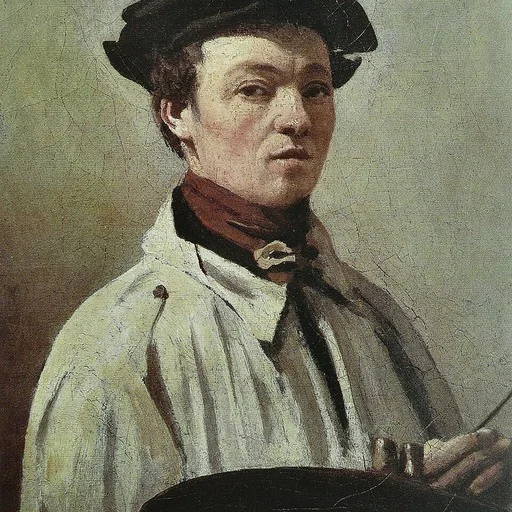
Jean-Baptiste-Camille Corot (UK: KORR-oh, US: kə-ROH, kor-OH; French: ; 16 July 1796 – 22 February 1875), or simply Camille Corot, was a French landscape and portrait painter as well as a printmaker in etching.