Artwork
The Little Shepherd
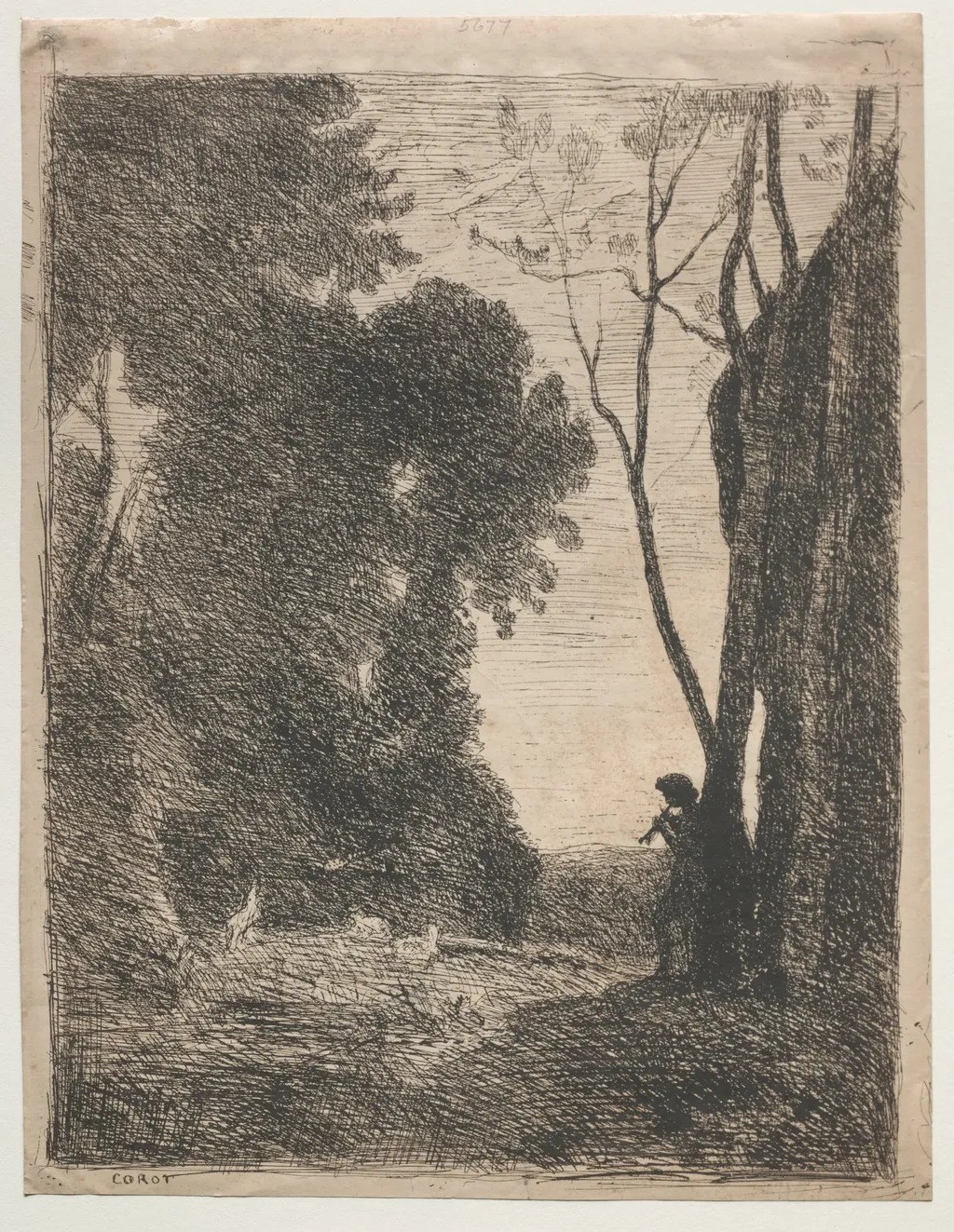
The Little Shepherd is a print by the Impressionist artist Jean Baptiste Camille Corot. It dates from 1855 and is held in the collection of the Cleveland Museum of Art.
About this work
Overview
Created in 1855, *The Little Shepherd* is a graphite drawing by Jean-Baptiste-Camille Corot that captures a quiet rural moment with minimal detail.
Created in 1855, *The Little Shepherd* is a graphite drawing by Jean-Baptiste-Camille Corot that captures a quiet rural moment with minimal detail. Executed on paper with loose, expressive strokes, it reflects Corot’s shift toward intimate, observational works. The rough, unfinished edges suggest it was made in the field, part of a series of studies that prioritized atmosphere over finish. Its presence in the Cleveland Museum of Art underscores its value as a personal, yet significant, record of 19th-century landscape practice.
Subject & Meaning
The drawing centers on a solitary child shepherd beneath a sprawling tree, their posture suggesting quiet vigilance rather than action. The figure is rendered with sparse lines, emphasizing presence over identity. The setting—dense foliage, a faint path, and blurred ground—evokes a timeless pastoral realm. Corot avoids narrative drama, instead inviting contemplation of solitude and the quiet rhythm of rural life, aligning with his broader interest in serene, unidealized nature.
Technique & Style
Corot employed rapid, scratchy graphite strokes to suggest texture and movement, allowing light and shadow to merge softly across the surface. The tree’s branches dominate the composition, their tangled lines dissolving into the background. The paper’s rough edges and lack of framing reinforce the work’s sketch-like character. This approach—prioritizing immediacy and tonal harmony over precision—reflects his move away from academic conventions toward a more intuitive, atmospheric style.
History & Provenance
The drawing entered the Cleveland Museum of Art’s collection as part of a broader acquisition of Corot’s works on paper. While its exact provenance before the 20th century is not fully documented, its condition and style align with his mid-1850s field studies. Unlike finished paintings, such sketches were often retained by the artist or given to close associates, making their survival and institutional preservation notable.
Context
In the 1850s, Corot was increasingly focused on outdoor studies, responding to emerging interest in direct observation of nature. While contemporaries like the Barbizon painters emphasized realism, Corot’s approach remained lyrical and restrained. *The Little Shepherd* fits within this context—not as a finished work, but as a meditative record of light, form, and stillness, bridging academic tradition and the nascent Impressionist sensibility.
Legacy
Though modest in scale, *The Little Shepherd* exemplifies Corot’s influence on later generations who valued spontaneity and tonal nuance over grand narrative. His sketchbook studies, once considered preparatory, are now recognized as autonomous expressions of perception. This drawing contributes to the reevaluation of drawing as a vital, independent medium in 19th-century art, not merely a step toward painting.
Own this work as a print
Artist & collection
Artist
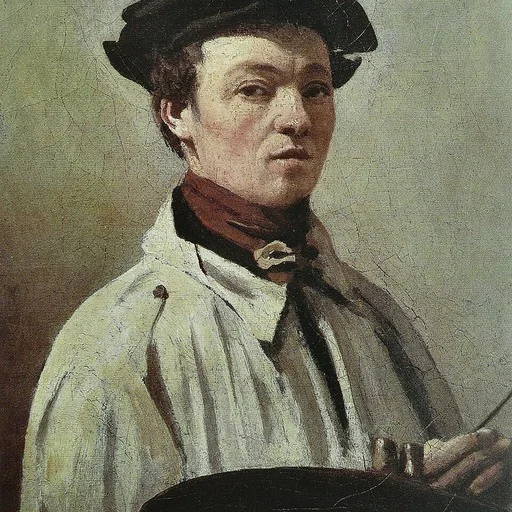
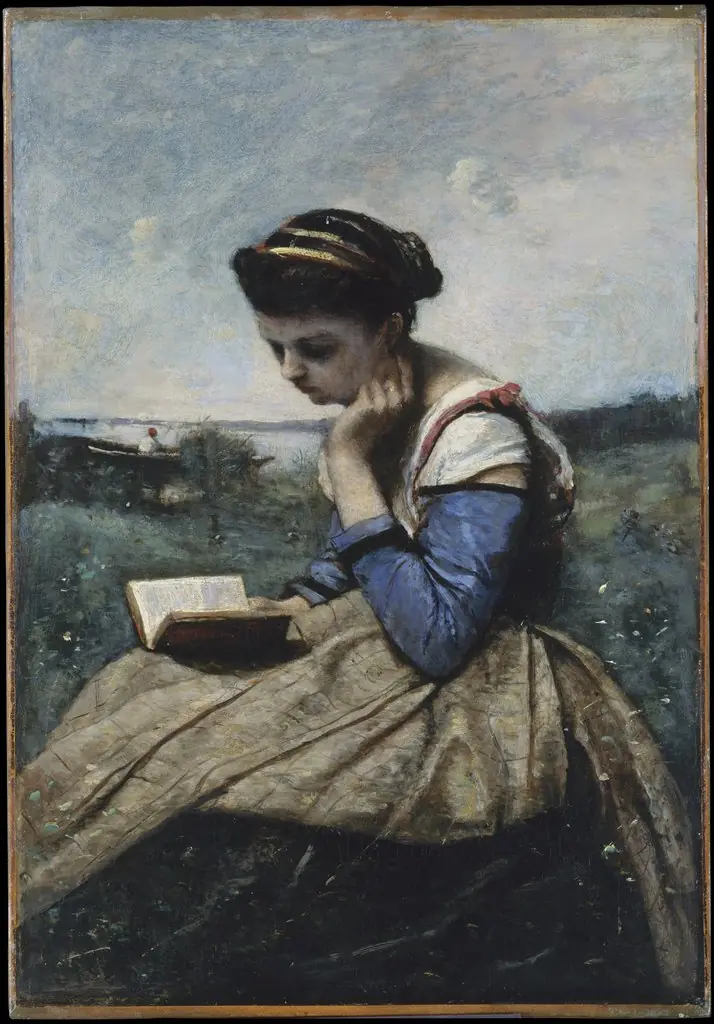
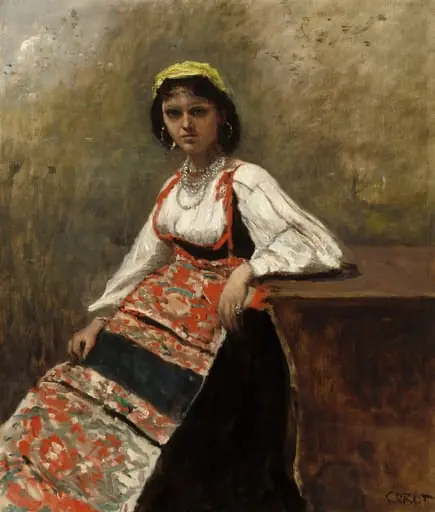
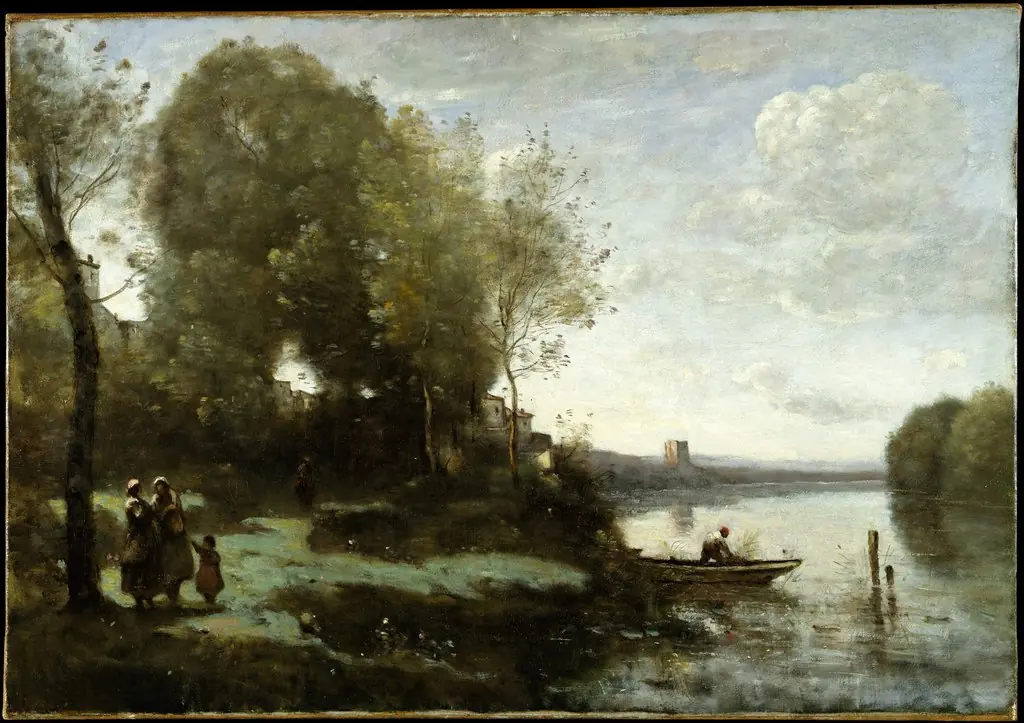
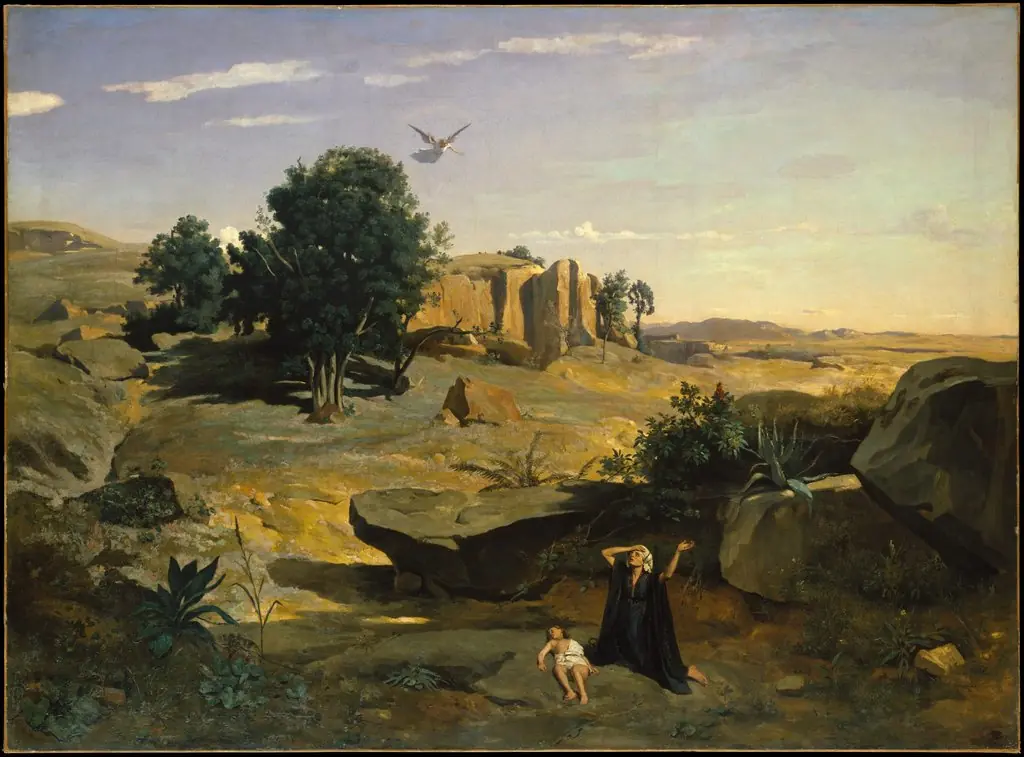
Jean-Baptiste-Camille Corot (UK: KORR-oh, US: kə-ROH, kor-OH; French: ; 16 July 1796 – 22 February 1875), or simply Camille Corot, was a French landscape and portrait painter as well as a printmaker in etching.

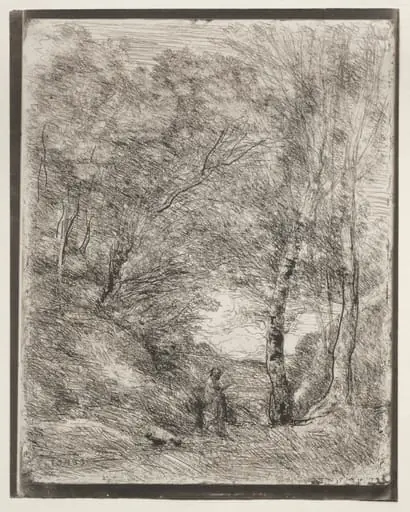 The Gardens of Horace
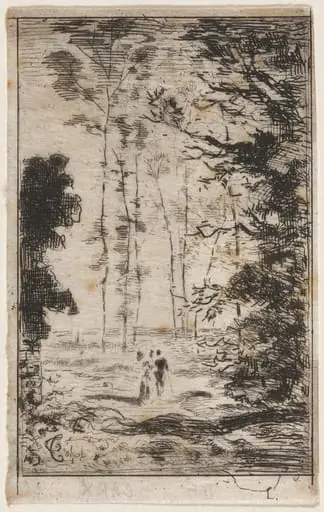 Petit paysage en hauteur (Small Landscape)
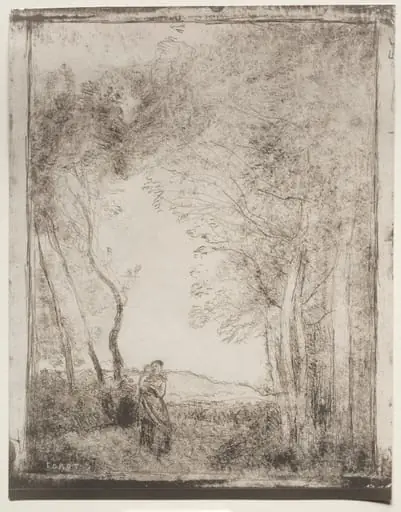 A Young Mother at the Entrance of a Wood
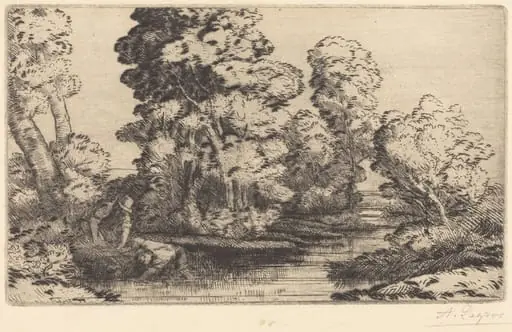 Valley in Bourgogne (Une vallee en Bourgogne)
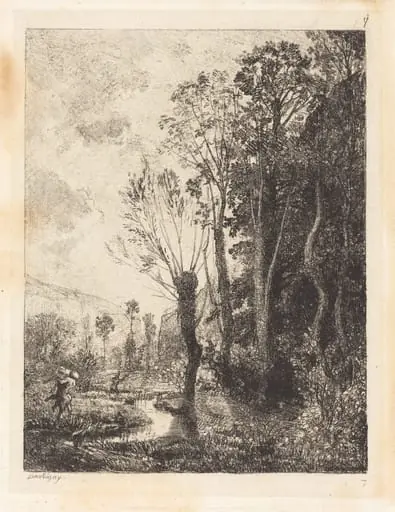 Satyr (Le Satyre)
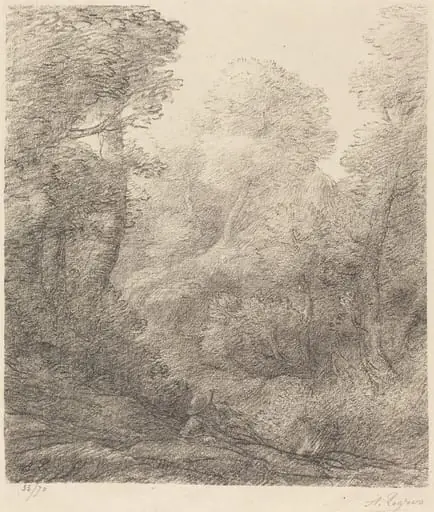 Landscape: Morning Mist (Paysage: Brumes du matin)
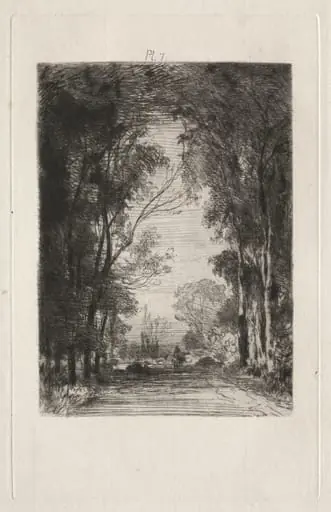 Traveler on a Road in a Forest
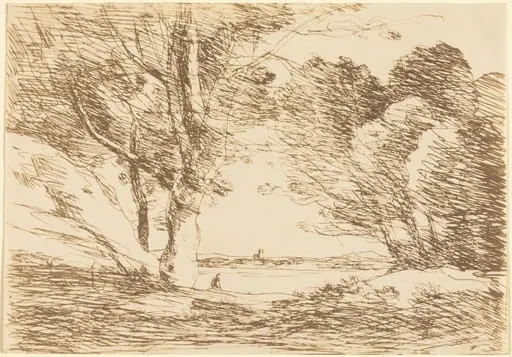 Tower on the Horizon of a Lake (Tour a l'horizon d'un lac)
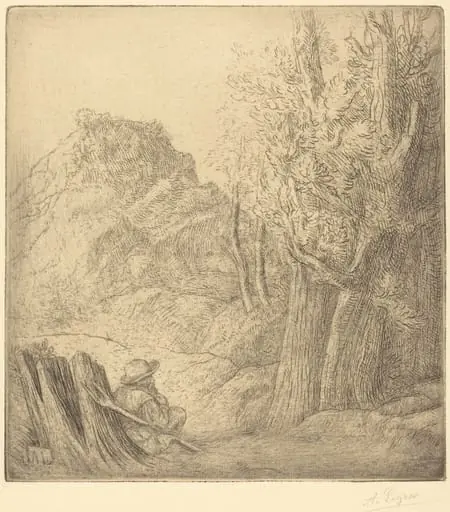 Old Village (Ville vieille)