Artwork
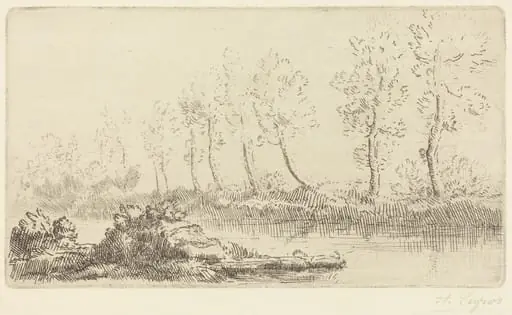
Valley in Bourgogne (Une vallee en Bourgogne)
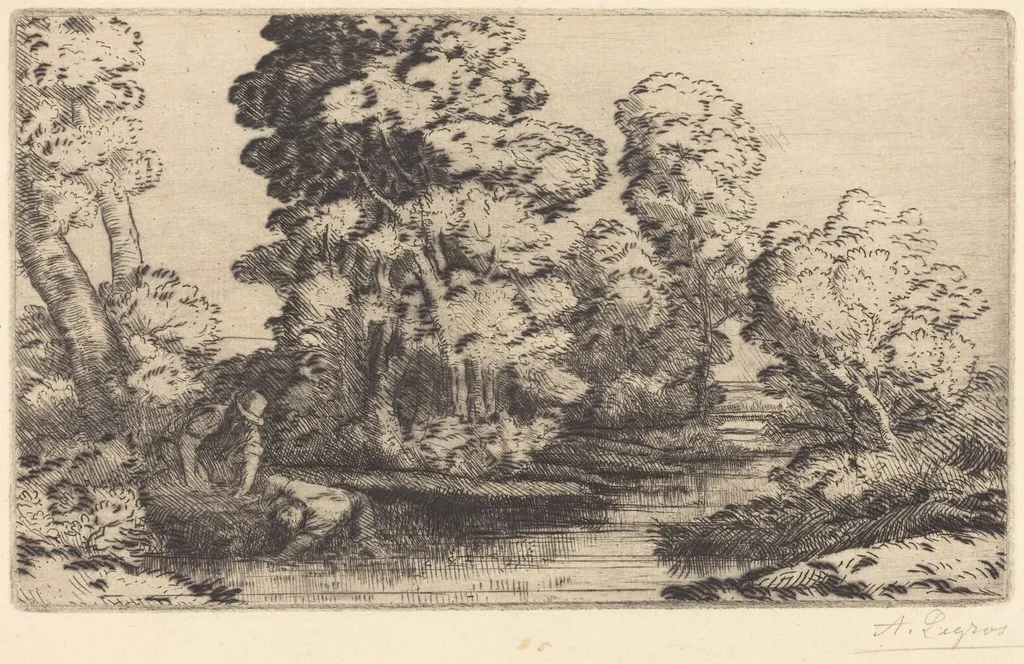
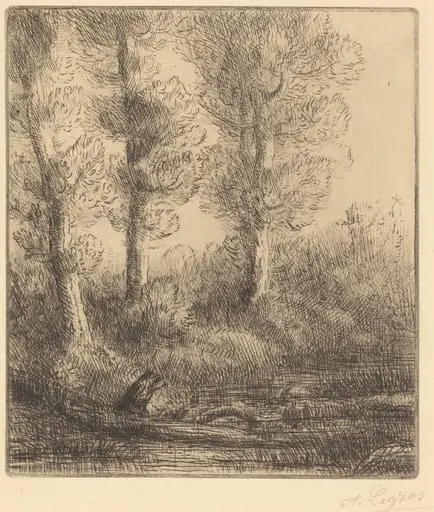
Valley in Bourgogne (Une vallee en Bourgogne) is an ink print by the Romanticist artist Alphonse Legros. It dates from 1874 and is held in the collection of the National Gallery of Art.
About this work
Overview
Valley in Bourgogne (Une vallee en Bourgogne) is a 1874 print by Alphonse Legros, created using drypoint and etching techniques. The work showcases a rural Burgundian landscape, leveraging Legros' mastery of intaglio methods.
Subject & Meaning
The print captures a dense, wild forest in Burgundy, with a winding river at its core. The dominant shadows and scarce light imbue the scene with a sense of the natural world's inherent vitality and mystery.
Technique & Style
Characterized by scratchy, deep lines, the print exemplifies Legros' skill in drypoint, where a tool carves directly into the metal plate to achieve a textured, expressive quality. This approach enhances the landscape's rugged, untamed feel.
History & Provenance
Created in 1874, the print reflects Legros' contribution to the revival of etching in Britain, following his relocation to London in 1863. His multifaceted career spanned painting, printmaking, and sculpture.
Context
As a French artist established in Britain, Legros' work bridged continental and British artistic practices, influencing the local printmaking revival with his intaglio expertise.
Legacy
Valley in Bourgogne stands as a testament to Legros' technical innovation and expressive use of drypoint and etching, contributing to the enduring appreciation of these techniques in printmaking heritage.
Artist & collection

Artist
Alphonse Legros (French pronunciation: ; 8 May 1837 – 8 December 1911) was a French, later British, painter, etcher, sculptor, and medallist.

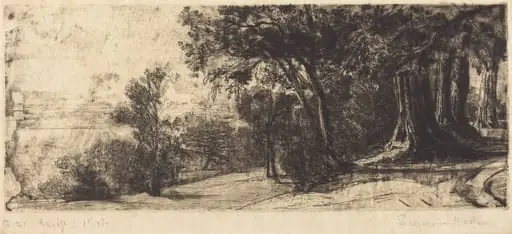 Early Morning - Richmond
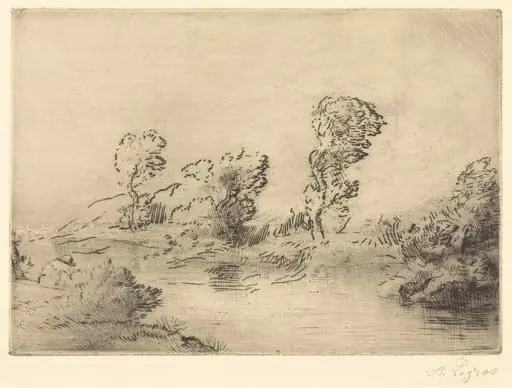 Banks of the Marne (Bord de la Marne)
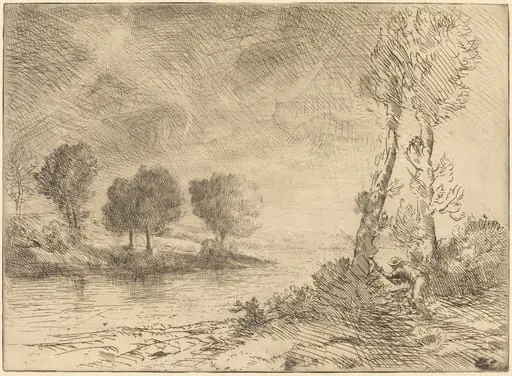 Salmon Fisher (Le pecheur de saumon)
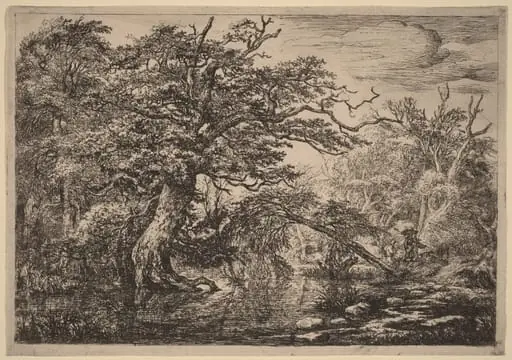 A Forest Marsh with Travelers on a Bank (The Travelers)
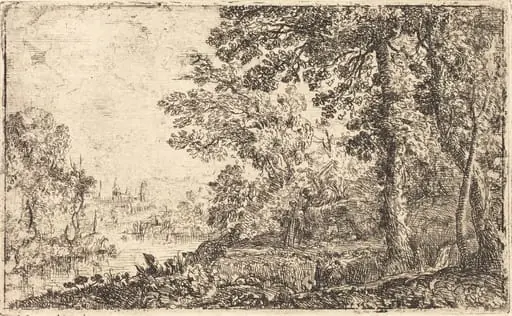 The Vision (L'apparition)
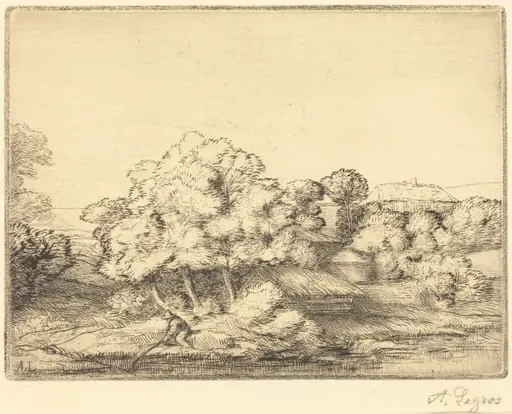 Hamlet near the Lake (Le hameau pres du lac)
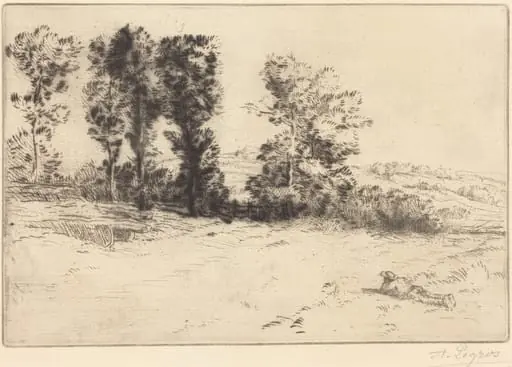 Meadow in Sunshine (Le pre ensoleille)
 Banks of the Saint-Pre (Rive du Saint-Pre)
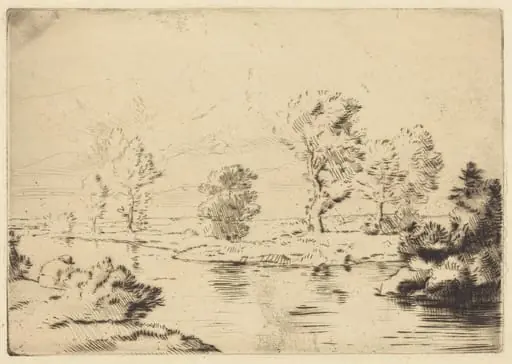 Banks of the Marne (Bord de la Marne)
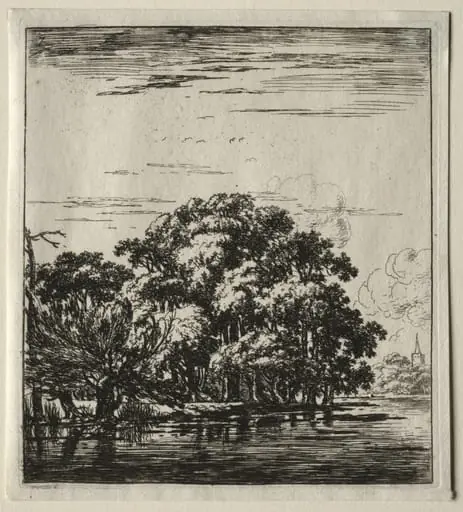 Le bois au bord de la rivière
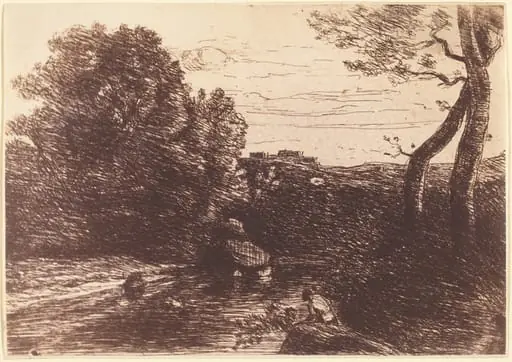 Shepherd's Bath (Le Bain du berger)
 Banks of the Adour (Bord de l'Adour)