Artwork
The Pond at the Entrance of the Woods
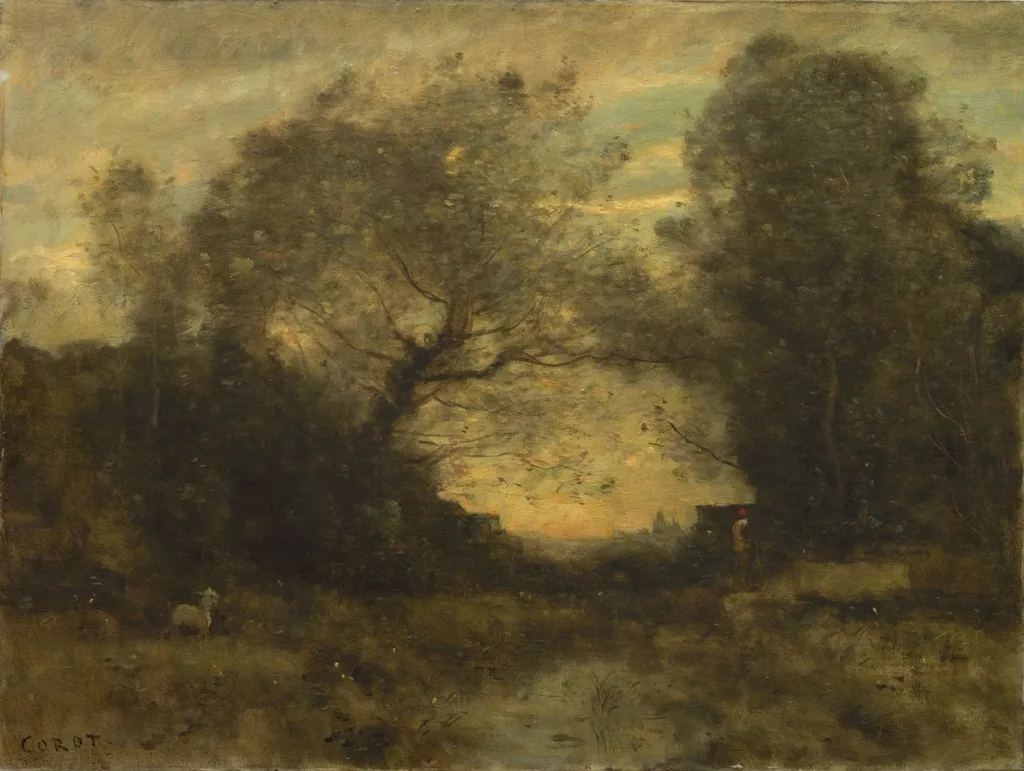
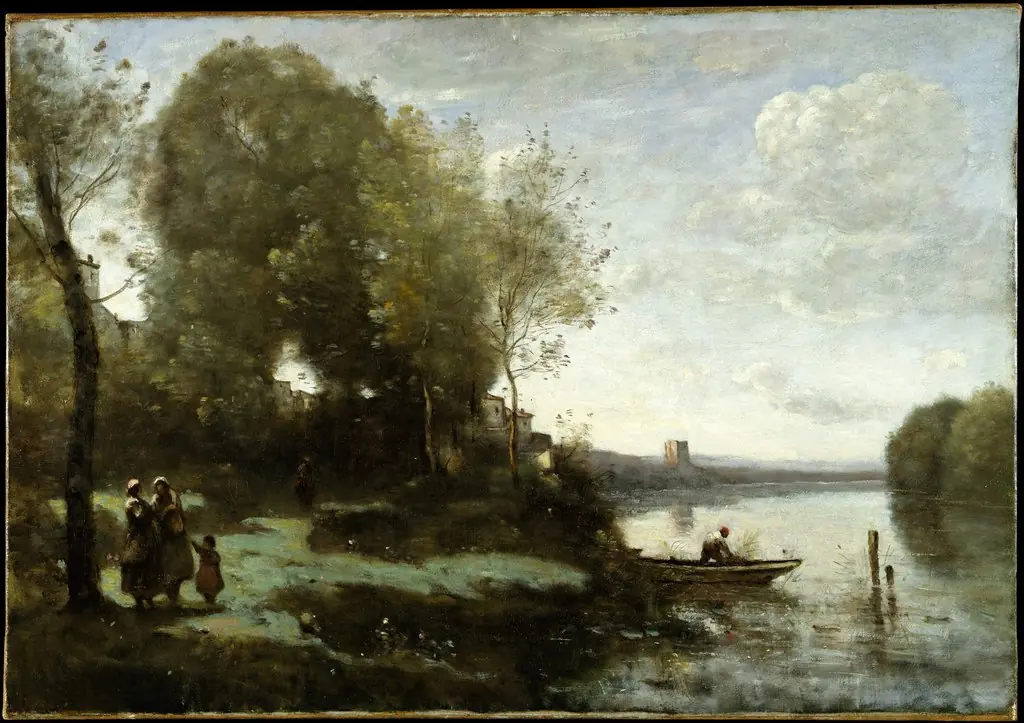
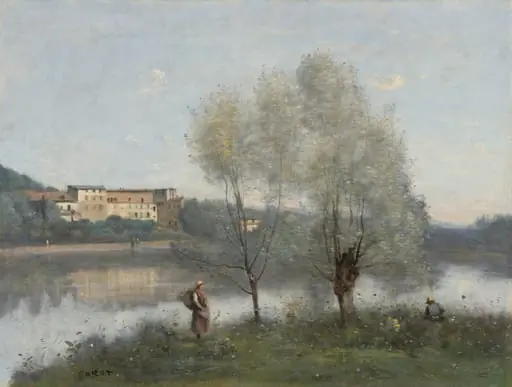
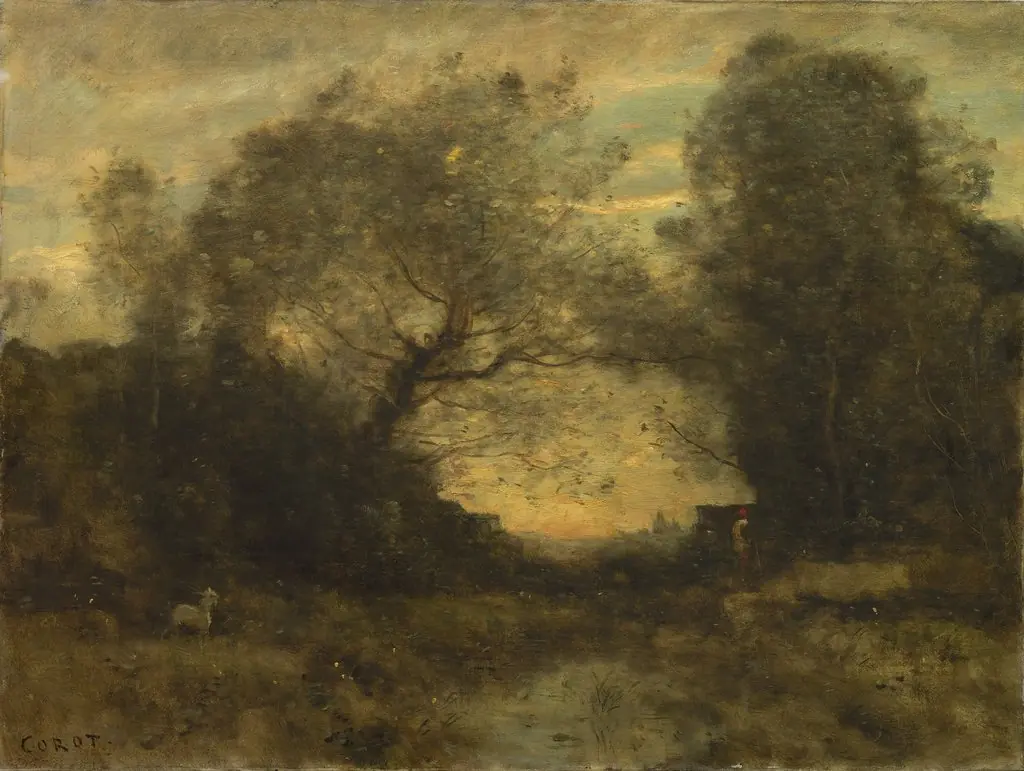
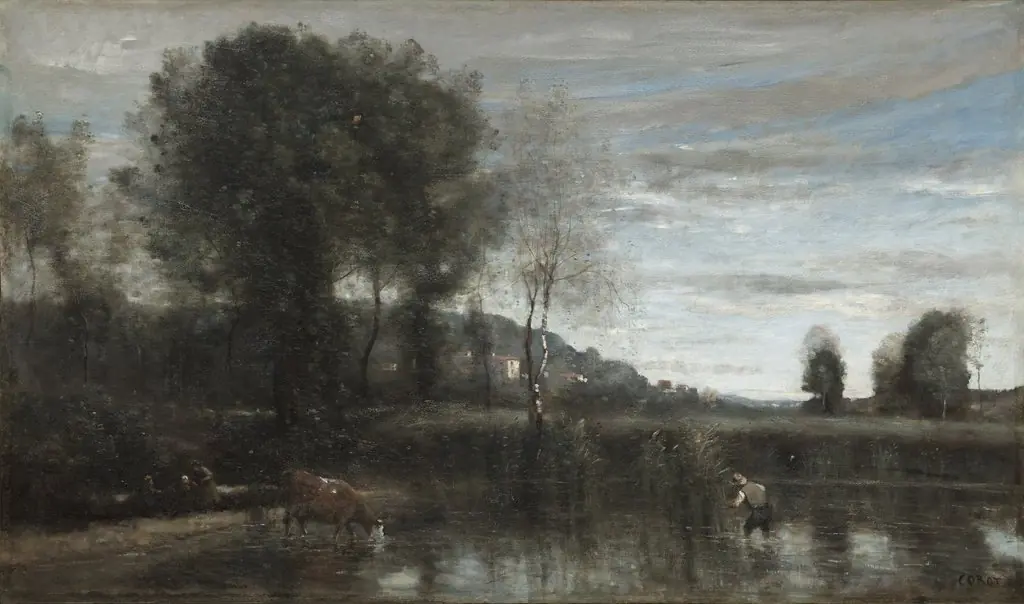
The Pond at the Entrance of the Woods is an unspecified painting by the Barbizon school artist Jean Baptiste Camille Corot. It dates from 1868 and is held in the collection of the Cleveland Museum of Art. This painting depicts a tranquil pond at the edge of a wooded area, a recurring subject in Corot’s late work.
About this work
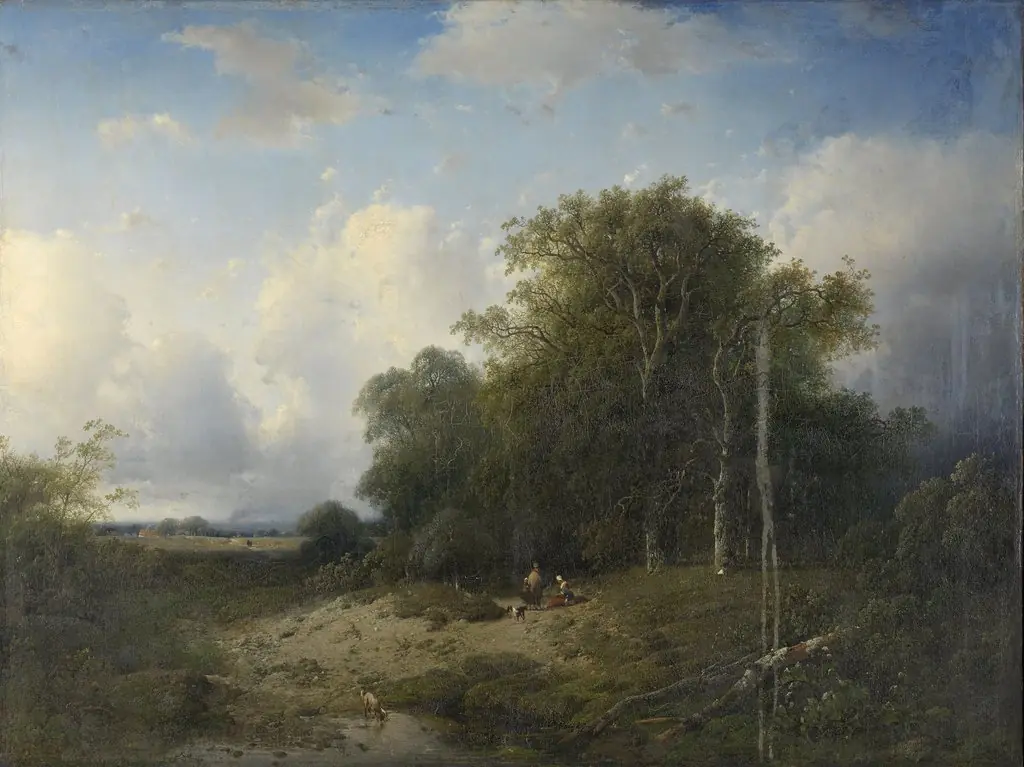
You see a quiet pond framed by tall, leafy trees. A peasant and a white goat stand small near the water.
Corot painted this spot many times—it’s his family’s land outside Paris. The light feels soft, almost hazy, like early morning. He used thin layers of paint to make the air look damp and still.
If you like this, look up more paintings of france, 19th century, mod euro.
Overview
Painted during the 1860s or 1870s, it reflects his deep connection to Ville-d'Avray, a rural suburb west of Paris where his family owned property.
This painting depicts a tranquil pond at the edge of a wooded area, a recurring subject in Corot’s late work. Painted during the 1860s or 1870s, it reflects his deep connection to Ville-d'Avray, a rural suburb west of Paris where his family owned property. The composition is quiet and restrained, emphasizing stillness over narrative, with minimal human presence and a muted color scheme that enhances the sense of calm.
Subject & Meaning
A solitary peasant and a white goat are positioned near the water’s edge, their small scale emphasizing the vastness of the natural setting. These figures, common in Corot’s later works, suggest quiet rural life without sentimentality. The scene holds no dramatic event; its meaning lies in the contemplative atmosphere, inviting observation of light, texture, and the subtle interplay between land and water.
Technique & Style
Corot applied thin, layered washes of paint to create a hazy, atmospheric effect, mimicking the dampness of morning air. His palette is limited to soft grays, greens, and browns, reinforcing the muted tone of the landscape. Brushwork is delicate and fluid, avoiding sharp contours, allowing forms to emerge gently from the veil of light. This technique became characteristic of his mature style, prioritizing mood over detail.
History & Provenance
The pond depicted was located on land inherited by Corot from his parents in Ville-d'Avray, a place he visited regularly throughout his life. He returned to this site repeatedly, producing numerous variations of the same view over decades. This particular version belongs to a series of late works that reflect his evolving approach to landscape, moving away from topographical precision toward poetic abstraction.
Context
Painted during a period when French landscape painting was shifting from academic tradition toward more personal, sensory interpretations, Corot’s work stood apart for its quiet introspection. While contemporaries pursued realism or impressionist color, he focused on tonal harmony and atmospheric nuance. His depictions of Ville-d'Avray were not tourist views but intimate records of a familiar, cherished place.
Legacy
Corot’s late pond scenes influenced later generations of painters who valued mood over detail, including early Impressionists and even some American Tonalists. His ability to convey silence and light through restrained means demonstrated that emotional depth in landscape need not rely on grandeur or drama. These works remain touchstones for artists seeking to express stillness through paint.
Artist & collection
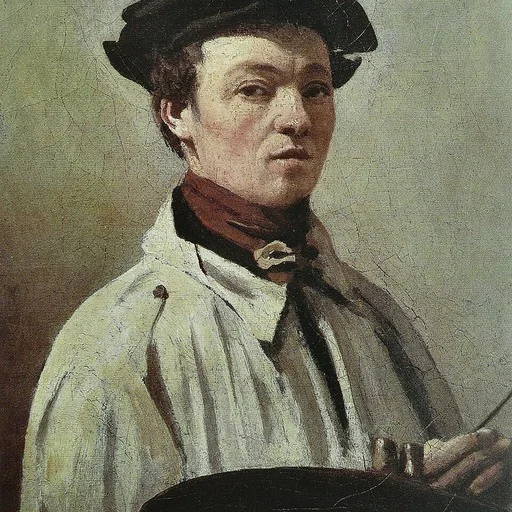
Artist
Jean-Baptiste-Camille Corot (UK: KORR-oh, US: kə-ROH, kor-OH; French: ; 16 July 1796 – 22 February 1875), or simply Camille Corot, was a French landscape and portrait painter as well as a printmaker in etching.