Artwork
Girl Weaving a Garland
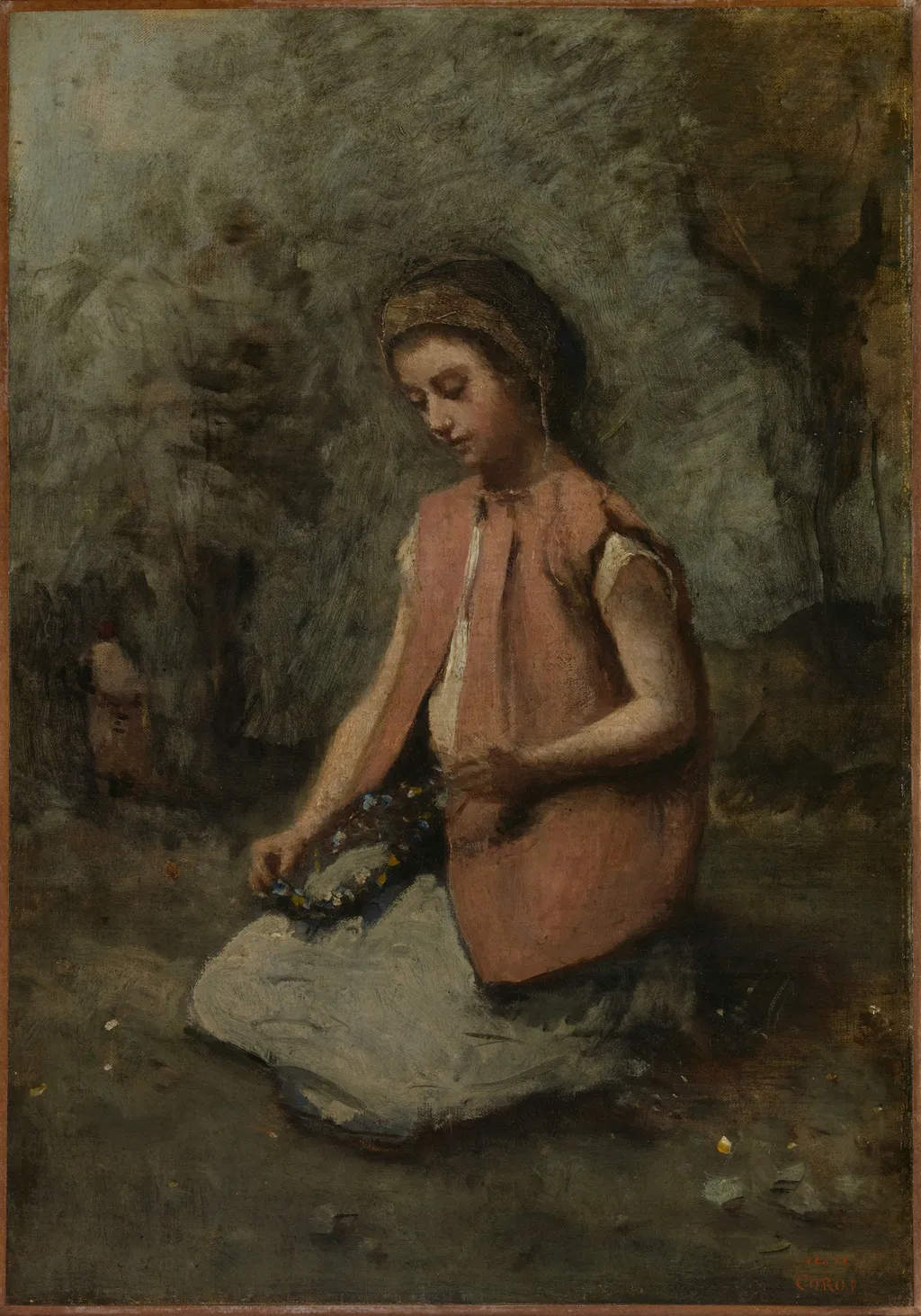
Girl Weaving a Garland is an oil painting by the Realist artist Jean Baptiste Camille Corot. It dates from 1860 and is held in the collection of the Metropolitan Museum of Art.
About this work
Overview
Jean-Baptiste-Camille Corot completed Girl Weaving a Garland in 1860, an oil painting that exemplifies the Realist interest in ordinary life.
Jean-Baptiste-Camille Corot completed Girl Weaving a Garland in 1860, an oil painting that exemplifies the Realist interest in ordinary life. This work depicts a young woman engaged in a simple, domestic task, rendered with a quiet intensity. The French artist, known for his landscapes and portraits, often explored figures within natural or intimate settings, and this piece is a notable example of his figurative work.
Subject & Meaning
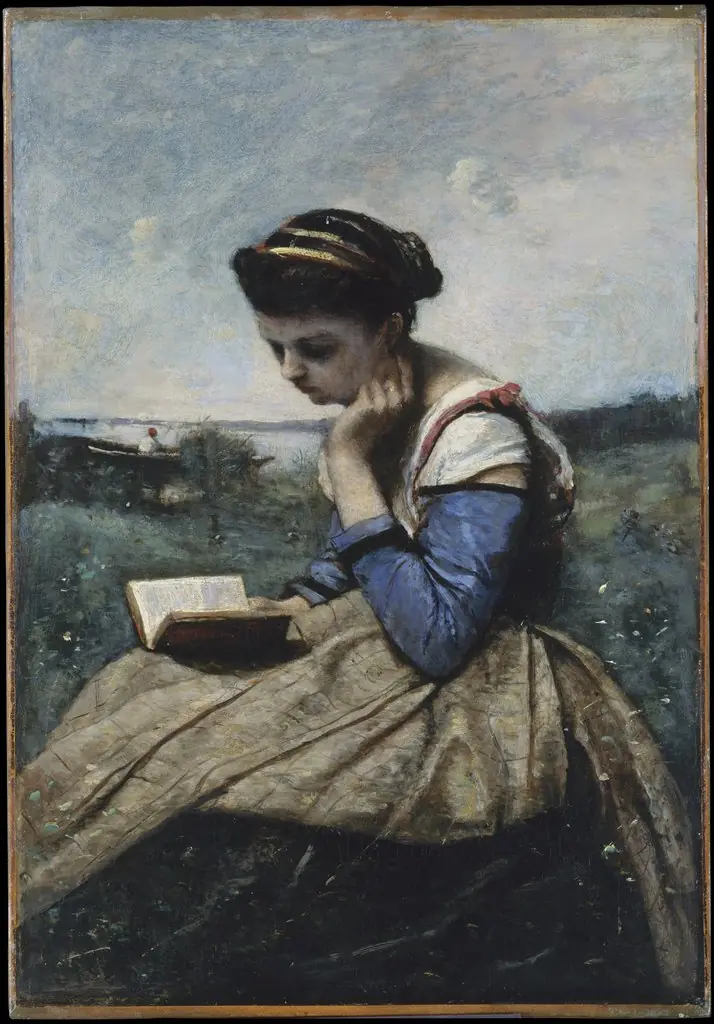
The painting centers on a young girl seated on the ground, her gaze fixed on the garland she meticulously crafts. Dressed in a pink top, white skirt, and headscarf, her posture and focused expression convey a sense of absorbed concentration. This portrayal of an unassuming individual engaged in a routine activity aligns with the Realist movement's emphasis on depicting the unvarnished realities of daily existence, elevating the commonplace to artistic subject matter.
Technique & Style
Corot employed oil paint to create a scene characterized by a muted color palette, primarily featuring soft grays, browns, and greens in the background, contrasting with the girl's attire. The delicate handling of light and shadow contributes to the painting's serene atmosphere, emphasizing the quiet contemplation of the subject. This nuanced approach reflects Corot's distinctive style, which often blended classical compositional elements with a pre-Impressionistic sensitivity to light and tone.
Context
Created during a period of significant artistic transition, Girl Weaving a Garland illustrates Corot's unique position in 19th-century French art. While his broader oeuvre is recognized for bridging Neo-Classical traditions with the emerging plein-air techniques that would influence Impressionism, this painting specifically aligns with the Realist current. It demonstrates a departure from grand historical narratives towards an appreciation for the dignity found in everyday human endeavors.
History & Provenance
This oil painting, executed by Corot in 1860, is currently part of the esteemed collection at The Metropolitan Museum of Art. Its acquisition contributes to the museum's representation of 19th-century French art, showcasing Corot's significant contributions to both landscape and figure painting. The work continues to be studied as an example of the artist's sensitive portrayal of human subjects.
Artist & collection
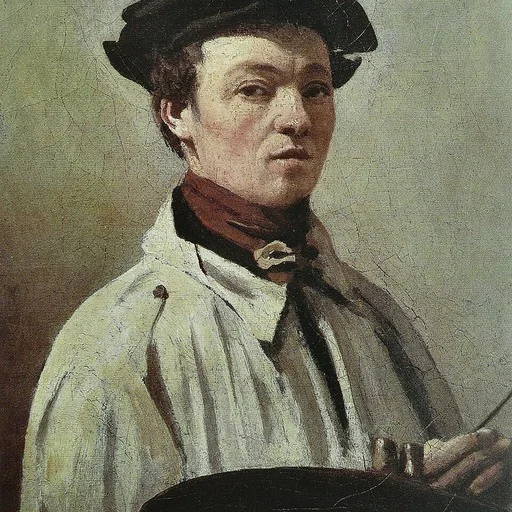
Artist
Jean-Baptiste-Camille Corot (UK: KORR-oh, US: kə-ROH, kor-OH; French: ; 16 July 1796 – 22 February 1875), or simply Camille Corot, was a French landscape and portrait painter as well as a printmaker in etching.