Artwork
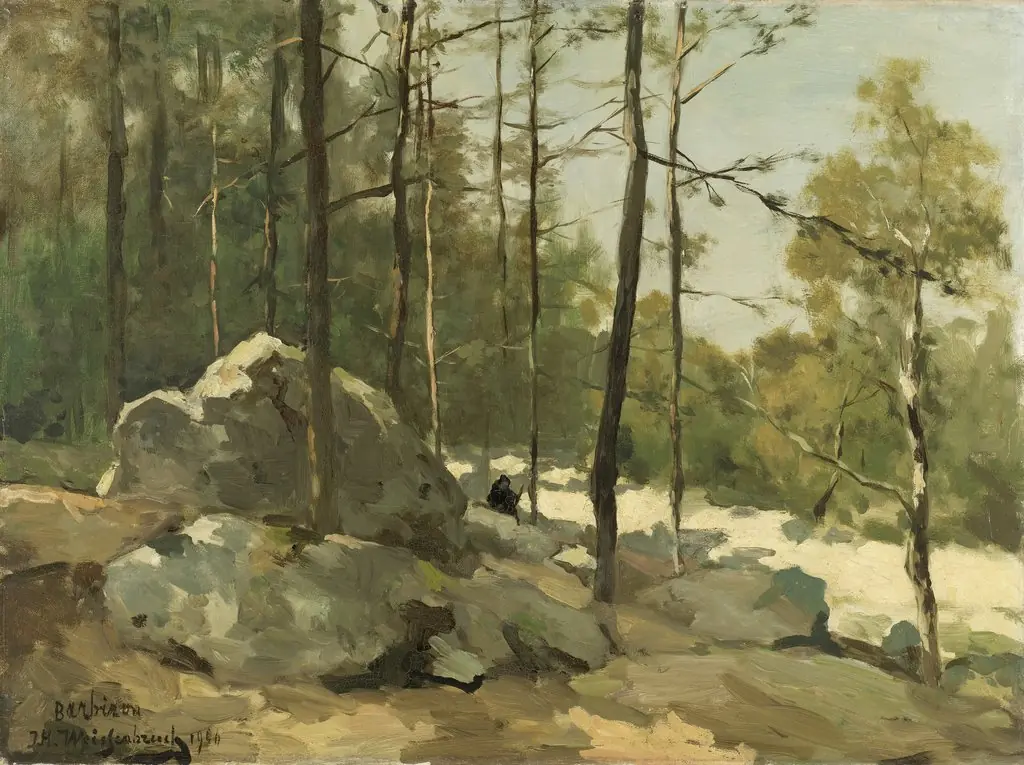
In Fontainebleau Forest. Pines and Birches Among the Rocks
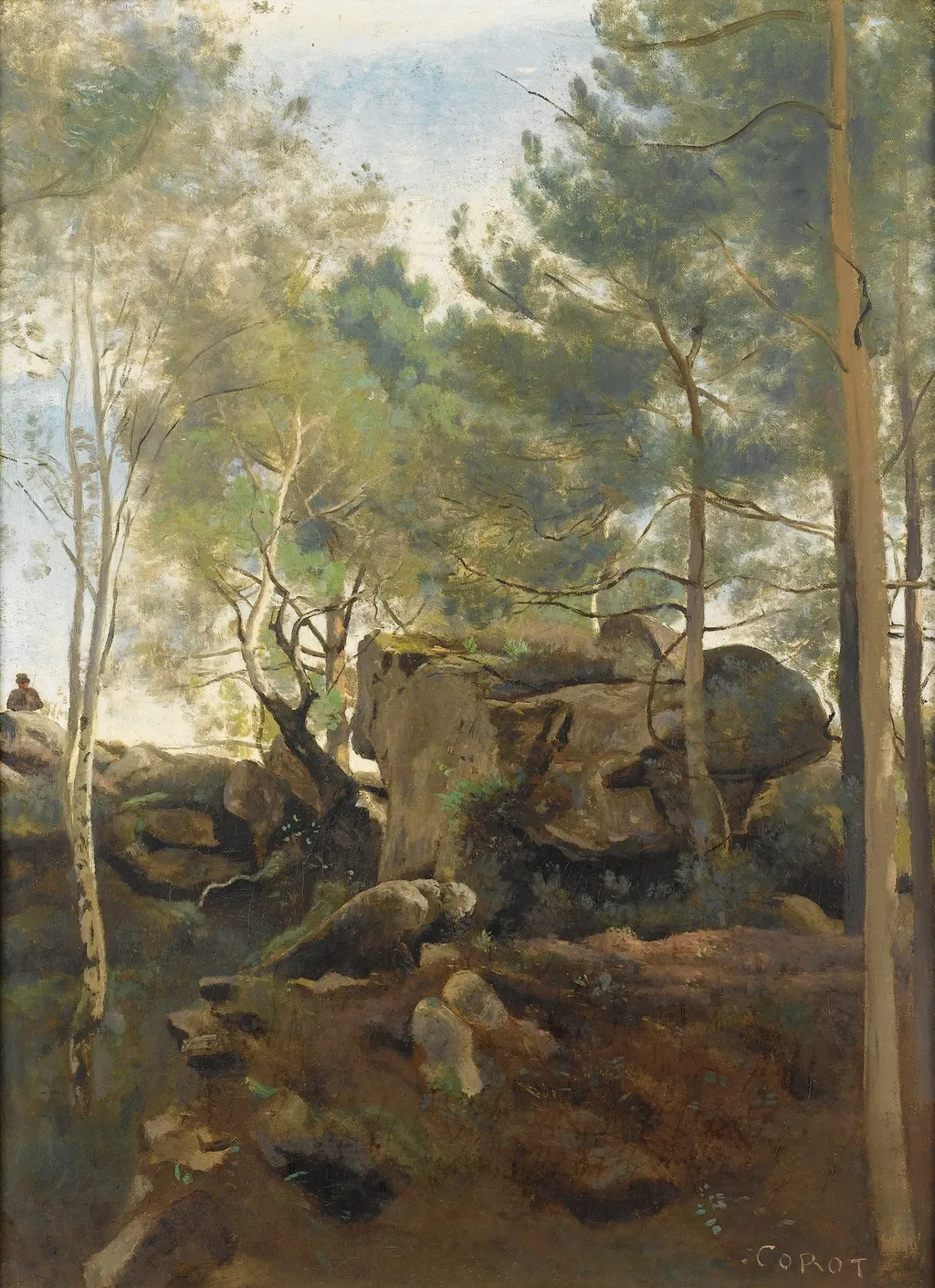
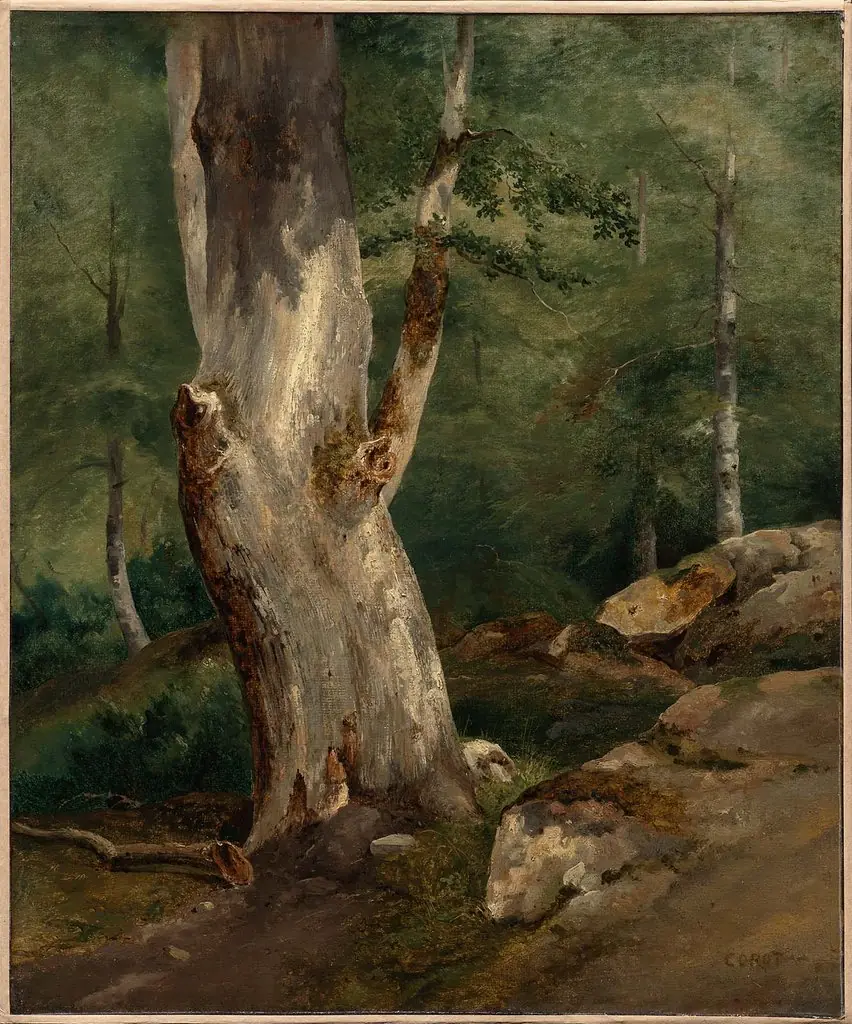
In Fontainebleau Forest. Pines and Birches Among the Rocks is an oil painting by the Barbizon school artist Jean Baptiste Camille Corot. It dates from 1847 and is held in the collection of the Louvre Abu Dhabi. Painted in 1847, *In Fontainebleau Forest.
About this work
Overview
It captures a quiet corner of the Fontainebleau woodland, where pine and birch trees rise from a rocky terrain.
Painted in 1847, *In Fontainebleau Forest. Pines and Birches Among the Rocks* is an oil on canvas landscape by Jean-Baptiste-Camille Corot. It captures a quiet corner of the Fontainebleau woodland, where pine and birch trees rise from a rocky terrain. The work aligns with the Barbizon School’s commitment to observing nature directly, moving away from idealized compositions toward intimate, unembellished scenes of the French countryside.
Subject & Meaning
The painting presents a tranquil forest interior, dominated by gnarled rocks draped in moss and slender tree trunks reaching skyward. A solitary figure, barely discernible in the distance, stands on a ledge, suggesting contemplation rather than action. This quiet human presence reinforces the theme of harmony between person and nature, inviting quiet reflection rather than narrative drama.
Technique & Style
Corot employed soft brushwork and a restrained palette of olive greens, browns, and grays to evoke atmospheric depth. Light filters subtly through the canopy, modeling forms without harsh contrasts. The composition avoids dramatic perspective, instead favoring a flattened, intimate space that emphasizes texture and tone over detail, reflecting his move toward observational realism.
History & Provenance
Created during Corot’s frequent visits to Fontainebleau, the painting was part of his sustained engagement with the forest as a subject. It entered the collection of Louvre Abu Dhabi through the broader acquisition of works from French 19th-century artists, reflecting the museum’s focus on cross-cultural dialogues in art history.
Context
In the mid-1840s, French artists began rejecting studio-based historicism in favor of painting outdoors. Corot, though trained in classical traditions, became a key figure in this shift. His work in Fontainebleau influenced younger painters like Millet and Rousseau, helping lay the groundwork for Impressionism by prioritizing light, atmosphere, and direct observation.
Legacy
The painting exemplifies Corot’s role in transitioning landscape painting from academic conventions to a more personal, sensory approach. Its quiet realism and emphasis on natural light resonated with later generations, contributing to the legitimacy of plein-air practice and influencing how nature was visually understood in modern art.
Own this work as a print
Artist & collection
Artist
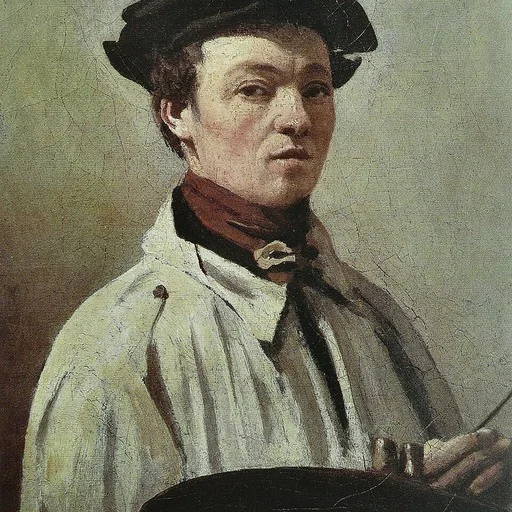
Jean-Baptiste-Camille Corot (UK: KORR-oh, US: kə-ROH, kor-OH; French: ; 16 July 1796 – 22 February 1875), or simply Camille Corot, was a French landscape and portrait painter as well as a printmaker in etching.