Artwork
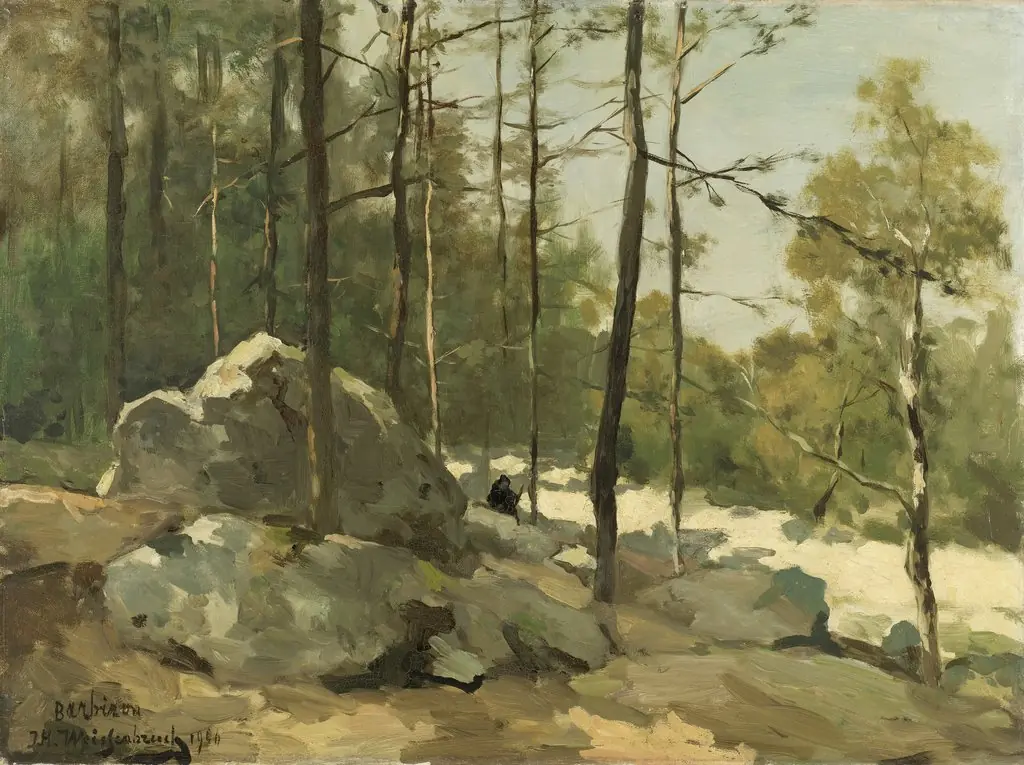
Bosgezicht nabij Barbizon
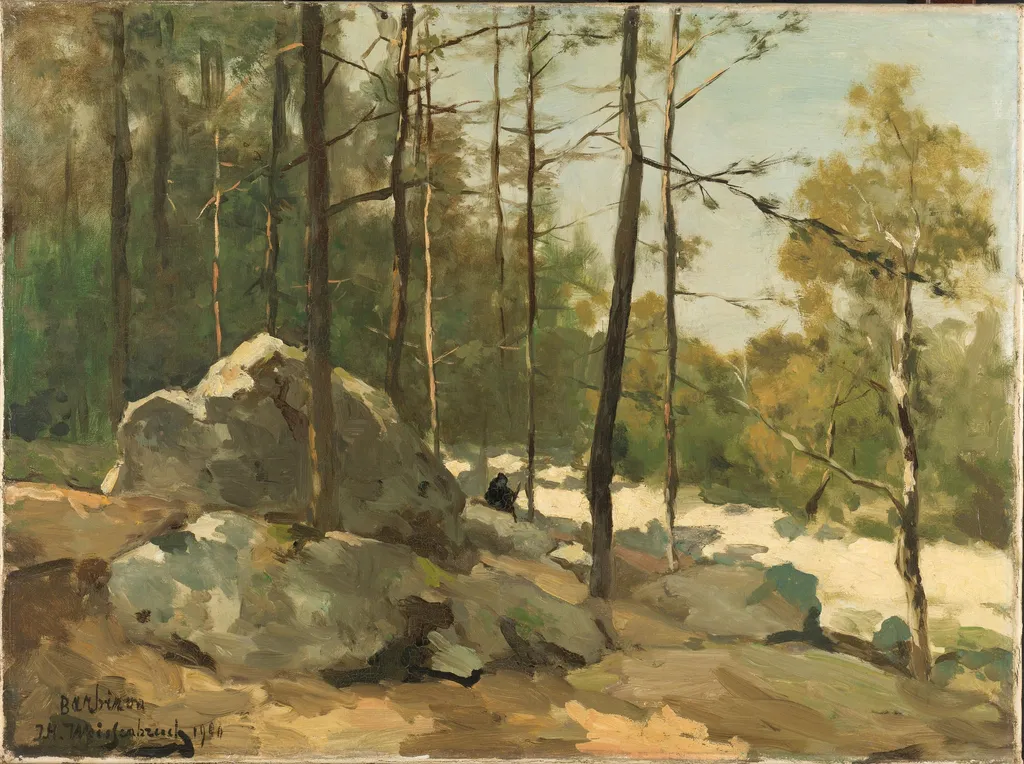
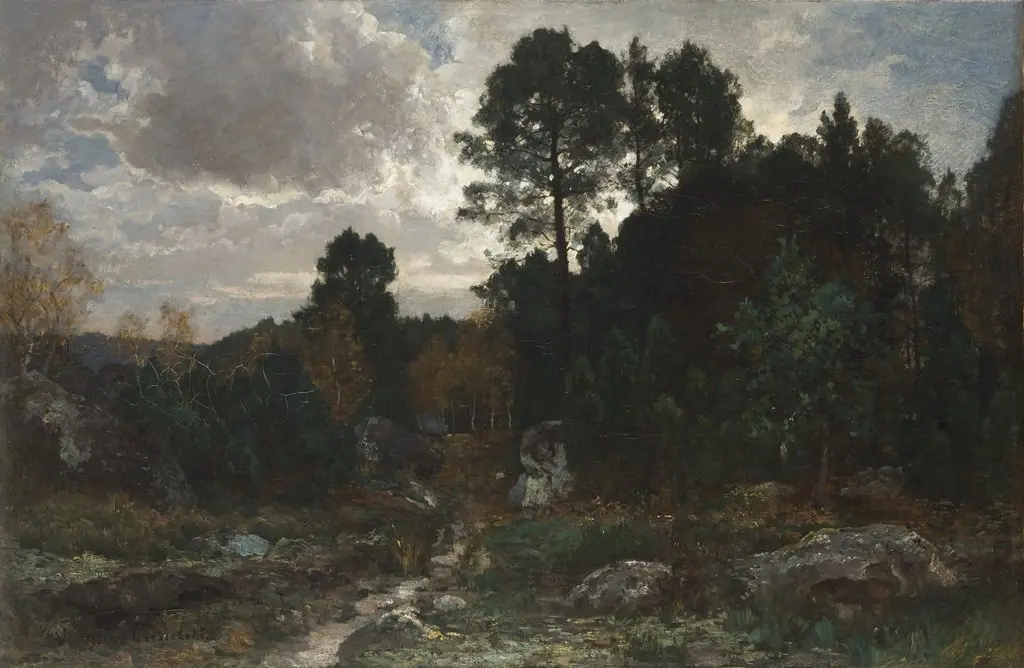
Bosgezicht nabij Barbizon is an unspecified painting by the Hague School artist Johan Hendrik Weissenbruch. It dates from 1900 and is held in the collection of the Rijksmuseum.
About this work
Overview
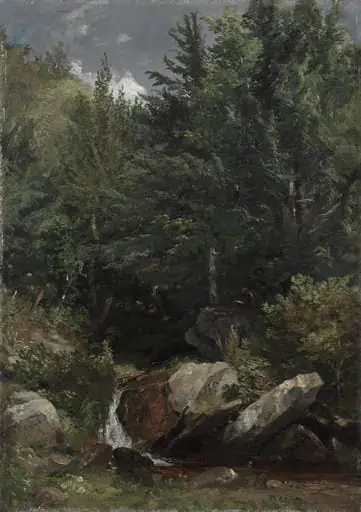
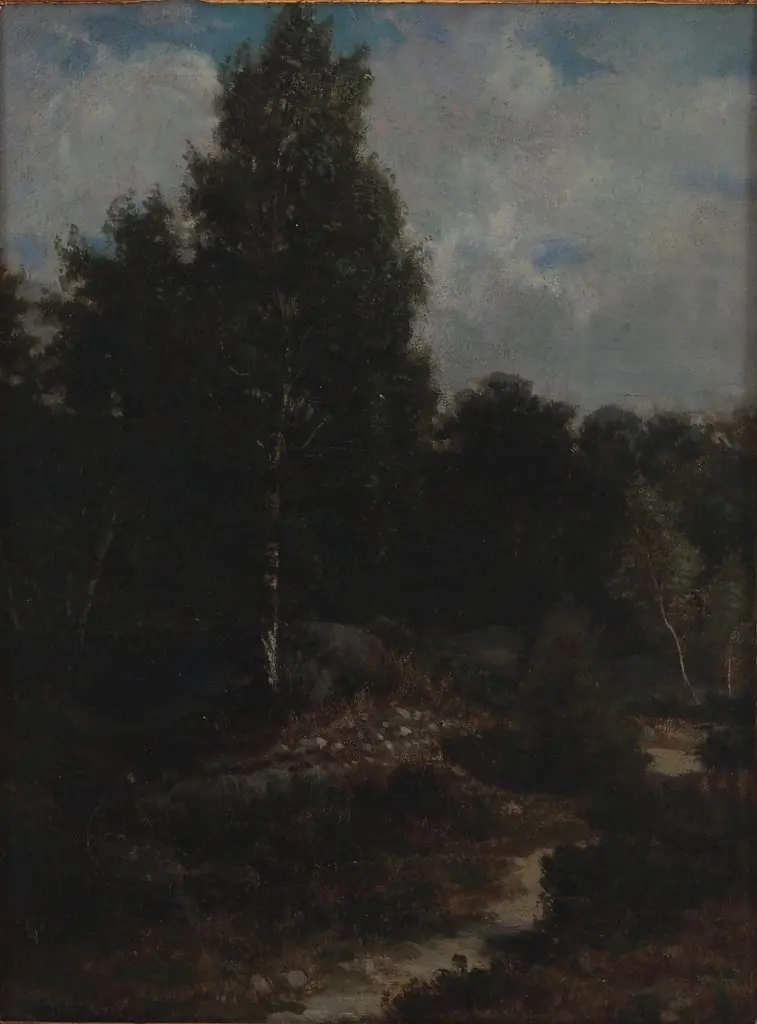
This painting depicts a quiet woodland scene near Barbizon, a village known for its association with landscape painters in the mid-19th century.
This painting depicts a quiet woodland scene near Barbizon, a village known for its association with landscape painters in the mid-19th century. The artist, Jan Weissenbruch, traveled there at age 76—his sole journey abroad—to study the naturalism of the French school. The work captures a moment of stillness, reflecting his deep engagement with the Barbizon tradition and its influence on his own approach to light and atmosphere.
Subject & Meaning
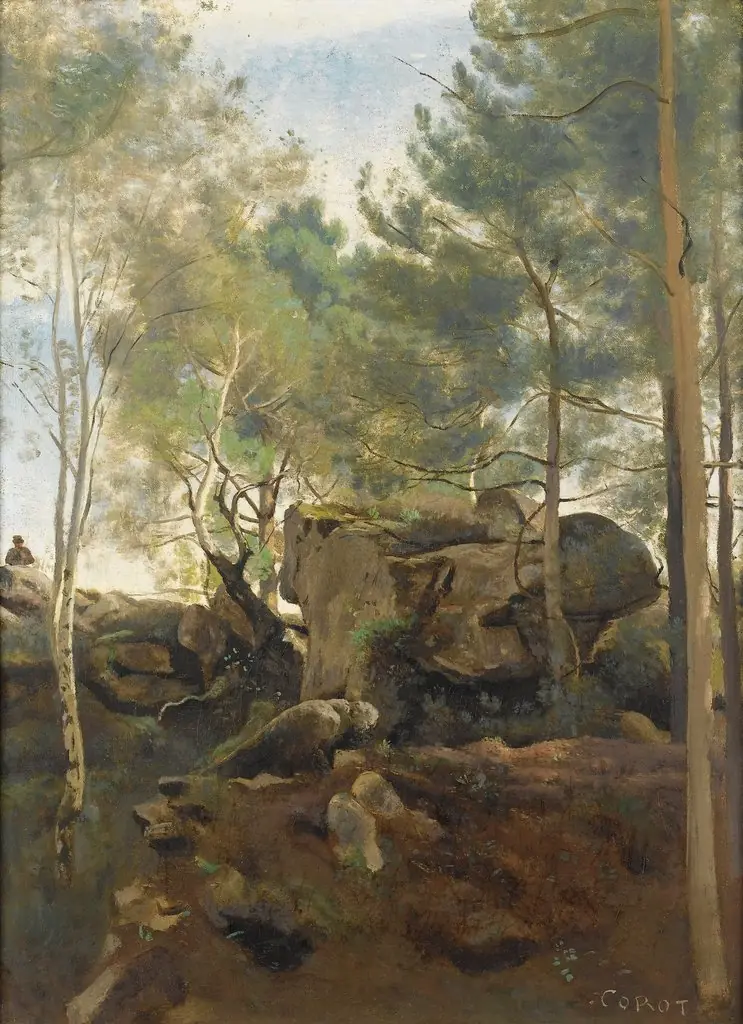
The scene shows a solitary figure, likely another artist, seated on a rock and sketching amid a grove of birch trees. The absence of narrative or drama emphasizes contemplation and quiet observation. This image functions as both a depiction of nature and a meditation on the act of painting itself—honoring the practice of direct, attentive looking rather than idealized composition.
Technique & Style
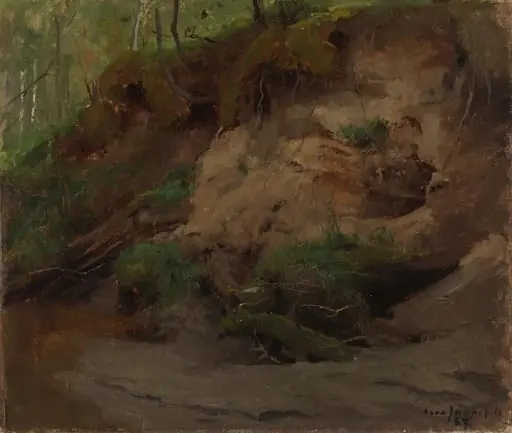
Weissenbruch employs soft, muted tones and delicate brushwork to render the dappled light filtering through the trees. The composition avoids sharp contrasts, favoring subtle gradations of gray, green, and gold. His handling of texture—rough bark, smooth stone, and whispering leaves—conveys a tactile realism aligned with the Hague School’s preference for atmospheric truth over theatrical effect.
History & Provenance
Painted during Weissenbruch’s late career, this work stems from his only foreign trip, undertaken in 1896 at age 76. It reflects his lifelong admiration for the Barbizon painters, whose commitment to painting outdoors influenced Dutch landscape artists. The piece remained in private collections in the Netherlands before entering a public museum, where it now represents the transnational dialogue between French and Dutch naturalism.
Context
The Barbizon School inspired a generation of Dutch painters, including those of the Hague School, who sought to capture rural life and landscape with sincerity. Weissenbruch’s journey to Barbizon was an act of homage, not imitation. His painting aligns with broader 19th-century trends toward plein air practice and the rejection of academic idealism, emphasizing personal experience over grand historical themes.
Legacy
This work stands as a quiet testament to the enduring influence of Barbizon on Dutch landscape painting. Weissenbruch’s late-life pilgrimage underscores the respect he held for his French predecessors. The painting’s understated character continues to resonate within the Hague School’s legacy, exemplifying how modest, observational art could convey profound emotional and artistic integrity.
Artist & collection
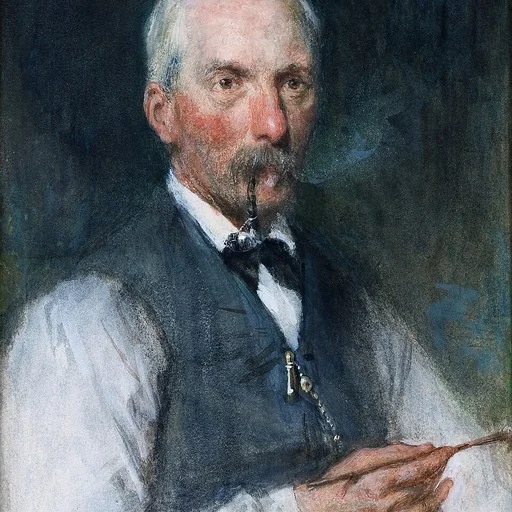
Artist
Jan Hendrik Weissenbruch, also known as Hendrik Johannes Weissenbruch (born 19 June 1824 in The Hague – died 24 March 1903 in The Hague) was a Dutch painter of the Hague School. He is noted especially for his watercolours.