Artwork
Seine and Old Bridge at Limay
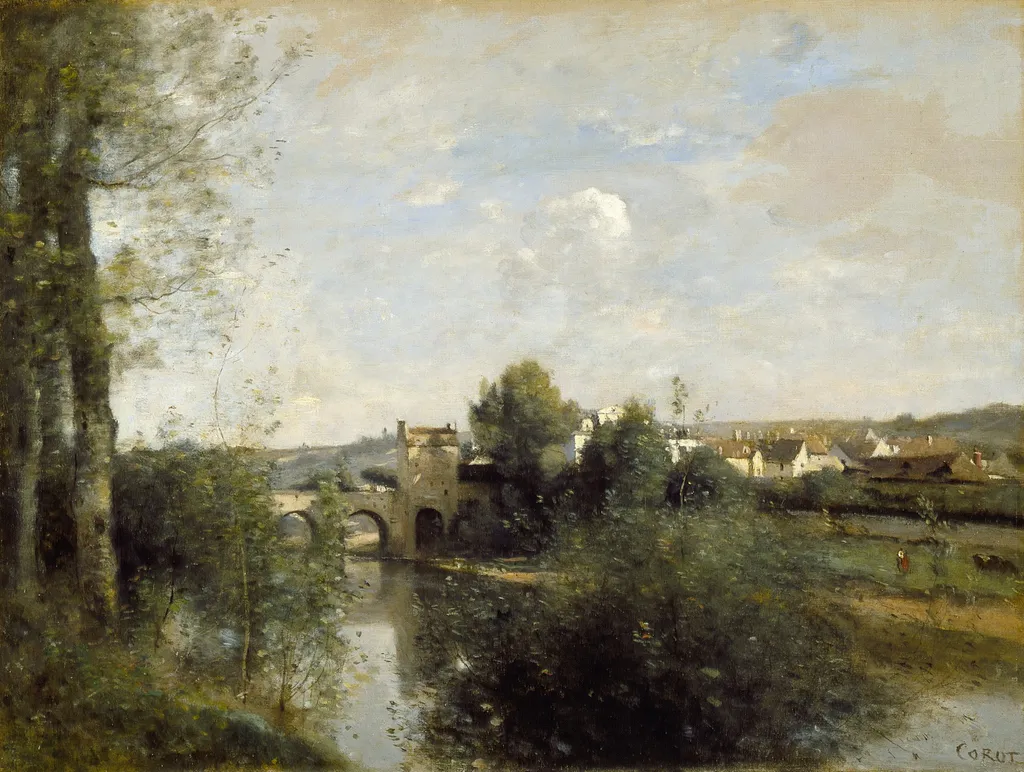
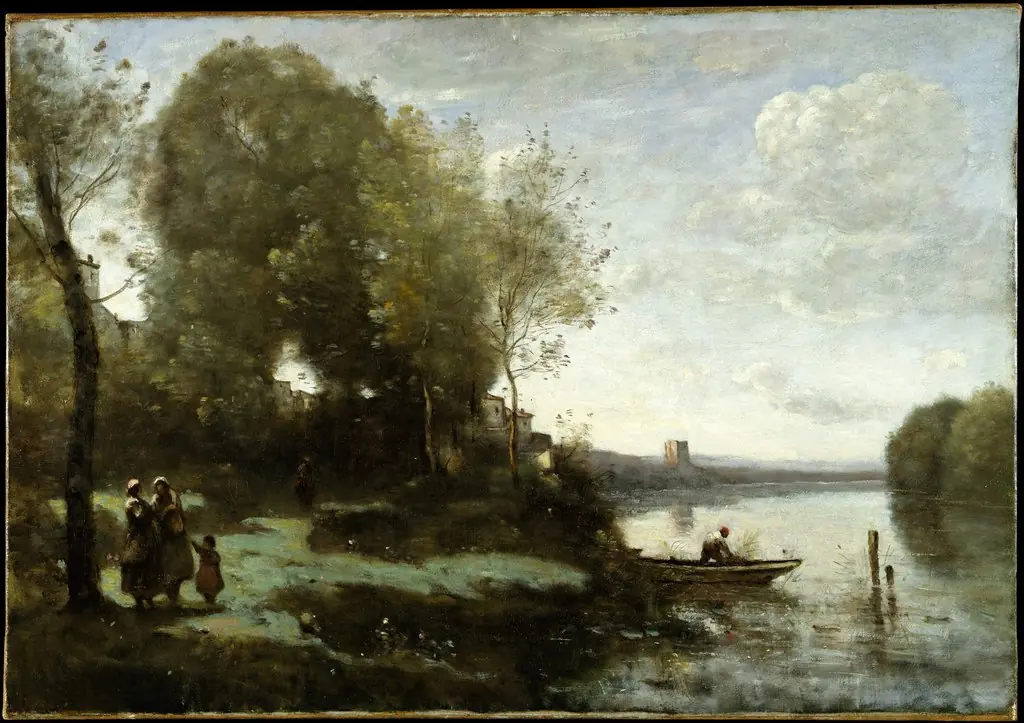
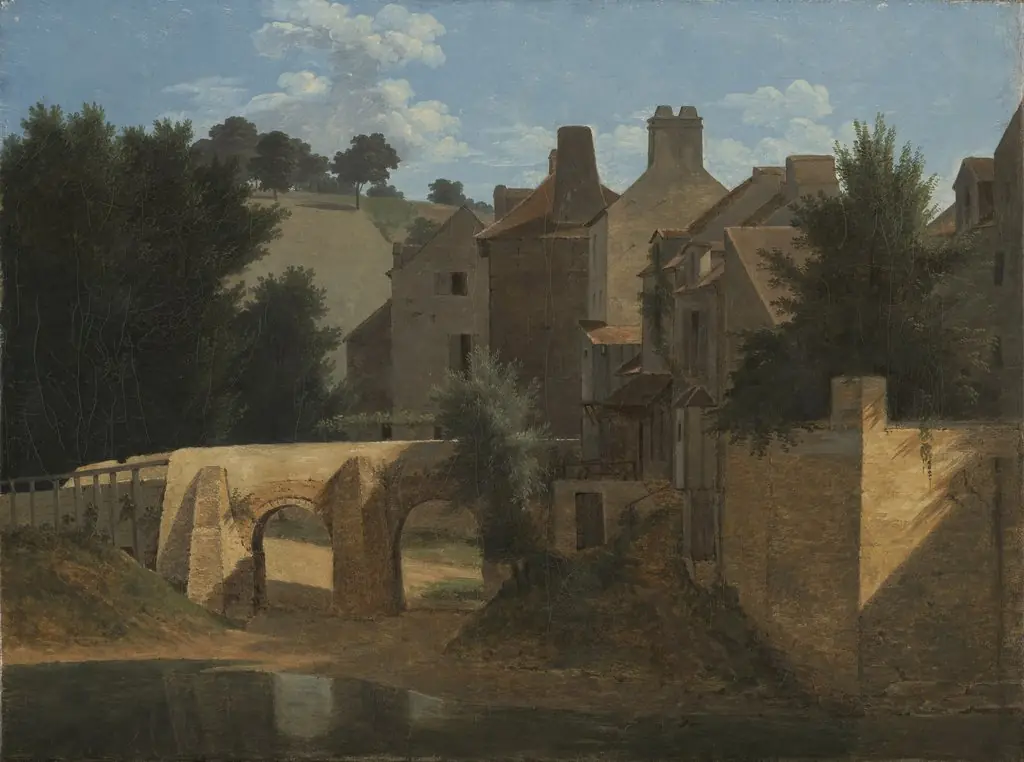
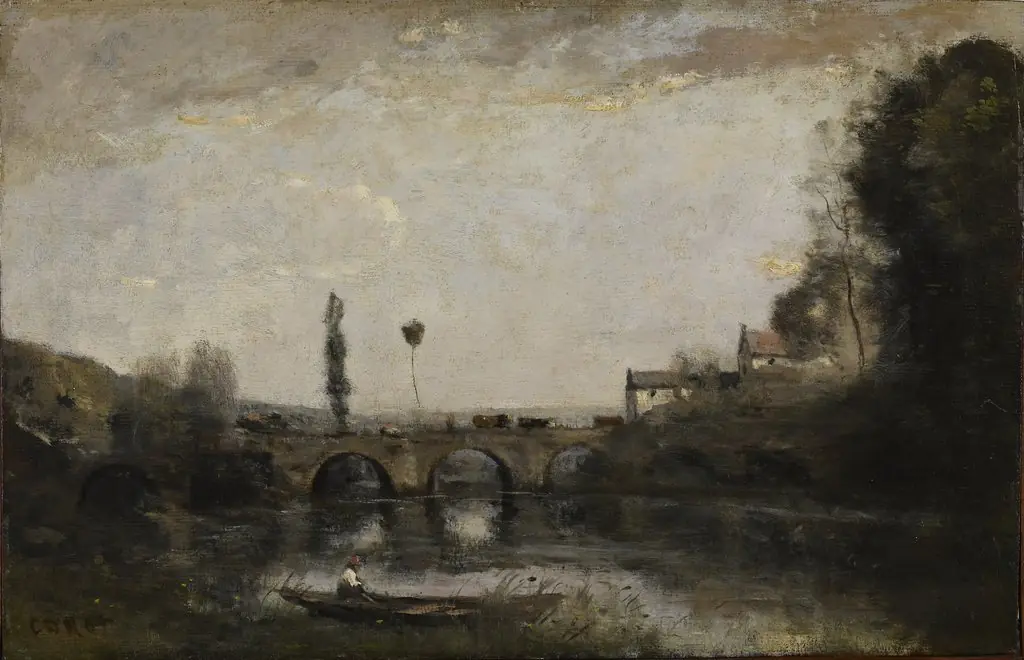
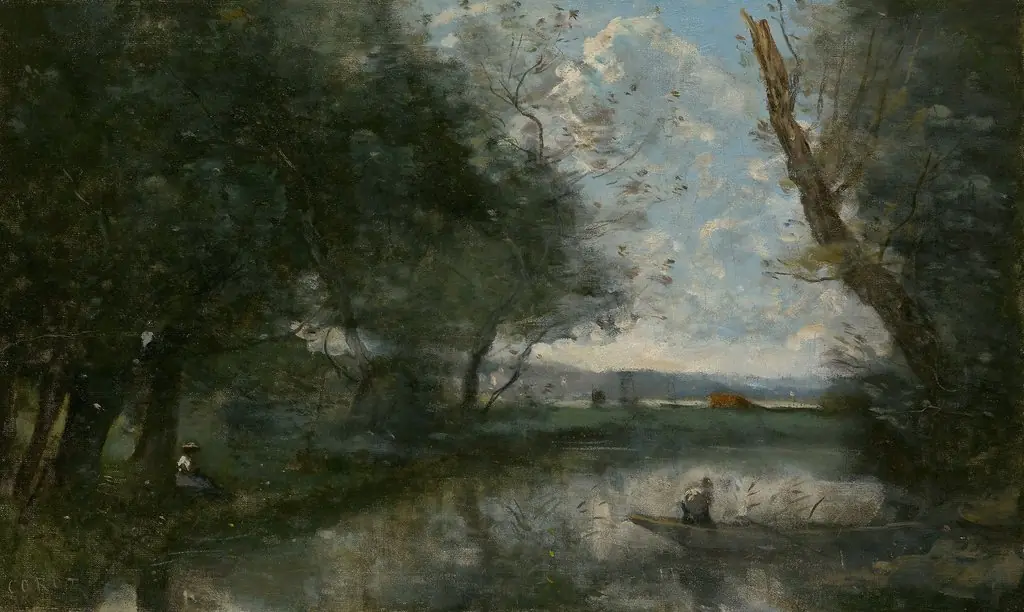
Seine and Old Bridge at Limay is an oil painting by Jean Baptiste Camille Corot. It dates from 1872 and is held in the collection of the Los Angeles County Museum of Art.
About this work
Overview
It captures a quiet stretch of the Seine near the village of Limay, featuring a stone bridge, scattered buildings, and a line of trees along the riverbank.
Painted in 1872, *Seine and Old Bridge at Limay* is an oil on canvas landscape by Jean-Baptiste-Camille Corot. It captures a quiet stretch of the Seine near the village of Limay, featuring a stone bridge, scattered buildings, and a line of trees along the riverbank. Corot’s approach blends observed naturalism with a subdued tonal harmony, reflecting his lifelong engagement with outdoor sketching and the poetic potential of light.
Subject & Meaning
The painting presents a modest, unidealized view of rural France, emphasizing stillness over drama. The bridge, a local structure, anchors the composition while the river mirrors the sky’s pale blue and drifting clouds. No human figures appear, reinforcing a sense of solitude and timelessness. Corot treats the scene not as a topographical record but as a meditation on quietude and the enduring rhythm of nature.
Technique & Style
Corot employed soft, blended brushwork and a restrained palette of greys, greens, and pale blues to evoke atmospheric depth. The sky and water are rendered with delicate transitions, while the trees and buildings are suggested rather than sharply defined. His method, rooted in plein-air study, avoids theatrical lighting, favoring a gentle, diffused luminosity that unifies the composition and enhances its tranquil mood.
History & Provenance
Created near the end of Corot’s career, the painting reflects his mature style developed over decades of travel across France. It entered the collection of the Los Angeles County Museum of Art in the 20th century, following earlier ownership by private collectors in Europe. Its journey reflects the growing international appreciation for 19th-century French landscape painting beyond academic circles.
Context
In the 1870s, Corot stood apart from the rising Impressionist movement, maintaining a more contemplative, tonal approach. While younger artists pursued bold color and visible brushstrokes, he refined his earlier Neo-Classical training with direct observation. This work exemplifies his role as a bridge between tradition and modernity—valuing structure and mood over fleeting effects, yet grounded in real, unembellished scenery.
Legacy
Corot’s landscapes, including this one, influenced later generations by demonstrating how quiet observation could yield emotional resonance. His emphasis on tonal harmony and atmospheric cohesion provided an alternative to both academic grandeur and Impressionist fragmentation. Though less celebrated in popular memory than his contemporaries, his work remains a touchstone for painters seeking subtlety and stillness in nature.
Own this work as a print
Artist & collection
Artist
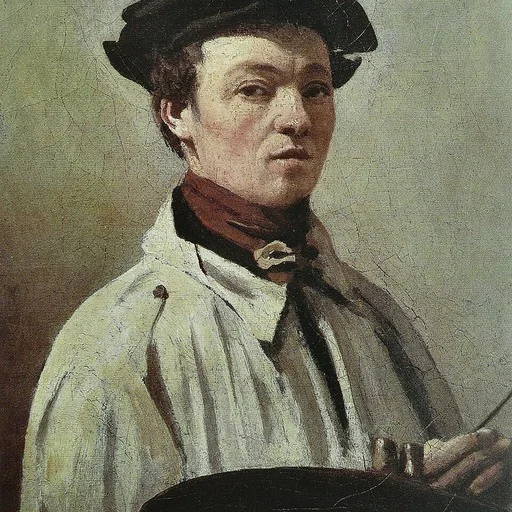
Jean-Baptiste-Camille Corot (UK: KORR-oh, US: kə-ROH, kor-OH; French: ; 16 July 1796 – 22 February 1875), or simply Camille Corot, was a French landscape and portrait painter as well as a printmaker in etching.