Artwork
The Bridge at Mantes
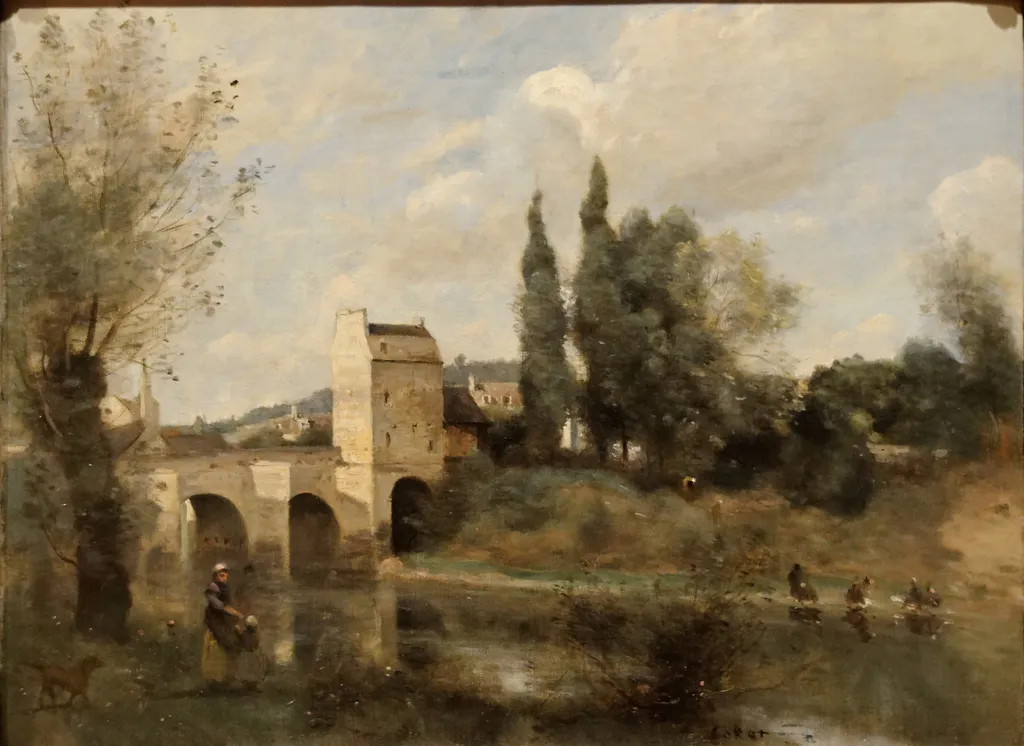
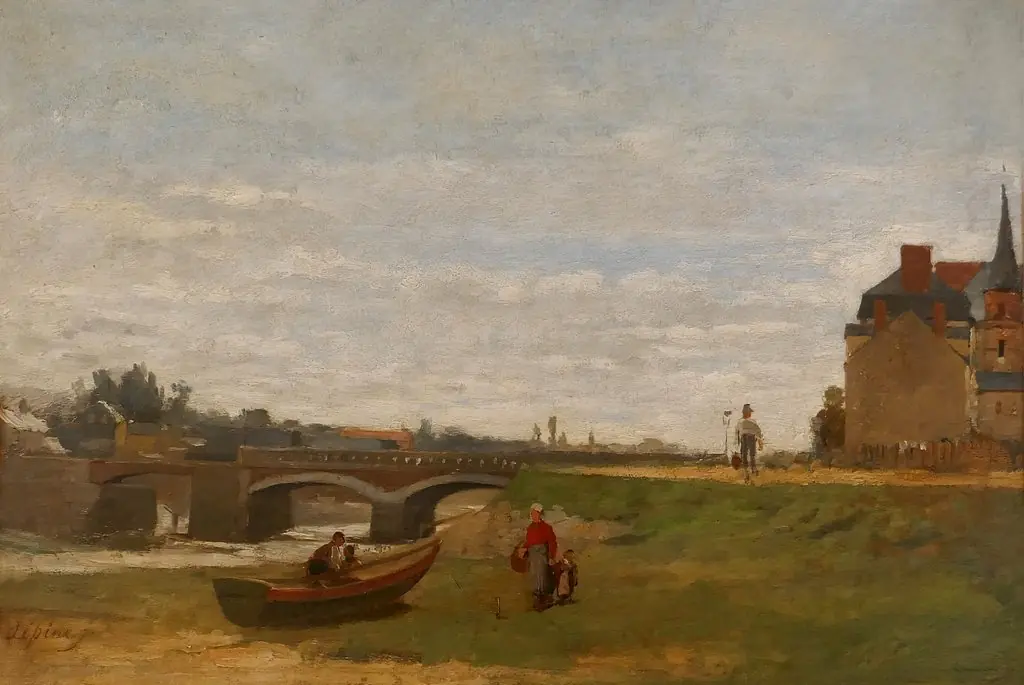
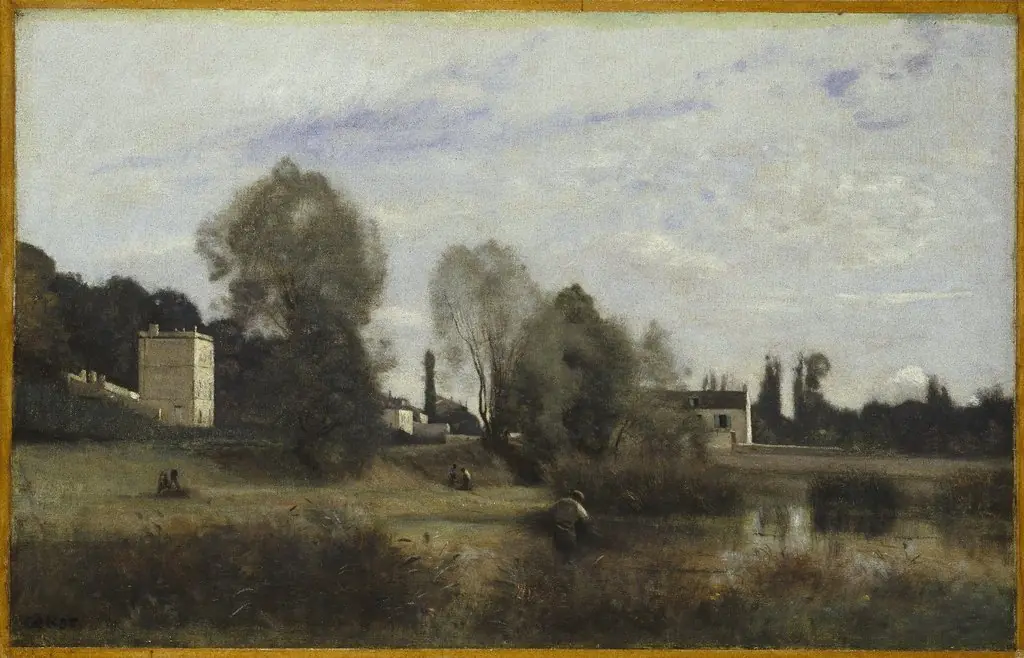
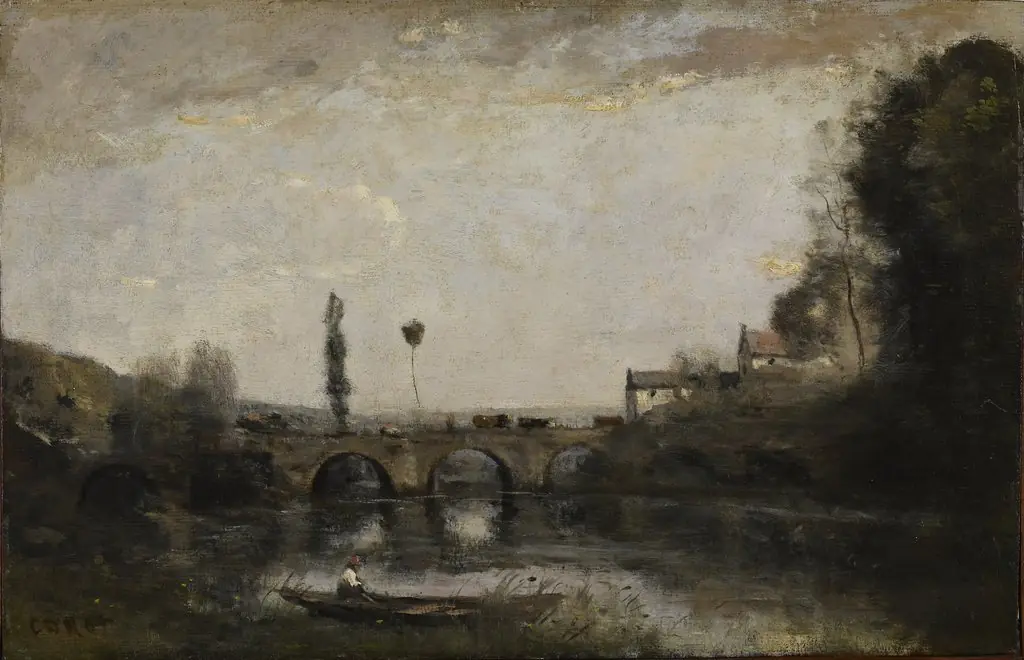
The Bridge at Mantes is an oil painting by the Realist artist Jean Baptiste Camille Corot. It dates from 1869 and is held in the collection of the Calouste Gulbenkian Museum.
About this work
Overview
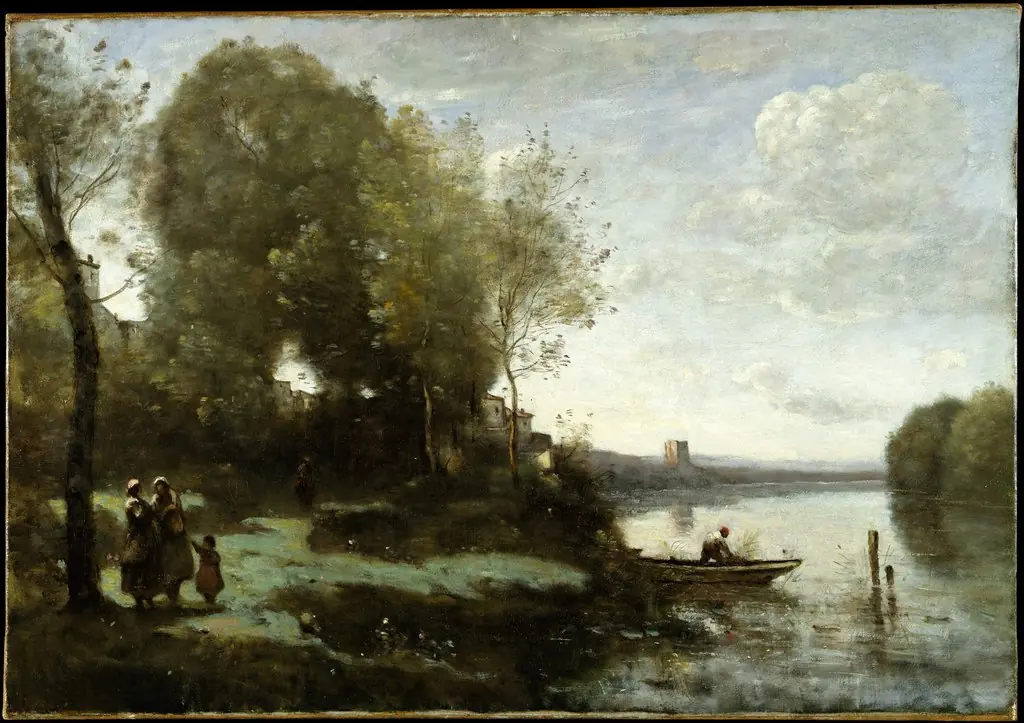
Jean‑Baptiste‑Camille Corot painted *The Bridge at Mantes* in 1869 with oil on canvas. The composition presents a stone bridge crossing the Seine at Mantes‑sur‑Seine, framed by gentle foliage and a calm sky. A woman in a long dress and hat walks along the riverbank with a dog, while a small group gathers on the opposite shore, creating a quiet, everyday scene.
Subject & Meaning
The work records a specific locale—a three‑arched bridge with a modest tower—while emphasizing the ordinary activities of its passersby. By placing a solitary figure and a few onlookers within a tranquil landscape, Corot suggests a harmonious relationship between human presence and the natural environment, inviting contemplation of everyday serenity.
Technique & Style
Corot employs a restrained palette of earthy tones and pale blues, rendering forms with soft, blended brushwork that balances detail and atmosphere. The handling of light on water and sky reflects his transition from academic classicism toward the looser, plein‑air approach that would later influence Impressionism, yet the overall rendering remains grounded in realism.
History & Provenance
Completed in the late 1860s, the painting entered the collection of the Calouste Gulbenkian Museum, where it remains on display. Its acquisition reflects the museum’s interest in 19th‑century French landscape painting and Corot’s role as a pivotal figure bridging academic and modernist practices.
Artist & collection
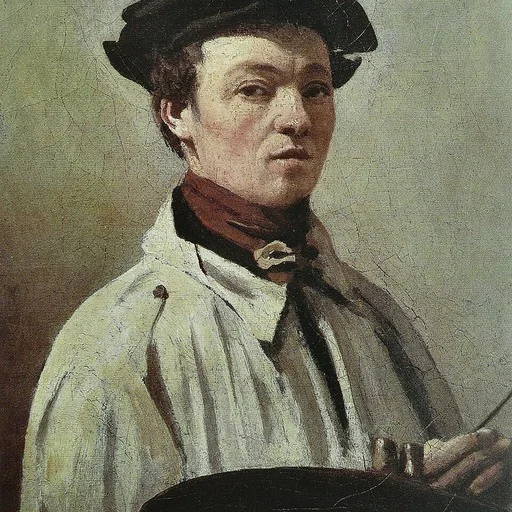
Artist
Jean-Baptiste-Camille Corot (UK: KORR-oh, US: kə-ROH, kor-OH; French: ; 16 July 1796 – 22 February 1875), or simply Camille Corot, was a French landscape and portrait painter as well as a printmaker in etching.