Artwork
Landscape with a Bridge
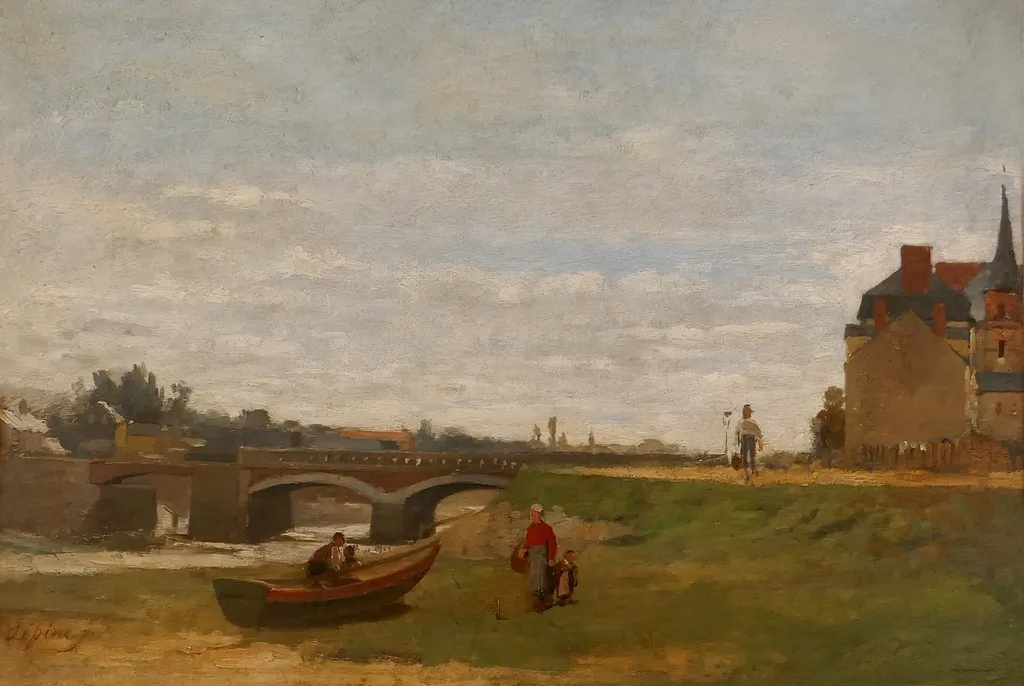
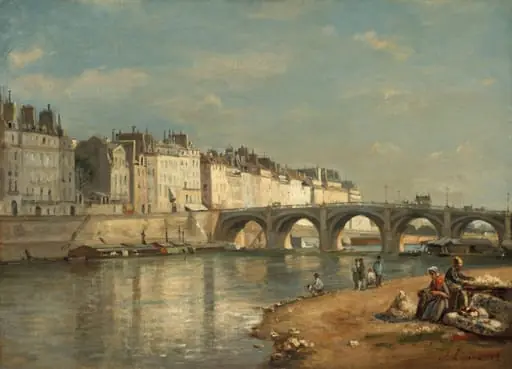
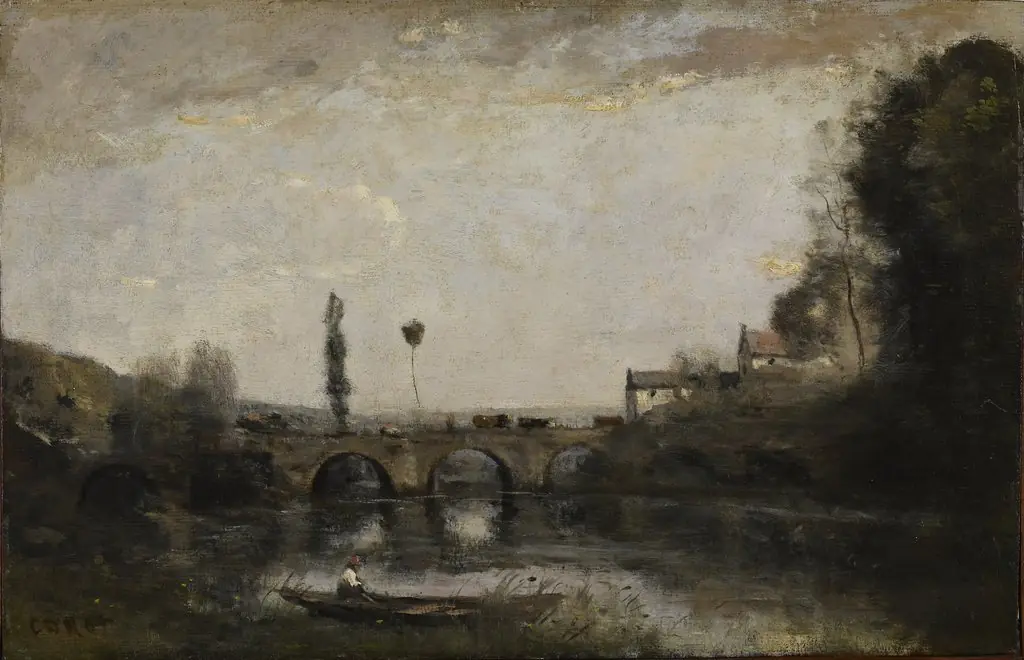
Landscape with a Bridge is an oil painting by the Impressionist artist Stanislas Lépine. It dates from 1871 and is held in the collection of the Hermitage Museum.
About this work
Overview
Painted in 1871, Landscape with a Bridge is an oil-on-canvas work by French artist Stanislas Lépine. It depicts a tranquil riverside scene near Paris, characterized by subtle atmospheric effects and unpolished brushwork. The painting resides in the State Hermitage Museum in Saint Petersburg, where it reflects Lépine’s dedication to capturing everyday natural environments with quiet authenticity.
Subject & Meaning
The scene portrays a modest, unidealized riverside moment: a stone bridge spans the water, flanked by quiet human activity. A red boat holds two figures, while a woman in a red shawl walks with a child, and another stands near a distant spired structure. These elements suggest ordinary life unfolding without drama, emphasizing stillness and the rhythm of daily routines in the countryside.
Technique & Style
Lépine employed loose, rapid brushstrokes that avoid meticulous detail, particularly in the sky and foliage. Colors remain muted, with soft transitions between land, water, and air. The paint is applied with visible texture, leaving areas deliberately unfinished—especially in the upper half—creating a sense of immediacy and direct observation, aligning with early plein air practices.
History & Provenance
Created in 1871, the painting entered the collection of the State Hermitage Museum in the late 19th or early 20th century, likely through acquisitions of French Impressionist and Barbizon-influenced works. Its presence in Russia reflects broader European interest in French landscape painting during that period, though Lépine himself remained less celebrated than his contemporaries.
Context
Lépine worked during a time when artists were shifting from studio-based historic scenes to direct observation of nature. Influenced by the Barbizon School and anticipating Impressionism, he focused on ordinary landscapes near Paris, often painting en plein air. His work, though not radical, contributed to the growing legitimacy of landscape as a serious subject in modern art.
Legacy
Though not widely known today, Lépine’s approach influenced later generations of landscape painters who valued spontaneity and naturalism over idealization. His unembellished depictions of rivers, bridges, and rural life helped normalize the everyday as worthy of artistic attention, paving a quiet but steady path toward modern landscape traditions.
Own this work as a print
Artist & collection
Artist
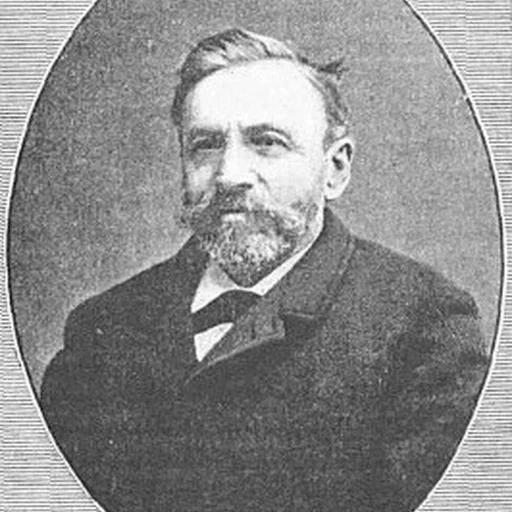
Stanislas Victor Edouard Lépine (October 3, 1835 – September 28, 1892) was a French painter who specialized in landscapes, especially views of the Seine.

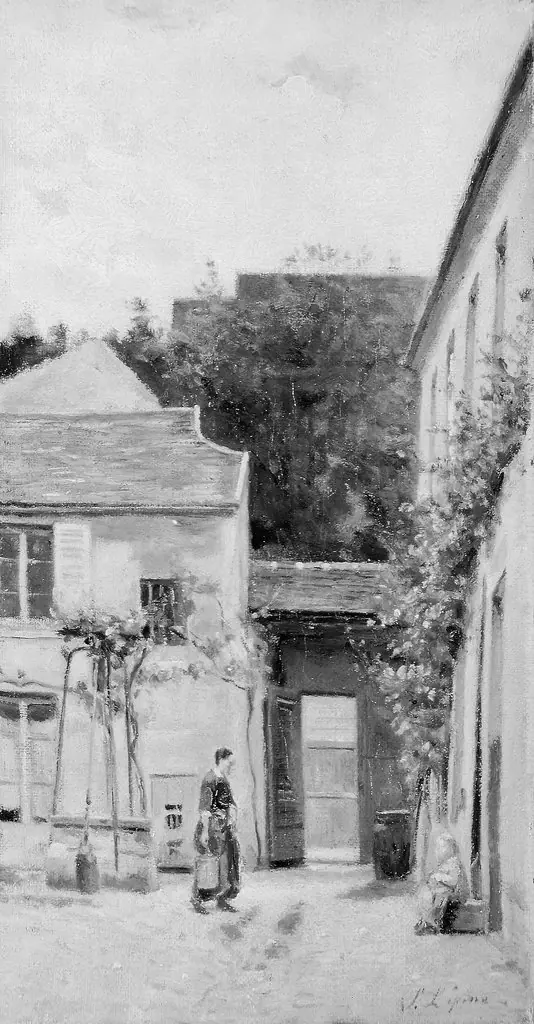
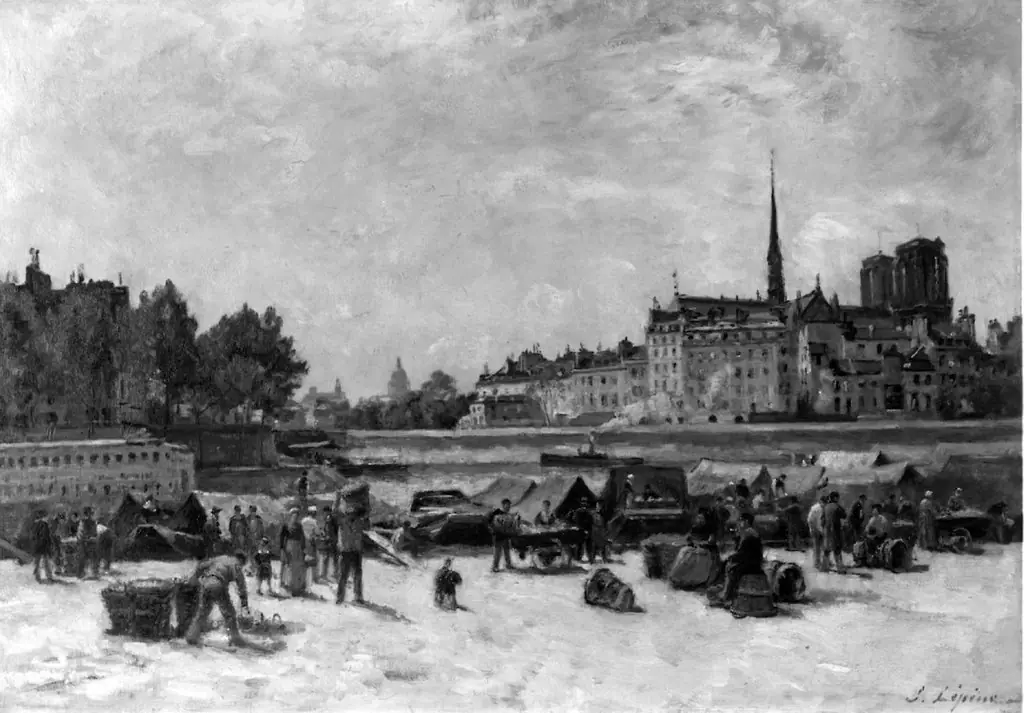
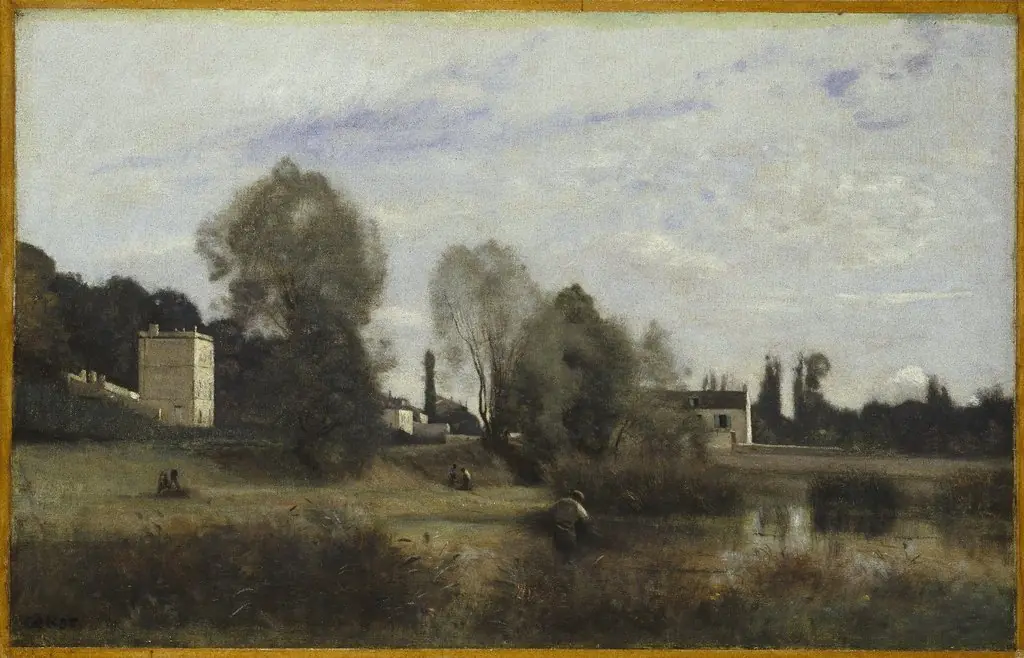 Ville d'Avray
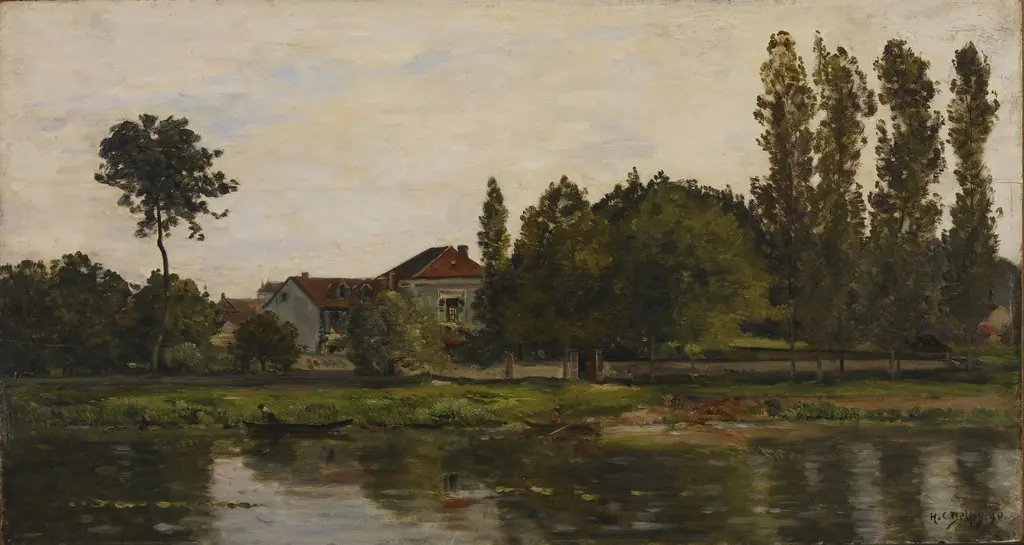 The House of M. Lucas
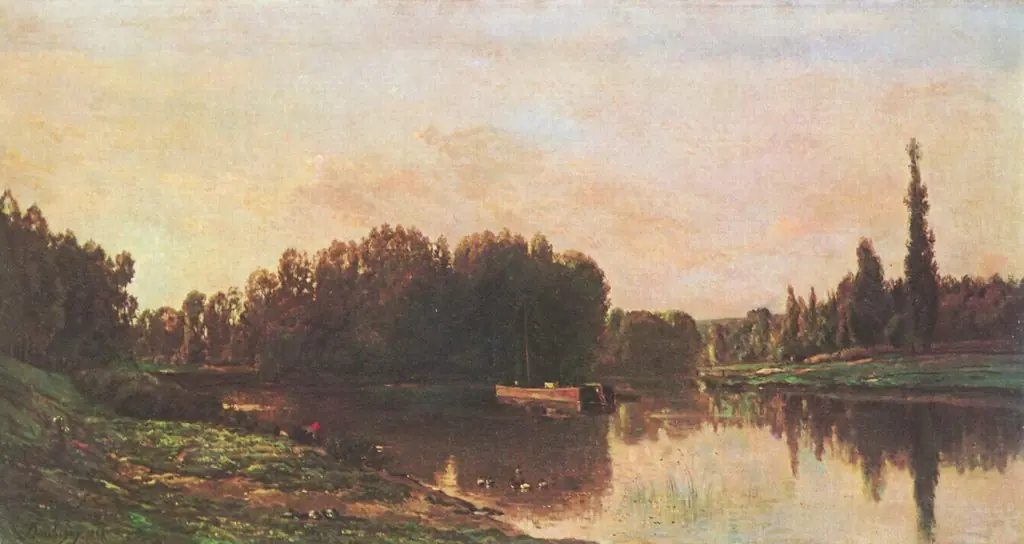 The Confluence of the Rivers Seine and Oise
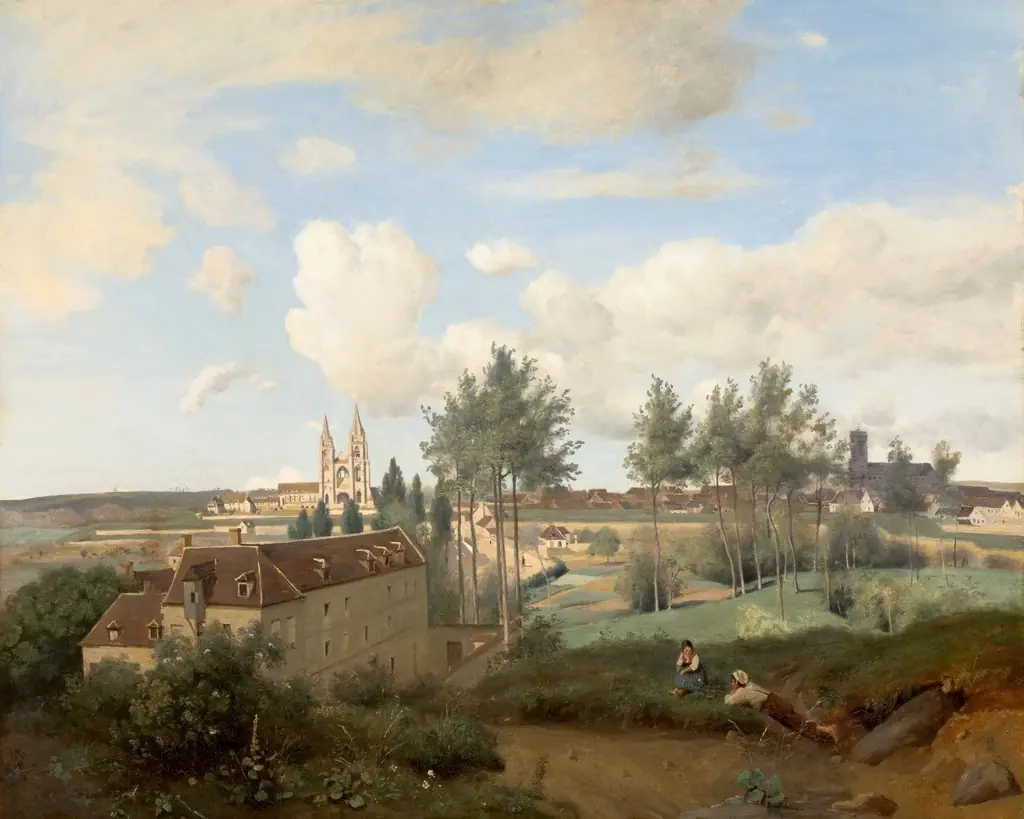 Soissons Seen from Mr. Henry's Factory
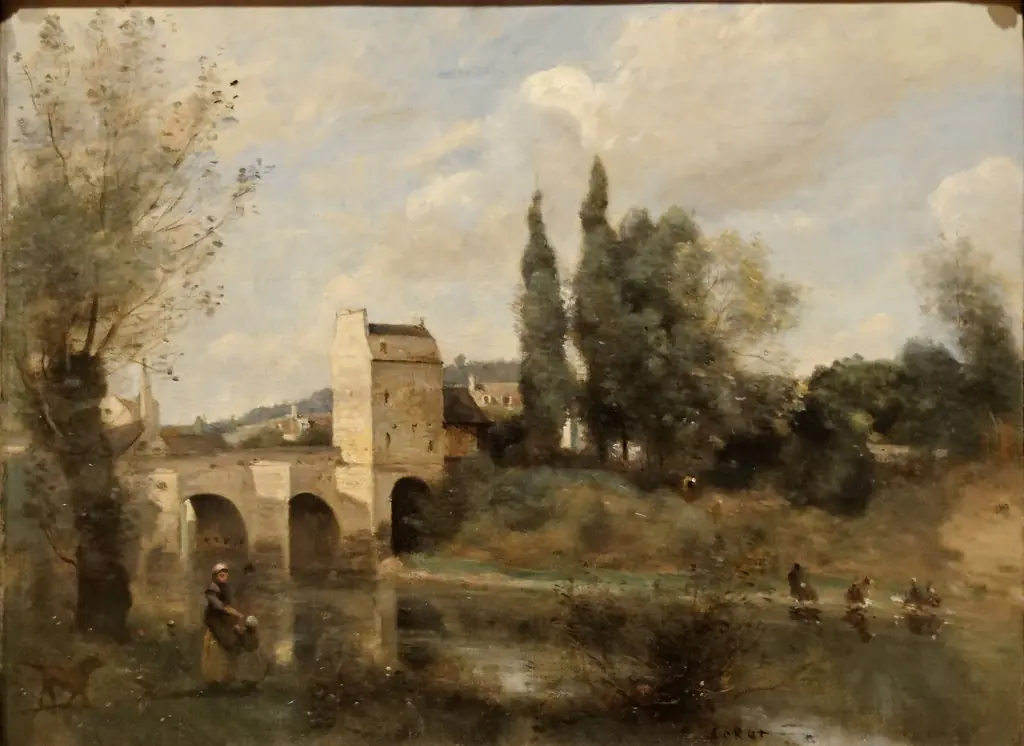 The Bridge at Mantes
 Gillingham on the Medway, Kent
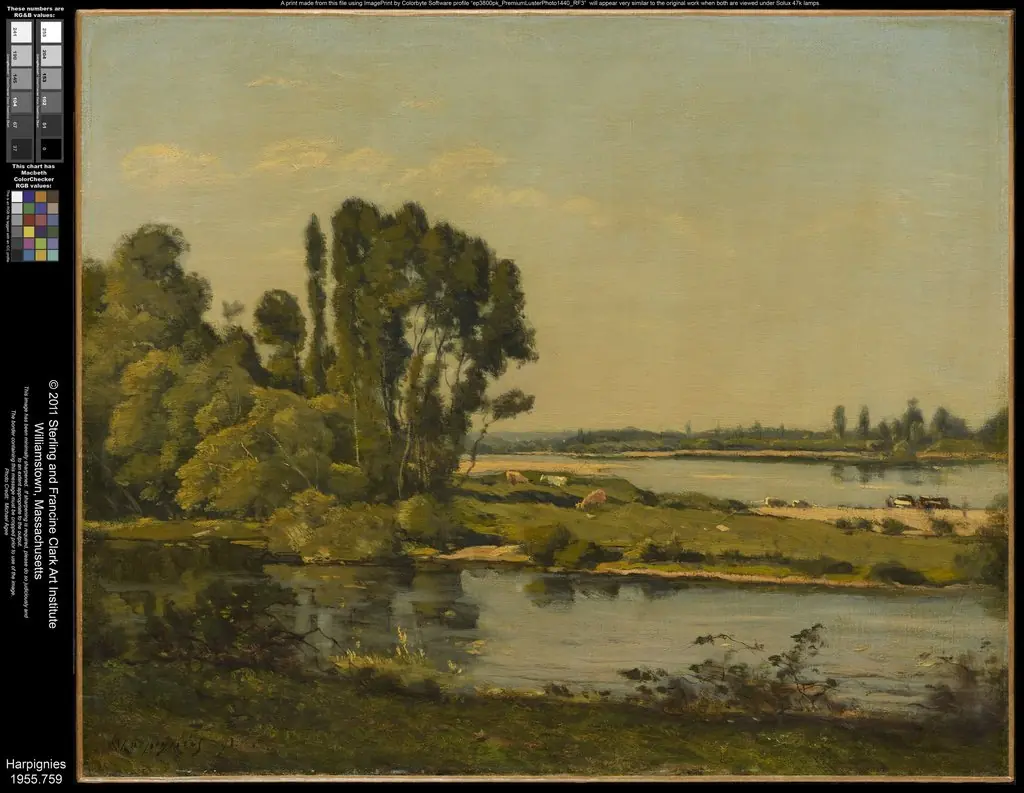 Landscape with a River
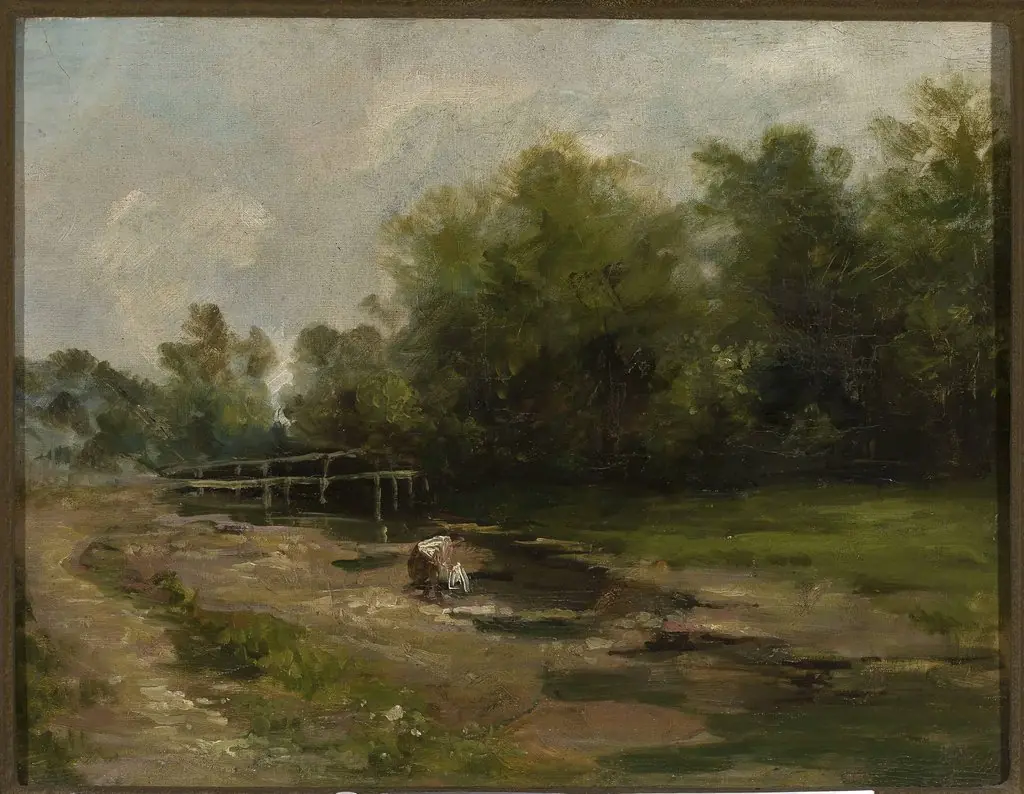 Landscape
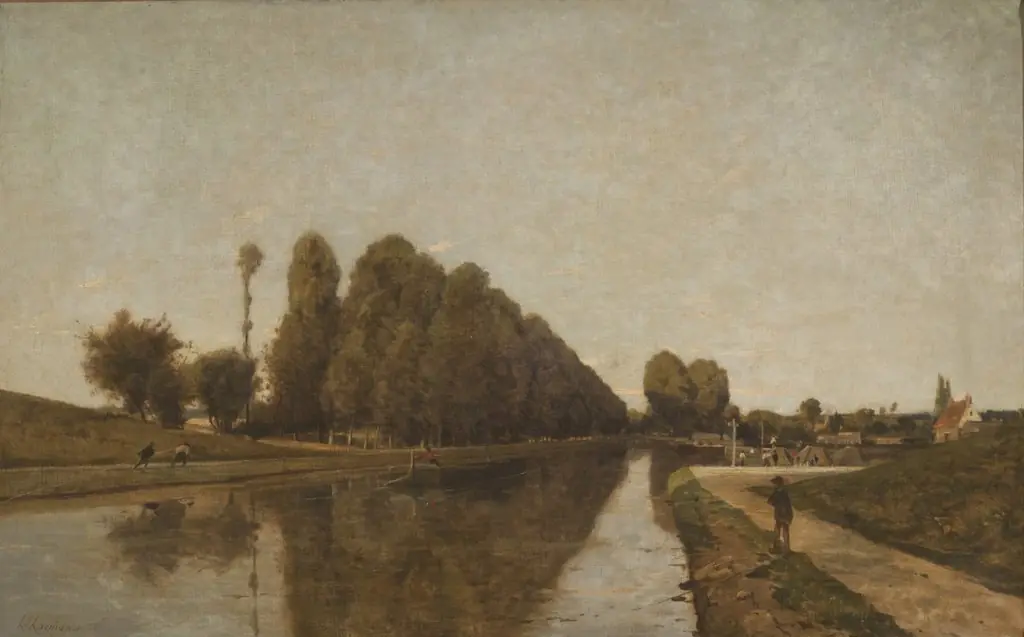 El Canal de Briare (Loire)
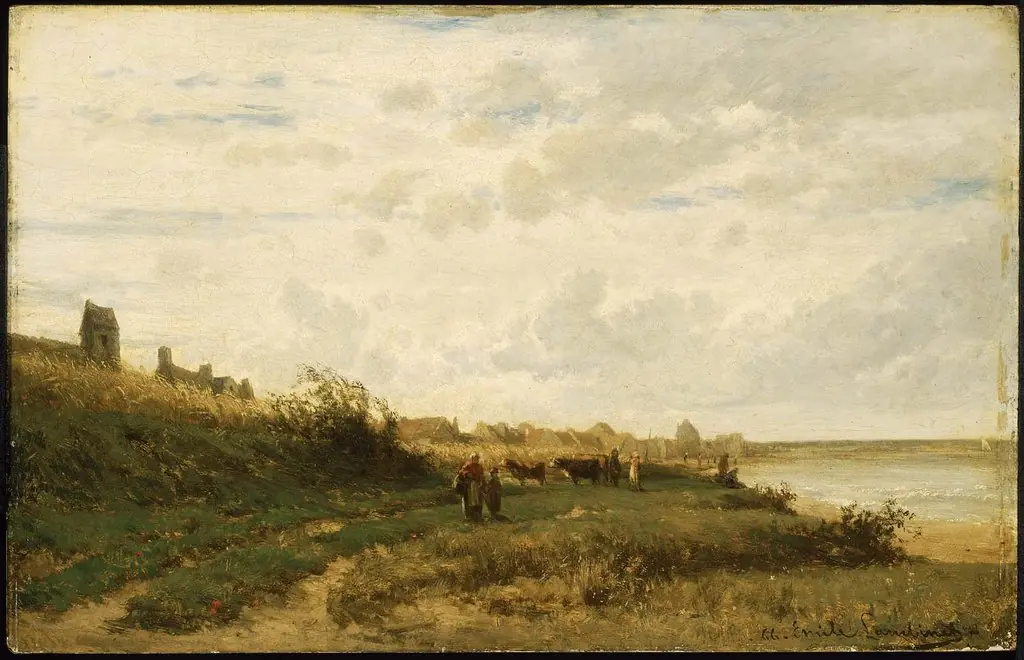 Village on the Sea
 View of The Hague from the Delftse Vaart in the 17th Century
 Landscape with Bridge