Artwork
The heights above Sèvres. Enclosed pasture.
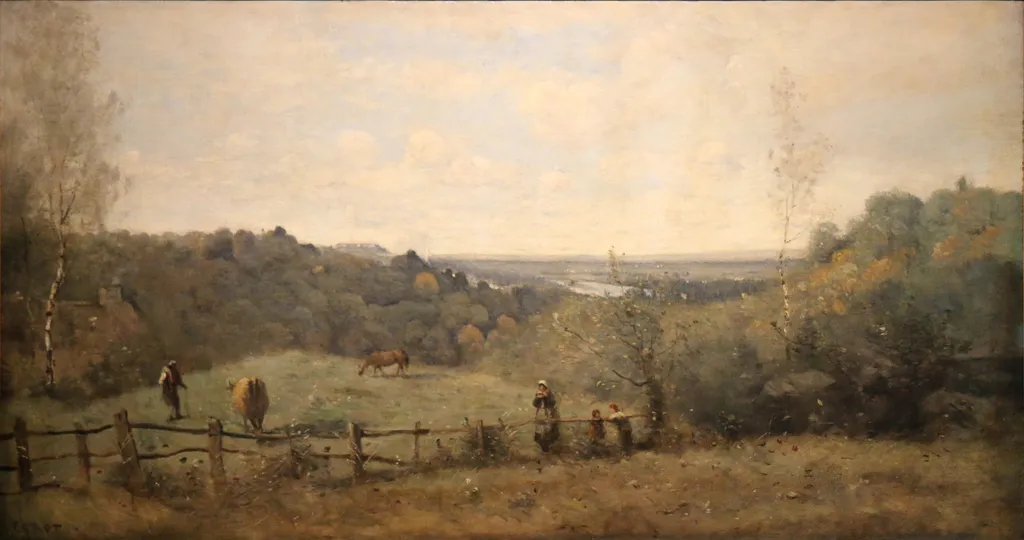
The heights above Sèvres. Enclosed pasture. is an oil painting by the Barbizon school artist Jean Baptiste Camille Corot. It dates from 1867 and is held in the collection of the Royal Museums of Fine Arts of Belgium. Painted in 1867, *The Heights Above Sèvres.
About this work
Overview
The work is part of the broader Barbizon tradition, which valued unidealized views of the countryside over historical or mythological subjects.
Painted in 1867, *The Heights Above Sèvres. Enclosed Pasture* is an oil landscape by Jean-Baptiste-Camille Corot that captures a quiet rural scene near Paris. It reflects his sustained interest in the natural world and his role in shifting landscape painting toward direct observation. The work is part of the broader Barbizon tradition, which valued unidealized views of the countryside over historical or mythological subjects.
Subject & Meaning
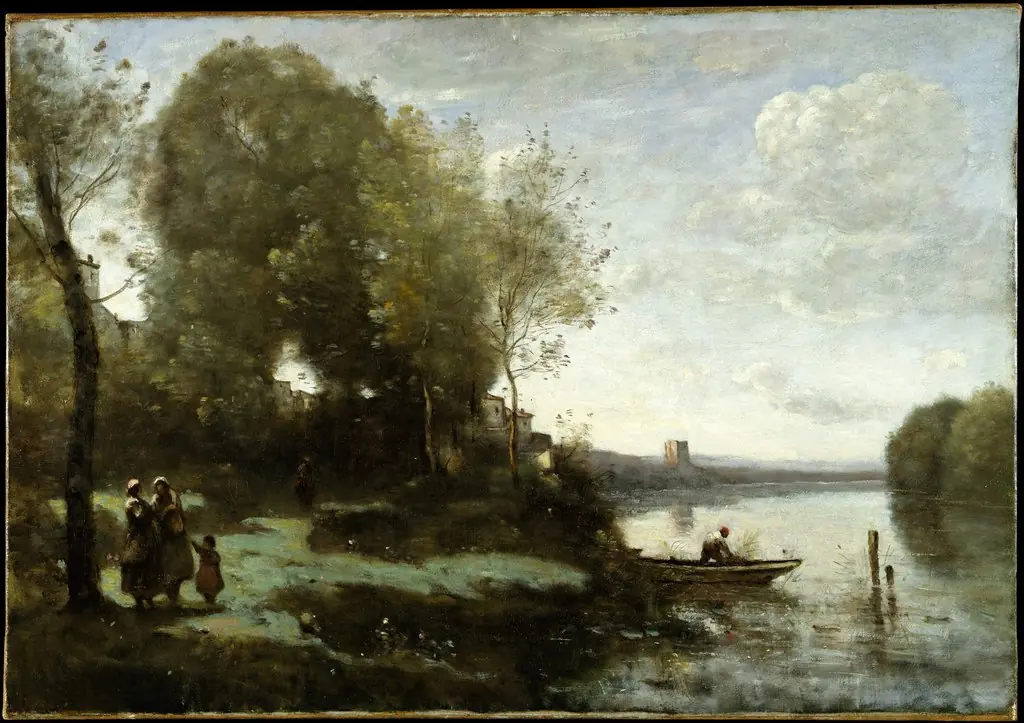
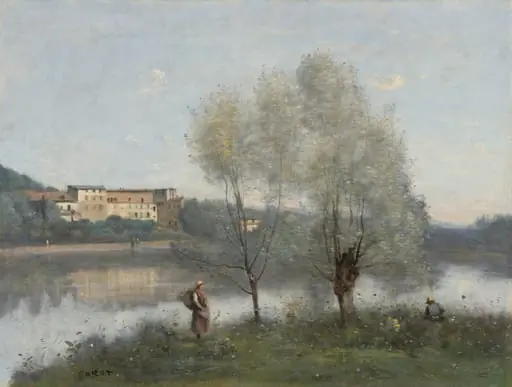
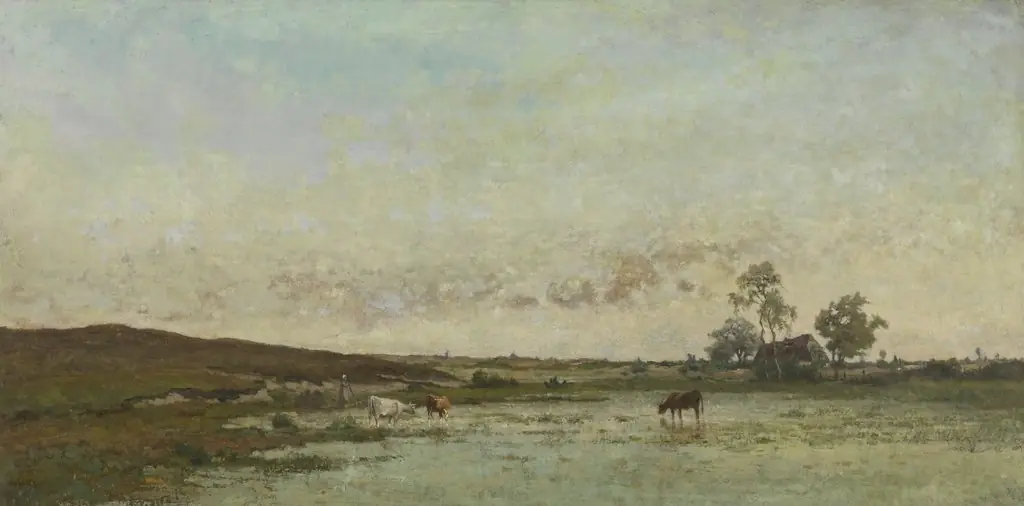
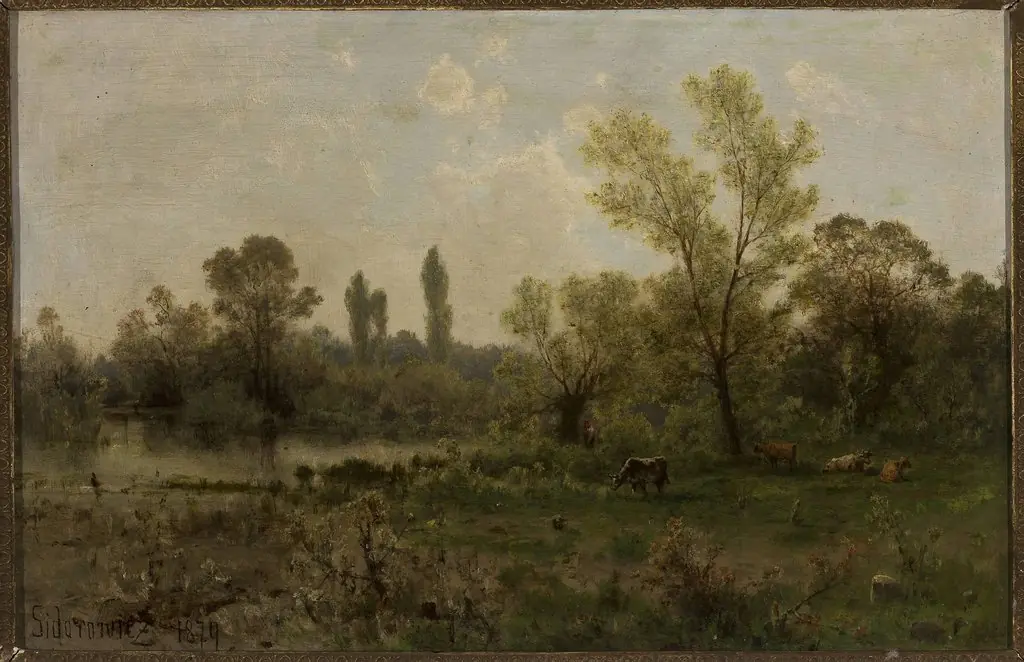
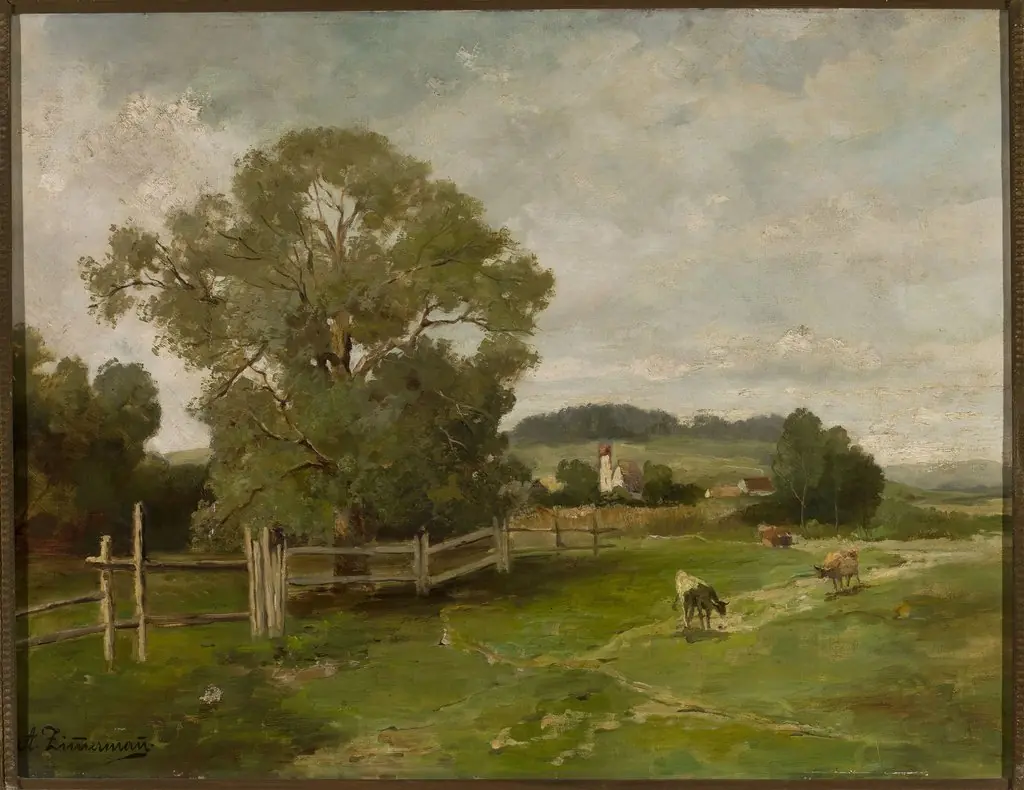
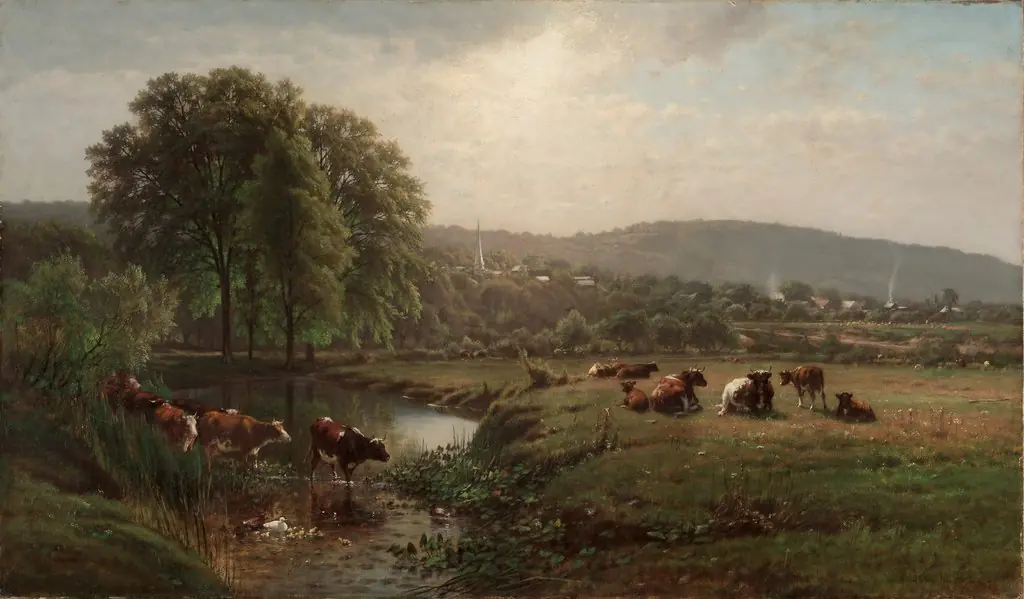
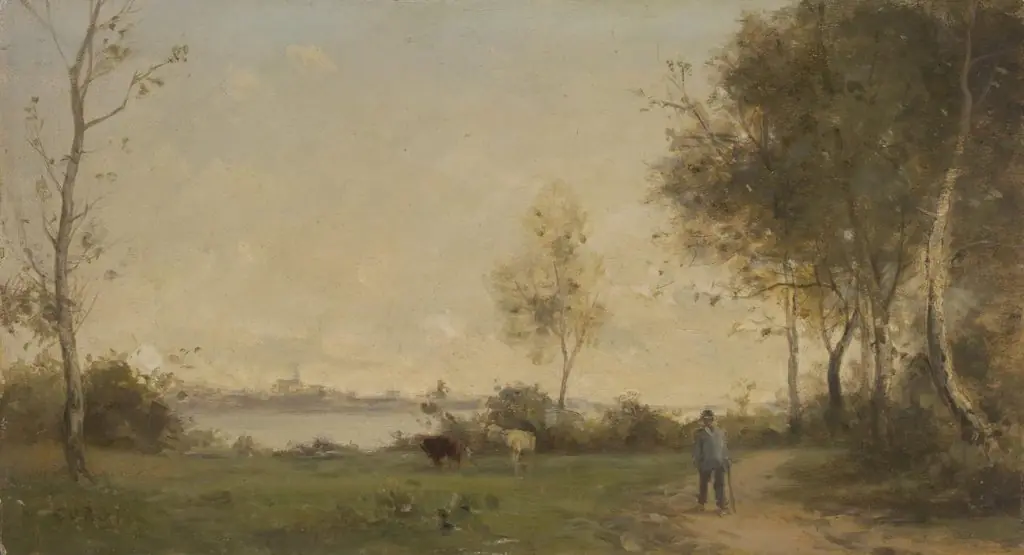
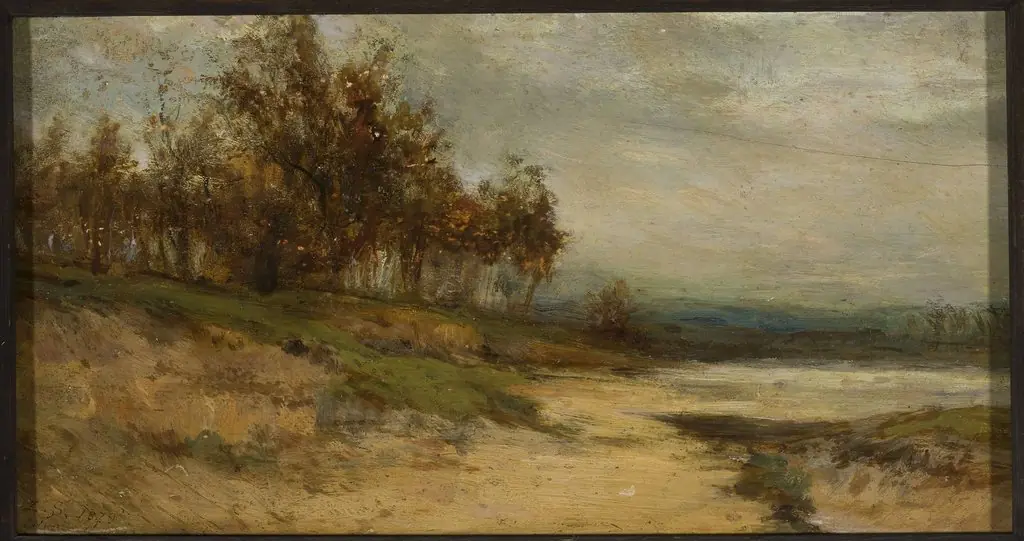
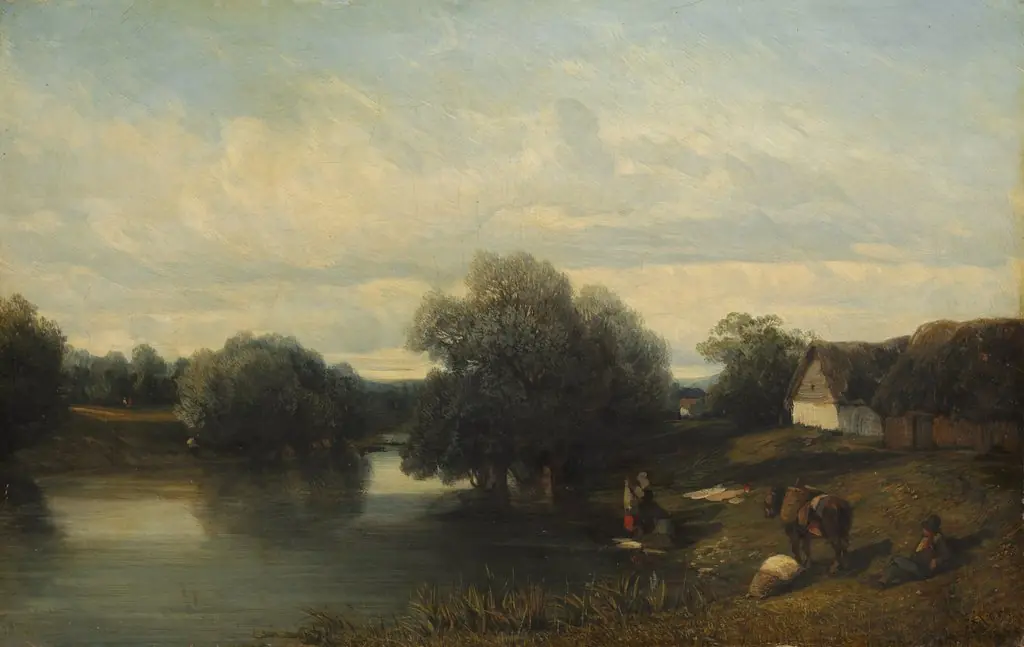
The painting depicts a gently rolling pasture enclosed by low stone walls, with a few figures and grazing animals scattered across the field. Distant hills and a stretch of water suggest a quiet, expansive countryside. There is no narrative drama—instead, the scene conveys stillness and continuity, emphasizing the harmony between human land use and the natural environment.
Technique & Style
Corot employed loose, fluid brushwork and a restrained palette of greens, grays, and browns to evoke atmosphere rather than detail. Light filters softly through the trees, casting subtle shadows that model the terrain without harsh contrast. The technique balances observation with poetic suggestion, avoiding sharp definition to preserve a sense of air and distance.
History & Provenance
Created during Corot’s mature period, the painting entered the collection of the Royal Museums of Fine Arts of Belgium in the late 19th or early 20th century. Its presence there reflects the international recognition of Corot’s work among European collectors and institutions, particularly those interested in the evolution of modern landscape painting.
Context
In the 1860s, French artists were increasingly turning away from academic conventions toward painting outdoors. Corot, though not a full-time member of the Barbizon group, shared their commitment to observing nature directly. His work here aligns with contemporaries like Daubigny and Rousseau, who sought to portray rural life with quiet authenticity.
Legacy
Corot’s approach to landscape, exemplified in this painting, influenced later generations, including the Impressionists, who adopted his emphasis on light and spontaneous brushwork. While less radical than his successors, his quiet, atmospheric compositions helped legitimize landscape as a serious subject, paving the way for modern approaches to naturalism.
Artist & collection
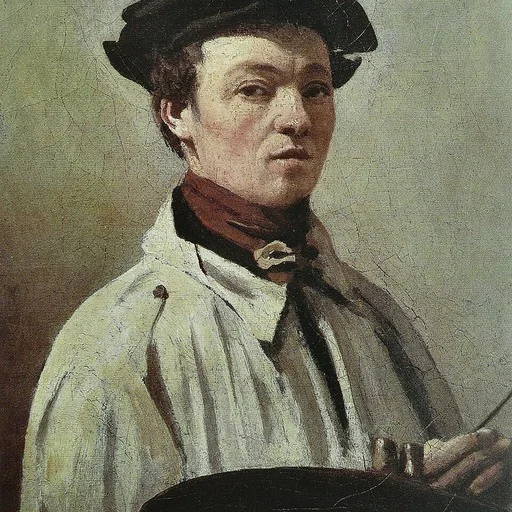
Artist
Jean-Baptiste-Camille Corot (UK: KORR-oh, US: kə-ROH, kor-OH; French: ; 16 July 1796 – 22 February 1875), or simply Camille Corot, was a French landscape and portrait painter as well as a printmaker in etching.

Museum
Royal Museums of Fine Arts of Belgium
Continue through works from the same source collection.