Artwork
The Laundress (La Blanchisseuse)
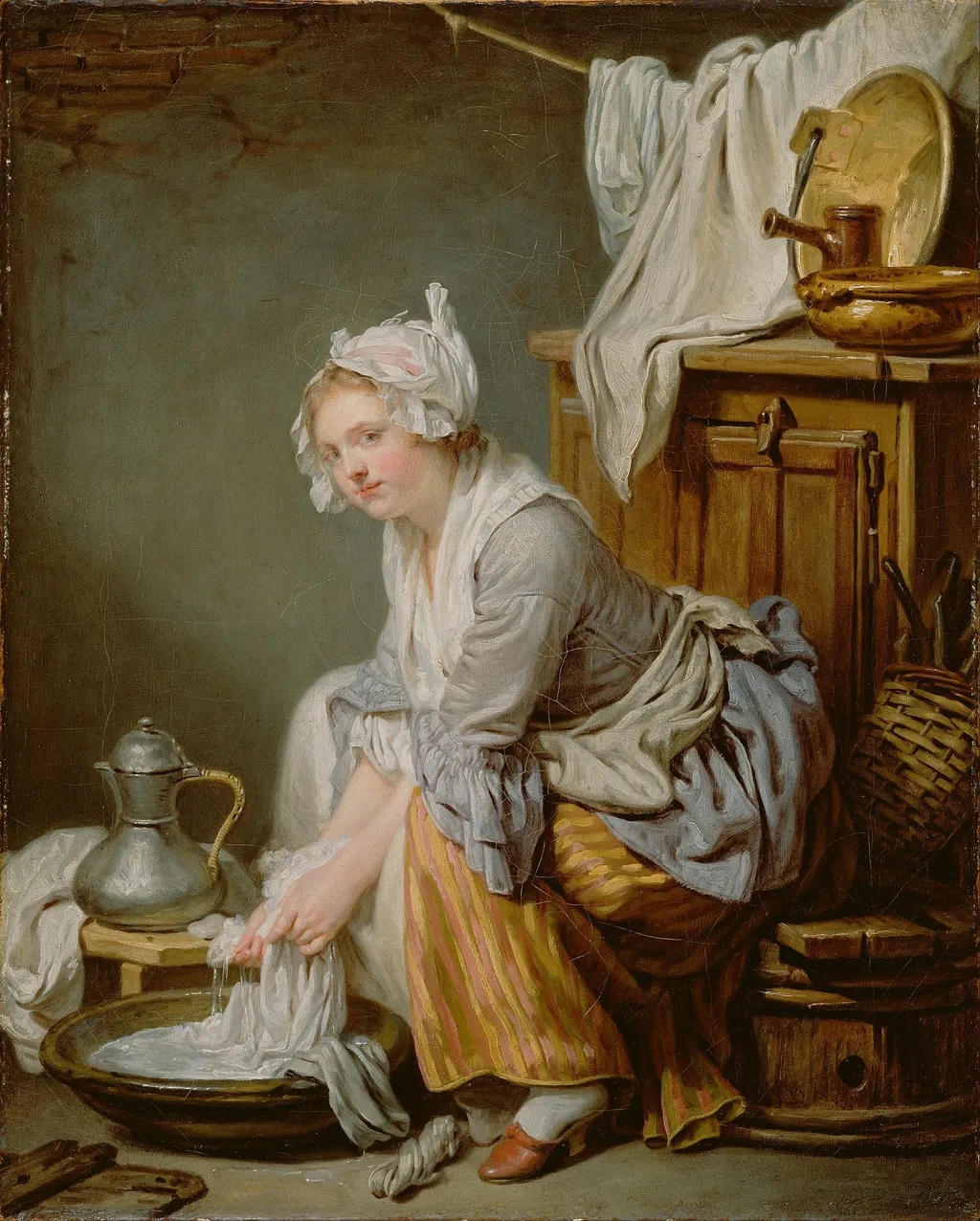
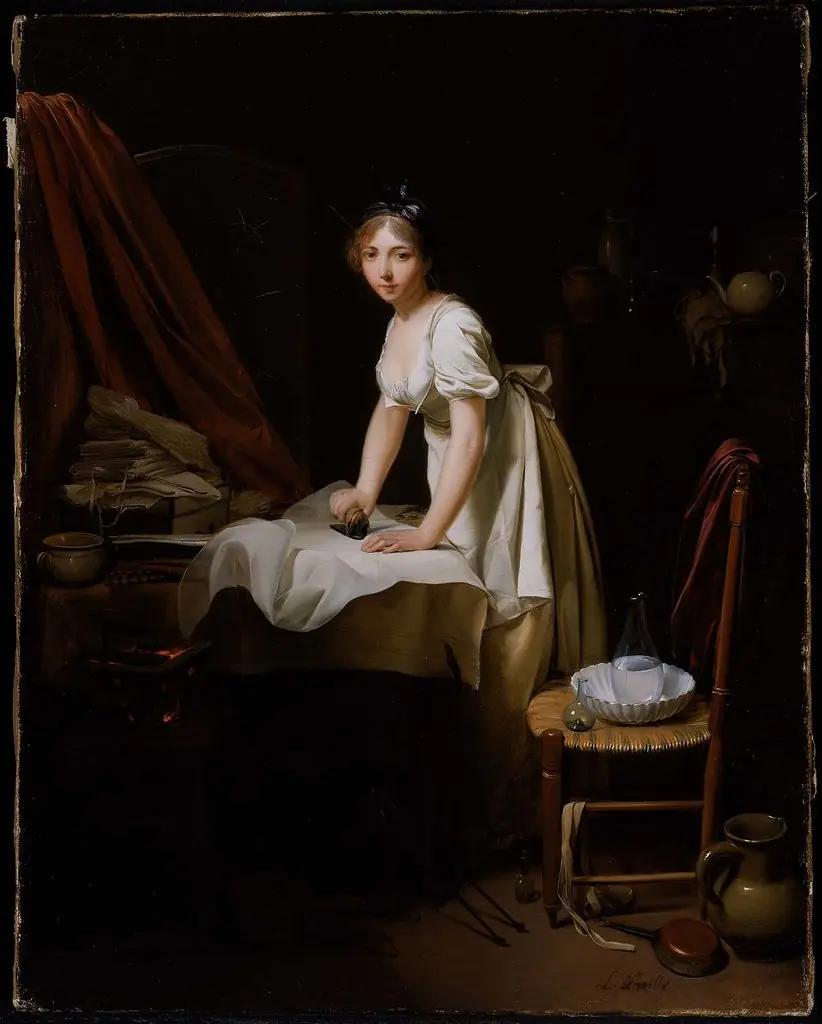
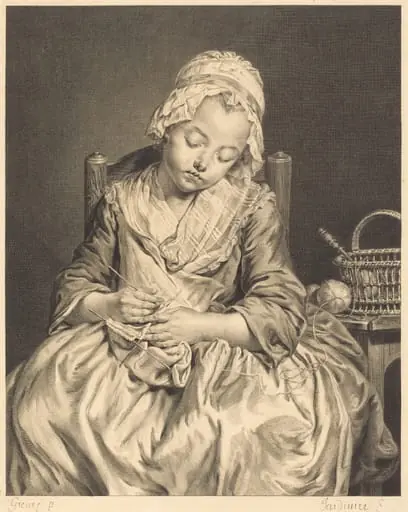
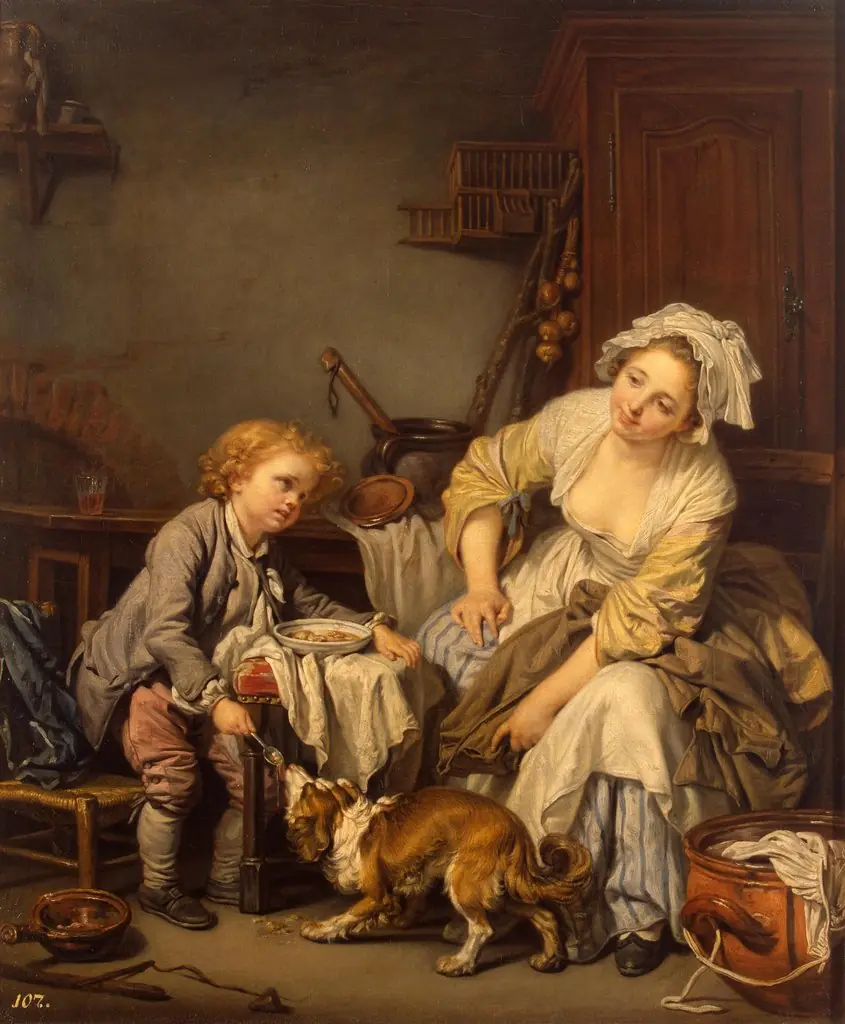
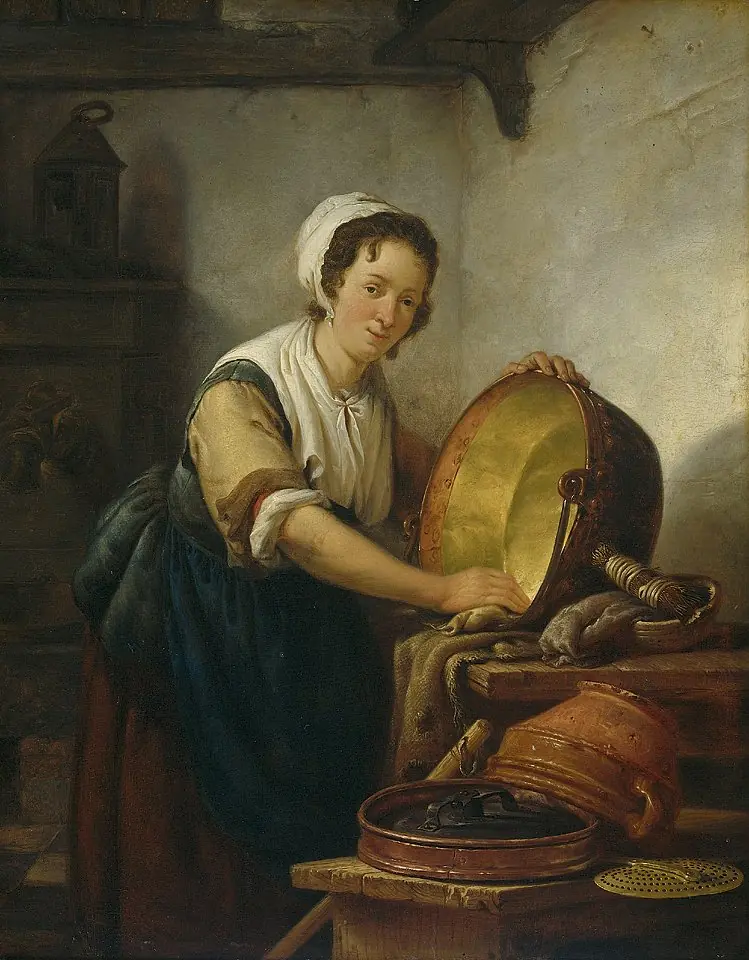
The Laundress (La Blanchisseuse) is an oil painting by the Rococo painting artist Jean-Baptiste Greuze. It dates from 1761 and is held in the collection of the J. Paul Getty Museum. Jean‑Baptiste Greuze’s genre work The Laundress, painted in 1761, depicts a washerwoman at work.
About this work
Overview
Jean‑Baptiste Greuze’s genre work The Laundress, painted in 1761, depicts a washerwoman at work. Two oil on canvas versions survive, both modest in size and executed in Greuze’s characteristic smooth brushwork. The composition presents a quiet domestic scene that reflects the artist’s interest in everyday French life during the mid‑eighteenth century.
Subject & Meaning
The painting portrays a solitary laundress, a figure frequently rendered in French art as a symbol of modest labor and moral virtue. By focusing on the act of washing, Greuze highlights the dignity of ordinary work, inviting viewers to contemplate the quiet dignity of the working class without overt narrative embellishment.
Technique & Style
Greuze employs a restrained palette of muted earth tones, allowing the figure’s white linen and the soft shadows to become focal points. The brushwork is refined, with delicate modeling of flesh and fabric that creates a sense of three‑dimensionality. The composition is balanced, the figure placed slightly off‑center, drawing the eye across the modest interior space.
History & Provenance
The larger version was shown at the Paris Salon of 1761 and entered the collection of Ange Laurent Lalive de Jully, a noted patron of the artist.
The larger version was shown at the Paris Salon of 1761 and entered the collection of Ange Laurent Lalive de Jully, a noted patron of the artist. In 1770 it was sold to Swedish collector Gustaf Adolf Sparre, where it remained in private hands for over two centuries before being acquired by the Getty Museum in 1983. The smaller counterpart, measuring 39 × 31 cm, is housed at Harvard’s Fogg Museum and is also dated to around 1761, likely produced to facilitate a print edition.
Context
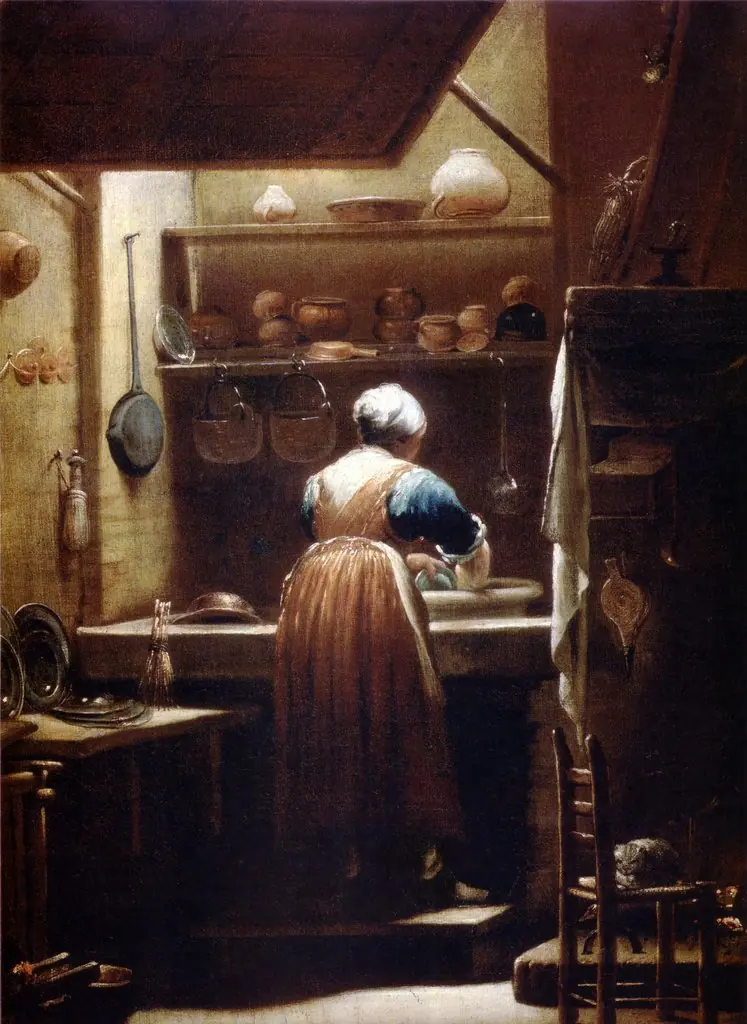
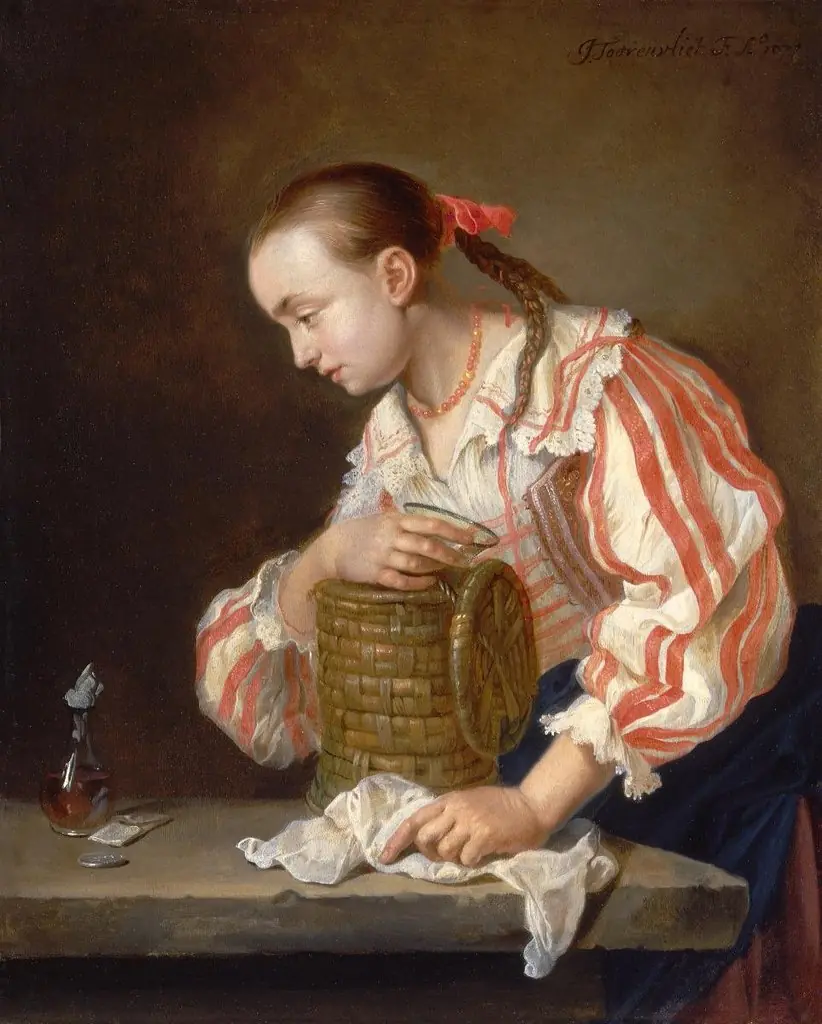
During the 1760s, scenes of washerwomen enjoyed popularity in French visual culture, reflecting contemporary interest in genre subjects that celebrated everyday life. Greuze’s treatment aligns with the Enlightenment’s focus on moralizing depictions of common people, positioning the laundress as an emblem of honest labor within the broader trend of domestic genre painting.
Own this work as a print
Artist & collection
Artist
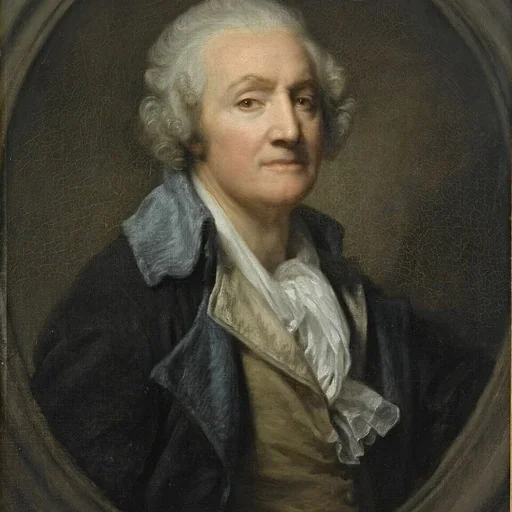
Jean-Baptiste Greuze (French pronunciation: , 21 August 1725 – 4 March 1805) was a French painter of portraits, genre scenes, and history painting.