Artwork
Dancers in a Pavilion
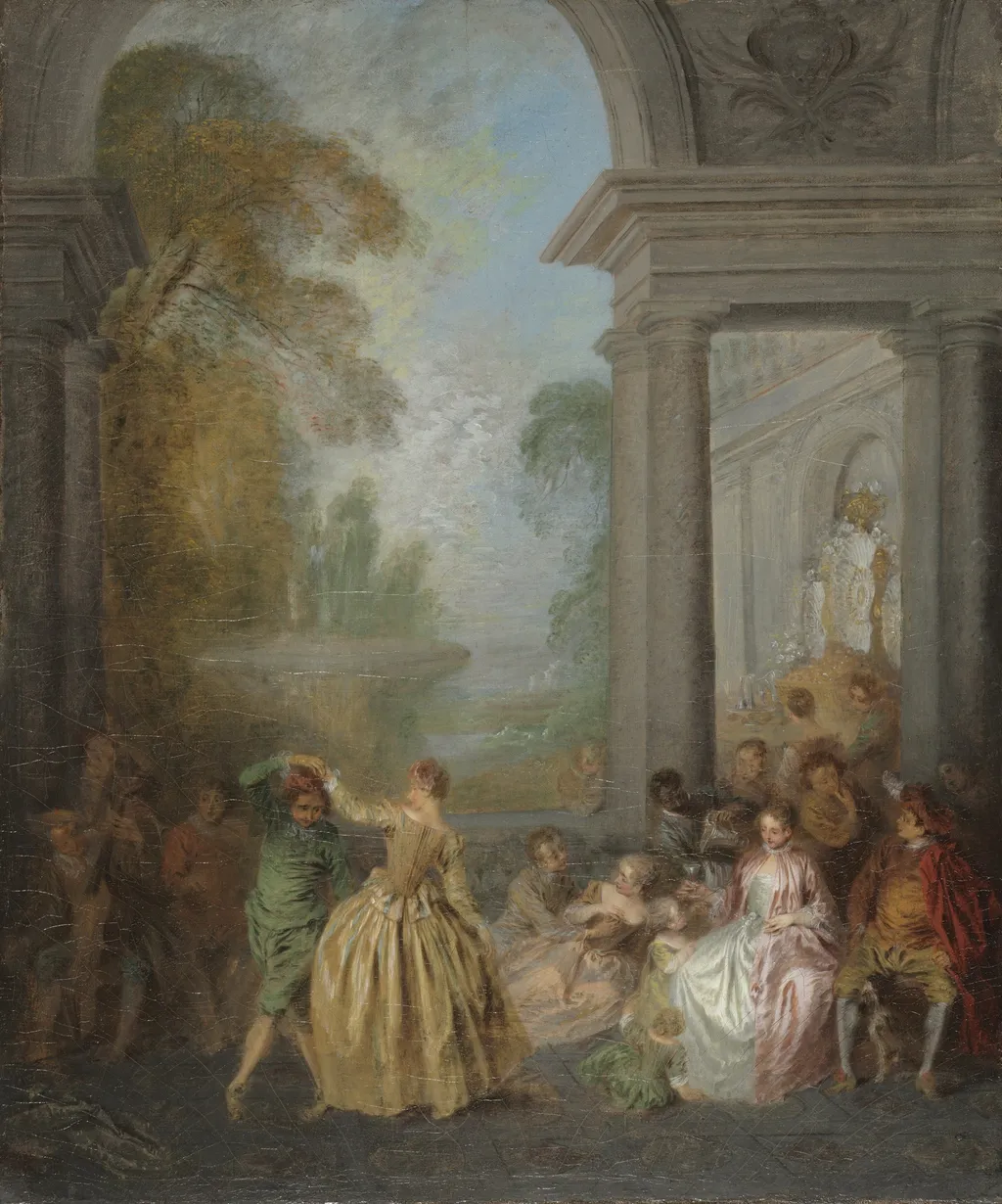
Dancers in a Pavilion is an oil painting by the Rococo painting artist Jean-Baptiste Pater. It dates from 1720 and is held in the collection of the Cleveland Museum of Art.
About this work
Overview
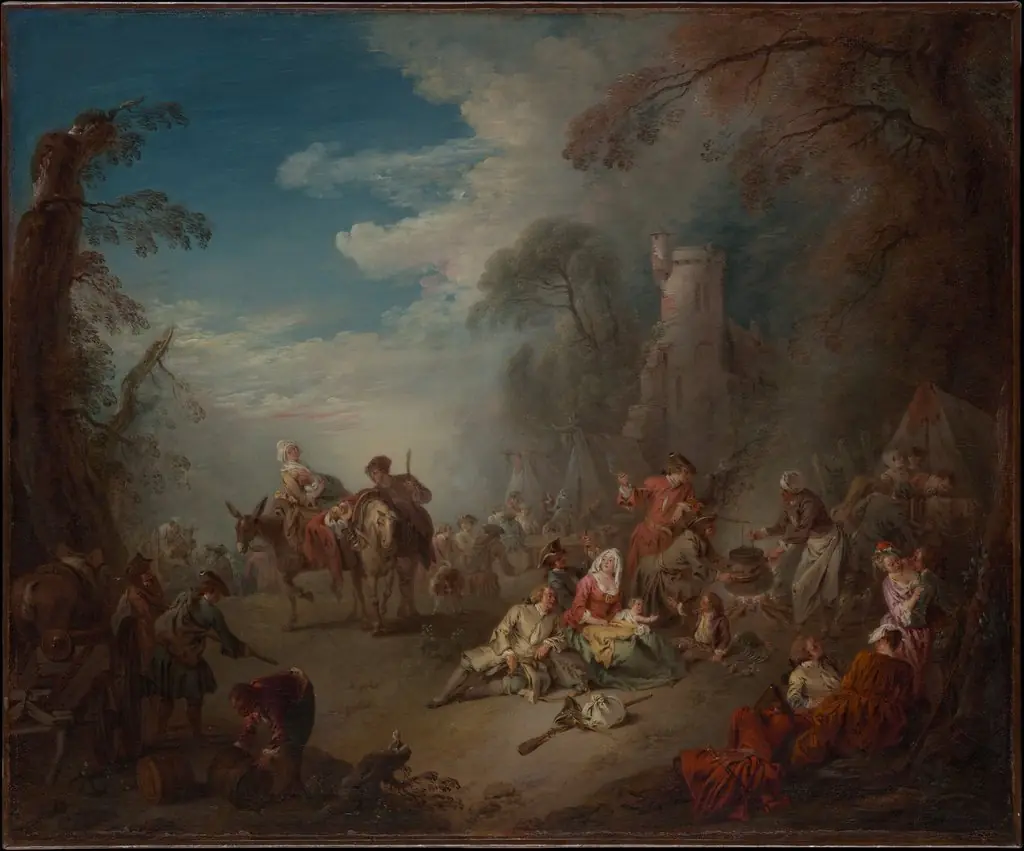
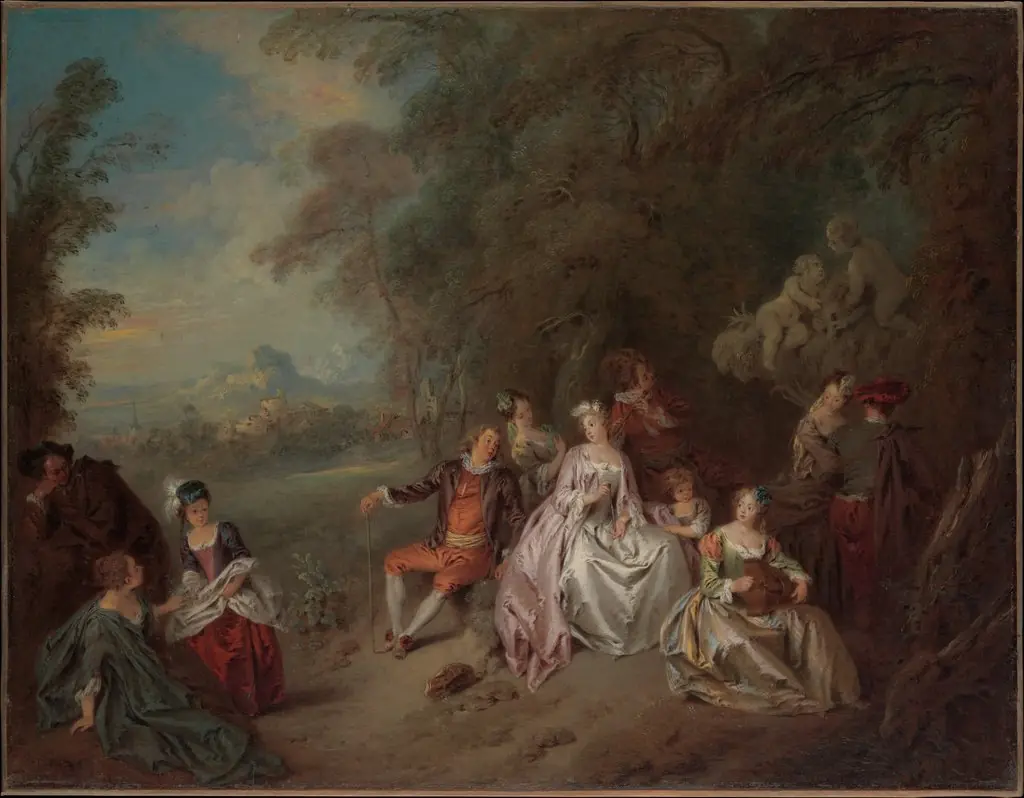
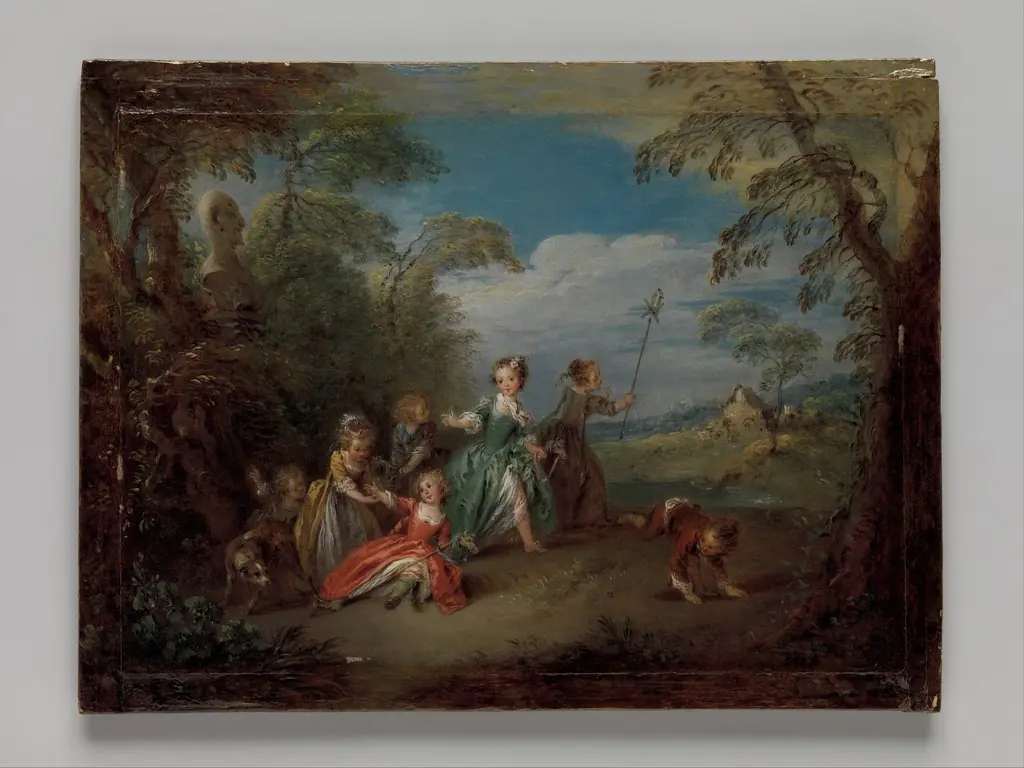
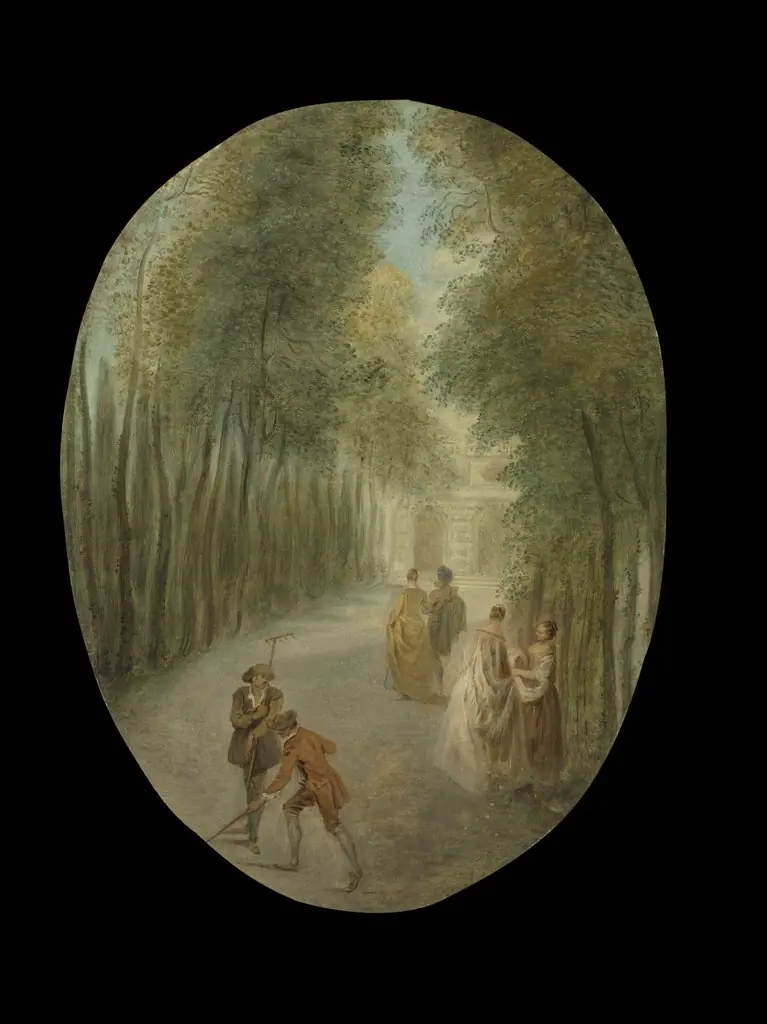
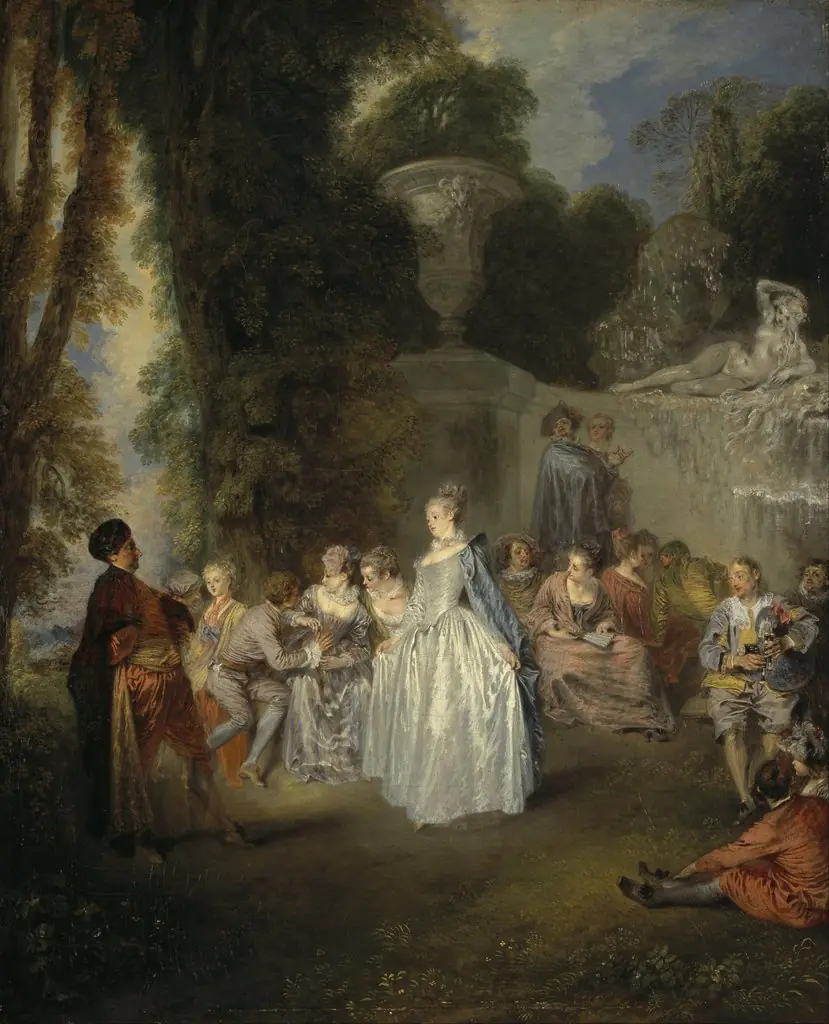
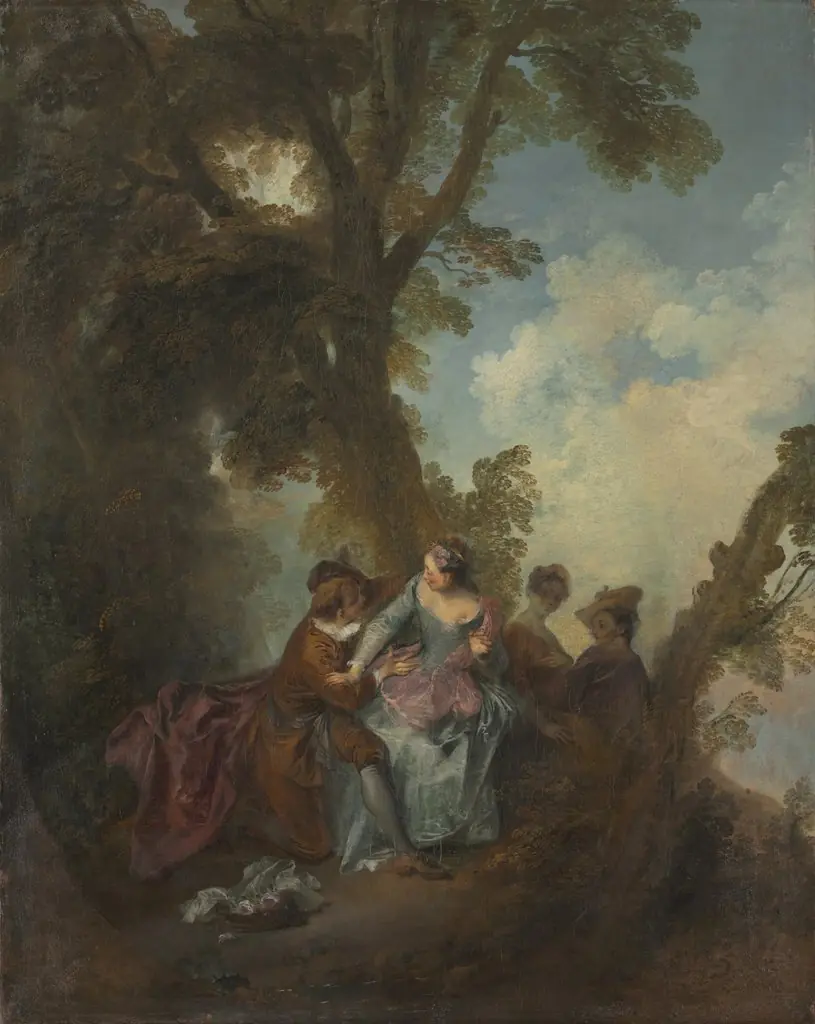
Jean-Baptiste Pater’s oil painting *Dancers in a Pavilion* dates from 1720. Executed in the early phase of the French Rococo, the canvas depicts a gathering of elegantly dressed figures positioned before an ornate pavilion, set against a landscaped garden with trees and a pond under a cloud‑filled sky.
Subject & Meaning
The composition presents a social scene of leisure: men in vivid coats and women in expansive gowns mingle, with a woman in a yellow dress holding a fan occupying a focal point. The work celebrates the pleasures of aristocratic recreation and the light‑hearted atmosphere typical of Rococo gatherings.
Technique & Style
Pater employs soft, fluid brushwork that merges colors to create a delicate surface. The handling of light on fabric and foliage is subtle, emphasizing the decorative quality of the scene while maintaining a sense of movement among the figures.
History & Provenance
Born in 1695, Pater was trained initially by his sculptor father before studying with Jean‑Baptiste Guide and later Antoine Watteau, whose influence is evident in the painting’s airy composition. *Dancers in a Pavilion* entered the collection of the Cleveland Museum of Art, where it remains on view.
Context
The painting belongs to the Rococo movement, a style that emerged in early 18th‑century France and favored playful subjects, pastel palettes, and ornamental elegance. Pater’s work reflects the transition from the more formal Baroque toward the decorative sensibilities that defined the period’s visual culture.
Artist & collection
Artist
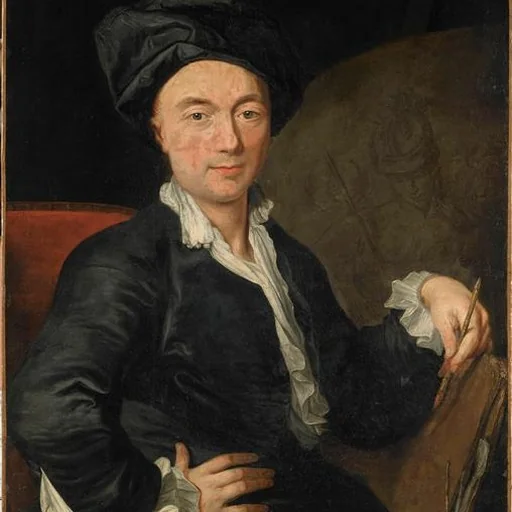
Jean-Baptiste Pater (December 29, 1695 – July 25, 1736) was a French rococo painter.